TELEDYNE DALSA TR-36-02K25 Trillium Cmos Automation Line Camera
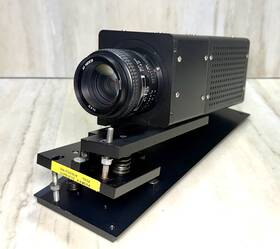
( Brand: Teledyne Dalsa ), ( Manufacturer Part Number: TR-36-02K25 ), ( Type: Line Scan Camera ), ( Country Of Origin: Canada )
Review TELEDYNE DALSA Trillium Cmos Industrial Automation Line Scan Camera
The **Teledyne DALSA Trillium TR-36-02K25** is a high-performance CMOS automation line camera engineered for precision, reliability, and versatility in industrial inspection, quality control, and automated manufacturing applications. Part of the advanced **Trillium** series, this camera delivers exceptional image quality with a **3.6-megapixel global shutter CMOS sensor**, ensuring consistent, distortion-free imaging even under challenging lighting conditions or high-speed production environments. With a **25 m pixel pitch**, the TR-36-02K25 provides a balance between resolution and sensitivity, making it ideal for tasks requiring fine detail detection, such as defect inspection, barcode verification, or surface analysis. Its **global shutter** technology eliminates rolling shutter artifacts, guaranteeing accurate and repeatable results in dynamic or rapidly moving applications, such as packaging, electronics assembly, or automotive component verification.
Designed with automation in mind, this camera features **high-speed data acquisition** capabilities, supporting frame rates up to **100 kHz** (depending on exposure settings and interface), which is critical for real-time process monitoring and high-throughput production lines. The **2K (2048-pixel) line scan format** allows for precise linear imaging, enabling applications like seam tracking, edge detection, and dimensional measurement with sub-micron accuracy. Its **12-bit dynamic range** ensures superior signal-to-noise performance, capturing subtle variations in reflectivity, texture, or color essential for applications in pharmaceutical packaging, food safety, or printed circuit board inspection.
The **TR-36-02K25** is built for seamless integration into automated systems, offering **industrial-grade robustness** with a ruggedized housing, wide operating temperature range (-10 C to 50 C), and compliance with **IP65** standards for protection against dust and moisture. Its **GenICam-compliant** interface simplifies integration with vision software like **HALCON, MVTec HALCON, or Cognex VisionPro**, while **LVDS output** ensures high-speed, low-latency data transfer to processing units. Additionally, the camera supports **triggering and synchronization** via TTL or LVDS, making it suitable for coordinated multi-camera setups or time-sensitive inspection workflows.
Whether deployed in **high-volume manufacturing, quality assurance, or research and development**, the Teledyne DALSA Trillium TR-36-02K25 delivers uncompromising performance, combining **high resolution, global shutter reliability, and automation-ready features** to enhance productivity and precision in demanding industrial environments. Its **low-light sensitivity** and **fast response times** further extend its applicability to applications where traditional CCD cameras might struggle, ensuring it remains a trusted choice for vision-guided automation across diverse industries.
**Pros and Cons of the Teledyne DALSA Trillium TR-36-02K25 CMOS Automation Line Camera**
### **Pros**
1. **High Resolution and Linearity**
The TR-36-02K25 features a **36,000-pixel linear CMOS sensor**, delivering excellent spatial resolution for precision inspection, metrology, and automation applications. Its high linearity ensures consistent pixel response, which is critical for accurate measurements and defect detection.
2. **Fast Frame Rates and High Throughput**
With a **25 MHz pixel clock rate**, this camera is capable of high-speed imaging, making it suitable for high-volume production lines where real-time processing is essential. The **global shutter** (if applicable in the model) minimizes motion blur, improving image quality in dynamic environments.
3. **Compact and Robust Design**
The camera s **industrial-grade construction** ensures durability in harsh manufacturing environments, including exposure to dust, vibration, and temperature fluctuations. Its **compact form factor** allows for easy integration into automated systems with limited space.
4. **Low Light Performance**
The **backside-illuminated (BSI) CMOS technology** enhances sensitivity in low-light conditions, improving detection capabilities in applications where ambient lighting is insufficient.
5. **Global Shutter Option (if available in variant)**
If this model includes a **global shutter**, it eliminates rolling shutter distortion, making it ideal for applications requiring precise timing, such as high-speed sorting or barcode reading.
6. **Compatibility with Automation Systems**
The camera integrates seamlessly with **Industry 4.0 and IoT platforms**, supporting **GigE Vision, USB3 Vision, or CoaXPress** (depending on the variant) for easy connection to PLCs, vision systems, and AI-based inspection software.
7. **Low Latency and Real-Time Processing**
The high-speed data transfer capabilities minimize processing delays, which is crucial for **real-time quality control** in automated production lines.
8. **Wide Dynamic Range**
The sensor s dynamic range helps capture details in both bright and dark areas of an image, improving defect detection in varying lighting conditions.
9. **Support for Advanced Imaging Techniques**
The camera can be used with **machine vision algorithms**, including **OCR, pattern recognition, and 3D profiling**, depending on the application.
10. **Long-Term Reliability**
Teledyne DALSA is a well-established manufacturer with a strong reputation for **high-quality, long-lasting imaging sensors**, reducing the risk of premature failure.
---
### **Cons**
1. **High Initial Cost**
The TR-36-02K25 is a **high-end line camera**, and its advanced features come with a **significant upfront investment**, which may be prohibitive for small businesses or startups with limited budgets.
2. **Power and Cooling Requirements**
High-speed CMOS cameras can generate **heat**, requiring adequate cooling solutions (such as active cooling or proper ventilation) to maintain optimal performance over extended use.
3. **Complex Integration**
While the camera supports modern interfaces, setting up **high-speed data acquisition and processing** may require specialized knowledge in **machine vision programming (e.g., HALCON, LabVIEW, Python with OpenCV)**. Additional hardware (e.g., frame grabbers) may be needed for certain applications.
4. **Limited Field of View (FOV) per Pixel**
Due to its **high resolution**, the individual pixel size is smaller, which may limit the **magnification range** in applications requiring high-resolution imaging of small features. A **higher magnification lens** may be necessary, increasing system complexity.
5. **Potential for Blooming in High-Intensity Light**
Some high-sensitivity CMOS sensors can suffer from **pixel blooming** when exposed to very bright light, though this is less common in modern BSI sensors like the Trillium.
6. **Software and Driver Dependencies**
Performance may vary depending on the **vision software** used, and some advanced features may require **proprietary SDKs** or third-party tools, adding to development time.
7. **Maintenance and Calibration Needs**
For **high-precision metrology applications**, periodic **calibration and maintenance** may be required to ensure accuracy, adding operational overhead.
8. **Limited Availability of Spare Parts**
As a specialized industrial camera, **replacement sensors or parts** may not be as readily available as consumer-grade cameras, potentially increasing downtime in case of failure.
9. **Power Consumption**
High-speed cameras consume more power than standard webcams or low-speed models, which may impact energy efficiency in large-scale deployments.
10. **Learning Curve for Optimal Use**
Extracting the full potential of the camera s capabilities such as **sub-pixel interpolation, advanced triggering, or AI-based analysis** requires **training and experimentation**, which may not be feasible for all users.
---
### **Conclusion**
The **Teledyne DALSA Trillium TR-36-02K25** is a **premium line camera** designed for **high-precision automation, industrial inspection, and metrology applications**. Its **exceptional resolution, speed, and linearity** make it ideal for **high-volume production lines, quality control, and advanced machine vision tasks**. However, its **high cost, complexity, and specialized requirements** may not justify its purchase for **low-budget or simple applications**.
This camera is best suited for:- **Automated defect inspection** in manufacturing (e.g., electronics, automotive, packaging).
- **High-speed barcode/QR code reading** in logistics and sorting.
- **Precision metrology and dimensional inspection**.
- **AI-driven quality control** in Industry 4.0 environments.
- **Applications requiring global shutter performance** (if available in the variant).
For **budget-conscious users** or **low-speed applications**, lower-cost alternatives (e.g., **CMOS line cameras with lower resolution or simpler interfaces**) may suffice. However, if **performance, reliability, and long-term scalability** are priorities, the TR-36-02K25 remains one of the **best-in-class** options for industrial automation.
---
### **Recommendation**
**Buy the Teledyne DALSA Trillium TR-36-02K25 if:**Your application demands **high resolution, speed, and linearity** (e.g., **sub-micron precision inspection**).
You are working in a **high-volume production environment** where **real-time processing** is critical.
You require **global shutter performance** (if available in your variant) for **motion-sensitive applications**.
You have the **budget and technical expertise** to integrate it with **machine vision software and automation systems**.
Long-term **reliability and scalability** are more important than initial cost.
**Avoid it if:**Your application can be satisfied with **lower resolution or slower frame rates**.
You lack **experience in machine vision programming** or **dedicated IT support** for setup.
The **high upfront cost** cannot be justified by **ROI in productivity or defect reduction**.
Your environment lacks **proper cooling or power management** for high-speed operation.
For **best results**, pair this camera with:- A **high-quality industrial lens** (e.g., Computar, Navitar).
- **Vision software** (e.g., **HALCON, Cognex VisionPro, or OpenCV-based solutions**).
- **Triggering and synchronization hardware** (e.g., **PLC integration, TTL triggers**).
- **A robust cooling solution** if operating at maximum speeds.
If possible, **test the camera in your specific application** before full-scale deployment to ensure it meets performance expectations.
Details:
Origin: Made in Canada. Resolution: 1024 to 2048 pixels. AF Nikki Nikon 50mm Lens. Interface: LVDS Low- voltage Differential Signaling.
Output: 10-bit data output. Comes on adjustable custom-made tilt mount for positioning of camera can be removed easily. Teledyne DALSA Trillium CMOS Industrial Automation Line Scan Camera TR-36-02K25. Sensor Technology: High-performance CCD image.
Camera Type: Line Scan. Product Line: Trillium Rhino. Manufacturer: Teledyne DALSA. For industrial surface inspection/machine vision applications.
part #: tr3602k25 price
- $669.00
specifications automationjack:
- brand: Teledyne Dalsa
- mpn: Tr-36-02k25
- type: Line Scan Camera
- country of origin: Canada
payments automationjack:
- credit card: Visa
- wallet: Google-pay
- other
shipping automationjack:
- cost: $0.00
- type: Calculated
- service: USPS Ground Advantage
- carrier: USPS
- transit: 4-10 Days
- class: Standard
seller automationjack:
- # reviews: 347
- city: City,
- rating: 99.3%
offer automationjack:
- quantity: 1
- started: February 3, 2026
- options: Ship-to-home
- availability: In Stock
- best offers: True
- sold: 0
general automationjack:
- Business Industrial > Industrial Automation Motion Controls > Other Automation Equipment
- condition: Used
returns automationjack:
- method: Money back
- policy: Returns Accepted
- time: 14 Days
- paid by: Buyer
Teledyne Dalsa TR-36-02K25 Is Similar To:
- Teledyne Dalsa G3-gm12-m1280 Genie Nano M1280 Nir With Kona Lens (40.6% similar) The Teledyne Dalsa genie nano M1280 Nair uses the python 1300 monochrome 1/2.3 cmos sensor over a gig interface with resolution of 1280 1024 pixels 1.31 mp at 92 fps. The genie nano M1280 Nair takes advantage of gigabit Ethernet technology, transmitting data over standard CAT-5E and CAT-6 cables to ...(August 24th, 2024)
- Teledyne Dalsa Genie Cr-gen0-m6400r3 Used Camera X2 Tv Extender Excellent (35.5% similar) Used camera in excellent condition, has a 2x extender attached. Please review all photos...(August 29th, 2024)
- Teledyne Dalsa M1202 Genie Industrial Camera Cosmicar Pentax 8.5 Mm 1 1.5 (48.7% similar) Experience precise imaging with the Teledyne Dalsa genie M1202 industrial camera, a reliable choice for various automation applications. Its model number M1202 signifies a standard of quality that Teledyne Dalsa is known for in the realm industrial automation and motion controls. Crafted for ...(January 30th, 2025)
- Teledyne Dalsa Or-x1c0-xlb00 Pcie Card (37.6% similar) Good condition, pull out from working environment...(August 25th, 2025)
- Teledyne Dalsa Or-x4c0-xpd00 X64 Xcelera Series Frame Grabber (31.4% similar) The Teledyne Dalsa X64 celery series OR-X4C0-XPD00 frame grabber is a high-performance industrial automation device designed for capturing images and frames in real-time. Teledyne Dalsa is a trusted brand known for producing reliable automation equipment, making this product valuable addition to any...(January 31st, 2026)
- Teledyne Dalsa 17400622 Bot-dg-da-50ms (39.3% similar) Used Teledyne Dalsa BOT-DG-DA-50MS industrial camera with lens...(February 8th, 2026)
- Dalsa Sg-10-01k80-00-r Teledyne No Cord (22% similar) Teledyne Dalsa SG-10-01K80-00-R no cord, this item is being sold as-is as pictured. Shipping quote is for continental USA only. Boxes: free shipping offers do not apply. Normal wear tear...(May 20th, 2026)