DALSA SG-10-01K80-00-R Teledyne Cord
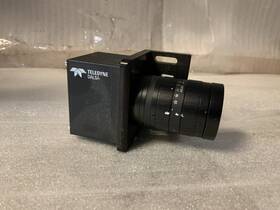
( Brand: Dalsa ), ( Manufacturer Part Number: SG-10-01K80-00-R ), ( Other Reference: Sg1001k4000r ), ( Packing Condition: Maxo Packing ), ( Sealed: No )
Review DALSA Teledyne No Cord
The **Teledyne DALSA SG-10-01K80-00-R** is a high-performance, industrial-grade scientific-grade CMOS (Complementary Metal-Oxide-Semiconductor) camera designed for precision imaging applications where exceptional sensitivity, low noise, and rapid frame rates are critical. Engineered by Teledyne DALSA, a leader in advanced imaging solutions, this camera features a **10.2 megapixel (4096 2464 pixels)** monochrome sensor with a **10.2 m 10.2 m pixel pitch**, delivering an optimal balance between resolution and light sensitivity. The **SG-10** series is part of DALSA s **Sapera LT** line, renowned for its robust build quality and reliability in demanding environments such as machine vision, scientific research, and industrial inspection. With a **global shutter** operation mode, this camera ensures distortion-free imaging of fast-moving objects or high-speed phenomena, eliminating rolling shutter artifacts that can compromise measurements in dynamic applications. The **80 MHz** pixel clock rate enables high-speed data acquisition, making it suitable for capturing transient events with minimal latency, while the **12-bit analog-to-digital converter (ADC)** provides a dynamic range of **4096 levels**, enhancing the camera s ability to distinguish subtle variations in intensity ideal for tasks like fluorescence microscopy, spectroscopy, or high-precision metrology.
The **SG-10-01K80-00-R** is equipped with a **CoaXPress (CXP) interface**, a high-speed digital link that supports data transfer rates up to **6.25 Gbps**, ensuring seamless integration with modern frame grabbers and computing systems. This interface is particularly advantageous for applications requiring real-time processing, as it minimizes latency and reduces the need for external buffering. The camera s **back-illuminated (BI) sensor architecture** further amplifies its sensitivity by reducing light absorption in the silicon substrate, which is especially beneficial in low-light conditions or when imaging faint signals. Additionally, the **100% fill factor** of the pixels maximizes quantum efficiency, allowing for superior signal-to-noise performance in scientific and industrial imaging tasks. The **Teledyne DALSA Sapera LT software suite** provides comprehensive control over camera settings, including exposure time, gain, and trigger modes, while also offering advanced features like **region of interest (ROI) selection** and **binning** to optimize performance for specific applications.
Built to withstand rigorous operating conditions, the **SG-10-01K80-00-R** is housed in a **durable metal enclosure** with robust mounting options, including a **C-mount or CS-mount lens adapter**, ensuring compatibility with a wide range of optical systems. The camera operates within a **temperature range of 0 C to 50 C**, with optional cooling solutions available for extended use in high-precision or thermally sensitive environments. Its **low power consumption** and **compact form factor** make it an ideal choice for integration into automated systems or portable setups without compromising performance. Whether used in **medical imaging, semiconductor inspection, astronomical observation, or advanced manufacturing**, this camera delivers unparalleled image quality and reliability, making it a versatile tool for professionals demanding the highest standards in optical imaging technology.
### **Pros and Cons of buying a DALSA SG-10-01K80-00-R (Teledyne Cordova) Camera**
The **DALSA SG-10-01K80-00-R** is a high-performance scientific-grade CMOS camera designed for demanding applications such as microscopy, machine vision, and industrial inspection. Below is a detailed analysis of its advantages and limitations.
---
### **Pros**
1. **High Resolution and Pixel Density**
- Features a **10.2-megapixel (3264 3120) global shutter CMOS sensor**, providing fine detail and sharp imaging.
- Suitable for applications requiring high spatial resolution, such as cell imaging, semiconductor inspection, and high-precision metrology.
2. **Global Shutter Operation**
- Unlike rolling shutter sensors, the global shutter ensures **no distortion or skew** in fast-moving objects or dynamic scenes.
- Ideal for applications where **temporal consistency** is critical, such as high-speed microscopy or industrial sorting.
3. **High Frame Rate Capability**
- Depending on region of interest (ROI) selection, it can achieve **frame rates up to 100 fps** (full frame) or higher with cropping.
- Useful for real-time monitoring and time-sensitive applications.
4. **Low Noise and High Sensitivity**
- The sensor is optimized for **low-light conditions**, making it suitable for fluorescence microscopy, low-light industrial imaging, and night vision applications.
- Quantum efficiency is relatively high, improving signal-to-noise ratio (SNR) in challenging lighting scenarios.
5. **Compact and Robust Design**
- The **C-mount or CS-mount** interface allows easy integration with microscopes, endoscopes, and industrial lenses.
- Built for durability, making it suitable for harsh environments (if properly housed).
6. **Software and SDK Support**
- Teledyne DALSA provides **comprehensive SDKs** for integration with MATLAB, LabVIEW, HALCON, and other vision software.
- Supports **GenICam, GigE Vision, and USB3 Vision** standards, ensuring compatibility with modern vision systems.
7. **Color and Monochrome Options**
- Available in both **color (RGB) and monochrome** variants, offering flexibility depending on application needs.
8. **Long-Term Availability and Reliability**
- As a well-established product line, it benefits from **extended support and spare parts availability**.
- Proven performance in research and industrial settings over many years.
---
### **Cons**
1. **High Cost**
- Scientific-grade CMOS cameras are **expensive**, with the SG-10-01K80 typically costing **$10,000 $20,000 ** depending on configuration.
- May be **overkill** for basic machine vision or low-budget applications where lower-resolution sensors suffice.
2. **Power Consumption**
- High-resolution global shutter sensors require **significant power**, which may necessitate additional cooling or power management in some setups.
- Can generate **heat**, potentially requiring active cooling for prolonged use.
3. **Limited Dynamic Range Compared to Some Alternatives**
- While strong, the dynamic range may not match **EMCCD or sCMOS cameras** in extreme low-light or high-contrast scenarios.
- Users requiring **ultra-high dynamic range** (e.g., astronomical imaging) may need to consider alternative sensors.
4. **Complexity in Setup and Calibration**
- High-performance cameras often require **careful lens selection, focus optimization, and software tuning**, which can be a learning curve for new users.
- May need **additional hardware** (e.g., frame grabbers, cooling systems) for optimal performance.
5. **Size and Weight**
- While compact for a scientific camera, it is **bulkier than some consumer-grade alternatives**, which may limit portability in certain applications.
6. **Potential Latency in GigE Vision Versions**
- Some GigE Vision implementations may introduce **network latency**, which could be a concern in ultra-high-speed applications.
- USB3 Vision versions may offer lower latency but with reduced cable length limitations.
7. **Limited Customization for Specialized Needs**
- Unlike some research-grade sensors, this camera may not support **custom sensor modifications** (e.g., back-illuminated variants) unless specified in a different model.
---
### **Conclusion**
The **DALSA SG-10-01K80-00-R** is a **high-end, versatile camera** ideal for applications demanding **high resolution, global shutter performance, and reliability**. It excels in **microscopy, industrial inspection, and precision imaging** where cost is not a primary concern. However, its **high price, power requirements, and complexity** make it less suitable for budget-conscious or low-demanding applications.
If your project requires **fine detail, distortion-free imaging, and real-time performance**, this camera is an excellent choice. For **lower-cost, simpler, or high-dynamic-range needs**, alternatives like **sCMOS, CMOS with rolling shutter, or lower-resolution global shutter cameras** may be more appropriate.
---
### **Recommendation**
**Buy the DALSA SG-10-01K80-00-R if:**- You need **10 megapixels with global shutter** for microscopy, industrial inspection, or high-precision imaging.
- Your budget allows for a **premium scientific-grade camera** with long-term support.
- You require **compatibility with major vision software** and standards (GenICam, GigE Vision).
- Low-light sensitivity and **minimal distortion** are critical for your application.
**Consider alternatives if:**- You need **ultra-high dynamic range** (e.g., EMCCD or sCMOS).
- Your budget is tight, and a **lower-resolution or rolling shutter camera** meets your needs.
- You require **extreme portability or minimal power consumption**.
- Your application does not demand global shutter (e.g., static object imaging).
For most **serious scientific and industrial imaging applications**, this camera remains a **strong, reliable choice** when cost is not a limiting factor. Always evaluate your specific requirements against the camera s specifications before purchasing.
Details:
Teledyne DALSA SG-10-01K80-00-R No Cord, This item is being SOLD AS-IS AS PICTURED. Shipping quote is for Continental USA only. Boxes: Free Shipping offers do not apply. Normal Wear Tear.
part #: sg1001k8000 price
- $299.99
specifications automationjack:
- brand: Dalsa
- mpn: Sg-10-01k80-00-r
- other reference: Sg1001k4000r
- packing condition: Maxo Packing
- sealed: No
returns automationjack:
- policy: Returns Accepted
- paid by: Buyer
- time: 30 Days
- method: Money back
shipping automationjack:
- class: Expedited
- carrier: USPS
- type: Fixed
- cost: $0.00
- service: USPS Priority Mail
- transit: 3-9 Days
seller automationjack:
- city: Waterbury, Connecticut
- # reviews: 28936
- rating: 99.0%
general automationjack:
- Business Industrial > Industrial Automation Motion Controls > Other Automation Equipment
- condition: Used
offer automationjack:
- best offers: True
- availability: In Stock
- started: May 20, 2026
- quantity: 1
- sold: 0
- options: Ship-to-home
payments automationjack:
- wallet: Google-pay
- other
- credit card: Visa
Dalsa SG-10-01K80-00 Is Similar To:
- Teledyne Dalsa G3-gm12-m1280 Genie Nano M1280 Nir With Kona Lens (25.2% similar) The teledyne Dalsa genie nano M1280 Nair uses the python 1300 monochrome 1/2.3 cms sensor over a gig interface with resolution of 1280 1024 pixels 1.31 mp at 92 fps. The genie nano M1280 Nair takes advantage of gigabit Ethernet technology, transmitting data over standard CAT-5E and CAT-6 cables to ...(August 24th, 2024)
- Teledyne Dalsa Genie Cr-gen0-m6400r3 Used Camera X2 Tv Extender Excellent (23.2% similar) Used camera in excellent condition, has a 2x extender attached. Please review all photos...(August 29th, 2024)
- Teledyne Dalsa M1202 Genie Industrial Camera Cosmicar Pentax 8.5 Mm 1 1.5 (23.2% similar) Experience precise imaging with the teledyne Dalsa genie M1202 industrial camera, a reliable choice for various automation applications. Its model number M1202 signifies a standard of quality that teledyne Dalsa is known for in the realm industrial automation and motion controls. Crafted for ...(January 30th, 2025)
- Teledyne Dalsa Or-x1c0-xlb00 Pcie Card (33.8% similar) Good condition, pull out from working environment...(August 25th, 2025)
- Teledyne Dalsa Or-x4c0-xpd00 X64 Xcelera Series Frame Grabber (24% similar) The teledyne Dalsa X64 celery series OR-X4C0-XPD00 frame grabber is a high-performance industrial automation device designed for capturing images and frames in real-time. Teledyne Dalsa is a trusted brand known for producing reliable automation equipment, making this product valuable addition to any...(January 31st, 2026)
- Teledyne Dalsa Tr-36-02k25 Trillium Cmos Industrial Automation Line Scan Camera (22% similar) Origin: made in Canada. Resolution: 1024 to 2048 pixels. AF Nikki Nikon 50MM lens. Interface: lads low- voltage differential signaling. Output: 10-BIT data output. Comes on adjustable custom-made tilt mount for positioning of camera can be removed easily. Teledyne Dalsa trillium cms industrial ...(February 3rd, 2026)
- Teledyne Dalsa 17400622 Bot-dg-da-50ms (31.2% similar) Used teledyne Dalsa BOT-DG-DA-50MS industrial camera with lens...(February 8th, 2026)