BENDER RCM420-D-2 Fault Monitor 70-300VAC/DC 250VAC/5A
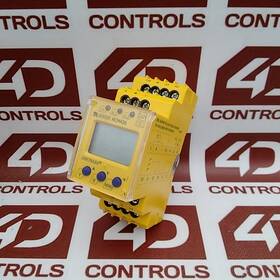
( Brand: Bender ), ( Manufacturer Part Number: RCM420-D-2 ), ( Type: Other Automation Equipment )
Review BENDER Ground fault Monitor 70-300vac/dc 250vac/5a Used
The **Bender RCM420-D-2 Ground-Fault Monitor** is a high-performance, industrial-grade device designed to provide reliable protection and monitoring for electrical systems operating within a broad voltage and current range. Engineered for applications requiring precise ground-fault detection, this monitor is ideal for industrial facilities, commercial buildings, renewable energy systems, and critical infrastructure where safety and compliance are paramount. With a robust design capable of handling both alternating current (AC) and direct current (DC) systems, the RCM420-D-2 excels in environments where traditional ground-fault circuit interrupters (GFCIs) fall short, such as in high-voltage or high-current applications ranging from **70 to 300V AC/DC** and **250V AC/5A**.
At its core, the RCM420-D-2 employs advanced differential current sensing technology to detect even the smallest ground-fault currents, ensuring early intervention to prevent equipment damage, electrical fires, or hazardous conditions. Its wide input range allows it to be seamlessly integrated into diverse electrical setups, including solar inverters, battery storage systems, industrial machinery, and low-voltage distribution networks. The device features a compact yet durable construction, making it suitable for installation in tight spaces or harsh environments where reliability is non-negotiable. With a user-friendly interface, it provides clear visual and audible alerts, enabling operators to respond promptly to potential faults while minimizing downtime.
Beyond its primary function as a ground-fault monitor, the RCM420-D-2 offers configurable thresholds and adjustable sensitivity, allowing users to tailor protection parameters to their specific application requirements. This flexibility ensures optimal performance across a variety of scenarios, from sensitive electronic systems to robust industrial installations. Additionally, its robust build quality, including protection against overvoltage, overcurrent, and environmental stressors, guarantees long-term dependability in demanding operational conditions. Whether deployed in a renewable energy microgrid, a manufacturing plant, or a critical data center, the Bender RCM420-D-2 serves as a vigilant guardian, safeguarding both personnel and assets with uncompromising precision and reliability.
The **Bender RCM420-D-2** is a ground-fault monitor designed for industrial and commercial applications, providing protection against ground faults in AC/DC systems (70 300 VAC/DC, 250 VAC/5 A). Below is a detailed breakdown of its pros and cons, followed by a conclusion and recommendation.
---
### **Pros of the Bender RCM420-D-2**
1. **High Sensitivity and Fast Response**
The device offers adjustable ground-fault sensitivity (down to 10 mA) and a fast response time, which is critical in preventing equipment damage or electrical hazards in industrial environments. This makes it suitable for applications where even small faults need immediate attention.
2. **Wide Voltage and Current Range**
It supports a broad input range (70 300 VAC/DC and 250 VAC/5 A), making it versatile for various industrial setups, including those with mixed AC/DC loads or varying voltage conditions. This flexibility reduces the need for multiple monitors.
3. **Digital Communication and Integration**
The RCM420-D-2 includes digital outputs (e.g., RS-485 Modbus RTU) and relay contacts, allowing for easy integration into SCADA systems or PLC-based control networks. This enables remote monitoring, logging, and automated shutdowns, improving system reliability and maintenance efficiency.
4. **Adjustable Trip Curves**
The device allows customization of trip curves (e.g., time-delayed or instantaneous trips) to match specific application requirements. This is particularly useful in environments where gradual faults (e.g., insulation degradation) need to be addressed before they escalate.
5. **Durability and Industrial Build**
Designed for harsh environments, the RCM420-D-2 is likely built to withstand temperature fluctuations, vibration, and electrical noise, which is essential for industrial or outdoor installations. Its robust construction reduces the risk of failure due to environmental factors.
6. **Compliance with Safety Standards**
The monitor adheres to relevant safety standards (e.g., IEC/EN standards for ground-fault protection), ensuring compliance with regulatory requirements in many regions. This can simplify certification processes for industrial facilities.
7. **Low Maintenance Requirements**
As a digital device with minimal moving parts, the RCM420-D-2 typically requires less maintenance than analog or mechanical ground-fault monitors. Its self-diagnostic features (e.g., status LEDs, communication errors) also make troubleshooting easier.
8. **Scalability**
The device can be used in both standalone applications and as part of a larger protection system. Its modular design (e.g., compatibility with other Bender products) allows for expansion as system requirements grow.
---
### **Cons of the Bender RCM420-D-2**
1. **Complexity for Non-Expert Users**
The adjustable settings and digital communication features may be overwhelming for users without electrical or automation experience. Proper configuration requires an understanding of ground-fault protection principles and system requirements, which could lead to misconfiguration or improper use.
2. **Higher Initial Cost**
Compared to basic analog ground-fault monitors or simpler relay-based solutions, the RCM420-D-2 is more expensive. The added features (e.g., digital outputs, adjustable trip curves) justify the cost for industrial applications but may be unnecessary for smaller or simpler setups.
3. **Dependence on Power Supply**
Like most digital devices, the RCM420-D-2 requires a stable power source. In environments with frequent power fluctuations or poor wiring, the monitor may experience intermittent failures or false trips, requiring additional backup power or surge protection.
4. **Limited Physical Indicators**
While the device includes status LEDs, some users may find the lack of a more detailed physical display (e.g., a digital screen showing real-time fault levels) limiting. This could make on-site troubleshooting slightly more challenging without access to the digital interface.
5. **Potential for False Trips in Noisy Environments**
Industrial settings often have electrical noise (e.g., from motors, welders, or variable frequency drives). If not properly shielded or configured, the RCM420-D-2 could trigger false alarms, leading to unnecessary downtime or maintenance calls. Proper installation and grounding are critical.
6. **Vendor Lock-In with Proprietary Features**
Some of the advanced features (e.g., specific Modbus commands or integration with Bender s ecosystem) may limit compatibility with third-party systems. Users relying on non-Bender automation platforms might face additional configuration hurdles or require custom solutions.
7. **Calibration and Testing Requirements**
To ensure accuracy, the device may need periodic calibration or testing, especially in applications where fault levels are near the trip threshold. This adds to the maintenance workload compared to simpler, set-and-forget monitors.
8. **Physical Size and Installation Constraints**
The RCM420-D-2 is likely larger than basic ground-fault relays, which could pose challenges in space-constrained installations. Proper mounting and wiring must be carefully planned to avoid signal interference or mechanical issues.
---
### **Conclusion**
The **Bender RCM420-D-2** is a high-performance ground-fault monitor well-suited for industrial, commercial, or critical applications where adjustable protection, digital integration, and reliability are prioritized. Its strengths lie in its sensitivity, versatility, and compatibility with modern automation systems. However, its complexity, higher cost, and potential for false trips in noisy environments make it less ideal for simple or non-technical setups.
For users with the necessary expertise and requirements for advanced ground-fault protection, the RCM420-D-2 is an excellent choice. In contrast, those seeking a straightforward, low-cost solution may find simpler alternatives (e.g., basic ground-fault relays or analog monitors) more appropriate.
---
### **Recommendation**
**Buy the Bender RCM420-D-2 if:**- You operate in an industrial or commercial environment with mixed AC/DC loads and require precise, adjustable ground-fault protection.
- You need digital integration (e.g., Modbus RTU) for remote monitoring or automation.
- Your system demands high sensitivity and fast response to ground faults, with the ability to customize trip curves.
- You have the technical knowledge or support to configure and maintain the device properly.
**Avoid the Bender RCM420-D-2 if:**- You are working in a simple residential or small commercial setup where basic protection is sufficient.
- Budget constraints make the higher cost prohibitive, and simpler alternatives would suffice.
- Your environment has significant electrical noise without proper shielding, risking false trips.
- You lack the expertise to configure or troubleshoot the device effectively.
For most industrial applications, the **RCM420-D-2 is a robust and valuable investment** in electrical safety and system reliability. Pair it with proper installation practices (e.g., shielding, grounding, and testing) to maximize its effectiveness.
Details:
Condition: Used Item - All used products are guaranteed to be working but may show signs of use. Shipping: Shipping cost: is quoted as part of the sale. Is Bender RCM420-D-2 not the part you are wanting. For example, Programmable Logic Controllers PLC's, Distributed Control Systems DCS's, Human Machine Interface HMI's, Variable Speed Drives VSD's, Power Supplies, Pressure Transmitters and everything in between.
RCM420-D-2 Bender Ground-Fault Monitor, 70-300VAC/DC, 250VAC/5A.
part #: rcm420d2 prices
- $135.00-$171.14
specifications automationjack:
- brand: Bender
- mpn: Rcm420-d-2
- type: Other Automation Equipment
payments automationjack:
- credit card: Diners-club
- other
- wallet: Apple-pay
seller automationjack:
- # reviews: 968
- rating: 99.6%
- city: Denver, Colorado
shipping automationjack:
- type: Fixed
- cost: $0.00
- class: Standard
- service: Standard
- transit: 4-9 Days
offer automationjack:
- availability: In Stock
- quantity: 1
- options: Ship-to-home
- sold: 0
- started: May 25, 2026
- best offers: True
general automationjack:
- condition: Used
- Business Industrial > Industrial Automation Motion Controls > Other Automation Equipment
returns automationjack:
- paid by: Seller
- policy: Returns Accepted
- method: Money back
- time: 60 Days
Bender RCM420-D-2 Is Similar To:
- Bender Rcma420 W20ab Current Transformer Ct And Ground-fault Monitor With Cable (53.8% similar) Measurements are displayed in real-time via the devices on-board digital display. The pickup value is adjustable from 10 ma to 500 for a higher value, refer RCMA423 series. All device are configured using the display and push buttons. A separately configurable pre-warning alarm is also available. ...(February 13th, 2024)
- Bender Rcm465y-13 Residual Current Monitor Used Tested Working (46.9% similar) Pictures featured the actual items for sale units are tested and working. This monitor is perfect for detecting residual currents and ensuring safe effective operation of industrial equipment. It has been tested and is guaranteed to work properly. It is made by the trusted brand Bender and has a ...(September 14th, 2024)
- Isometer Iso685-d Bender Ground Fault Detection With Ak160 Coupling Device Agh150w (36.5% similar) Working pull from the field. Includes the AK160 AGH150W coupling device...(April 23rd, 2025)
- Bender Ir125y-4 Ir125y4 Used (35.4% similar) Packaging and handling: items are safely eds packaged in custom shipping cartons for protection. All products are guaranteed to be working but may show signs of use if purchasing a used product. Call to use a shipping service other than the ones listed. Bender IR125Y-4 / IR125Y4 used discontinued by...(May 6th, 2025)
- Bender Ir425-d4-1 Insulation Monitoring Device Isometer Used Upp (52.3% similar) For example, programmable logic controllers plc's, distributed control systems DC's's, human machine interface him's, variable speed drives BSD's, power supplies, pressure transmitters and everything in between. IR425-D4-1 Bender insulation monitoring device, odometer, 0-300VAC/DC. Screw-type ...(November 11th, 2025)
- Bender Ir420-d4w-2 Isometer Ir420-d4 Series 0-300vac Used Upp (50.4% similar) IR420-D4W-2 Bender odometer, IR420-D4 series, 0-300VAC, 70-300VDC, 1-200KOHM. Shipping: shipping cost: is quoted as part of the sale. For example, programmable logic controllers plc's, distributed control systems DC's's, human machine interface him's, variable speed drives BSD's, power supplies, ...(November 11th, 2025)
- Bender Irg-140y Irg 140y Insulation Monitoring Device 20-100kohm Used Upp (44.6% similar) Is Bender org 140Y not the part you are wanting. Shipping: shipping cost: is quoted as part of the sale. Org 140Y Bender insulation monitoring device, 20-100KOHM, 250V, 5A, 50/60HZ.: condition: used item - all used products are guaranteed to be working but may show signs of use. For example, ...(November 21st, 2025)
- Bender Rcm475ly Residual Current Monitor (38.9% similar) Affinity, Baltic's, slab, MC or Thermos fisher chillers. Five-one-two-nine-two-eight-five-five-five-three corporate office. Please contact. Your source for spares chiller repairs. Items over 150 lbs. Weldon't ship to any illegal by us law or restricted destinations. Two-zero-eight-nine-eight-two-one...(March 2nd, 2026)