HONEYWELL 4DP7APXAD-21 Tdc Converter Module R3
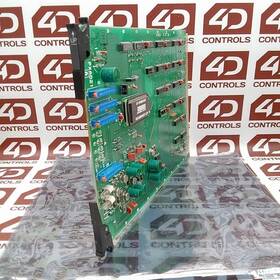
( Brand: Honeywell ), ( Manufacturer Part Number: 4DP7APXAD-21 ), ( Type: Signal Converters )
Review HONEYWELL R3 Tdc Converter Module Used
The **Honeywell 4DP7APXAD-21 R3 TDC 2000 Converter Module** is a high-performance, field-proven analog-to-digital conversion device designed to seamlessly integrate with Honeywell s TDC 2000 distributed control system (DCS) architecture. This intelligent module serves as a critical interface between analog field devices such as temperature sensors, pressure transmitters, or flow meters and the TDC 2000 s digital network, enabling precise data acquisition, signal conditioning, and real-time monitoring. Engineered with Honeywell s robust engineering standards, the 4DP7APXAD-21 is built to withstand harsh industrial environments, featuring a rugged, compact design that ensures reliable operation in facilities ranging from refineries and chemical plants to power generation and water treatment systems.
At its core, the module supports **four differential analog inputs**, each capable of processing signals from a variety of field devices, including 4-20 mA current loops, 0-20 mA current loops, or voltage signals (e.g., 0-10 VDC or 10 VDC) depending on the configuration. This flexibility allows engineers to tailor the module to specific application requirements while maintaining compatibility with Honeywell s extensive range of sensors and transmitters. The device incorporates advanced **signal conditioning circuitry**, including built-in filtering, linearization, and scaling algorithms, to ensure accurate and repeatable conversions from analog to digital values. This eliminates the need for external signal conditioning hardware, reducing installation complexity and potential points of failure.
One of the standout features of the 4DP7APXAD-21 is its **deterministic communication protocol**, leveraging Honeywell s **HART (Highway Addressable Remote Transducer) and Foundation Fieldbus** capabilities (when paired with compatible TDC 2000 modules) to enable bidirectional communication between the module and field devices. This allows for advanced diagnostics, device parameter adjustments, and predictive maintenance capabilities directly from the control system interface. Additionally, the module supports **Honeywell s EXACT (EXtended Accuracy Control Technology)**, which enhances measurement accuracy by compensating for environmental factors such as temperature drift, ensuring long-term reliability in critical process control applications.
The 4DP7APXAD-21 is designed with **scalability and modularity** in mind, fitting seamlessly into the TDC 2000 s open-architecture framework. It operates within the **R3 (Release 3) software environment**, which provides enhanced features such as **event-driven alarming, trending, and historical data logging**, all of which contribute to improved operational visibility and decision-making. The module s **backward and forward compatibility** with Honeywell s TDC 2000 series ensures that existing control system infrastructures can be upgraded or expanded without significant downtime or reconfiguration.
From a safety and compliance perspective, the 4DP7APXAD-21 adheres to stringent industry standards, including **IEC 61508 (SIL-certified safety integrity levels)** and **IEC 61131-2**, making it suitable for applications requiring high levels of functional safety. Its **intrinsically safe (IS) and explosion-proof (Ex d) certifications** (depending on the specific enclosure variant) ensure compliance with ATEX, IECEx, and UL standards, allowing it to operate safely in classified hazardous areas such as Class I, Division 1 or Zone 0/1 environments. The module s **wide operating temperature range** (typically -40 C to 70 C) and resistance to vibration and electromagnetic interference further reinforce its suitability for demanding industrial settings.
For maintenance and troubleshooting, the 4DP7APXAD-21 incorporates **self-diagnostic capabilities**, including built-in fault detection for open circuits, short circuits, and signal range violations. These features, combined with Honeywell s **TDC 2000 s intuitive operator interface**, enable technicians to quickly identify and resolve issues, minimizing unplanned downtime. The module s **hot-swappable design** allows for easy replacement during system operation, reducing maintenance interruptions and enhancing overall system availability.
In summary, the **Honeywell 4DP7APXAD-21 R3 TDC 2000 Converter Module** is a versatile, high-reliability analog input device that bridges the gap between analog field instrumentation and digital control systems. With its advanced signal processing, robust construction, and seamless integration with Honeywell s TDC 2000 platform, this module is an essential component for industries requiring precise, real-time process monitoring and control. Whether deployed in a refinery, power plant, or manufacturing facility, the 4DP7APXAD-21 delivers the accuracy, durability, and flexibility needed to support mission-critical operations with confidence.
The Honeywell 4DP7APXAD-21 R3 TDC 2000 Converter Module is a specialized device used primarily in industrial automation, particularly for converting analog signals (such as 4-20mA or RTD/Pt100) into digital signals compatible with Honeywell s TDC 2000 system. Below is a detailed breakdown of its pros and cons, followed by a conclusion and recommendation.
---
### **Pros of the Honeywell 4DP7APXAD-21 R3 TDC 2000 Converter Module**
1. **Compatibility with Honeywell TDC 2000 System**
The module is designed specifically for Honeywell s TDC 2000 control system, ensuring seamless integration with existing Honeywell infrastructure. This reduces the need for additional third-party adapters or converters, simplifying system architecture and maintenance.
2. **High Reliability and Industrial-Grade Build**
Honeywell products are known for their robustness in harsh industrial environments, including exposure to temperature fluctuations, humidity, and electrical noise. The TDC 2000 platform is widely trusted in industries like oil and gas, power generation, and manufacturing, where uptime is critical.
3. **Support for Multiple Input Types**
The 4DP7APXAD-21 supports multiple analog input types, including 4-20mA current loops, RTD (Resistance Temperature Detectors, such as Pt100), and potentially other signals depending on configuration. This versatility makes it suitable for diverse sensor applications without requiring multiple modules.
4. **Digital Communication Interface**
The module communicates digitally (likely via Honeywell s proprietary or Modbus/other standard protocols, depending on the system setup), reducing signal degradation issues common in analog wiring over long distances. Digital communication also allows for easier diagnostics and remote monitoring.
5. **Scalability and Modularity**
The TDC 2000 system is modular, meaning you can expand or reconfigure the system as needed without overhauling the entire setup. Adding or replacing modules like the 4DP7APXAD-21 is straightforward, which is beneficial for growing or evolving industrial processes.
6. **Diagnostic and Troubleshooting Features**
Honeywell s TDC 2000 platform typically includes built-in diagnostic tools that can alert operators to issues such as signal failures, sensor drift, or communication errors. This proactive monitoring can prevent costly downtime by identifying problems early.
7. **Long-Term Availability and Support**
Honeywell is a well-established manufacturer with a long history in industrial automation. The TDC 2000 platform, while older, still has a strong support network, and spare parts (including converter modules) are likely to remain available for the foreseeable future. This reduces the risk of obsolescence compared to proprietary or niche systems.
8. **Reduced Cabling Complexity**
By converting analog signals to digital within the system, the module can simplify wiring schemes, especially in complex systems with multiple sensors. This can lower installation costs and reduce the risk of signal interference or damage from long analog runs.
---
### **Cons of the Honeywell 4DP7APXAD-21 R3 TDC 2000 Converter Module**
1. **Legacy System Dependency**
The TDC 2000 platform is not a cutting-edge system by modern standards. It may lack features found in newer Honeywell platforms (e.g., Experience, EXL, or Evo) such as advanced analytics, cloud connectivity, or touchscreen interfaces. This could limit integration with newer technologies or require additional gateways or interfaces.
2. **Limited Modern Protocol Support**
While the module likely supports standard industrial protocols (e.g., Modbus RTU/TCP), it may not natively support more modern or open protocols like OPC UA, PROFINET, or Ethernet/IP without additional hardware or software. This can be a drawback if you re looking to adopt more interconnected or "smart factory" approaches.
3. **Higher Upfront Cost Relative to Alternatives**
Honeywell s industrial-grade products often come with a premium price tag compared to generic or off-the-shelf converter modules from other manufacturers. If your application doesn t require Honeywell s specific features (e.g., compatibility with their ecosystem), a third-party module might offer similar functionality at a lower cost.
4. **Training and Expertise Requirements**
Honeywell systems, including the TDC 2000, require specialized knowledge for configuration, programming, and troubleshooting. If your team lacks experience with Honeywell platforms, training costs or reliance on external consultants may be necessary, adding to the overall expense.
5. **Potential for Obsolescence**
While Honeywell s support for the TDC 2000 is likely robust, no system is immune to eventual obsolescence. Future upgrades or replacements may require migrating to a newer platform, which could involve additional costs for compatibility testing or reconfiguration.
6. **Limited Customization**
The module s functionality is tied to the TDC 2000 system s capabilities. If you need highly specialized or non-standard features (e.g., advanced signal processing, AI integration, or custom protocols), you may need to pair it with additional hardware or software, which could complicate the setup.
7. **Physical Size and Installation Constraints**
Industrial converter modules like this one are typically larger and more robust than consumer-grade devices. Installation may require additional space in control panels or enclosures, and mounting considerations (e.g., vibration resistance, cooling) must be accounted for.
8. **Vendor Lock-In Risks**
Relying heavily on Honeywell s ecosystem can create vendor lock-in, making it difficult or expensive to switch to a different automation platform in the future. This is particularly relevant if you later need to integrate with non-Honeywell systems or third-party software.
---
### **Conclusion**
The Honeywell 4DP7APXAD-21 R3 TDC 2000 Converter Module is a reliable, well-supported choice for applications where seamless integration with Honeywell s TDC 2000 control system is a priority. Its strengths lie in its industrial-grade durability, compatibility with Honeywell s infrastructure, and robust diagnostic capabilities. These features make it ideal for environments where uptime, reliability, and long-term availability are critical such as in oil and gas, power generation, or manufacturing plants already using Honeywell s TDC 2000 platform.
However, the module s legacy status means it may lack the advanced features, modern protocols, or scalability offered by newer automation systems. If your application requires cutting-edge connectivity, AI integration, or open-standard protocols, you may need to pair this module with additional hardware or consider a more modern platform. Additionally, the higher cost and specialized expertise requirements could be drawbacks if budget or personnel constraints are a concern.
---
### **Recommendation**
**Buy the Honeywell 4DP7APXAD-21 R3 TDC 2000 Converter Module if:**- You are already using or planning to use Honeywell s TDC 2000 control system and need a reliable, compatible converter for 4-20mA or RTD signals.
- Your application operates in a harsh industrial environment where reliability and long-term support are paramount.
- You prioritize ease of integration with existing Honeywell infrastructure and want to minimize additional wiring or third-party components.
- You have access to trained personnel or are willing to invest in training to manage the system effectively.
**Consider Alternatives if:**- You are looking for a more modern or scalable automation platform with advanced features like cloud connectivity, OPC UA, or AI integration. In this case, evaluate newer Honeywell platforms (e.g., Experience, EXL) or third-party converters that support open protocols.
- Your budget is constrained, and you can find a similarly capable converter from another manufacturer (e.g., Siemens, Allen-Bradley, or generic industrial converters) that meets your signal requirements at a lower cost.
- You anticipate future needs for non-Honeywell integration or plan to expand beyond the TDC 2000 ecosystem. In this scenario, a more modular or open-standard solution may be preferable.
- Your team lacks experience with Honeywell systems, and the learning curve or reliance on external support would be prohibitive.
**Final Note:**If you are committed to the TDC 2000 platform and the module fits your technical and operational needs, it is a sound investment. However, always verify the module s compatibility with your specific sensors, signal types, and system configuration to avoid unexpected issues. Additionally, consider the long-term viability of the TDC 2000 platform in your industry and whether future-proofing might require additional investments.
Details:
Condition: Used Item - All used products are guaranteed to be working but may show signs of use. For example, Programmable Logic Controllers PLC's, Distributed Control Systems DCS's, Human Machine Interface HMI's, Variable Speed Drives VSD's, Power Supplies, Pressure Transmitters and everything in between. Shipping: Shipping cost: is quoted as part of the sale. Is Honeywell 4DP7APXAD-21 not the part you are wanting.
4DP7APXAD-21 Honeywell R3 TDC 20 Analog-to-Digital Converter Module.
part #: 4dp7apxad21 prices
- $1450.00-$1729.00
specifications automationjack:
- brand: Honeywell
- mpn: 4dp7apxad-21
- type: Signal Converters
offer automationjack:
- options: Ship-to-home
- best offers: True
- availability: In Stock
- started: May 25, 2026
- sold: 0
- quantity: 2
payments automationjack:
- wallet: Google-pay
- credit card: Diners-club
- other
returns automationjack:
- policy: Returns Accepted
- paid by: Seller
- time: 60 Days
- method: Money back
shipping automationjack:
- type: Fixed
- class: Standard
- service: Standard
- cost: $0.00
- transit: 4-9 Days
seller automationjack:
- city: Denver, Colorado
- rating: 99.6%
- # reviews: 968
general automationjack:
- Business Industrial > Industrial Automation Motion Controls > Other Automation Equipment
- condition: Used
Honeywell 4DP7APXAD-21 Is Similar To:
- Vulcain Va201mq1ch4 senbrd Honeywell Va201mq1ch4senbrd Used Tested Cleaned (31.8% similar) Packaging and handling: items are safely eds packaged in custom shipping cartons for protection. Call to use a shipping service other than the ones listed. Sells new and surplus product develops channels to purchase such. Honeywell VA201MQ1CH4/SENBRD / VA201MQ1CH4SENBRD used tested cleaned module, ...(August 5th, 2024)
- Gamewell-fci Rsm-95 Honeywell Rsm95 Used (34.7% similar) All products are guaranteed to be working but may show signs of use. Sells new and surplus product develops channels to purchase such. Packaging and handling: items are safely eds packaged in custom shipping cartons for protection. Honeywell RSM-95 / RSM95 used releasing solenoid module. Call to use...(October 8th, 2024)
- Intermec D24-bl005-00 Honeywell D24bl00500 Used (38.1% similar) Call to use a shipping service other than the ones listed. The product is used surplus. Packaging and handling, items are safely eds packaged in custom shipping cartons for protection. All products are guaranteed to be working but may show signs of use. Sells new and surplus product develops ...(October 11th, 2024)
- Honeywell 32002513-001 32002513001 Used (45.4% similar) Packaging and handling: items are safely eds packaged in custom shipping cartons for protection. Honeywell 32002513-001 / used n/o vent VLF adapt 3/4-2 body. Sells new and surplus product develops channels to purchase such. All products are guaranteed to be working but may show signs of use if ...(October 16th, 2024)
- Honeywell 51309369-001 51309369001 Used (43.3% similar) Packaging and handling: items are safely eds packaged in custom shipping cartons for protection. Call to use a shipping service other than the ones listed. Sells new and surplus product develops channels to purchase such. All products are guaranteed to be working but may show signs of use if ...(October 23rd, 2024)
- Measurex 51304493-250 Honeywell 51304493250 Used (35.8% similar) Sells new and surplus product develops channels to purchase such. Call to use a shipping service other than the ones listed. Packaging and handling: items are safely eds packaged in custom shipping cartons for protection. Honeywell 51304493-250 / used discontinued by manufacturer, modem, Pam, h/w. ...(October 24th, 2024)
- Microswitch Jv-26 Honeywell Jv26 Used (35.8% similar) Call to use a shipping service other than the ones listed. Sells new and surplus product develops channels to purchase such. Packaging and handling: items are safely eds packaged in custom shipping cartons for protection. All products are guaranteed to be working but may show signs of use if ...(November 13th, 2024)
- Honeywell M9184d-1005 M9184d1005 Used (52.6% similar) Honeywell M9184D-1005 / M9184D1005 used discontinued by manufacturer, rotary actuator motor, series 90 Motorola iv, non-spring return, dual ended shaft, to 160 degrees stroke, 75 lb-in torque, 15 VA power consumption, 24 volts , 50/60 Hz, 15-30 sec. Packaging and handling: items are safely eds ...(November 23rd, 2024)
- Microswitch Lsz1s Honeywell Micro Switch Used (33% similar) Honeywell micro switch LSZ1S / used UE4051 B2-A3 R1124...(November 24th, 2024)
- Honeywell 0854.612 Spu-ii Board With Alarm Relays Used (38.2% similar) For example, programmable logic controllers plc's, distributed control systems DC's's, human machine interface him's, variable speed drives BSD's, power supplies, pressure transmitters and everything in between. 0854.612 Honeywell sup-ii board, with alarm relays. Is Honeywell 0854.612 not the part ...(November 28th, 2024)
- Notifier Co Mps-400pca Honeywell Mps400pca Used (32.4% similar) Packaging and handling: items are safely eds packaged in custom shipping cartons for protection. Sells new and surplus product develops channels to purchase such. All products are guaranteed to be working but may show signs of use if purchasing a used product. Call to use a shipping service other ...(November 29th, 2024)