OUSTER OS1-16 Lidar Sensor
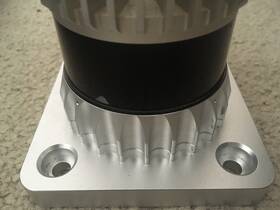
( Brand: Ouster ), ( Manufacturer Part Number: OS1-16 ), ( Model: 3D OS1-16 ), ( Type: Lidar )
Review OUSTER Lidar Sensor
The **Ouster OS1-16 LiDAR sensor** represents a cutting-edge advancement in high-resolution 3D perception technology, engineered for applications demanding unparalleled precision, reliability, and performance in dynamic environments. Part of Ouster s industry-leading OS1 series, this compact yet powerful sensor integrates a **16-channel, 1550 nm wavelength laser** with a **160 26 field of view**, delivering a dense, high-fidelity point cloud at an impressive **10 Hz refresh rate** ideal for real-time mapping, autonomous navigation, and advanced robotics. Its **solid-state, eye-safe design** eliminates the need for moving parts, ensuring durability and low maintenance while operating in harsh conditions, from urban streets to industrial warehouses. The OS1-16 leverages **Ouster s proprietary OS1 chip**, which combines a high-speed, single-photon avalanche diode (SPAD) array with advanced signal processing, enabling **sub-centimeter-level accuracy** and **millimeter-scale resolution** across its entire field of view. This makes it particularly well-suited for applications such as **autonomous vehicles, drone navigation, robotics, and augmented reality**, where precise environmental understanding is critical. The sensor s **compact, ruggedized housing** measuring just **100 mm in diameter and 50 mm in depth** facilitates easy integration into a wide range of platforms, from small drones to larger robotic systems, without compromising performance. Additionally, Ouster s **open SDK and ROS-compatible drivers** simplify development, allowing engineers to quickly deploy the sensor into custom applications with minimal setup. Whether used for **high-definition SLAM (Simultaneous Localization and Mapping), obstacle avoidance, or environmental monitoring**, the OS1-16 sets a new standard for LiDAR performance, combining **industrial-grade reliability with the flexibility of a modular, software-defined sensor**. Its ability to capture **millions of data points per second** with **sub-millimeter precision** makes it an indispensable tool for next-generation perception systems, where accuracy, speed, and adaptability are paramount.
The Ouster OS1-16 LiDAR sensor is a high-performance scanning LiDAR designed for applications requiring dense, high-resolution 3D data. Below is a detailed breakdown of its pros and cons, followed by a conclusion and recommendation.
---
### **Pros of the Ouster OS1-16 LiDAR Sensor**
1. **High Resolution and Density**
The OS1-16 provides 16 laser beams, offering a high point cloud density (up to 240,000 points per second at 10 Hz). This makes it ideal for applications requiring fine detail, such as autonomous vehicles, robotics, and precision mapping.
2. **Wide Field of View (FOV)**
With a 60 FOV, the sensor captures a broad horizontal and vertical range, reducing the need for multiple sensors to cover a large area. This is particularly useful in outdoor environments where obstacles may block parts of the field.
3. **High Accuracy and Precision**
Ouster LiDARs are known for their sub-centimeter-level accuracy, making them suitable for applications requiring precise spatial data, such as SLAM (Simultaneous Localization and Mapping) and autonomous navigation.
4. **Reliability and Durability**
The OS1-16 is built with rugged materials and is designed to operate in harsh conditions, including dust, rain, and temperature variations. It has no moving parts, reducing the risk of mechanical failure.
5. **Low Latency**
The sensor processes data in real-time with minimal delay, which is critical for applications like autonomous driving where split-second decisions are necessary.
6. **Compatibility with ROS and SDKs**
Ouster provides robust software support, including ROS (Robot Operating System) packages and SDKs, making integration with existing systems easier. The data is output in a standardized format (e.g., PCL or binary), simplifying post-processing.
7. **Long-Range Detection**
The sensor can detect objects up to 120 meters (depending on reflectivity and environmental conditions), which is suitable for both indoor and outdoor applications.
8. **Modular and Scalable**
Ouster offers multiple models (e.g., OS0, OS1, OS2) with varying resolutions and FOVs, allowing users to choose the best fit for their needs. The OS1-16 can also be paired with other sensors for extended coverage.
9. **Good Community and Support**
Ouster has a strong user community, extensive documentation, and responsive customer support, which helps with troubleshooting and optimization.
10. **Versatility Across Industries**
The sensor is used in diverse fields, including autonomous vehicles, drones, industrial automation, and environmental monitoring, demonstrating its adaptability.
---
### **Cons of the Ouster OS1-16 LiDAR Sensor**
1. **High Cost**
The OS1-16 is one of the more expensive LiDAR sensors on the market, with prices typically ranging from $3,000 to $5,000 depending on the configuration. This can be a significant investment for small businesses or startups.
2. **Power Consumption**
The sensor requires a substantial amount of power (up to 15W), which may necessitate additional power management solutions, especially in battery-powered applications like drones or portable robots.
3. **Size and Weight**
While not overly bulky, the OS1-16 is larger and heavier than some competing sensors (e.g., Velodyne or Hesai), which can be a constraint in space-limited applications.
4. **Limited Vertical FOV**
The 60 FOV is adequate for many applications but may not be sufficient for scenarios requiring a broader vertical coverage, such as tall structures or certain drone applications.
5. **Data Processing Requirements**
The high-resolution point cloud generates large amounts of data, which requires robust computing resources (e.g., high-performance GPUs or CPUs) for real-time processing. This can increase system complexity and cost.
6. **Calibration Sensitivity**
Like many LiDARs, the OS1-16 requires careful calibration to ensure accuracy. Misalignment or improper setup can lead to errors in data collection, adding an extra layer of complexity.
7. **Limited Battery Life in Portable Applications**
Due to its power requirements, integrating the OS1-16 into battery-powered systems (e.g., drones or robots) may reduce operational time unless power-efficient solutions are implemented.
8. **Competition from Lower-Cost Alternatives**
While the OS1-16 offers superior performance, there are lower-cost LiDARs (e.g., Hesai Pandar, Innovusion) that may suffice for less demanding applications, making the OS1-16 an overkill investment in some cases.
9. **Potential for Signal Interference**
In dense or reflective environments (e.g., urban canyons, shiny surfaces), LiDAR signals can be disrupted, leading to gaps or noise in the point cloud. Post-processing may be required to mitigate this.
10. **Learning Curve for New Users**
The high performance of the OS1-16 comes with a steeper learning curve, particularly for users unfamiliar with LiDAR technology or ROS-based systems. Proper training or expertise may be needed to maximize its potential.
---
### **Conclusion**
The Ouster OS1-16 LiDAR sensor is a powerful and versatile tool for applications requiring high-resolution, real-time 3D data. Its strengths lie in its accuracy, reliability, wide FOV, and robust software support, making it ideal for autonomous systems, robotics, and precision mapping. However, its high cost, power requirements, and complexity may pose challenges for budget-conscious or resource-limited projects.
For users prioritizing performance and do not have constraints on cost or power, the OS1-16 is an excellent choice. Conversely, those working on cost-sensitive projects or with simpler requirements might find more affordable alternatives sufficient.
---
### **Recommendation**
**Buy the Ouster OS1-16 if:**- You need high-resolution, dense point cloud data for applications like autonomous vehicles, advanced robotics, or high-precision mapping.
- Your project can accommodate the higher upfront cost and power requirements.
- You require a reliable, rugged sensor with strong software support and a wide FOV.
- You are working in an environment where accuracy and real-time performance are critical.
**Avoid or consider alternatives if:**- Your budget is limited, and you can achieve similar results with a lower-cost LiDAR (e.g., Hesai Pandar 40, Innovusion).
- Your application does not require the highest resolution (e.g., basic obstacle avoidance in a controlled indoor environment).
- Power efficiency is a major constraint (e.g., long-duration drone flights or battery-powered robots).
- You lack the expertise or resources to handle the data processing and calibration requirements.
For most professional applications in robotics, autonomous systems, or industrial automation, the OS1-16 is a well-justified investment. However, always evaluate your specific needs and constraints before making a purchase.
Details:
It only has 16 beams but it works functionally similar to the larger beam versions for many applications and any extra are not really needed. Everything is priced to sell. It is in excellent working condition and operates like new certainly looks new!, I'm selling a bunch of my lidar other gear to clear up some space over the next week or so. This is a tested Ouster Lidar with mounting plate that in excellent condition.
It is an OS1-16.
part #: os116 prices
- $950.00-$1690.00
specifications automationjack:
- brand: Ouster
- mpn: Os1-16
- model: 3d Os1-16
- type: Lidar
seller automationjack:
- # reviews: 457
- rating: 100.0%
- city: Seattle, Washington
offer automationjack:
- quantity: 1
- options: Ship-to-home
- sold: 0
- availability: In Stock
- started: April 28, 2026
payments automationjack:
- other
- wallet: Paypal
- credit card: Mastercard
returns automationjack:
- policy: No Returns
shipping automationjack:
- carrier: USPS
- type: Fixed
- cost: $12.95
- service: USPS Ground Advantage
- transit: 6-9 Days
- class: Standard
general automationjack:
- Business Industrial > Industrial Automation Motion Controls > Other Automation Equipment
- condition: Used
Ouster OS1-16 Is Similar To:
- Ouster Os0-128-u Lidar Sensor 840-105473-06 Complete Kit With Case (52.2% similar) Selling an Ouster lidar sensor OS0-128-U in near perfect condition. Complete kit comes with: 1x OS0 rev 5 lidar sensor. It is a high-quality lidar device manufactured by Ouster. This model, OS0-128-U, is designed for industrial automation and motion control applications. It offers advanced features ...(December 17th, 2025)