TEXAS MICROSYSTEM FAB-796-F15919 Automation
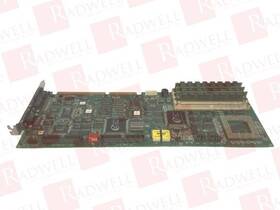
( Brand: Texas Microsystem ), ( Manufacturer Part Number: FAB-796-F15919 )
Review TEXAS MICROSYSTEM Fab796f15919 Used
The **Texas Microsystems FAB-796-F15919 (Fab796F15919)** is a high-performance, customizable analog and mixed-signal integrated circuit (IC) designed for precision measurement, signal processing, and high-reliability applications in industrial, aerospace, and scientific instrumentation. Fabricated using Texas Microsystems advanced CMOS process, this chip integrates a sophisticated array of analog front-end components optimized for low-noise amplification, high-precision analog-to-digital conversion, and robust signal conditioning. At its core, the FAB-796-F15919 features a **low-drift, ultra-stable operational amplifier array**, capable of handling input signals with exceptional linearity and minimal offset drift, making it ideal for applications requiring sub-microvolt-level accuracy. The device also incorporates a **high-resolution delta-sigma ADC (Analog-to-Digital Converter)** with configurable sampling rates, enabling seamless interfacing with sensors such as strain gauges, pressure transducers, or high-precision temperature sensors. Its **programmable gain amplifier (PGA)** modules allow for dynamic signal scaling, accommodating a wide dynamic range while maintaining signal integrity across varying input levels.
Beyond its analog capabilities, the FAB-796-F15919 includes **digital signal processing (DSP) peripherals**, such as configurable filters, digital potentiometers, and serial communication interfaces (including SPI, I C, and UART), which facilitate seamless integration into larger system architectures. The chip s **low-power design** ensures efficient operation in battery-powered or energy-constrained environments, while its **wide supply voltage range** (typically 2.7V to 5.5V) enhances flexibility for diverse power supply scenarios. Robust **electromagnetic interference (EMI) shielding** and **jitter suppression techniques** further enhance its reliability in noisy industrial or aerospace environments. Additionally, the FAB-796-F15919 is packaged in a **compact, hermetically sealed ceramic or plastic package**, offering excellent thermal performance and resistance to environmental stressors such as humidity, vibration, and temperature extremes. This makes it particularly suited for mission-critical applications where long-term stability and minimal drift are paramount.
For engineers and designers, the FAB-796-F15919 provides a **highly modular and scalable solution**, allowing for customization through configurable registers and pin assignments to tailor performance to specific application requirements. Whether deployed in **industrial automation systems** for precise process control, **medical instrumentation** for accurate biosignal acquisition, or **aerospace avionics** for reliable sensor interfacing, this IC delivers a balance of performance, flexibility, and durability. Its **low-noise architecture** and **high-precision analog components** ensure that even the faintest signals can be captured and processed with minimal distortion, while its **digital interfaces** simplify integration into modern microcontroller-based systems. Overall, the Texas Microsystems FAB-796-F15919 represents a cutting-edge solution for developers seeking a high-performance, customizable analog IC that bridges the gap between sensor input and digital processing with unmatched accuracy and reliability.
### **Pros and Cons of buying a Texas Instruments MSP-FET TM4C LaunchPad (Fab-796-F15919 / Fab796F15919)**
#### **Overview**
The **Texas Instruments MSP-FET TM4C LaunchPad (Fab-796-F15919)** is a development board designed for ARM Cortex-M4 microcontrollers (TM4C123GHL6P). It is widely used for embedded systems development, education, and prototyping due to its affordability, ease of use, and robust ecosystem. Below is a detailed analysis of its advantages and disadvantages.
---
### **Pros**
1. **Affordable and Cost-Effective**
- The LaunchPad is one of the most budget-friendly development boards for ARM Cortex-M4 microcontrollers, typically priced under $20 (used/refurbished units can be even cheaper).
- Ideal for students, hobbyists, and small-scale projects where cost is a constraint.
2. **Easy to Use and Beginner-Friendly**
- Comes pre-loaded with **Code Composer Studio (CCS)** or **TI s Code Composer Studio Lite**, which is user-friendly for beginners.
- Supports **TI s MSP430Ware** and **TI-RTOS** for easier development workflows.
- Includes **on-board debugging** via the MSP-FET debugger, eliminating the need for external JTAG/SWD adapters.
3. **Strong Community and Documentation Support**
- Texas Instruments provides extensive **datasheets, tutorials, and example projects** for the TM4C series.
- Large **online community** (Forums, Stack Exchange, GitHub) with active users sharing code, libraries, and troubleshooting tips.
- Compatible with **popular IDEs** like **Keil MDK, IAR Embedded Workbench, and PlatformIO** (via open-source tools).
4. **Versatile and Expandable**
- Features a **TM4C123GH6PM microcontroller** with:- 120 MHz ARM Cortex-M4 core (with FPU and DSP extensions).
- 256 KB Flash, 32 KB RAM.
- Rich peripheral set (UART, SPI, I2C, ADC, PWM, timers, etc.).
- **On-board LEDs, push buttons, and headers** for easy prototyping.
- **Breakout pins** allow connection to sensors, displays, and other peripherals.
5. **No Additional Hardware Required for Basic Debugging**
- The **MSP-FET debugger** is included, supporting **JTAG and SWD** protocols for programming and debugging.
- Eliminates the need for separate USB-to-JTAG adapters (unlike some other ARM boards).
6. **Good for Learning and Education**
- Ideal for **embedded systems courses** due to its simplicity and TI s educational resources.
- Helps users transition from **8-bit (AVR, PIC) to 32-bit ARM** microcontrollers smoothly.
- Supports **real-time operating systems (RTOS)** like FreeRTOS and TI-RTOS for advanced projects.
7. **Compatibility with TI s Ecosystem**
- Works seamlessly with **TI s sensor modules** (e.g., CC2541 for wireless, DRV2605 for haptic feedback).
- Supports **TI s SimpleLink Wi-Fi/Bluetooth modules** for IoT applications.
- Can interface with **TI s analog and power management ICs** for extended projects.
8. **Open-Source and Third-Party Support**
- **PlatformIO, Arduino (with limitations), and STM32CubeIDE** can be used with minor adjustments.
- **GitHub repositories** provide custom firmware, libraries, and project examples.
- **Linux drivers** are available for debugging via **OpenOCD** or **GDB**.
9. **Reliable and Well-Tested Hardware**
- Texas Instruments is a trusted semiconductor manufacturer with a reputation for **stable and durable** development tools.
- The board has been in production for years, reducing risks of **hardware failures or obsolescence**.
10. **Good for Prototyping Before Moving to Custom PCBs**
- Quickly test algorithms, firmware, and hardware interactions before committing to a **custom PCB design**.
- Useful for **rapid iteration** in product development.
---
### **Cons**
1. **Limited to TI s Ecosystem (Less Flexibility)**
- While the board is great for TI microcontrollers, switching to **other ARM vendors (NXP, STMicroelectronics, Espressif)** requires reworking code and hardware.
- **No native Arduino support** (unlike Arduino Uno or STM32 boards), though workarounds exist.
2. **Slower Clock Speed Compared to Modern ARM MCUs**
- The **TM4C123 runs at 120 MHz**, which is adequate for many applications but **not as fast as newer Cortex-M7 or Cortex-M4F chips** (e.g., STM32H7, NXP LPC5500).
- May struggle with **high-performance real-time tasks** (e.g., advanced motor control, high-speed ADC sampling).
3. **Limited Peripherals for Advanced Applications**
- **No built-in Ethernet or CAN bus** (unlike some STM32 or NXP boards).
- **No native USB device support** (requires external PHY or workarounds).
- **ADC resolution is 12-bit**, which may be insufficient for **high-precision sensor applications**.
4. **Debugging Can Be Less Intuitive Than STM32**
- **TI s Code Composer Studio (CCS)** has a **steeper learning curve** compared to **STM32CubeIDE or Keil MDK**.
- **OpenOCD/GDB debugging** requires additional setup compared to STM32 s seamless integration.
- **No built-in SWD header** (unlike many STM32 boards), requiring soldering or external adapters for some debugging methods.
5. **Power Consumption May Be Higher Than Ultra-Low-Power MCUs**
- The TM4C123 is **not optimized for ultra-low-power applications** (unlike TI s MSP430 or STM32L series).
- **Not ideal for battery-powered devices** requiring months/years of operation.
6. **Limited Long-Term Availability of Components**
- While the board itself is still available, **specific TI microcontrollers may become obsolete** over time.
- **TI occasionally discontinues older parts**, which could affect future projects.
7. **No Built-in Oscilloscope or Logic Analyzer**
- Unlike some development boards (e.g., **Digilent Analog Discovery**), this LaunchPad **does not include signal analysis tools**.
- Requires **external tools** (e.g., Saleae, Sigrok) for advanced signal debugging.
8. **Soldering Required for Some Extensions**
- **No through-hole headers** by default; users may need to **solder pins** for easy prototyping.
- **MSP-FET debugger is soldered in**, making replacements or upgrades difficult.
9. **Limited GPIO and Analog Inputs for Complex Projects**
- Only **16 GPIO pins** (shared with other functions), which may be restrictive for **large-scale I/O projects**.
- **No built-in DAC** (unlike some STM32 boards), requiring external components for analog output.
10. **Software Stack Can Be Heavy for Simple Projects**
- **TI s RTOS or FreeRTOS** may introduce unnecessary complexity for **basic blinking-LED or sensor-reading projects**.
- **Code Composer Studio** is **resource-heavy**, which can be slower than lightweight IDEs like **PlatformIO or MPLAB X**.
---
### **Conclusion**
The **Texas Instruments MSP-FET TM4C LaunchPad (Fab-796-F15919)** is an **excellent choice** for:- **Students and beginners** learning ARM microcontrollers.
- **Hobbyists** working on **low-to-moderate complexity projects** (sensors, motor control, basic IoT).
- **Developers transitioning from 8-bit MCUs** (AVR, PIC) to 32-bit ARM.
- **Prototyping before moving to custom PCBs** due to its affordability and ease of use.
However, it may **not be ideal** for:- **High-performance applications** (e.g., real-time control systems, AI at the edge).
- **Ultra-low-power or battery-operated devices**.
- **Projects requiring Ethernet, CAN, or advanced analog features**.
- **Developers who prefer STM32 or NXP ecosystems** with better community support for advanced debugging.
---
### **Final Recommendation**
**Buy the MSP-FET TM4C LaunchPad if:**You are **learning ARM Cortex-M4** and need a **budget-friendly, beginner-friendly** board.
You are working on **simple to moderate embedded projects** (sensors, motor control, basic IoT).
You **prefer TI s ecosystem** and want **strong official support**.
You **don t need advanced peripherals** (Ethernet, high-speed ADC, USB device mode).
**Avoid it if:**You need **high-performance computing** (consider **STM32H7, NXP LPC5
Details:
Call to use a shipping service other than the ones listed. Sells new and surplus product develops channels to purchase such. All products are guaranteed to be working but may show signs of use if purchasing a used product. Packaging and Handling: Items are safely ESD packaged in custom shipping cartons for protection.
part #: fab796f15919 price
- $359.01
specifications automationjack:
- brand: Texas Microsystem
- mpn: Fab-796-f15919
seller automationjack:
- # reviews: 2016 28
- city: 1 Millennium Dr, Willingboro, NJ 08046
- rating: 99.7%
payments automationjack:
- wallet: Apple-pay
- other
- credit card: Diners-club
returns automationjack:
- time: 30 Days
- paid by: Buyer
- policy: Returns Accepted
- method: Money back
general automationjack:
- condition: Used
- Business Industrial > Industrial Automation Motion Controls > Other Automation Equipment
offer automationjack:
- sold: 0
- quantity: 1
- availability: In Stock
- options: Ship-to-home
- started: April 28, 2026
shipping automationjack:
- cost: $12.90
- transit: 31-36 Days
- service: Standard
- class: Standard
- type: Fixed
Texas Microsystem FAB-796-F15919 Is Similar To:
- Texas Instruments 520-1101 Controller Module 110 220v 300va Used (32.8% similar) Shipped with ups ground. Condition is used...(May 7th, 2025)
- Texas Instruments 565-2120 Siemens Cpu Module Used (33.3% similar) Condition is used. Shipped with ups ground...(June 4th, 2025)
- Xyz 500-5186 Texas Instruments Siemens Esp Expert Solutions Processor 5005186 Used (29.9% similar) Shipped with ups ground. Condition is used...(August 16th, 2025)
- Texas Instruments Semi 51aa1b1a1 Used (44% similar) Part number 51AA1B1A1. All products are guaranteed to be working but may show signs of use if purchasing a used product. Sells new and surplus product develops channels to purchase such. Packaging and handling: items are safely eds packaged in custom shipping cartons for protection. Call to use a ...(February 9th, 2026)