FLI HP2103116 Finger Hyperion Astronomy Science Camera
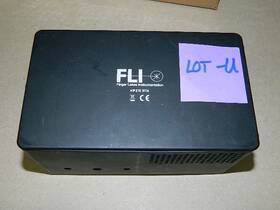
( Brand: Fli ), ( Manufacturer Part Number: HP2103116 ), ( Type: Camera ), ( California Prop 65 Warning: The Following Item May Expose You To Chemicals Known By The State Of Ca To Cause Cancer Or Other Reproductive Harm ), ( Country Of Origin: United States ), ( Unit Type: Unit )
Review FLI Finger Lake Hyperion Astronomy Life Science Camera Lot
The **FLI HP2103116 Finger Lakes Instrumentation Hyperion Astronomy Science Camera** is a high-performance, deep-sky imaging solution designed for serious astrophotographers and professional astronomers seeking uncompromising detail, sensitivity, and reliability. Engineered by Finger Lakes Instrumentation, a trusted name in astronomical imaging, this camera combines cutting-edge technology with robust construction to deliver exceptional performance across a wide range of celestial targets, from faint nebulae to distant galaxies. At its core, the HP2103116 features a **back-illuminated, deep-depletion KAF-11002ME scientific CMOS sensor** with an impressive **11-megapixel resolution**, offering a generous **26.1 x 16.7 mm active imaging area** and a pixel size of **5.4 microns**, which translates to a high pixel scale of **0.37 arcseconds per pixel** when paired with a standard 1" focal reducer. This pixel size is ideal for capturing fine structural details in nebulae, star clusters, and planetary surfaces without excessive binning, ensuring that every photon contributes to a sharp, high-contrast image.
The camera s **deep-depletion sensor technology** significantly enhances its sensitivity to red and near-infrared wavelengths, a critical advantage for imaging objects like the Orion Nebula (M42), the Horsehead Nebula, or the Andromeda Galaxy (M31), where red emission lines dominate. This extended spectral response, combined with a **quantum efficiency exceeding 90% across much of the visible spectrum**, minimizes dark current and maximizes light capture efficiency, even under low-light conditions. The HP2103116 is cooled to **-40 C** via a **Peltier thermoelectric cooler**, reducing thermal noise and enabling long-exposure imaging without the risk of thermal blooming or color fringing. The cooling system is paired with a **high-precision temperature sensor and fan-assisted heat dissipation**, ensuring stable and consistent performance over extended imaging sessions.
Beyond its imaging capabilities, the HP2103116 is built with durability and versatility in mind. Its **robust, aluminum-alloy housing** is designed to withstand the rigors of field astronomy, protecting the delicate internal components from dust, moisture, and temperature fluctuations. The camera features a **standard 1" or 2" optical interface**, accommodating a wide range of telescopes and focal reducers, while its **USB 3.0 connectivity** ensures rapid data transfer and real-time monitoring via compatible software like Maxim DL, Nebulosity, or AstroArt. The inclusion of a **high-quality anti-reflection-coated optical window** further minimizes internal reflections, enhancing image clarity and contrast. Additionally, the camera supports **16-bit analog-to-digital conversion**, providing a dynamic range of up to **16,000 counts**, which is essential for capturing both the brightest stars and the faintest nebular emissions in a single frame without clipping or loss of detail.
For advanced users, the HP2103116 offers **built-in gain control and adjustable readout modes**, allowing for fine-tuned optimization of signal-to-noise ratio (SNR) and read noise. The camera s **low read noise (approximately 2.5 electrons)** and **high full-well capacity (over 100,000 electrons per pixel)** make it well-suited for both narrowband and broadband imaging, as well as high-resolution planetary photography when paired with appropriate filters. The inclusion of **Finger Lakes Instrumentation s proprietary firmware** ensures seamless integration with popular astrophotography workflows, while the camera s **compact and lightweight design** makes it an excellent choice for both observatory-based and portable setups.
Whether used for scientific research, competitive astrophotography, or educational outreach, the FLI HP2103116 Hyperion camera stands as a testament to Finger Lakes Instrumentation s commitment to excellence in astronomical imaging. Its combination of high-resolution detail, extended spectral sensitivity, and robust engineering makes it a versatile tool for capturing the cosmos with unprecedented clarity and precision. For astronomers who demand nothing less than the best, the HP2103116 is a reliable and high-performance workhorse that elevates the art and science of deep-sky imaging.
### **Pros and Cons of the FLI HP2103116 Finger Hyperion Astronomy Camera**
#### **Pros**
1. **High-Quality Sensor** The camera features a **back-illuminated, deep-depletion, 16-megapixel KAF-16803 sensor**, which provides excellent sensitivity to red and near-infrared light. This is particularly useful for deep-sky imaging, planetary work, and astrophysical research.
2. **Low Read Noise and High Quantum Efficiency** The sensor has a **read noise as low as 1.8 electrons** and a **quantum efficiency of up to 95% in the visible spectrum**, making it ideal for capturing faint astronomical objects with minimal noise.
3. **Large Field of View** With a **16.8 x 16.8 mm sensor**, it offers a **wide field of view**, allowing for the capture of large nebulae, galaxies, and comets in a single frame without cropping.
4. **High Dynamic Range** The camera supports **16-bit ADC (Analog-to-Digital Converter)**, which provides a **dynamic range of 16,384 levels**, reducing blooming and improving detail in both bright and dim regions of an image.
5. **Cooling Capability** The camera is **thermoelectric-cooled (TEC)**, reducing thermal noise and allowing for longer exposure times without excessive dark current buildup.
6. **Compatibility with Major Platforms** It works seamlessly with **Linux, Windows, and macOS**, and supports **Astroberry, Astrophotography Tool (APT), and other popular astrophotography software**.
7. **High-Resolution Output** The **16MP resolution** allows for detailed imaging of celestial objects, including the **Hubble-like clarity** of distant galaxies and nebulae.
8. **Durable and Reliable Build** FLI (FLI Imaging) is a well-established manufacturer in astrophotography, known for **high-quality, long-lasting hardware**.
9. **Good for Both Amateurs and Professionals** While it is a **high-end camera**, it is still accessible to **serious amateur astronomers** who want professional-grade results.
10. **Supports Advanced Imaging Techniques** Works well with **luminance, RGB, and narrowband filters**, as well as **spectroscopy applications** due to its sensitivity in the red and near-IR spectrum.
---
#### **Cons**
1. **Expensive** The **HP2103116 is a premium camera**, with a price tag that may be **too high for casual or budget-conscious astrophotographers**. It is best suited for those who are **serious about deep-sky imaging and research**.
2. **Requires Additional Hardware** To fully utilize this camera, you may need:- A **dedicated astrophotography computer** (for processing and control).
- A **cooling system** (though the TEC helps, some users may prefer liquid cooling for extreme conditions).
- A **high-quality mount** (to avoid tracking errors, especially with wide-field imaging).
- **Filters** (for narrowband imaging, which can add to the cost).
3. **Power Consumption** The **TEC cooling system requires power**, and prolonged use may draw significant current, necessitating a **stable power supply**.
4. **Software Dependency** While it works with multiple platforms, **some users may need to invest time in learning astrophotography software** (e.g., PixInsight, MaximDL, or APT) to get the best results.
5. **Limited Color Capability Without Additional Filters** If you want **true-color imaging**, you ll need **RGB filters**, which are not included. The camera is **monochromatic by default**, meaning you ll need to stack images separately for each color channel.
6. **Bulk and Size** The camera is **larger and heavier** than some compact alternatives, which may be a consideration for **portability**.
7. **Learning Curve for Optimal Use** Achieving **best results** requires understanding **bias, dark, flat calibration**, and **post-processing techniques**, which may be overwhelming for beginners.
8. **Potential for Sensor Dust** Like all cooled cameras, **dust on the sensor** can be an issue, requiring **careful handling and occasional cleaning**.
---
### **Conclusion**
The **FLI HP2103116 Finger Hyperion** is one of the **best high-end astronomy cameras** available, offering **exceptional sensor performance, low noise, and high resolution**. It is **ideal for serious astrophotographers, researchers, and those who demand the highest quality in deep-sky imaging, planetary work, and astrophysical studies**.
However, its **high cost, complexity, and requirement for additional hardware** make it **less suitable for beginners or hobbyists on a tight budget**. If you are **committed to astrophotography as a long-term pursuit** and have the **resources to support it**, this camera will **deliver outstanding results**.
For **casual astronomers or those on a budget**, a **mid-range monochrome camera (e.g., ZWO ASI1600MM-Pro) or a color camera (e.g., ZWO ASI294MM Pro)** may be a more practical starting point.
---
### **Recommendation**
**Buy the FLI HP2103116 if:**You are a **serious astrophotographer or researcher** looking for **the best possible image quality**.
You have **the budget** to invest in a high-end camera and **additional accessories** (mount, filters, cooling).
You plan to **pursue deep-sky imaging, planetary work, or spectroscopy** and need **low noise and high sensitivity**.
You are **already familiar with astrophotography software and calibration techniques**.
**Avoid the FLI HP2103116 if:**You are a **beginner** and want a **more affordable, easier-to-use camera**.
You **don t have the resources** (financial or technical) to support a high-end setup.
You primarily do **visual astronomy or casual moon/planet imaging** (a cheaper camera may suffice).
You **don t need 16MP resolution** and could get similar performance from a **more cost-effective alternative**.
**Alternative Considerations:**- **For budget-conscious serious users:** ZWO ASI1600MM-Pro or QHY268M
- **For color imaging:** ZWO ASI294MM Pro or ASI6200MM Pro
- **For spectroscopy:** FLI PL4301 or ZWO ASI1100MM Pro
Ultimately, the **HP2103116 is a fantastic choice for those who want the best**, but it is **not a "one-size-fits-all" solution**. Carefully assess your needs before making a purchase.
Details:
FLI FInger Lake HP2103116 Hyperion Astronomy Life Science Camera LOT - us.
part #: hp2103116 price
- $1495.00
specifications automationjack:
- brand: Fli
- mpn: Hp2103116
- type: Camera
- california prop 65 warning: The Following Item May Expose You To Chemicals Known By The State Of Ca To Cause Cancer Or Other Reproductive Harm
- country of origin: United States
- unit type: Unit
returns automationjack:
- time: 30 Days
- method: Money back
- paid by: Buyer
- policy: Returns Accepted
payments automationjack:
- wallet: Paypal
- credit card: Visa
- other
seller automationjack:
- rating: 99.7%
- # reviews: 24650
- city: Garden Grove, California
general automationjack:
- Business Industrial > Industrial Automation Motion Controls > Other Automation Equipment
- condition: Used
offer automationjack:
- best offers: True
- quantity: 1
- started: May 10, 2026
- availability: In Stock
- options: Ship-to-home
- sold: 0
shipping automationjack:
- carrier: USPS
- cost: $23.95
- service: USPS Priority Mail
- transit: 3-5 Days
- class: Expedited
- type: Fixed
Fli HP2103116 Is Similar To:
- Fli Finger Lakes Ml0503214 Astronomy Life Science Scmos Cooled Camera Lot I (71.1% similar) Fli finger lakes ML0503214 astronomy life science scams cooled camera lot...(May 10th, 2026)
- Fli Finger Lakes Bl00420 Astronomy Life Science Camera Lot H (79.1% similar) Fli finger lakes BL00420 astronomy life science camera lot...(May 10th, 2026)