FLI FINGER LAKES BL00420 Astronomy Science Camera
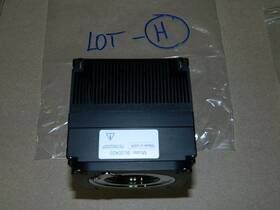
( Brand: Fli Finger Lakes ), ( Manufacturer Part Number: BL00420 ), ( Type: Camera ), ( California Prop 65 Warning: The Following Item May Expose You To Chemicals Known By The State Of Ca To Cause Cancer Or Other Reproductive Harm ), ( Country Of Origin: United States ), ( Unit Type: Unit )
Review FLI FINGER LAKES Astronomy Life Science Camera Lot
The **FLI Finger Lakes Instruments BL00420 Astronomy Science Camera** is a high-performance, back-illuminated scientific imaging device meticulously engineered for astronomers, astrophysicists, and advanced amateur stargazers seeking unparalleled sensitivity and precision in deep-sky observation. Designed with cutting-edge technology, this camera features a **back-illuminated (BI) CCD sensor**, which maximizes quantum efficiency by eliminating the silicon substrate typically found in front-illuminated sensors, allowing up to **95% light throughput** across a broad spectral range from the ultraviolet to near-infrared wavelengths. This exceptional sensitivity enables astronomers to capture faint celestial objects, such as distant galaxies, nebulae, and supernova remnants, with remarkable clarity and detail, even under challenging observing conditions.
The BL00420 is equipped with a **1024x1024 pixel array**, providing a generous field of view while maintaining high resolution, making it ideal for both wide-field imaging and detailed planetary or lunar studies. Its **13-micron square pixels** strike an optimal balance between light-gathering capability and spatial resolution, ensuring that astronomers can resolve fine structural features in astronomical objects without sacrificing sensitivity. The camera s **16-bit analog-to-digital converter (ADC)** delivers exceptional dynamic range, capturing subtle variations in brightness and contrast that are often lost in lower-bit-depth systems, which is particularly valuable for photometric studies and high-contrast imaging.
Built with durability and reliability in mind, the BL00420 incorporates a **high-quality, low-noise preamplifier circuit** and a **cooling system** that can maintain the sensor at temperatures as low as **-40 C**, significantly reducing thermal noise and extending exposure times without introducing unwanted artifacts. This active cooling mechanism is essential for deep-sky imaging, where long exposures are necessary to accumulate sufficient light from faint objects. The camera s **on-chip binning capability** further enhances performance by allowing users to aggregate pixels electronically, reducing read noise and improving signal-to-noise ratios in low-light conditions.
The BL00420 is also designed with versatility in mind, featuring a **standard F5 flange** for easy integration with a wide range of telescopes and optical systems, including Newtonian, Schmidt-Cassegrain, and refractor configurations. Its **USB 2.0 interface** ensures fast data transfer rates, while the **FLI s proprietary software suite**, including **The Imaging Source (TIS) and FLI s own imaging software**, provides intuitive controls for acquisition, calibration, and post-processing. Whether used for scientific research, educational outreach, or high-end astrophotography, this camera delivers professional-grade performance with a level of detail and precision that elevates astronomical imaging to new heights.
For researchers and enthusiasts alike, the BL00420 represents a fusion of advanced engineering and astronomical science, offering a tool that pushes the boundaries of what is achievable in the field of celestial imaging. Its combination of high quantum efficiency, low noise, and robust construction makes it a cornerstone for those pursuing the most demanding and rewarding observations in the cosmos.
### **Pros and Cons of the FLI Finger Lakes BL00420 Astronomy Science Camera**
#### **Pros:**The FLI BL00420 is a high-end astronomical imaging camera designed for serious astrophotographers and professional observatories. Its key advantages include:
1. **High Sensitivity and Quantum Efficiency** The camera features a back-illuminated (BI) CCD sensor, which maximizes light capture efficiency, especially in low-light conditions. This is crucial for deep-sky imaging, where faint objects like nebulae and galaxies require long exposures.
2. **Low Read Noise and High Dynamic Range** The sensor has exceptionally low read noise (typically around 3 5 electrons), allowing for longer exposures without introducing excessive noise. This is essential for capturing subtle details in faint celestial objects.
3. **Cooling Capability** The camera supports active cooling (down to -40 C), which significantly reduces thermal noise. This is vital for deep-sky imaging, where thermal electrons from the sensor itself can dominate the signal in uncooled or passively cooled cameras.
4. **High Resolution and Large Sensor Size** The 2048x2048 pixel sensor provides a substantial field of view, making it suitable for both wide-field and narrow-field astrophotography. The pixel size (7.4 microns) offers a good balance between resolution and light-gathering capability.
5. **High Quantum Efficiency (QE) Across the Spectrum** The back-illuminated design ensures high QE (typically 80 90% in the visible spectrum and extending into the near-infrared), making it ideal for capturing a wide range of astronomical objects, including emission nebulae and planetary surfaces.
6. **Robust Build and Durability** FLI cameras are known for their rugged construction, designed to withstand harsh environmental conditions, including temperature fluctuations and humidity. This makes them reliable for long-term use in observatories or remote locations.
7. **Compatibility with Major Telescopes** The camera is designed to work seamlessly with a variety of telescopes and mounts, including Schmidt-Cassegrains, Newtonians, and refractors. Its robust electronics and cooling system ensure stable performance across different setups.
8. **Software Support and Integration** FLI provides proprietary software (e.g., FLI Control, FLI Camera Control) that integrates well with popular astrophotography software like Maxim DL, PixInsight, and TheSkyX. This ensures ease of use and automation for long-exposure imaging sessions.
9. **Long-Term Stability** The camera s cooling system and sensor design minimize drift and thermal fluctuations, which is critical for high-resolution imaging where pixel alignment over long exposures is important.
10. **Professional-Grade Performance** Unlike consumer-grade cameras, the BL00420 is built for scientific and high-end amateur astronomical use. It delivers consistent, high-quality results that rival some commercial astronomical instruments.
---
#### **Cons:** While the FLI BL00420 is a powerful tool, it also comes with some drawbacks that potential buyers should consider:1. **High Cost** The camera is expensive, often priced in the range of $10,000 $15,000 or more, depending on accessories and cooling options. This makes it a significant investment, especially for hobbyists or those just starting in astrophotography.
2. **Complex Setup and Learning Curve** The camera requires careful calibration, cooling management, and software configuration. Users must understand concepts like dark frame subtraction, bias frames, and flat-fielding to maximize performance. Beginners may find the setup process overwhelming without prior experience.
3. **Power and Cooling Requirements** The active cooling system requires a stable power supply and may need additional cooling infrastructure (e.g., a dedicated cooling unit or chiller) in extreme environments. This adds to the overall cost and complexity of setup.
4. **Limited Consumer Support** While FLI provides good technical support, the camera is primarily marketed toward professional and advanced amateur astronomers. Consumer-level support (e.g., troubleshooting for non-technical users) may not be as robust as for mass-market products.
5. **Bulk and Portability Issues** The camera is large and heavy, which can make it cumbersome to transport. This may be a drawback for astrophotographers who frequently move their equipment between locations.
6. **Software Dependency** The camera relies on FLI s proprietary software or third-party astrophotography tools, which may require a learning curve. Users must be comfortable with software like Maxim DL or PixInsight to fully utilize the camera s capabilities.
7. **Maintenance and Sensor Care** Back-illuminated CCDs are sensitive to dust and scratches. Users must take precautions to avoid contaminating the sensor, such as using dust caps and clean environments. Improper handling can reduce the camera s lifespan or performance.
8. **Limited Color Capability (for Some Models)** While the BL00420 is typically a monochrome camera, color imaging requires additional filters and processing. Users interested in color astrophotography will need to invest in a color filter wheel or use separate monochrome cameras with filters.
9. **Depreciation** High-end astronomical equipment can depreciate quickly, especially as technology advances. While the BL00420 remains a reliable choice, newer cameras with even better sensors (e.g., CMOS-based alternatives) may emerge in the future.
10. **Overkill for Some Users** If you are primarily interested in lunar or planetary imaging, or if you are a beginner with modest equipment, the BL00420 may offer more features than you need. For these applications, a more affordable camera (e.g., a cooled CMOS camera) might suffice.
---
### **Conclusion:**The FLI Finger Lakes BL00420 is one of the best astronomical imaging cameras available for deep-sky astrophotography, professional observatories, and serious hobbyists. Its back-illuminated CCD sensor, low read noise, active cooling, and high quantum efficiency make it an excellent choice for capturing faint celestial objects with exceptional detail. The camera s durability, compatibility with major telescopes, and integration with professional software further enhance its appeal.
However, the high cost, complex setup, and steep learning curve may deter casual users or those on a tight budget. It is best suited for experienced astrophotographers, observatories, or individuals committed to high-end imaging projects. If your primary goal is deep-sky imaging and you have the budget and technical know-how, the BL00420 is a fantastic investment. For beginners, planetary imagers, or those seeking a more affordable option, alternative cameras (e.g., cooled CMOS cameras like the ZWO ASI 1600MM or ASI 2600MM) may be more appropriate.
---
### **Recommendation:** **Buy the FLI BL00420 if:**- You are a serious astrophotographer or professional observer focused on deep-sky imaging (nebulae, galaxies, clusters).
- You have the budget to invest in high-end equipment and are willing to learn the technical aspects of CCD imaging.
- You require low read noise, high quantum efficiency, and active cooling for long-exposure imaging.
- You are using a large-aperture telescope (e.g., 8" or larger) and need a robust, high-resolution camera.
- You prioritize durability and long-term reliability in harsh or remote environments.
**Consider alternatives if:**- You are a beginner or casual astrophotographer and want a more affordable entry point.
- Your primary focus is lunar, planetary, or solar imaging, where CMOS cameras may offer better performance and lower cost.
- You lack the technical expertise or patience to manage a complex CCD camera setup.
- You are on a tight budget and can achieve similar results with a cooled CMOS camera (e.g., ZWO ASI 2600MM Pro, SBIG STXL-6303E).
For most advanced astrophotographers, the FLI BL00420 remains a top-tier choice, but it is not the only option modern CMOS cameras have closed the gap in performance while offering greater flexibility and lower costs. Always weigh your specific needs against the camera s features before making a purchase.
Details:
FLI FInger Lakes BL00420 Astronomy Life Science Camera LOT -.
part #: bl00420 price
- $1495.00
specifications automationjack:
- brand: Fli Finger Lakes
- mpn: Bl00420
- type: Camera
- california prop 65 warning: The Following Item May Expose You To Chemicals Known By The State Of Ca To Cause Cancer Or Other Reproductive Harm
- country of origin: United States
- unit type: Unit
general automationjack:
- Business Industrial > Industrial Automation Motion Controls > Other Automation Equipment
- condition: Used
offer automationjack:
- quantity: 1
- sold: 0
- availability: In Stock
- best offers: True
- options: Ship-to-home
- started: May 10, 2026
seller automationjack:
- rating: 99.7%
- # reviews: 24650
- city: Garden Grove, California
payments automationjack:
- other
- credit card: Mastercard
- wallet: Google-pay
returns automationjack:
- policy: Returns Accepted
- time: 30 Days
- method: Money back
- paid by: Buyer
shipping automationjack:
- cost: $23.95
- type: Fixed
- service: USPS Priority Mail
- transit: 3-5 Days
- class: Expedited
- carrier: USPS
Fli Finger Lakes BL00420 Is Similar To:
- Fli Finger Lakes Ml0503214 Astronomy Life Science Scmos Cooled Camera Lot I (83.5% similar) Fli Finger Lakes ML0503214 astronomy life science scams cooled camera lot...(May 10th, 2026)