HAMAMATSU C7460 Hamamatau Plasma Process Monitor
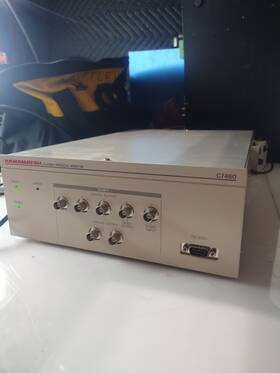
( Brand: Hamamatsu ), ( Manufacturer Part Number: C7460 ), ( Type: Plasma Process Monitor )
Review HAMAMATSU Hamamatau Plasma Process Monitor
The **Hamamatsu C7460 Hamamatsu Plasma Process Monitor** is a high-performance, advanced diagnostic tool designed to provide real-time, precise measurements of plasma parameters during semiconductor manufacturing and materials processing. Engineered with cutting-edge optical emission spectroscopy (OES) technology, this compact yet powerful instrument delivers unparalleled insight into plasma chemistry, enabling operators to optimize deposition, etching, and cleaning processes with exceptional accuracy. The C7460 leverages Hamamatsu s renowned expertise in photonics and plasma diagnostics, combining a robust optical system with high-speed data acquisition to capture critical spectral information across a broad wavelength range, typically spanning from the ultraviolet (UV) to the near-infrared (NIR) spectrum. Its modular design allows for flexible integration into various plasma processing chambers, including reactive ion etching (RIE), plasma-enhanced chemical vapor deposition (PECVD), and atomic layer deposition (ALD) systems, making it an indispensable asset in both research and high-volume manufacturing environments.
At the core of the C7460 s functionality lies its **high-resolution spectrometer**, which employs a diffraction grating optimized for spectral resolution and sensitivity, ensuring that even subtle variations in plasma composition such as trace gas concentrations or radical species are accurately detected. The system s **fast response time** and **low noise performance** enable real-time monitoring of plasma dynamics, allowing process engineers to make immediate adjustments to maintain consistency and yield. Additionally, the C7460 features **user-friendly software** with intuitive graphical interfaces, enabling seamless data visualization, spectral analysis, and automated process control. Key features include **real-time spectral plotting**, **peak identification and quantification**, **process stability monitoring**, and **integration with external control systems** via standard communication protocols like Ethernet or USB. This level of interoperability ensures seamless integration into existing manufacturing workflows, enhancing productivity while minimizing downtime.
Beyond its technical capabilities, the C7460 is built to withstand the demanding conditions of semiconductor fabrication, offering **ruggedized construction** and **high environmental stability** to ensure reliable operation in cleanroom environments. Its **compact and modular design** allows for easy installation and minimal footprint, making it suitable for both benchtop research applications and large-scale production lines. Whether used for **process development**, **troubleshooting**, or **quality assurance**, the C7460 provides actionable insights that help manufacturers achieve higher precision, repeatability, and efficiency in plasma-based processes. By continuously analyzing plasma emissions, this instrument helps identify potential issues such as gas leaks, contamination, or equipment drift before they impact production, thereby reducing waste and improving overall process control. Ultimately, the Hamamatsu C7460 Hamamatsu Plasma Process Monitor stands as a cornerstone for next-generation plasma diagnostics, empowering engineers to push the boundaries of materials science and semiconductor innovation.
The **Hamamatsu C7460 Plasma Process Monitor** is a specialized tool used for real-time monitoring of plasma etching and deposition processes in semiconductor manufacturing. Below is a detailed analysis of its pros and cons, followed by a conclusion and recommendation.
---
### **Pros of the Hamamatsu C7460**
1. **Real-Time Process Monitoring**
The C7460 provides real-time feedback on plasma parameters such as optical emission spectroscopy (OES) data, which helps in optimizing etch rates, selectivity, and uniformity. This is critical for maintaining high yield in semiconductor fabrication.
2. **High Sensitivity and Accuracy**
Hamamatsu s OES-based systems are known for their high sensitivity, allowing for precise detection of trace gases and plasma species. This ensures accurate process control even at low concentrations.
3. **Compatibility with Various Plasma Systems**
The C7460 is designed to integrate with a wide range of plasma etching and deposition tools, including reactive ion etching (RIE), inductively coupled plasma (ICP), and other advanced plasma processes. This flexibility makes it suitable for different fabrication lines.
4. **Non-Invasive Measurement**
Since the monitor uses optical detection, it does not interfere with the plasma environment, reducing the risk of contamination or process disruption.
5. **Data Logging and Analysis Capabilities**
The system can log and analyze process data over time, enabling trend analysis, root cause identification, and predictive maintenance. This helps in improving process stability and reducing downtime.
6. **Support for Advanced Process Control**
The C7460 can be integrated with process control systems (e.g., via OPC UA or other industrial protocols), allowing for automated adjustments based on real-time feedback. This is valuable for high-volume manufacturing.
7. **Durability and Reliability**
Hamamatsu equipment is generally built for harsh industrial environments, with robust optics and electronics that can withstand the demands of semiconductor fabrication.
8. **Support for Multiple Wavelengths**
The system can monitor multiple emission lines simultaneously, providing a comprehensive view of plasma chemistry and helping in fine-tuning process parameters.
---
### **Cons of the Hamamatsu C7460**
1. **High Initial Cost**
The C7460 is a premium piece of equipment, and its purchase price, along with installation and integration costs, can be substantial. This may be a barrier for smaller labs or startups with limited budgets.
2. **Complex Setup and Calibration**
Proper installation and calibration require expertise, and misalignment or incorrect calibration can lead to inaccurate readings. Training personnel to operate and maintain the system may require additional time and resources.
3. **Maintenance Requirements**
Optical components (e.g., fibers, lenses, and detectors) can degrade over time due to exposure to plasma or contaminants. Regular maintenance, including cleaning and recalibration, is necessary to ensure consistent performance.
4. **Integration Challenges**
While the C7460 is designed to be compatible with many plasma tools, integrating it with legacy systems or non-standard equipment may require custom solutions, adding complexity and potential delays.
5. **Dependence on Expertise**
Effective use of the monitor requires skilled operators who understand plasma physics, OES data interpretation, and process optimization. Without proper training, the system s full potential may not be realized.
6. **Limited Portability**
The C7460 is typically a fixed installation, making it less suitable for mobile or flexible fabrication environments where tools need to be moved between different chambers or facilities.
7. **Potential for False Positives/Negatives**
In some cases, OES data may not capture all aspects of plasma chemistry, leading to misinterpretations. Additional diagnostic tools (e.g., mass spectrometry) may be needed for comprehensive process control.
8. **Software Dependency**
The system relies on proprietary software for data acquisition and analysis. Compatibility issues with newer operating systems or software updates could require updates or support from Hamamatsu.
---
### **Conclusion**
The **Hamamatsu C7460 Plasma Process Monitor** is a powerful and precise tool for real-time plasma monitoring in semiconductor manufacturing. Its strengths lie in its high sensitivity, non-invasive measurement, and integration capabilities, which are invaluable for optimizing etch and deposition processes. However, its high cost, complexity, and maintenance requirements make it a significant investment that is best suited for well-equipped fabrication facilities with experienced personnel.
For **semiconductor foundries, research labs with advanced plasma systems, or manufacturers requiring high-precision process control**, the C7460 is a strong choice. However, for **smaller labs, startups, or environments with limited budgets or expertise**, the costs and complexities may outweigh the benefits, and alternative or lower-cost monitoring solutions might be more appropriate.
---
### **Recommendation**
- **Buy the Hamamatsu C7460 if:**- Your facility requires high-precision plasma monitoring for critical etch/deposition processes.
- You have the budget and technical expertise to integrate and maintain the system.
- You operate in a high-volume manufacturing environment where process stability is paramount.
- You need real-time feedback for automated process control.
- **Consider alternatives if:**- Your budget is constrained, and you can opt for a lower-cost OES monitor or other diagnostic tools (e.g., Langmuir probes, mass spectrometers).
- Your facility lacks the personnel to operate and maintain advanced plasma monitoring equipment.
- You are working with simpler plasma processes where basic monitoring may suffice.
- **Complementary Approach:**If purchasing the C7460, consider pairing it with other diagnostic tools (e.g., mass spectrometry or in-situ metrology) for a more comprehensive process understanding. Additionally, invest in training for your team to maximize the system s effectiveness.
Ultimately, the decision should align with your specific process requirements, budget, and operational capabilities.
Details:
Hamamatsu Plasma Process Monitor. Both of them turn on and show some minor wear, scratches.
specifications automationjack:
- brand: Hamamatsu
- mpn: C7460
- type: Plasma Process Monitor
shipping automationjack:
- class: Standard
- service: UPS Ground
- transit: 4-11 Days
- cost: $38.64
- type: Calculated
- carrier: UPS
seller automationjack:
- rating: 99.2%
- city: Union City, California
- # reviews: 128
offer automationjack:
- started: May 15, 2026
- sold: 0
- options: Ship-to-home
- best offers: True
- quantity: 2
- availability: In Stock
returns automationjack:
- policy: No Returns
general automationjack:
- Business Industrial > Industrial Automation Motion Controls > Other Automation Equipment
- condition: Used
payments automationjack:
- wallet: Apple-pay
- credit card: Visa
- other