HP A3824 Hewlett Packard Board 08714-60171 T71820
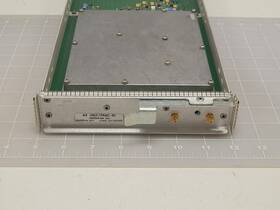
( Brand: Hp ), ( Manufacturer Part Number: A3824 ), ( Part Type: Board )
Review HP Hewlett Packard Source Board Assembly
The **Hewlett Packard (HP) T71820 (Part Number: A3824-08714-60171)** is a high-performance, enterprise-grade **motherboard** designed for HP ProLiant Gen8 servers, specifically tailored for the **DL380p Gen8** and **DL360p Gen8** platforms. This board represents a robust foundation for mission-critical computing environments, engineered to deliver exceptional reliability, scalability, and efficiency in data centers, cloud infrastructure, and high-demand business applications. Built with Hewlett Packard s signature engineering precision, the T71820 integrates a **dual-socket Intel Xeon E5-2600 v1/v2/v3/v4 processor** platform, supporting up to **two 8-core or 10-core processors** with a maximum of **20 cores per socket**, enabling unparalleled processing power for virtualization, high-performance computing (HPC), and enterprise workloads. The motherboard features **up to 24 DIMM slots**, accommodating **up to 768GB of DDR3 ECC memory** across three memory channels per processor, ensuring optimal data throughput and system stability critical for databases, ERP systems, and real-time analytics.
At its core, the T71820 is equipped with **HP s Smart Array controllers**, including options for **P410i, P420i, or P812M** (depending on configuration), which provide **RAID 0, 1, 1 0, 5, 6, and 10** support for internal storage, along with **cache mirroring** and **battery-backed write cache (BBWC)** for data protection. This redundancy ensures high availability and fault tolerance, minimizing downtime in demanding environments. The board also supports **up to 16 SFF (Small Form Factor) or LFF (Large Form Factor) SAS/SATA drives**, expandable via **HP Smart Array controllers** or **HP P410i/P420i adapters**, making it ideal for storage-intensive applications like virtualization hosts, NAS servers, or backup repositories. For connectivity, the T71820 includes **dual 10Gb Ethernet ports** (via optional **HP NC552i or NC553i adapters**) and **multiple PCIe 3.0 x16 slots**, allowing for the integration of high-speed networking cards, GPUs, or additional storage controllers to further enhance performance.
Security and manageability are prioritized on the T71820 through **HP s Integrated Lights-Out (iLO) 4**, a remote management solution that enables administrators to monitor, diagnose, and troubleshoot the server remotely via a web interface, SSH, or SNMP. This feature is particularly valuable for distributed data centers, where physical access may be limited. Additionally, the board supports **HP s Smart Memory and Smart Storage** technologies, which optimize resource allocation and reduce latency, while **HP s Dynamic Power Capping** helps manage power consumption efficiently, lowering operational costs in energy-intensive environments. The T71820 is built with **HP s high-reliability components**, including **dual redundant power supplies (optional)** and **ECC memory support**, ensuring data integrity and system uptime even under extreme workloads. Whether deployed in a traditional IT infrastructure or a modern cloud environment, this motherboard serves as a dependable backbone for businesses requiring **high-performance, scalable, and resilient computing solutions**.
### **Pros and Cons of buying a HP A3824-08714 (T71820) Motherboard**
#### **Pros:**1. **Reliability and Brand Reputation** HP (now part of Hewlett Packard Enterprise) has a long-standing reputation for durable and well-built server hardware, particularly in enterprise and workstation motherboards. The T71820 is designed for stability in professional environments.
2. **Enterprise-Grade Build Quality** This motherboard is built for servers and workstations, meaning it is designed to handle continuous operation, high workloads, and extended uptime without frequent failures.
3. **Compatibility with High-Performance Processors** The T71820 supports Intel Xeon and Xeon Scalable processors (depending on the socket version), which are optimized for demanding workloads such as virtualization, data processing, and AI/ML tasks.
4. **Advanced Connectivity Options** It typically includes multiple PCIe slots (Gen 3 or Gen 4), high-speed data interfaces (10GbE, 25GbE, or higher), and support for NVMe SSDs, making it suitable for high-bandwidth applications.
5. **Redundancy and Fault Tolerance Features** Many enterprise motherboards in this line include features like ECC memory support, dual power supply compatibility, and robust BIOS recovery options, reducing downtime in critical systems.
6. **Long-Term Availability** HP enterprise hardware often remains in production longer than consumer-grade components, ensuring parts and support are available for extended periods.
7. **Compatibility with HP Server Systems** If you are building or upgrading an HP ProLiant or BladeSystem server, this motherboard is designed to integrate seamlessly with other HP server components.
---
#### **Cons:**1. **High Cost** Enterprise-grade motherboards like the T71820 are significantly more expensive than consumer alternatives. The price reflects its durability, features, and support, but it may not be cost-effective for casual users.
2. **Limited Consumer Support** Unlike consumer motherboards, enterprise models may not receive the same level of consumer-friendly support (e.g., driver updates, community forums, or troubleshooting guides). Support is typically through HP s enterprise channels, which can be slower.
3. **Overkill for Non-Enterprise Use** If you are not running a server, virtualization platform, or high-end workstation, the extra features (e.g., redundant power, advanced cooling requirements) may not be necessary, making the investment unnecessary.
4. **Potential for Obsolescence** While HP enterprise hardware lasts longer, newer generations of processors or memory standards may eventually render this motherboard incompatible without upgrades. This is less of an issue for businesses with long-term hardware cycles.
5. **Complexity in Setup** Enterprise motherboards often require more careful configuration, especially for features like RAID, virtualization, or power redundancy. This can be intimidating for users without server administration experience.
6. **Limited Upgrade Path** Some enterprise motherboards are designed with specific processor and memory compatibility in mind, and upgrading components may require purchasing full server modules rather than individual parts.
7. **No Consumer-Grade Features** Features like RGB lighting, overclocking support, or consumer-grade VRMs are absent, as the focus is purely on performance, reliability, and compatibility with enterprise workloads.
---
### **Conclusion:** The **HP A3824-08714 (T71820) motherboard** is an excellent choice if you are:- Building or upgrading a **server, workstation, or virtualization platform** where reliability, redundancy, and high performance are critical.
- Working in an **enterprise or professional environment** where downtime is costly, and long-term support is a priority.
- Requiring **high-speed connectivity, ECC memory support, and compatibility with Intel Xeon processors**.
However, it is **not ideal** if you are:- A **gamer or content creator** looking for consumer-grade features, overclocking, or budget-friendly options.
- Building a **home server or NAS** where a cheaper, more consumer-friendly motherboard would suffice.
- Uncomfortable with **complex setup processes** or lack access to enterprise-level support.
---
### **Recommendation:** **Buy this motherboard if:**- You are deploying it in a **professional or enterprise setting** where uptime and performance are non-negotiable.
- You need **long-term reliability** and are willing to pay for HP s support ecosystem.
- Your use case aligns with **server, workstation, or high-end virtualization workloads**.
**Avoid this motherboard if:**- You are on a **tight budget** and can find a suitable alternative (e.g., ASUS or Supermicro enterprise motherboards) at a lower cost.
- You are a **casual user** who does not require enterprise-grade features.
- You prefer **consumer-grade support, overclocking, or modern consumer features** (e.g., USB-C, Wi-Fi 6).
For most **consumer or small-business users**, a **Supermicro or ASUS enterprise motherboard** (e.g., H12SSL-i, WS C621) may offer a better balance of cost and features. However, if you are committed to the **HP ecosystem**, the T71820 remains a robust and dependable choice.
Details:
12ET1347, A3 REF/FRAC-N, A3R204 REF ADJ, A3J301 FN OUT, 10MHz OUT A3J202, KA3824, A3824, 08714-60171, PII-M1, 36998. Reference Number:T71820. Glad you stopped by. We proudly sell hard-to-find parts, components, and machines to makers manufacturers.
part #: a3824 price
- $249.99
specifications automationjack:
- brand: Hp
- mpn: A3824
- part type: Board
general automationjack:
- condition: Used
- Business Industrial > Industrial Automation Motion Controls > Other Automation Equipment
seller automationjack:
- # reviews: 22184
- rating: 99.7%
- city: El Paso, Texas
returns automationjack:
- method: Money back
- time: 30 Days
- paid by: Seller
- policy: Returns Accepted
offer automationjack:
- best offers: True
- started: May 16, 2026
- options: Ship-to-home
- sold: 0
- availability: In Stock
payments automationjack:
- wallet: Apple-pay
- other
- credit card: Discover
shipping automationjack:
- class: Standard, Expedited, One-day
- carrier: UPS
- type: Calculated
- cost: $16.57
- transit: 5-10 Days
- service: UPS Ground, UPS 2nd Day Air, UPS 3 Day Select, UPS Next Day Air
Hp A3824 Is Similar To:
- Hp 85660-60178 Agilent A-2140-53 Hp-ib Interface Board T44240 (46% similar) Hp agent 85660-60178 A-2140-53 Hp-Ibo interface board T44240 C2...(February 7th, 2024)
- Hp Hewlett Packard 18596c Autosampler Tray Untested (36.2% similar) Condition is used. Hp hewlett packard 18596C auto sampler tray untested. Shipped with USPS priority mail. As is, I don't have the machine to test it...(May 1st, 2024)
- Hp 12105-60001 Cpu Processor Board (42.4% similar) Guaranteed to work...(August 1st, 2024)
- Hp Hewlett Packard 08673-60110 A-2505-4 Microprocessor Board T40899 (47% similar) Hp hewlett packard 08673-60110 A-2505-4 microprocessor board T40899 warranty information: this is a used item, in good condition and includes 30 day warranty...(August 4th, 2024)
- Hp Hewlett Packard 03253-66501 Circuit Board Control Panel T36302 (49.2% similar) Hp hewlett packard 03253-66501 circuit board control panel T36302 warranty information: this is a used item, in good condition and includes 30 day warranty...(August 16th, 2024)
- Hp Hewlett Packard 52621f Circuit Board T41779 (54.1% similar) Hp hewlett packard 52621F circuit board T41779 warranty information: this is a used item, in good condition and includes 30 day warranty...(August 26th, 2024)
- Hewlett Packard Hp-f1059a Floppy Disk Drive Hp F1059c External No Cable (33.8% similar) Vintage Hp external floppy disk drive with no cable. Unable to test so selling as-is...(September 5th, 2024)
- Hp E3750-66504 Channel Load Board M1005 (38.5% similar) Hp E3750-66504 channel load board M1005 warranty information: this is a used item, in good condition and includes 30 day warranty...(September 11th, 2024)
- Hp Hewlett Packard 86701-60016 B-2110-4 Driver Board T40913 (48.4% similar) Hp hewlett packard 86701-60016 B-2110-4 driver board T40913 warranty information: this is a used item, in good condition and includes 30 day warranty...(October 3rd, 2024)
- Hp Hewlett Packard 08673-60104 Atten Driver Board T40911 (47.9% similar) Hp hewlett packard 08673-60104 attend driver board T40911 warranty information: this is a used item, in good condition and includes 30 day warranty...(October 3rd, 2024)
- Hp Hewlett Packard 08673-60032 Ytm Driver Board T40949 (50.4% similar) Hp hewlett packard 08673-60032 TM driver board T40949 warranty information: this is a used item, in good condition and includes 30 day warranty...(October 3rd, 2024)