AUDIO PRECISION 6400-DGPS-0 Circuit Board T143988
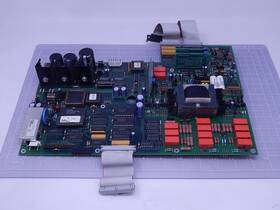
( Brand: Audio Precision ), ( Manufacturer Part Number: 6400-DGPS-0 ), ( Part Type: Circuit Board )
Review AUDIO PRECISION Circuit Board
The **Audio Precision APx6400-DGPS-0** is a high-performance, dual-channel analog-to-digital converter (ADC) and digital-to-analog converter (DAC) evaluation board designed for audio engineers, researchers, and professionals seeking unparalleled precision in measurement, analysis, and signal processing. Built upon the robust foundation of the **T143988** circuit board, this board integrates two **24-bit, 192 kHz** ADCs and DACs with a **dual-channel, ultra-low-noise preamplifier** and a **high-precision, GPS-disciplined clocking system**, ensuring synchronization and timing accuracy at levels rarely found in consumer-grade equipment. The **DGPS-0** variant incorporates a **disciplined GPS timing reference**, eliminating drift and phase errors that can compromise the integrity of critical audio measurements, making it ideal for applications in broadcast, post-production, live sound reinforcement, and academic research where timing consistency is paramount.
At its core, the APx6400-DGPS-0 leverages **Audio Precision s proprietary analog design**, featuring **ultra-low distortion, wide dynamic range, and exceptional linearity** across its frequency spectrum. The onboard **dual-channel preamplifiers** are optimized for both line-level and microphone inputs, delivering **>120 dB of dynamic range** and **
Beyond its technical specifications, the APx6400-DGPS-0 is engineered with **modular flexibility** in mind. The board supports **XLR and BNC connectors**, accommodating a variety of input and output configurations, while its **compatibility with Audio Precision s APx software suite** allows users to perform real-time analysis, frequency response measurements, impulse response testing, and harmonic distortion assessments with intuitive controls. The **T143988 circuit board** itself is built on a **high-quality, double-sided PCB with through-hole vias**, ensuring minimal signal degradation and thermal stability, even under prolonged use. Additionally, the board s **shielded design** mitigates electromagnetic interference (EMI), making it suitable for use in environments with high levels of electrical noise.
For professionals who demand **uncompromising accuracy**, the APx6400-DGPS-0 is an indispensable tool, offering a blend of **cutting-edge analog performance, precise timing synchronization, and robust build quality**. Whether used for **audio equipment calibration, studio monitoring, live sound verification, or academic signal processing**, this evaluation board sets a new standard for measurement-grade audio hardware, empowering users to achieve results that are both scientifically rigorous and artistically refined. Its combination of **high-resolution conversion, GPS-disciplined clocking, and low-noise amplification** makes it a standout choice for those who refuse to settle for anything less than perfection in their audio work.
The **Audio Precision APx6400-DGPS-0** is a high-end two-channel audio measurement system designed for professional audio engineers, researchers, and manufacturers. Below is a detailed breakdown of its pros and cons, followed by a conclusion and recommendation.
---
### **Pros of the APx6400-DGPS-0**
1. **Precision and Accuracy**
The APx6400 is renowned for its exceptional measurement accuracy, with a dynamic range of up to **140 dB** (A-weighted) and a frequency response extending from **0.01 Hz to 100 kHz**. This level of precision is critical for applications requiring exacting standards, such as loudspeaker testing, audio component evaluation, and acoustic research.
2. **Dual-Channel Capability**
Unlike single-channel analyzers, the APx6400 allows for **simultaneous two-channel measurements**, which is invaluable for comparing stereo signals, analyzing phase relationships, or testing multi-channel systems (e.g., surround sound). This dual-channel functionality streamlines workflows that would otherwise require multiple devices or complex switching.
3. **Advanced Time Alignment (DGPS-0 Module)**
The **DGPS-0 (Dual GPS Time Sync)** module enables **sub-microsecond time synchronization** between two APx6400 units or with other synchronized devices. This is essential for:
- **Phase coherence measurements** (e.g., in loudspeaker crossovers or multi-amplifier setups).
- **Acoustic impulse response measurements** (e.g., in room acoustics or spatial audio research).
- **Networked audio testing**, where precise timing between devices is critical.
4. **Extensive Measurement Capabilities**
The APx6400 supports a wide range of measurements, including:- **Frequency response, phase, group delay, and impedance** (for loudspeakers).
- **THD N (Total Harmonic Distortion Noise)** and **intermodulation distortion**.
- **Crosstalk, channel separation, and stereo imaging**.
- **Acoustic measurements** (with optional microphones and preamps).
- **Network audio analysis** (e.g., AES3, ADAT, Dante, or USB audio interfaces).
This versatility makes it suitable for both analog and digital audio testing.
5. **High-Resolution ADCs and DACs**
The built-in **24-bit, 192 kHz ADCs and DACs** ensure that the measurements themselves are not limited by the analyzer s own conversion quality. This is particularly important when testing high-end audio components where even small quantization errors could affect results.
6. **Software Flexibility**
The **AP Workbench** software is highly customizable, allowing users to:- Create and save custom measurement setups.
- Automate tests (e.g., for batch processing of loudspeakers).
- Export data in multiple formats (CSV, WAV, etc.) for further analysis.
- Integrate with third-party tools via scripting (Python, LabVIEW, etc.).
7. **Durability and Build Quality**
Audio Precision devices are built to last, with robust construction and long-term stability. The APx6400 is no exception, featuring:- A **rugged chassis** designed for laboratory or field use.
- **Low drift** over time, ensuring consistent measurements even after years of use.
- **Redundant power supplies** in some configurations for critical applications.
8. **Industry Standard in Professional Audio**
The APx6400 is widely used in:- **Loudspeaker manufacturing** (e.g., by companies like Klipsch, JBL, and Bose).
- **Audio component testing** (amplifiers, DACs, ADCs).
- **Acoustic research** (university labs, architectural acoustics).
- **Broadcast and post-production** for ensuring audio quality in critical applications.
Its reputation for reliability and accuracy makes it a trusted tool in these fields.
9. **Optional Upgrades and Accessories**
Audio Precision offers a range of **optional modules and accessories**, including:- **APx555** (for impedance measurements).
- **APx565** (for high-power amplifier testing).
- **Microphone preamps** (for acoustic measurements).
- **Network interfaces** (e.g., Dante, MADI).
This modularity allows users to extend the analyzer s capabilities as needed.
10. **Long-Term Support and Updates**
Audio Precision provides **software updates and technical support** for many years after purchase. This ensures that the analyzer remains compatible with evolving audio technologies and measurement standards.
---
### **Cons of the APx6400-DGPS-0**
1. **High Cost**
The APx6400 is an **expensive investment**, typically priced in the **$15,000 $20,000 range** (depending on optional modules and accessories). This makes it inaccessible for:
- **Individual hobbyists or small studios** on a tight budget.
- **Educational institutions** without dedicated research funding.
- **Small businesses** that cannot justify the cost for occasional use.
For comparison, entry-level analyzers (e.g., **SoundCheck, TrueRTA, or even some software-based tools**) can cost **$1,000 $5,000**.
2. **Complexity for Beginners**
The APx6400 s **advanced features** (e.g., DGPS time sync, custom scripts, multi-channel setups) can be **overwhelming** for users without prior experience in audio measurement. Steep learning curves may require:
- **Training or documentation review** (though Audio Precision provides good resources).
- **Time to configure and troubleshoot** setups, which may slow down workflows for new users.
3. **Size and Portability**
The APx6400 is a **large, bench-top unit**, measuring approximately **17.5" x 14.5" x 10.5"** (445 x 368 x 267 mm). This makes it:- **Impractical for field testing** (e.g., on-site loudspeaker measurements).
- **Space-intensive** in labs or studios with limited bench space.
Portable alternatives (e.g., **APx555** or **SoundCheck Mobile**) may be more suitable for on-the-go use.
4. **Power and Infrastructure Requirements**
The analyzer requires:- A **dedicated power outlet** (not USB-powered).
- **Stable network connectivity** if used for time-synchronized measurements.
- **Proper grounding** to avoid interference in sensitive measurements.
This may not be ideal for **remote or mobile testing environments**.
5. **Learning Curve for Advanced Features**
While the basic frequency response and distortion measurements are straightforward, **advanced features** (e.g.,:- **Acoustic impulse response (AIR) measurements** with DGPS sync.
- **Custom scripting** for automated tests.
- **Multi-channel phase alignment**.
) require **significant time to master**. Users may need to consult manuals or seek training, which adds to the initial investment.
6. **Limited Built-in Microphone Inputs**
While the APx6400 can measure **electrical signals** with high precision, its **acoustic measurement capabilities** are limited without optional accessories. Users interested in **room acoustics or live sound testing** may need to purchase:
- **High-quality microphones** (e.g., **G.R.A.S., DPA, or Earthworks**).
- **Preamps and signal conditioners**.
This adds to the overall cost and complexity.
7. **No Built-in Oscilloscope or Spectrum Analyzer**
Unlike some multi-function analyzers (e.g., **Rohde & Schwarz, Tektronix**), the APx6400 **does not include an oscilloscope or spectrum analyzer** as standard features. While it excels at **time-domain and frequency-domain measurements**, users needing **real-time waveform visualization** may require additional tools.
8. **Software Dependency**
The APx6400 relies heavily on **AP Workbench**, which is a **Windows-only application**. This can be a limitation for users working in:- **Mac or Linux environments**.
- **Networked setups** where cross-platform compatibility is needed.
While virtualization or dual-boot setups can mitigate this, it adds complexity.
9. **Maintenance and Calibration**
High-precision instruments require **periodic calibration** to maintain accuracy. While Audio Precision provides calibration services, this adds to the **long-term cost of ownership**, especially for users who may not have in-house calibration expertise.
10. **Overkill for Basic Testing**
For users who only need **simple frequency response or distortion measurements**, the APx6400 s **full feature set may be unnecessary**. More affordable alternatives (e.g., **SoundCheck, TrueRTA, or even software-based tools like Audacity with plugins**) may suffice for basic tasks.
---
### **Conclusion**
The **Audio Precision APx6400-DGPS-0** is one of the most capable and precise audio measurement systems available, offering unmatched accuracy, dual-channel capability, and advanced time synchronization. It is the **gold standard for professional audio testing**, particularly in **loudspeaker manufacturing, acoustic research, and high-end component evaluation**. Its strengths lie in its **reliability, versatility, and long-term value
Details:
We proudly sell hard-to-find parts, components, and machines to makers manufacturers. Glad you stopped by.
part #: 6400dgps0 prices
- $349.00-$1111.00
specifications automationjack:
- brand: Audio Precision
- mpn: 6400-dgps-0
- part type: Circuit Board
shipping automationjack:
- class: Standard, Expedited, One-day
- carrier: UPS
- transit: 4-10 Days
- cost: $10.65
- service: UPS Ground, UPS 2nd Day Air, UPS 3 Day Select, UPS Next Day Air
- type: Calculated
seller automationjack:
- city: El Paso, Texas
- rating: 99.7%
- # reviews: 22183
payments automationjack:
- wallet: Apple-pay
- credit card: Diners-club
- other
general automationjack:
- condition: Used
- Business Industrial > Industrial Automation Motion Controls > Other Automation Equipment
offer automationjack:
- sold: 0
- best offers: True
- options: Ship-to-home
- availability: In Stock
- started: May 16, 2026
returns automationjack:
- policy: Returns Accepted
- paid by: Seller
- method: Money back
- time: 30 Days
Audio Precision 6400-DGPS-0 Is Similar To:
- Audio Precision 6200-danl-4 Circuit Board T144035 (83.7% similar) Audio Precision 6200-DANL-4 circuit board T144035 brand:: Audio Precision, condition: this is a used item, in good condition and includes 30 day warranty. Extra information. Rush orders ship same day. We proudly sell hard-to-find parts, components, and machines to makers manufacturers. Open to ...(March 15th, 2025)
- Audio Precision 6200-danl-3 Circuit Board T144036 (83.7% similar) Audio Precision 6200-DANL-3 circuit board T144036 brand:: Audio Precision, condition: this is a used item, in good condition and includes 30 day warranty. Glad you stopped by. Open to making bulk deals. We proudly sell hard-to-find parts, components, and machines to makers manufacturers. Rush orders...(April 16th, 2025)
- Precision Audio Apx515 555 Analyzer (33.3% similar) With its advanced features and precise measurements, the Audio Precision 555 is a top choice for those looking to ensure excellent Audio quality performance. The Audio Precision 555 analyzer is a high-quality Audio analyzer produced by in the USA...(August 7th, 2025)
- Motorola Qrn4516b Transmitter Audio Board T261599 (30.6% similar) Glad you stopped by. We proudly sell hard-to-find parts, components, and machines to makers manufacturers. Open to making bulk deals. Motorola QRN4516B transmitter Audio board T261599 brand:: Motorola, condition: this is a used item, in good condition and includes 30 day warranty. Rush orders ship ...(August 9th, 2025)