X67AI1333 Analog Module
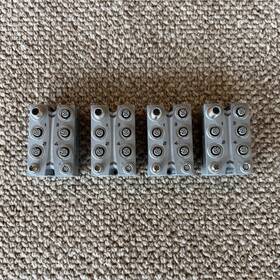
( Brand: B-r ), ( Manufacturer Part Number: X67AI1333 ), ( Type: Analog Input Module )
Review B R Analog Input Module Inputs
The **X67AI1333 Analog Input Module** is a high-performance, modular analog input device designed to seamlessly integrate into industrial automation, process control, and data acquisition systems. Part of a robust series of programmable automation controllers (PACs) or distributed I/O architectures, this module provides six high-precision analog input channels, each capable of measuring a wide range of voltage and current signals with exceptional accuracy and reliability. Engineered for versatility, the X67AI1333 supports both **4-20 mA current loops** and **0-10 VDC voltage signals**, making it compatible with a diverse array of sensors, transducers, and field instruments commonly found in manufacturing, energy, water treatment, and HVAC applications. Its **isolated inputs** ensure protection against electrical noise, voltage spikes, and ground loops, while its **wide common-mode rejection ratio (CMRR)** guarantees stable readings even in harsh environments where interference is prevalent.
Built with industrial-grade components, the X67AI1333 delivers **16-bit resolution** for each channel, enabling fine granularity in data capture and precise control feedback. The module features **configurable input ranges**, allowing users to optimize sensitivity and scaling for specific applications whether measuring temperature via RTD sensors, monitoring pressure levels, or tracking flow rates. Its **digital filtering capabilities** help reduce high-frequency noise and signal fluctuations, ensuring clean, reliable data transmission to the host system. Compatible with major industrial communication protocols such as **Ethernet/IP, Modbus TCP, or PROFINET**, the module integrates effortlessly into modern SCADA, PLC, or DCS setups, facilitating real-time monitoring and automated decision-making.
Durability is a cornerstone of the X67AI1333 s design, with a robust **NEMA 4X or IP67-rated enclosure** (depending on the variant) that protects against dust, moisture, and harsh environmental conditions. The module s **low power consumption** and **compact form factor** make it ideal for space-constrained installations, while its **hot-swappable design** minimizes downtime during maintenance or system upgrades. Additionally, the X67AI1333 supports **remote I/O configurations**, enabling flexible deployment in distributed architectures where centralized control rooms may be located far from the field devices. With built-in **diagnostic features**, including input fault detection and signal health monitoring, operators can quickly identify and troubleshoot issues, reducing maintenance overhead and improving system uptime.
Whether deployed in a **smart factory** optimizing production lines, a **water treatment facility** managing chemical dosing, or an **oil and gas refinery** overseeing critical process variables, the X67AI1333 delivers the precision, scalability, and reliability required for modern industrial automation. Its seamless integration with leading control systems, combined with its adaptability to various signal types and environmental challenges, makes it an indispensable component for engineers and technicians seeking high-performance analog data acquisition in demanding applications.
The **X67AI1333** is an analog input module designed for industrial automation, typically used in PLC (Programmable Logic Controller) systems to interface with sensors, transducers, or other analog devices. Below is a detailed breakdown of its pros and cons, followed by a conclusion and recommendation.
---
### **Pros of the X67AI1333**
1. **High Accuracy and Precision**
The module is engineered for reliable analog signal acquisition, offering high-resolution measurements (typically 16-bit or higher) to ensure precise data collection. This is critical for applications requiring tight process control, such as temperature monitoring, pressure sensing, or flow measurement.
2. **Wide Input Range**
It supports a broad range of input voltages and currents (e.g., 0 10V, 0 20mA, 4 20mA), making it compatible with most standard industrial sensors. This flexibility reduces the need for additional signal conditioning hardware.
3. **Robust Industrial Design**
The module is built to withstand harsh environments, featuring features like:- **Wide operating temperature range** (often -25 C to 75 C or higher), suitable for factory floors, outdoor installations, or environments with temperature fluctuations.
- **High immunity to noise and interference**, thanks to shielding and filtering mechanisms, which is essential in electrically noisy industrial settings.
- **Durable construction** with metal enclosures or rugged housing to protect against physical damage, vibration, or dust.
4. **Scalability and Modularity**
The X67AI1333 is part of a modular series, allowing it to be integrated into larger systems with other I/O modules (digital, relay, etc.). This modularity simplifies system expansion and maintenance, as engineers can add or replace modules without overhauling the entire setup.
5. **Compatibility with Major PLC Brands**
It is designed to work seamlessly with popular PLC platforms such as **Siemens, Allen-Bradley (Rockwell), Mitsubishi, and Omron**. This compatibility reduces integration challenges and ensures ease of programming and configuration.
6. **Diagnostic Features**
Many versions of this module include built-in diagnostics, such as:- **Input fault detection** (e.g., short circuits, open circuits, or out-of-range signals).
- **Self-test capabilities** to verify module functionality during startup or runtime.
- **Error logging** to help troubleshoot issues without requiring external tools.
7. **Fast Sampling Rate**
The module often supports high-speed data acquisition (e.g., 100 samples per second or more), which is beneficial for dynamic processes where rapid response is necessary (e.g., motion control, real-time monitoring).
8. **Support for Multiple Protocols**
Depending on the model, it may support communication protocols like **PROFIBUS DP, EtherNet/IP, or Modbus**, enabling seamless integration into modern industrial networks.
9. **Low Latency**
The module is optimized for minimal delay between signal acquisition and data transmission to the PLC, which is crucial for real-time control applications.
10. **Easy Configuration and Setup**
Many versions come with user-friendly configuration tools (e.g., software utilities or web interfaces) that simplify parameter setup, such as scaling, filtering, or threshold settings.
---
### **Cons of the X67AI1333**
1. **Cost**
As an industrial-grade module, the X67AI1333 can be more expensive than consumer-grade or lower-end analog input modules. The price may be a barrier for small-scale or budget-conscious projects.
2. **Complexity for Non-Experts**
While the module is robust, its configuration and integration may require technical expertise, especially when dealing with advanced features like filtering, scaling, or communication protocols. Non-engineers or hobbyists may find setup challenging.
3. **Limited Analog Channels**
The module typically offers a fixed number of analog inputs (e.g., 8 or 16 channels). If your application requires more channels, you may need to purchase multiple modules, increasing both cost and complexity.
4. **Power Requirements**
Industrial modules often require specific power supplies (e.g., 24V DC), which may not be readily available in all setups. Additional wiring or power conditioning may be necessary.
5. **Potential for Signal Noise**
Although the module is designed to be noise-resistant, extreme electromagnetic interference (EMI) or poor grounding in the installation environment can still affect signal integrity. Proper shielding and grounding practices are essential.
6. **Vendor Lock-In**
While the module is compatible with multiple PLC brands, some advanced features or firmware updates may be vendor-specific. This could limit flexibility if you later switch to a different PLC manufacturer.
7. **Physical Space and Wiring Complexity**
Industrial I/O modules require dedicated space in a control panel or rack. Additionally, wiring analog signals (especially long distances) can introduce noise or signal degradation if not properly managed (e.g., using twisted-pair cables and proper termination).
8. **Maintenance and Spare Parts**
Over time, analog input modules may require calibration or replacement. Finding compatible spare parts or technical support can be difficult if the manufacturer is no longer active or if the module is outdated.
9. **Latency in Large Systems**
In systems with many modules or long communication lines, there may be slight delays in data transmission, which could impact real-time performance in highly dynamic applications.
10. **Learning Curve for Advanced Features**
Features like **digital filtering, anti-aliasing, or advanced scaling** may require familiarity with signal processing concepts. Misconfiguration could lead to inaccurate data or system instability.
---
### **Conclusion**
The **X67AI1333** is a high-quality, reliable analog input module well-suited for industrial automation applications where precision, durability, and compatibility with major PLC systems are critical. Its strengths lie in its **accuracy, robustness, diagnostic capabilities, and modularity**, making it ideal for environments with demanding conditions such as manufacturing, process control, or energy management.
However, its **higher cost, complexity for non-technical users, and potential limitations in scalability or vendor dependency** may make it less ideal for small-scale projects, hobbyist applications, or budget-constrained setups. If your application requires **high-speed, accurate analog data acquisition in a stable industrial environment**, this module is an excellent choice. For simpler or lower-cost applications, alternatives like **consumer-grade ADC modules or lower-end industrial modules** might suffice.
---
### **Recommendation**
**Buy the X67AI1333 if:**- You are working in an **industrial or commercial automation environment** where reliability, accuracy, and long-term performance are priorities.
- Your application requires **integration with Siemens, Allen-Bradley, Mitsubishi, or Omron PLCs**.
- You need **multiple analog inputs with high resolution and noise immunity**.
- You can justify the **higher upfront cost** based on the module s longevity and reduced risk of failures.
- Your team has the **technical expertise** to configure and maintain the module.
**Consider alternatives if:**- Your budget is **limited**, and you can find a lower-cost module with sufficient specifications for your needs.
- Your application is **small-scale or non-industrial**, and a simpler, less expensive analog input solution (e.g., USB-based ADCs) would suffice.
- You require **extreme scalability** (e.g., hundreds of analog inputs), in which case a **distributed I/O system** or **remote I/O modules** might be more cost-effective.
- You lack **technical resources** to handle configuration, troubleshooting, or maintenance.
For most **serious industrial applications**, the X67AI1333 is a **strong, well-supported choice** that balances performance, compatibility, and durability. However, always verify the **specific model s datasheet** for your exact requirements (e.g., input range, communication protocol, or environmental ratings) to ensure it meets your needs.
Details:
B R X67AI1333 Analog Input Module 4 Inputs.
part #: x67ai1333 price
- $500.00
specifications automationjack:
- brand: B-r
- mpn: X67ai1333
- type: Analog Input Module
payments automationjack:
- credit card: Mastercard
- wallet: Google-pay
- other
general automationjack:
- condition: Used
- Business Industrial > Industrial Automation Motion Controls > Other Automation Equipment
shipping automationjack:
- class: Standard
- service: USPS Ground Advantage
- transit: 4-10 Days
- type: Calculated
- cost: $7.31
- carrier: USPS
seller automationjack:
- city: Manitou Beach, Michigan
- rating: 0.0%
- # reviews: 0
returns automationjack:
- time: 30 Days
- method: Money back
- paid by: Buyer
- policy: Returns Accepted
offer automationjack:
- options: Ship-to-home
- availability: In Stock
- started: March 22, 2026
- best offers: True
- sold: 0
- quantity: 4
B-r X67AI1333 Is Similar To:
- Siemens 6es7135-6hd00-0ba1 New 6es7 135-6hd00-0ba1 Analog Output Module (37.6% similar) New Siemens 6ES7135-6HD00-0BA1 6ES7 135-6HD00-0BA1 analog output module. Product feature. Product specifications: brand name...(November 17th, 2023)
- Dataforth Dsca30-02 Analog Voltage Input Signal Conditioner (36.2% similar) Data forth DSCA30-02 analog voltage input signal conditioner...(August 10th, 2024)
- Ge Is220paoch1a Energy Analog Out Module Rev F For Parts repair (47.7% similar) Cosmetic condition: this item is in good condition cosmetically. Signature required. Sale includes: GE energy analog out module IS220PAOCH1A rev f, for parts/ repair. Function: this item is for parts/ repair. Shipping method: USPS priority mail or fed ex. There are some minor scratches, scuffs, and/...(October 8th, 2024)
- Yokogawa Amc80 S1 Multipoint Analog I o Module (39.1% similar) Used but in good condition, comes only as shown, no other kind of accessories included, has scuffs and scratches nothing major, removed from a working item, Tokugawa AMC80 s1 multi point analog i/o module. Unless stated otherwise...(October 14th, 2024)
- Siemens Husky 674993 Hpn674993 Analog Input Module Used (52.4% similar) 674993 husky HPN674993 analog input module used...(October 19th, 2024)
- Cni Informatica Vic420 Cn 40 I o Encoder Input Analog Output Module (35.4% similar) Will there be a dock or forklift. Consignee: we choose the carrier. Need it urgently. Country of manufacture: Italy. Size: length : 16 in. Next day second air services are available. Your phone number and business name. After the return period has ended, you can no longer product. Condition: used. ...(November 18th, 2024)
- Computer Boards Inc Pc104-das08 Inc Analog Input Digital I o Board (36.8% similar) Part number: PC104-DAS08. Sold as-is, as pictured. PC104-DAS08 analog input digital i/o board...(December 2nd, 2024)
- Cannon Dac12cont Canon Automata 12bit Analog Output Module V01 70025200 (37.6% similar) Please only place a bid if you're serious about buying an item. Its the fast, easy and secure way to pay online. All shipping originates from 28110 zip code. Shipping details...(February 28th, 2025)
- Abb C1900 0323 Asea Brown Boveri abb Chart Recorder Analog Input Output Module Card (43.4% similar) This is an analog input/output module card for the sea brown Bovary now Abby C1900/0323 chart recorder. See picture I don't think it was actually ever used however the packaging has been opened...(March 22nd, 2025)
- Honeywell Mu-tail01 51304437-150 51401183-100 Analog Input Low Level Terminati (41.3% similar) Honeywell MU-TAIL01 51304437-150 / 51401183-100 analog input low level termination board T161968 brand:: Honeywell, condition: this is a used item, in good condition and includes 30 day warranty. Rush orders ship same day. Glad you stopped by. We proudly sell hard-to-find parts, components, and ...(March 29th, 2025)
- Matrox 16vd Morq 16vd Y7250-01 Rev A Analog Color monochrome Pcie Frame Grabber Module (27.3% similar) Accepts NSC, pal, RS-170 and cir video standards. 16 audio inputs. Real-time multi-channel MPEG-4 encoder. Watchdog timer for monitoring overall system integrity. Fully tested and functional, features: simultaneously capture from up to 16 independent CBS video sources...(April 28th, 2025)