SANDISK SDP3B Memory Card Flashdisk Pcmcia Ata 32MB
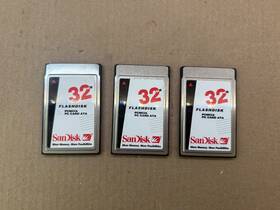
( Brand: Sandisk ), ( Manufacturer Part Number: SDP3B ), ( Part Type: Card ), ( Warehouse: 1820 ), ( Country Of Origin: United States )
Review SANDISK Lot Of Memory Card Flashdisk Pcmcia Pc Ata 32mb
The **SanDisk SDP3B 32MB PCMCIA FlashDisk** is a compact yet powerful memory solution designed to meet the demands of professionals and enthusiasts who require reliable, high-capacity storage on the go. Part of SanDisk s trusted line of flash memory products, this PCMCIA-compatible device seamlessly integrates into laptops and portable devices equipped with a Type II PCMCIA slot, offering a convenient alternative to traditional hard drives or floppy disks. With a robust **32MB capacity**, it provides ample space for storing critical documents, software applications, multimedia files, or backup data, ensuring that users can carry their essentials without the bulk of external storage devices. Built with SanDisk s proprietary **FlashFile** technology, this memory card delivers exceptional durability, resistance to shock and vibration, and a lifespan far exceeding that of conventional magnetic storage media. Its **ATA (IDE) interface compatibility** ensures seamless integration with older and newer systems, making it a versatile choice for both legacy and modern computing environments. The sleek, low-profile design of the PCMCIA form factor allows it to fit snugly into laptops without occupying additional space, while its **hot-swappable** nature enables users to insert, eject, or replace the drive without powering down their system. Whether used for data transfer, portable storage, or as a backup solution, the SanDisk SDP3B combines reliability, speed, and ease of use, making it an indispensable tool for professionals who demand performance without compromise.
The **Sandisk SDP3B 32MB PCMCIA FlashDisk (ATA)** is an older memory card designed for use in early PCMCIA slots, primarily in laptops from the late 1990s to early 2000s. Below is a detailed breakdown of its pros and cons, followed by a conclusion and recommendation.
---
### **Pros:**1. **Compatibility with Older Systems:** This card was designed for early PCMCIA Type II slots, which were common in laptops from the late 1990s and early 2000s. If you have an older machine that lacks modern storage options, this could serve as a functional storage solution.
2. **ATA Interface:** The card uses the ATA (IDE) interface, which was standard for hard drives and flash storage at the time. This means it can be treated as a removable drive by the operating system, allowing for easy file transfers.
3. **Durability:** Being a flash-based storage device, it has no moving parts, making it more resistant to physical shock compared to traditional hard drives. This was particularly useful in portable devices.
4. **Portability:** The PCMCIA form factor made it easy to insert and remove from laptops without needing to open the case, which was convenient for users who frequently transferred files.
5. **Legacy Use Cases:** If you have an older system that lacks USB ports or modern storage options (e.g., some industrial or embedded devices), this card could be useful for transferring data or running legacy software.
---
### **Cons:**1. **Extremely Limited Storage Capacity:** At just 32MB, this card is woefully inadequate for modern needs. Even for the era it was released, 32MB was a very small capacity, and it would fill up quickly with even basic files.
2. **Obsolete Technology:** The card is over 20 years old, and modern operating systems (Windows 10/11, Linux distributions, etc.) may not recognize it properly or at all. Drivers and compatibility issues are likely to arise.
3. **Slow Performance:** Flash memory from the late 1990s was significantly slower than modern standards. Transferring files would be painfully slow, and the card would likely struggle with even basic tasks like running small programs.
4. **Hard to Find:** Due to its age and niche use, this card may be difficult to locate in stores or online. Even if you find it, the price may be high relative to its value.
5. **No Modern Features:** Unlike modern flash drives, this card lacks USB compatibility, encryption, or any advanced features. It is purely a basic storage solution with no additional functionality.
6. **Potential Reliability Issues:** Older flash memory can degrade over time, especially if the card has been exposed to extreme temperatures or improper handling. The risk of data loss or failure increases with age.
7. **Lack of Software Support:** Modern operating systems may not support the ATA interface for removable drives in the same way they do USB or SD cards. You may need to use legacy software or drivers to access the data, which could be problematic.
---
### **Conclusion:**The **Sandisk SDP3B 32MB PCMCIA FlashDisk** is a relic of an era when storage was measured in megabytes rather than gigabytes or terabytes. While it may have served a purpose in its time particularly for users with older laptops lacking modern storage options its limitations are severe by today s standards. The 32MB capacity is laughably small, the technology is obsolete, and compatibility with modern systems is unlikely. Even for historical or nostalgic purposes, the practical value is minimal, and the challenges of using it far outweigh any benefits.
---
### **Recommendation:**Unless you have a specific, niche use case (e.g., restoring an old system, running legacy software, or maintaining a collection of vintage hardware), there is **no practical reason to purchase this card**. Instead, consider the following alternatives:
1. **Modern Flash Drives (USB):** For general use, a high-capacity USB flash drive (e.g., 64GB or more) is far more practical, affordable, and compatible with all modern devices.
2. **SD Cards for Older Devices:** If you re working with older laptops or cameras, a modern SD card (with an adapter) is a far better choice than a 20-year-old PCMCIA card.
3. **External Hard Drives or SSDs:** For larger storage needs, an external hard drive or SSD with USB connectivity is a reliable and high-capacity solution.
4. **Emulation or Virtualization:** If you re trying to run old software, consider using emulation software (e.g., DOSBox, VirtualBox) with a modern virtual drive instead of relying on obsolete hardware.
5. **E-Waste or Historical Preservation:** If the card has sentimental value or you re interested in preserving vintage technology, you might keep it as a curiosity but expect it to be largely unusable in practical terms.
In summary, this card is not worth buying for any modern or practical purpose. If you re looking to expand storage or transfer files, invest in a contemporary solution instead.
Details:
USED, Pulled From Working Environment. Orders / Shipping. Anything not mentioned or shown in photos is included. LOT OF 3 SanDisk Memory Card SDP3B Flashdisk PCMCIA PC ATA 32MB.
Have a question. Price is for A LOT OF AM/AC-20260430-NL S:0-A:7 OH2604-MISC qty:23 H:GRYT-64. Used products come from end users who no longer need them.
When a listing has multiple units in inventory, A final photo is often included to show the quality of all.
part #: sdp3b prices
- $40.00-$100.00
specifications automationjack:
- brand: Sandisk
- mpn: Sdp3b
- part type: Card
- warehouse: 1820
- country of origin: United States
general automationjack:
- condition: Used
- Business Industrial > Industrial Automation Motion Controls > Other Automation Equipment
seller automationjack:
- city: Raleigh, North Carolina
- # reviews: 25067
- rating: 99.8%
shipping automationjack:
- type: Fixed
- transit: 4-9 Days
- cost: $0.00
- class: Standard
- service: Standard
payments automationjack:
- wallet: Apple-pay
- other
- credit card: Mastercard
returns automationjack:
- paid by: Seller
- policy: Returns Accepted
- time: 60 Days
- method: Money back
offer automationjack:
- started: April 30, 2026
- best offers: True
- options: Ship-to-home
- availability: In Stock
- sold: 0