SPECTRUM SIGNAL PROCESSING SCMVX008 Carrier Board
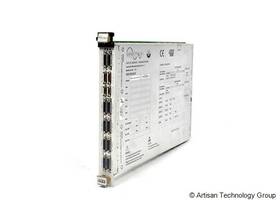
( Brand: Spectrum Signal Processing ), ( Manufacturer Part Number: SCMVX008 ), ( Part Type: Board )
Review SPECTRUM SIGNAL PROCESSING Carrier Board
The **Spectrum Signal Processing SCMVX008 Carrier Board** is a high-performance, modular development platform designed for engineers and researchers working in advanced signal processing, wireless communications, and embedded systems applications. This versatile carrier board serves as the backbone for the **SCMVX008** multi-channel RF transceiver module, enabling seamless integration with a wide range of digital signal processing (DSP) and FPGA-based systems. Built with precision engineering and robust design principles, the SCMVX008 Carrier Board facilitates the development of sophisticated communication systems, including software-defined radios (SDRs), cognitive radios, radar signal processing, and high-speed data acquisition platforms.
At its core, the board features a **high-speed FPGA interface**, typically supporting Xilinx or Altera (Intel) FPGA families, allowing for real-time signal processing, digital down/up-conversion, and advanced modulation/demodulation techniques. The modular design ensures compatibility with various FPGA evaluation kits, enabling users to leverage existing development environments while extending functionality through custom logic implementations. Additionally, the carrier board incorporates **multi-channel analog front-end (AFE) interfaces**, including high-speed ADCs and DACs, capable of handling wideband signals with exceptional dynamic range and low noise performance. This makes it ideal for applications requiring precise signal acquisition, such as spectrum analysis, radar imaging, and wireless testbeds.
For connectivity and expandability, the SCMVX008 Carrier Board provides a comprehensive array of **high-speed serial interfaces**, including PCIe, LVDS, and Gigabit Ethernet, ensuring seamless data transfer between the FPGA, host computer, and peripheral devices. The board also includes **precise timing and synchronization features**, such as GPS-disciplined oscillators and high-accuracy clock distribution networks, which are critical for time-sensitive applications like 5G prototyping, military communications, and radar systems. Optional RF connectors, such as SMA or RF micro-coax, allow for flexible antenna integration, enabling users to test and deploy wireless systems with minimal setup complexity.
Designed with **industrial-grade reliability** in mind, the SCMVX008 Carrier Board incorporates thermal management solutions, including heat sinks and efficient power distribution, to ensure stable operation under demanding conditions. The board s **user-friendly layout** includes clearly labeled connectors, on-board LEDs for status monitoring, and configurable jumpers for easy customization, reducing development time and minimizing potential errors during prototyping. Whether used in academic research, industrial automation, or next-generation wireless infrastructure, this carrier board empowers engineers to push the boundaries of signal processing innovation with unmatched flexibility and performance.
The **Spectrum Signal Processing SCMVX008 Carrier Board** is a specialized hardware module designed for RF signal processing, particularly in applications requiring high-performance modulation, demodulation, and signal conditioning. Below is a detailed analysis of its pros and cons, followed by a conclusion and recommendation.
---
### **Pros of the SCMVX008 Carrier Board**
1. **High Performance and Flexibility**
The SCMVX008 is built around the **Xilinx RFSoC (Radio Frequency System on Chip)**, which integrates FPGA logic with high-speed ADCs and DACs. This combination allows for advanced signal processing tasks such as:
- **Wideband RF signal processing** (up to 6 GHz bandwidth).
- **Real-time modulation/demodulation** (e.g., OFDM, QAM, FM, AM).
- **Digital predistortion (DPD)** for power amplifier linearization.
- **Software-defined radio (SDR) applications**, enabling reconfigurable signal chains.
The FPGA fabric provides programmable logic for custom algorithms, making it adaptable to various communication standards (e.g., LTE, 5G, radar, satellite comms).
2. **High-Speed Analog-to-Digital Conversion (ADC) and Digital-to-Analog Conversion (DAC)**
The board features **12-bit, 10 GSPS ADCs and DACs**, which are among the fastest in the industry. This capability is critical for:- **High-resolution signal acquisition** (e.g., radar, spectrum analysis).
- **Low-latency processing** for real-time applications.
- **Support for advanced modulation schemes** requiring precise timing and amplitude control.
3. **Integrated RF Front-End**
The board includes **RF transceivers** with built-in amplifiers, filters, and mixers, reducing the need for external RF components. This simplifies system design and improves signal integrity by minimizing losses and interference.
4. **Software Ecosystem and Tool Support**
- **Vitis (Xilinx SDK)** and **SDSoC** provide robust development environments for FPGA and processor-based programming.
- **Python and C/C APIs** allow for high-level signal processing scripting, making it accessible to engineers without deep FPGA expertise.
- **Pre-built IP cores** (e.g., for OFDM, FIR filters, FFT) accelerate development cycles.
- **Compatibility with MATLAB/Simulink** enables rapid prototyping and simulation before hardware deployment.
5. **Scalability and Modularity**
The board is part of Xilinx s RFSoC ecosystem, which supports **multi-board systems** for distributed signal processing (e.g., MIMO, beamforming). It can be integrated into larger systems with other RFSoC modules or FPGA carriers.
6. **Low Latency and Parallel Processing**
The FPGA s parallel architecture enables **sub-microsecond processing delays**, which is crucial for:- **Radar and sonar systems** requiring real-time target detection.
- **Financial trading systems** where low-latency signal processing is critical.
- **Wireless backhaul and test equipment** where timing precision matters.
7. **Support for Advanced Algorithms**
The board s computational power allows for:- **Machine learning acceleration** (e.g., FPGA-accelerated neural networks for signal classification).
- **Cryptographic processing** (e.g., AES, SHA) for secure communications.
- **Channel estimation and equalization** in wireless systems.
8. **Commercial and Military-Grade Options**
Xilinx offers variants of the RFSoC platform with **commercial (industrial temperature range) and military-grade (extended temperature range, radiation-hardened)** options, making it suitable for harsh environments.
9. **Community and Vendor Support**
Xilinx has a large ecosystem of partners, documentation, and community forums (e.g., Xilinx Forums, Stack Overflow). This reduces troubleshooting time and provides access to third-party IP and tools.
10. **Future-Proofing**
The RFSoC platform is evolving with newer generations (e.g., RFSoC Gen3) offering higher bandwidth, improved power efficiency, and additional features like **AI acceleration**. Investing in the SCMVX008 ensures compatibility with future upgrades.
---
### **Cons of the SCMVX008 Carrier Board**
1. **High Cost**
The SCMVX008 is an **expensive** board, especially when factoring in:- **Development costs** (licenses for Vitis, FPGA tools, and IP cores).
- **Additional hardware** (e.g., RF connectors, cooling solutions, power supplies).
- **Long-term licensing fees** for Xilinx tools (though some are free for basic use).
For small-scale or low-budget projects, this can be a significant barrier to entry.
2. **Complexity and Steep Learning Curve**
- **FPGA programming** requires knowledge of HDL (VHDL/Verilog), RTL design, and timing closure, which can be daunting for engineers without prior experience.
- **Software-defined radio (SDR) development** involves mastering signal processing algorithms, digital communication theory, and toolchains like Vitis.
- **Debugging** can be time-consuming due to the lack of visual debugging tools compared to microcontroller-based systems.
3. **Power Consumption**
The RFSoC platform, especially when running at full capacity (e.g., high-speed ADCs/DACs), can consume **significant power (10W 50W )**. This may require:
- **High-performance cooling solutions** (e.g., liquid cooling for high-power variants).
- **Additional power supply design** to ensure stable operation.
In battery-powered or portable applications, this can limit usability.
4. **Thermal Management Challenges**
The high-speed ADCs and FPGA logic generate heat, which can lead to:- **Reduced reliability** if thermal thresholds are exceeded.
- **Need for custom cooling** (e.g., heat sinks, fans, or liquid cooling) in enclosed systems.
Poor thermal management can cause **timing issues or even hardware failure**.
5. **Limited Stock and Lead Times**
Xilinx components, including RFSoC boards, can have **long lead times** due to:- **Semiconductor supply chain constraints**.
- **Customization requirements** (e.g., specific RF connectors, memory configurations).
This can delay projects, especially in time-sensitive applications.
6. **Dependency on Xilinx Ecosystem**
- **Toolchain lock-in**: Migrating from Xilinx tools (Vitis, Vivado) to alternatives (e.g., Intel FPGA tools) can be difficult.
- **IP compatibility**: Some third-party IP cores may not be fully optimized for RFSoC, requiring custom development.
- **Firmware updates**: Xilinx may introduce breaking changes in toolchain versions, requiring rework.
7. **Size and Form Factor**
The SCMVX008 is a **large and heavy** board (typically **100mm x 100mm or larger**), which can be a constraint in:- **Portable or embedded systems** where space is limited.
- **High-density integration** (e.g., multi-board systems with tight spacing requirements).
Additional **mechanical design work** may be needed to accommodate the board.
8. **Licensing and Cost of Tools**
While Xilinx offers **free WebPACK licenses** for basic FPGA development, advanced features (e.g., RFSoC support, high-speed I/O, AI acceleration) require **paid licenses** (e.g., Vitis Professional, Vivado Premium). This can add **thousands of dollars** to development costs annually.
9. **Limited Off-the-Shelf Software Support**
Unlike microcontrollers (e.g., STM32, Arduino) with extensive open-source libraries, the RFSoC ecosystem has **fewer pre-built software examples** for niche applications (e.g., specific radar or satellite comms protocols). Engineers may need to develop custom solutions from scratch.
10. **Potential for Overkill**
For **low-complexity applications** (e.g., simple audio processing, basic sensor interfacing), the SCMVX008 may be **far more capable than needed**, leading to:
- **Unnecessary cost** without leveraging advanced features.
- **Complexity without benefit** if the project doesn t require FPGA acceleration.
---
### **Conclusion**
The **Spectrum Signal Processing SCMVX008 Carrier Board** is a **powerful, high-performance tool** for RF signal processing, particularly suited for:- **Advanced wireless communication systems** (5G, LTE, radar, satellite).
- **Real-time signal processing** requiring low latency (e.g., financial trading, defense).
- **Prototyping complex modulation/demodulation schemes**.
- **Applications needing FPGA acceleration** (e.g., AI, cryptography, digital predistortion).
However, it is **not ideal** for:- **Budget-constrained projects** due to high upfront and recurring costs.
- **Simple or low-complexity signal processing** where a microcontroller or DSP would suffice.
- **Portable or space-constrained systems** due to size and power requirements.
- **Developers without FPGA experience**, as the learning curve is steep.
---
### **Recommendation**
#### **Buy the SCMVX008 If:**1. **Your project requires high-speed RF signal processing** (e.g., >1
Details:
Base Board: FRU 600-04015. Condition: Used and in Excellent Condition. Are not included with this equipment unless pictured and/or listed in the above. Fast and hassle-free.
part #: scmvx008 prices
- $3995.00-$4995.00
specifications automationjack:
- brand: Spectrum Signal Processing
- mpn: Scmvx008
- part type: Board
payments automationjack:
- other
- credit card: Visa
- wallet: Google-pay
returns automationjack:
- method: Money back
- paid by: Buyer
- policy: Returns Accepted
- time: 30 Days
offer automationjack:
- availability: In Stock
- options: Ship-to-home
- started: May 19, 2026
- quantity: 1
- sold: 0
general automationjack:
- condition: Used
- Business Industrial > Industrial Automation Motion Controls > Other Automation Equipment
shipping automationjack:
- cost: $25.01
- type: Calculated
- service: FedEx Ground / FedEx Home Delivery, FedEx Standard Overnight, FedEx Ground Economy
- transit: 3-8 Days
- class: Standard, One-day, Economy
- carrier: FedEx
seller automationjack:
- # reviews: 17896
- rating: 99.8%
- city: Champaign, Illinois