GREENSPRING SBC5 Industrypack Carrier
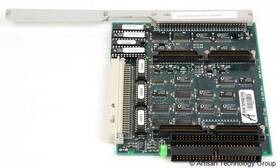
( Brand: Greenspring ), ( Manufacturer Part Number: SBC5 )
Review GREENSPRING Optional Industrypack Carrier
The **Greenspring SBC5 IndustryPack Carrier** is a high-performance, modular expansion platform designed to seamlessly integrate Single-Board Computers (SBCs) with IndustryPack-compatible modules, enabling robust industrial automation, control, and data acquisition applications. Engineered for reliability and flexibility, this carrier board serves as a robust bridge between a host SBC such as those based on ARM, x86, or other high-performance processors and a wide range of IndustryPack modules, including sensors, actuators, communication interfaces, and signal conditioning devices. Its compact yet sturdy design ensures compatibility with a variety of IndustryPack form factors, including IP-20, IP-26, and IP-30, while adhering to strict industrial standards for durability, thermal management, and electromagnetic compatibility (EMC). The carrier features a high-density backplane with robust signal routing, including isolated analog inputs, digital I/O, and high-speed communication buses like CAN, Ethernet, and serial interfaces, all of which are meticulously shielded to minimize noise and ensure data integrity in demanding environments. Built with high-quality materials such as reinforced FR-4 substrates and conformal-coated circuitry, the SBC5 IndustryPack Carrier is well-suited for harsh industrial settings, including factory floors, automotive testing labs, and outdoor installations where exposure to dust, vibration, and temperature fluctuations is common. Its modular architecture allows for easy upgrades and reconfiguration, enabling engineers to adapt the system to evolving project requirements without extensive redesign. Whether deployed in predictive maintenance systems, motor control applications, or distributed control networks, the Greenspring SBC5 IndustryPack Carrier delivers a scalable, future-proof solution that combines the processing power of modern SBCs with the rugged versatility of IndustryPack modules, making it an ideal choice for developers and manufacturers seeking a seamless integration of computing and industrial I/O.
**Overview of the Greenspring SBC5 IndustryPack Carrier**
The Greenspring SBC5 IndustryPack Carrier is a modular carrier board designed to interface Single-Board Computers (SBCs) with IndustryPack modules, enabling flexible and scalable industrial automation, control, and data acquisition applications. Below is a detailed analysis of its pros and cons, followed by a conclusion and recommendation.
---
### **Pros of the Greenspring SBC5 IndustryPack Carrier**
1. **Modular and Scalable Design**
The carrier supports IndustryPack modules, which are standardized for easy integration of sensors, actuators, and communication interfaces (e.g., analog/digital I/O, serial ports, Ethernet). This modularity allows users to expand functionality without replacing the entire system. For example, adding a new analog input module or a communication module can be done by simply swapping or stacking modules.
2. **Compatibility with Industry Standards**
IndustryPack modules adhere to a well-established standard, ensuring broad compatibility with a wide range of third-party modules from various manufacturers. This reduces vendor lock-in and provides access to a diverse ecosystem of hardware solutions.
3. **High Density and Compact Form Factor**
The carrier is designed to maximize space efficiency, allowing multiple modules to be stacked or mounted in tight environments. This is particularly useful in industrial settings where space is limited, such as control panels or enclosures.
4. **Robust and Reliable for Industrial Use**
The carrier is built to withstand harsh industrial conditions, including temperature fluctuations, electrical noise, and mechanical stress. It often includes features like reinforced connectors, shielding, and compliance with standards like IEC 61131-2 for programmable controllers, making it suitable for automation applications.
5. **Flexible Power Distribution**
Many IndustryPack carriers, including the SBC5, support multiple power supply options (e.g., 5V, 12V, 24V) and can distribute power to connected modules efficiently. This flexibility accommodates different module requirements and simplifies power management in complex systems.
6. **Easy Integration with SBCs**
The SBC5 carrier is specifically designed to work with single-board computers like those from Greenspring (e.g., SBC5 series) or other compatible SBCs. This integration simplifies the development of embedded systems by combining the processing power of an SBC with the I/O capabilities of IndustryPack modules.
7. **Support for Real-Time and Embedded Applications**
The combination of an SBC and IndustryPack modules enables real-time data processing, control, and communication, which is critical for applications like motor control, PLC replacements, or data acquisition in industrial environments.
8. **Developer-Friendly Features**
Many IndustryPack carriers include features like debug ports, LEDs for status monitoring, and documentation that simplifies prototyping and troubleshooting. This accelerates development cycles and reduces time-to-market for custom solutions.
9. **Cost-Effective for Custom Solutions**
For applications requiring custom I/O or communication interfaces, building a system around IndustryPack modules can be more cost-effective than designing and manufacturing custom PCBs. The carrier reduces the need for additional hardware layers, lowering both hardware and development costs.
10. **Backward and Forward Compatibility**
The IndustryPack standard has evolved over time, but many carriers support multiple generations of modules. This ensures that existing systems can be upgraded with newer modules, extending the lifespan of the hardware investment.
---
### **Cons of the Greenspring SBC5 IndustryPack Carrier**
1. **Limited to IndustryPack Ecosystem**
While the IndustryPack standard is robust, it is not as universally adopted as other standards like PCIe or USB. This means that users may not find modules for every possible application, and some niche or proprietary hardware may not be compatible. Relying on a single ecosystem can limit flexibility compared to more open standards.
2. **Learning Curve for IndustryPack Modules**
For developers unfamiliar with IndustryPack, there may be a learning curve in understanding module pinouts, power requirements, and communication protocols. This can slow down initial development, especially for teams transitioning from other standards like Arduino or Raspberry Pi.
3. **Potential for Module Compatibility Issues**
Not all IndustryPack modules are created equal, and some may have quirks or incompatibilities with specific carriers or SBCs. For example, a module designed for a different carrier might not fit physically or electrically, requiring additional testing or adapters.
4. **Power and Thermal Management Challenges**
Stacking multiple IndustryPack modules can lead to heat buildup, especially if power-hungry modules are used. The carrier may require additional cooling solutions (e.g., heat sinks, fans) to prevent overheating. Similarly, ensuring consistent power delivery across modules can be challenging in dense configurations.
5. **Limited Expansion Beyond IndustryPack**
The SBC5 carrier is primarily designed for IndustryPack modules, and adding other types of expansion cards (e.g., Ethernet, USB, or custom interfaces) may require additional adapters or separate carriers. This can complicate system design and increase complexity.
6. **Dependence on SBC Performance**
The overall system performance is limited by the capabilities of the connected SBC. If the SBC lacks sufficient processing power, memory, or real-time capabilities, the system may struggle with complex applications like high-speed data acquisition or advanced control algorithms.
7. **Physical Space and Mechanical Constraints**
While the compact form factor is an advantage, it can also be a limitation in larger systems where modules need to be easily accessible for maintenance or replacement. The carrier may not accommodate very large or bulky modules, and mounting options may be limited.
8. **Documentation and Support Variability**
The quality of documentation and technical support can vary depending on the manufacturer. Some IndustryPack module vendors may provide excellent documentation, while others may offer minimal support, leading to potential delays during development or troubleshooting.
9. **Cost of Modules and Carrier**
While the carrier itself may be reasonably priced, the cost of IndustryPack modules can add up, especially for high-end or specialized modules. For applications requiring only a few I/O points, a dedicated I/O board or a microcontroller with built-in interfaces might be more cost-effective.
10. **Potential for Signal Integrity Issues**
In high-speed or high-noise environments, IndustryPack modules may experience signal integrity issues due to long traces or insufficient shielding. This can affect the reliability of analog signals or communication interfaces, requiring careful PCB design or additional filtering.
---
### **Conclusion**
The Greenspring SBC5 IndustryPack Carrier is a powerful and flexible tool for building modular, scalable industrial and embedded systems. Its strengths lie in its compatibility with a standardized ecosystem, robust design for harsh environments, and ease of integration with single-board computers. These features make it an excellent choice for applications requiring custom I/O, real-time control, or rapid prototyping in industrial automation, data acquisition, or embedded systems.
However, the carrier is not without limitations. Its reliance on the IndustryPack ecosystem can restrict flexibility, and the learning curve for developers unfamiliar with the standard may be steep. Additionally, challenges related to power management, thermal dissipation, and signal integrity must be carefully addressed in complex designs. The system s performance is also dependent on the SBC s capabilities, which may not suffice for the most demanding applications.
Ultimately, the SBC5 IndustryPack Carrier is best suited for projects where modularity, scalability, and industrial robustness are prioritized over open-ended flexibility or cost constraints. It is particularly well-suited for:
- Industrial control systems requiring custom I/O or communication interfaces.
- Data acquisition systems where multiple sensors or actuators need to be integrated.
- Applications where rapid iteration and prototyping are critical.
- Environments with harsh operating conditions (e.g., temperature, vibration, electrical noise).
For applications with simpler requirements or where other standards (e.g., Arduino, Raspberry Pi HATs, or PCIe) are more appropriate, alternative solutions may offer better cost, flexibility, or ease of use.
---
### **Recommendation**
**Use the Greenspring SBC5 IndustryPack Carrier if:**1. You are working on an industrial or embedded system that requires modular, scalable I/O or communication interfaces.
2. You need to integrate a variety of IndustryPack-compatible modules (e.g., analog/digital I/O, serial ports, Ethernet) with a single-board computer.
3. Your application operates in harsh environments where reliability and robustness are critical.
4. You value the ability to easily upgrade or replace modules without redesigning the entire system.
5. You are already familiar with or willing to learn the IndustryPack standard, and you have access to compatible modules.
**Avoid or Consider Alternatives if:**1. You require a highly open or widely compatible expansion standard (e.g., PCIe, USB, or Arduino-compatible boards).
2. Your budget is constrained, and the cost of IndustryPack modules or the carrier exceeds the value of the project.
3. You need very high-speed data processing or real-time capabilities that exceed the SBC s performance limits.
4. Your application is simple and does not require the flexibility of modular I/O (e.g., a basic sensor or actuator interface).
5. You lack experience with IndustryPack and would benefit from a more beginner-friendly platform.
**Alternatives to Consider:**- **Raspberry Pi HATs or OSHW (Open Source Hardware) Modules:** For simpler projects or when working with Raspberry Pi, HAT-compatible modules offer a more open and cost-effective alternative.
- **PCIe or USB-Based Expansion Cards:** For desktop or server-like applications, PCIe or USB expansion cards provide high-speed connectivity and broader compatibility.
- **Arduino or STM32-Based Boards:** For low-cost, simple I/O applications, Arduino or STM32 boards with built-in interfaces may be more suitable.
- **Custom PCB Design:** For highly specialized applications, designing a custom PCB with the required I/O
Details:
Fast and hassle-free. Are not included with this equipment unless pictured and/or listed in the above. Hours / Location.
part #: sbc5 prices
- $1450.00-$2995.00
specifications automationjack:
- brand: Greenspring
- mpn: Sbc5
seller automationjack:
- rating: 99.8%
- city: Champaign, Illinois
- # reviews: 17946
offer automationjack:
- availability: In Stock
- started: May 28, 2026
- options: Ship-to-home
- quantity: 1
- sold: 0
shipping automationjack:
- transit: 4-7 Days
- service: FedEx Ground / FedEx Home Delivery, FedEx Standard Overnight, FedEx Ground Economy
- cost: $49.75
- class: Standard, One-day, Economy
- type: Calculated
- carrier: FedEx
payments automationjack:
- wallet: Apple-pay
- credit card: Discover
- other
general automationjack:
- condition: Used
- Business Industrial > Industrial Automation Motion Controls > Other Automation Equipment
returns automationjack:
- time: 30 Days
- paid by: Buyer
- policy: Returns Accepted
- method: Money back