OMRON RFH75 Braking Resistor I.r.e 3R6
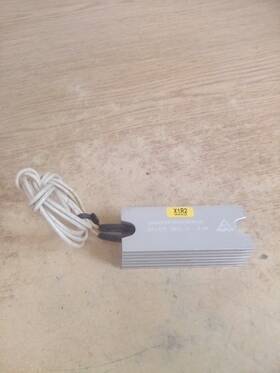
( Brand: Omron ), ( Manufacturer Part Number: RFH75 ), ( Model: I.R.E OMRON RFH75 3R6 ), ( Part Type: Resistor )
Review OMRON Rfh75.r.e 3r6 Braking Resistor
The **Omron RFH75 I.R.E 3R6 Braking Resistor** is a high-performance, industrial-grade braking resistor designed to efficiently dissipate the kinetic energy generated during the deceleration of electric motors, particularly in applications involving frequent starts, stops, or regenerative braking. Engineered with precision and built to withstand rigorous operational demands, this resistor is an essential component for systems requiring controlled and rapid motor braking, such as conveyors, cranes, hoists, and other heavy-duty machinery where energy recovery and wear reduction are critical. Constructed from high-quality, temperature-resistant materials, the RFH75 series features a robust, compact design that maximizes thermal efficiency while minimizing space requirements in control panels or enclosures. Its **3R6** rating indicates a nominal resistance value of **3.6 ohms**, carefully selected to optimize braking performance for motors in the 7.5 kW to 15 kW range, ensuring smooth deceleration without excessive heat buildup or voltage spikes. The **I.R.E** designation signifies its compliance with international safety standards, including **IEC/EN 60204-1**, guaranteeing reliable operation in both industrial and hazardous environments. With a **75 mm** mounting width, this resistor integrates seamlessly into standard control panel layouts, offering flexibility for retrofitting or new installations. Its **air-cooled design** ensures efficient heat dissipation, reducing the need for additional cooling mechanisms while extending the lifespan of the component. Whether used in conjunction with Omron s **AID, CV, or G3 series inverters** or other compatible drives, the RFH75 I.R.E 3R6 provides a dependable solution for minimizing mechanical stress on motors, reducing energy waste, and enhancing overall system efficiency. Built to endure continuous operation under varying load conditions, this braking resistor exemplifies Omron s commitment to durability, performance, and engineering excellence, making it a trusted choice for engineers and maintenance professionals seeking long-term reliability in demanding industrial applications.
Buying the **Omron RFH75 I.R.E 3R6 braking resistor** (or similar braking resistors) for industrial applications such as motor braking, energy recovery, or dynamic braking circuits has both advantages and disadvantages. Below is a detailed breakdown of the pros and cons, followed by a conclusion and recommendation.
---
### **Pros of buying a Omron RFH75 I.R.E 3R6 Braking Resistor**
1. **High Power Handling and Reliability**
The Omron RFH75 series is designed for heavy-duty industrial applications, capable of handling high current and voltage loads. The **3R6 (3.6 ohms)** model is specifically rated for dynamic braking in motors, ensuring stable operation under high inrush currents and repeated braking cycles. Omron s reputation for durability means these resistors are built to last in harsh environments.
2. **Energy Recovery and Efficiency**
Braking resistors dissipate kinetic energy as heat, reducing wear on mechanical brakes and improving system efficiency. In applications like conveyors, cranes, or elevator systems, this can extend equipment lifespan and reduce maintenance costs. The **I.R.E (Industrial Resistor Element)** construction ensures consistent performance over time.
3. **Compatibility with Control Systems**
Omron braking resistors are often designed to integrate seamlessly with their own or other major PLCs (Programmable Logic Controllers) and motor control systems. This makes them a reliable choice for automated industrial setups where precise braking control is critical.
4. **Wide Operating Range**
These resistors can operate across a broad temperature range (typically -40 C to 105 C), making them suitable for environments with extreme conditions, such as outdoor installations or high-temperature factories.
5. **Low Maintenance**
Unlike mechanical brakes, braking resistors have no moving parts, reducing the need for frequent adjustments or replacements. Their robust construction minimizes the risk of failure due to wear and tear.
6. **Customization and Scalability**
Omron offers various models and configurations, allowing for customization based on specific voltage, current, and braking requirements. The **3R6 model** is part of a scalable series, so it can be paired with other resistors or components as system demands grow.
7. **Safety Features**
Many Omron braking resistors include built-in safety mechanisms, such as thermal protection or overload resistance, to prevent damage in case of abnormal conditions. This reduces the risk of system failures that could lead to downtime or accidents.
---
### **Cons of buying a Omron RFH75 I.R.E 3R6 Braking Resistor**
1. **High Initial Cost**
Industrial braking resistors, especially from reputable brands like Omron, are more expensive upfront compared to generic or aftermarket alternatives. For small-scale or low-budget projects, this cost may be prohibitive.
2. **Heat Dissipation Requirements**
While braking resistors convert energy into heat, they generate significant thermal energy during operation. Proper ventilation and cooling systems are often required to prevent overheating, which may add to installation and maintenance costs.
3. **Limited Lifespan Under Extreme Conditions**
Although Omron resistors are durable, prolonged exposure to extreme temperatures, humidity, or contamination (e.g., dust, chemicals) can degrade performance over time. Regular inspections and replacements may be necessary in harsh environments.
4. **Size and Installation Constraints**
High-power braking resistors like the RFH75 series are bulky and require dedicated space in the electrical panel or near the motor. Installation may require additional wiring, mounting, and structural considerations, which can complicate retrofitting into existing systems.
5. **Dependence on Omron Ecosystem**
While Omron resistors work well with their own control systems, compatibility with third-party PLCs or non-Omron components may require additional interfacing or adapters. This could introduce complexity or compatibility issues in mixed-system setups.
6. **Potential for Energy Waste**
Braking resistors convert kinetic energy into heat rather than storing or reusing it. In applications where energy efficiency is critical (e.g., regenerative braking systems), this can be seen as a drawback compared to alternatives like regenerative drives or flywheels.
7. **Specialized Knowledge Required**
Proper sizing, installation, and maintenance of braking resistors require technical expertise. Misconfiguration (e.g., incorrect resistance value or wiring) can lead to inefficiencies, overheating, or even system damage. This may necessitate hiring skilled electricians or engineers.
---
### **Conclusion**
The **Omron RFH75 I.R.E 3R6 braking resistor** is a high-quality, reliable choice for industrial applications where dynamic braking is essential. Its strengths lie in durability, efficiency in energy dissipation, compatibility with control systems, and low maintenance requirements. However, the higher cost, space constraints, and need for proper cooling and installation can be significant drawbacks, particularly for smaller operations or projects with limited budgets.
For **large-scale industrial applications** (e.g., heavy machinery, conveyors, cranes, or elevator systems) where reliability and longevity are critical, the Omron RFH75 series is an excellent investment. It justifies its cost through reduced mechanical wear, extended equipment lifespan, and improved safety.
For **smaller or budget-conscious projects**, or applications where energy recovery is prioritized over simplicity (e.g., regenerative braking systems), alternative solutions such as generic braking resistors, regenerative drives, or hybrid systems might be more cost-effective.
---
### **Recommendation**
- **Buy the Omron RFH75 I.R.E 3R6 braking resistor if:**- You are working on a **large industrial system** where reliability and low maintenance are priorities.
- Your application requires **precise braking control** and compatibility with Omron or similar PLCs.
- You have the **space and ventilation** to accommodate the resistor safely.
- Long-term cost savings (reduced mechanical brake wear, fewer replacements) outweigh the initial investment.
- **Consider alternatives if:**- Your budget is **limited**, and you can find a similarly rated generic resistor at a lower cost.
- Your application could benefit from **regenerative braking** or energy recovery systems, which are more efficient in the long run.
- You are working with **third-party control systems** that may not integrate seamlessly with Omron components.
- The installation **space is constrained**, and a smaller or modular resistor would be more practical.
Ultimately, the decision should be based on a **cost-benefit analysis** that weighs the upfront expense against long-term operational benefits, as well as the specific requirements of your application. Consulting with an electrical engineer or Omron technical support can also help ensure the resistor is correctly sized and applied for your use case.
Details:
Location: NC Wall Bin The customer must know their part number and purchase accordingly. If it is included in this listing, its shown the photo. If we say the item works, then it was tested to best of our ability.
FOR YOUR CONSIDERATION:.R.E Omron RFH75 3R6 J Braking Resistor.
part #: rfh75 price
- $39.99
specifications automationjack:
- brand: Omron
- mpn: Rfh75
- model: I.r.e Omron Rfh75 3r6
- part type: Resistor
offer automationjack:
- options: Ship-to-home
- sold: 0
- quantity: 1
- started: February 5, 2026
- availability: In Stock
seller automationjack:
- city: Rose City, Michigan
- # reviews: 49389
- rating: 99.5%
returns automationjack:
- policy: Returns Accepted
- method: Money back
- paid by: Buyer
- time: 30 Days
general automationjack:
- condition: Used
- Business Industrial > Industrial Automation Motion Controls > Other Automation Equipment
shipping automationjack:
- transit: 4-7 Days
- type: Fixed
- class: Standard
- service: Standard
- cost: $0.00
payments automationjack:
- wallet: Apple-pay
- other
- credit card: Discover
Omron RFH75 Is Similar To:
- Industria Resistenze Elettriche Ax-rem00k4075-ie I.r.e Omron Rfh220 75r J Braking Resistor Aluminum Housing 400w 75ohm (39% similar) Address, next day automation, 9472 hemlock lane length : 200MM. This is a surplus item. Specifications: model #: AX-REM00K4075-IE. Omron RFH220 75R j braking resistor, aluminum housing, 400W 75OHM...(November 6th, 2024)