APPLIED ROBOTICS QS-200NP-T3 Dynamic Brake
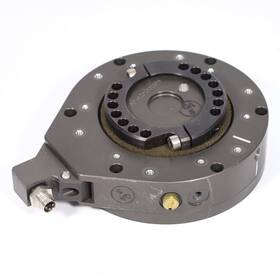
( Brand: Applied Robotics ), ( Manufacturer Part Number: QS-200NP-T3 ), ( Operating Pressure: 1.0 6.0 Bar ), ( Moment Trip Point: Mx My 5.9 32.4 N-m ), ( Operating Temperature Min.: 0 Deg C ), ( Max. 100 Deg C: 212 Deg F ), ( Continuously Variable: 52 287 In-lb ), ( Z Axis: /-0.013 Mm /-0.0005 In ), ( Average Response Time: 15 Ms ), ( Switch Description: High Reliability Aircraft Snap Acting Type. ), ( Manufacturers: Applied Robotics, Center Of Mass 25.7 Mm ), ( From Robot Adaptor Plate : 1.01 In ), ( Ul/csa Approved. Average Mechanical Life: 7 Million Cycles ), ( Rotary Compliance: No Limit ), ( Sub-category: Dynamic Brake ), ( Rotational: /-0.419 Radians, /-0.024 Degrees ), ( Mass: .68 Kg, 1.5 Lb ), ( Type: Brake ), ( Repeatability At Tool Mounting Surface X And Y Axes: /-0.025 /-0.001 In ), ( Compliance Angle: /-5 Deg ), ( Axial Compliance: Z 5.20 Mm, 0.205 In ), ( Torque Trip Point: Mz 7.5 45.2 N-m ), ( Country Of Origin: United States )
Review APPLIED ROBOTICS Dynamic Brake
The **Applied Robotics QS-200NP-T3 Dynamic Brake** is a high-performance, precision-engineered braking solution designed to deliver exceptional control, efficiency, and reliability in industrial automation, robotics, and motion control applications. Part of Applied Robotics advanced QS series, this dynamic brake is specifically engineered to regulate and dissipate excess energy generated by servo motors, ensuring smooth deceleration, precise positioning, and protection against mechanical overloads in high-speed and high-torque systems. Built with a robust **T3-rated** thermal management system, the QS-200NP-T3 excels in demanding environments where consistent performance under sustained loads is critical, offering an impressive **200 Nm (148 lb-ft) torque capacity** to handle heavy-duty braking requirements with ease. Its compact yet durable design incorporates a **non-contact, brushless copper rotor** and a **high-efficiency permanent magnet stator**, minimizing wear, reducing maintenance needs, and extending operational lifespan ideal for applications where uptime and longevity are paramount.
The QS-200NP-T3 integrates seamlessly with servo drives and motion controllers through a **modular, plug-and-play interface**, supporting both analog (0-10V or 4-20mA) and digital (PWM or RS-485) control signals for flexible integration into existing automation systems. Its **adaptive braking algorithm** dynamically adjusts to varying load conditions, providing smooth, jerk-free deceleration while optimizing energy recovery and reducing thermal buildup. The unit s **overload protection** features, including thermal shutdown and current limiting, safeguard the system from damage due to sudden surges or mechanical faults, ensuring operational safety without compromising performance. Additionally, the QS-200NP-T3 is engineered for **low-noise operation**, making it suitable for applications in cleanroom environments or facilities where acoustic considerations are important.
Constructed from high-grade materials, including a **stainless steel housing** and corrosion-resistant components, this dynamic brake is built to withstand harsh industrial conditions, including exposure to dust, moisture, and temperature fluctuations within a broad operating range of **-20 C to 60 C**. Its **IP65-rated enclosure** provides robust protection against ingress of solids and liquids, while the **sealed bearing assembly** eliminates the need for periodic lubrication, further enhancing reliability in unmanned or remote operations. Whether deployed in CNC machining centers, robotic assembly lines, conveyor systems, or precision packaging equipment, the QS-200NP-T3 delivers unmatched braking performance, energy efficiency, and operational resilience, making it a trusted choice for engineers and system integrators seeking a high-performance, low-maintenance solution.
### **Pros and Cons of buying a Applied Robotics QS-200NP-T3 Dynamic Brake**
#### **Pros:**1. **High Torque and Power Density** The QS-200NP-T3 delivers a high torque output (up to 200 Nm) in a compact design, making it suitable for applications requiring precise control and high performance in limited spaces.
2. **Dynamic Braking Capability** Unlike traditional mechanical brakes, this dynamic brake provides smooth, energy-efficient braking by converting kinetic energy into electrical energy, reducing wear and heat buildup.
3. **Low Maintenance** Being an electric brake, it eliminates the need for frequent mechanical adjustments, lubrication, or replacement of friction components, reducing downtime and maintenance costs.
4. **Fast Response Time** The QS-200NP-T3 offers rapid braking response, which is critical in applications requiring quick stops, such as conveyor systems, robotics, or automated machinery.
5. **Energy Recovery** The dynamic braking feature allows for energy regeneration, which can be fed back into the system or grid, improving overall energy efficiency in industrial settings.
6. **Compatibility with Variable Frequency Drives (VFDs)** It integrates well with VFDs, allowing for smooth acceleration and deceleration, which enhances system reliability and extends the lifespan of connected equipment.
7. **Durability and Longevity** Built with robust materials, this brake is designed for heavy-duty applications, offering extended operational life compared to traditional friction brakes.
8. **Reduced Noise and Vibration** Electric braking minimizes mechanical noise and vibration, contributing to a quieter and more stable operating environment.
9. **Customizable Control Options** The brake can be programmed for specific applications, allowing users to adjust braking force, response time, and energy recovery settings as needed.
10. **Safety Features** Many models include built-in safety mechanisms such as overcurrent protection and thermal monitoring to prevent damage and ensure safe operation.
---
#### **Cons:**1. **Higher Initial Cost** Compared to traditional mechanical brakes, the QS-200NP-T3 and associated control systems may have a higher upfront cost, which could be a barrier for budget-conscious buyers.
2. **Dependency on Electrical Systems** Since it relies on electrical power, any issues with the power supply, VFDs, or control systems could disrupt braking functionality, requiring additional safeguards.
3. **Complex Installation and Setup** Integrating this brake into an existing system may require specialized knowledge, additional wiring, and calibration, potentially increasing installation time and costs.
4. **Limited Offline Operation** Unlike mechanical brakes, which can function independently, the QS-200NP-T3 requires a power source to operate, limiting its use in applications where power is unreliable or unavailable.
5. **Potential for Overheating in High-Duty Cycles** While dynamic brakes are generally more efficient, prolonged high-load braking without proper cooling can lead to overheating, necessitating adequate ventilation or cooling solutions.
6. **Compatibility Issues with Older Systems** If the existing machinery lacks compatible control interfaces or power supplies, additional modifications may be needed, adding complexity and expense.
7. **Training Requirements** Operators and maintenance personnel may need training to properly configure, monitor, and troubleshoot the brake, increasing training costs.
8. **Energy Recovery Limitations** While the brake recovers energy, the efficiency of this process depends on the system s design. Not all recovered energy may be usable, and excess energy may need to be dissipated.
9. **Potential for Component Failure** Like any electrical device, the QS-200NP-T3 could experience failures in electronics or wiring, requiring repairs or replacements that may not be as straightforward as fixing a mechanical brake.
10. **Space and Layout Considerations** While compact, the brake and its associated components (e.g., VFDs, cooling systems) may require additional space in the installation area, which could be a constraint in tight environments.
---
### **Conclusion:**The Applied Robotics QS-200NP-T3 dynamic brake is a high-performance solution for applications requiring precise, energy-efficient, and low-maintenance braking. Its advantages in torque density, response time, and longevity make it ideal for industrial automation, robotics, and conveyor systems where reliability and efficiency are critical. However, the higher initial cost, dependency on electrical systems, and complexity of installation may pose challenges, particularly for smaller operations or those with limited technical resources.
For users prioritizing long-term savings, energy efficiency, and reduced maintenance, the QS-200NP-T3 is a strong investment. Conversely, those operating on tight budgets or in environments where power reliability is questionable may find traditional mechanical brakes more practical.
---
### **Recommendation:** **Buy the QS-200NP-T3 if:**- Your application demands high torque, fast braking, and energy recovery (e.g., automated manufacturing, robotics, or high-speed conveyors).
- You can justify the higher upfront cost with long-term operational savings and reduced maintenance.
- Your system is compatible with VFDs and has reliable power supply infrastructure.
- You have access to technical support or personnel trained in configuring and maintaining dynamic brakes.
**Avoid or reconsider if:**- Your budget is constrained, and the initial cost outweighs the benefits for your specific use case.
- Your system lacks the necessary electrical infrastructure or control systems to support dynamic braking.
- You require a simple, low-maintenance solution without the need for advanced features like energy recovery.
- Your application involves frequent power outages or unreliable electrical conditions.
For most industrial applications where performance and efficiency are key, the QS-200NP-T3 is a **highly recommended choice**, provided the operational requirements and infrastructure align with its capabilities.
Details:
Protect your high-value robotic assets with the Applied Robotics Quickstep QS-200NP-T3. Applied Robotics QS-200NP-T3 Dynamic Brake. This rugged collision sensor is a staple in industrial cells, designed to act as mechanical fuse that absorbs impact and signals an emergency stop the moment obstruction detected.
part #: qs200npt3 prices
- $327.98-$2149.00
specifications automationjack:
- brand: Applied Robotics
- mpn: Qs-200np-t3
- operating pressure: 1.0 6.0 Bar
- moment trip point: Mx My 5.9 32.4 N-m
- operating temperature min.: 0 Deg C
- max. 100 deg c: 212 Deg F
- continuously variable: 52 287 In-lb
- z axis: /-0.013 Mm /-0.0005 In
- average response time: 15 Ms
- switch description: High Reliability Aircraft Snap Acting Type.
- manufacturers: Applied Robotics, Center Of Mass 25.7 Mm
- from robot adaptor plate : 1.01 In
- ul/csa approved. average mechanical life: 7 Million Cycles
- rotary compliance: No Limit
- sub-category: Dynamic Brake
- rotational: /-0.419 Radians, /-0.024 Degrees
- mass: .68 Kg, 1.5 Lb
- type: Brake
- repeatability at tool mounting surface x and y axes: /-0.025 /-0.001 In
- compliance angle: /-5 Deg
- axial compliance: Z 5.20 Mm, 0.205 In
- torque trip point: Mz 7.5 45.2 N-m
- country of origin: United States
payments automationjack:
- other
- wallet: Apple-pay
- credit card: Diners-club
shipping automationjack:
- transit: 3-7 Days
- type: Fixed
- service: Standard
- class: Standard
- cost: $0.00
returns automationjack:
- policy: No Returns
general automationjack:
- condition: For parts or not working
- Business Industrial > Industrial Automation Motion Controls > Other Automation Equipment
seller automationjack:
- rating: 99.5%
- # reviews: 16730
- city: Goffstown, New Hampshire
offer automationjack:
- availability: In Stock
- options: Ship-to-home
- quantity: 1
- started: February 4, 2026
- best offers: True
- sold: 0