BRODERSEN PXU-20.924 Process Signal Converter
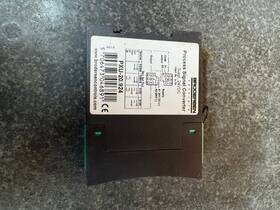
( Brand: Brodersen ), ( Manufacturer Part Number: PXU-20.924 ), ( Part Type: Signal Converter ), ( Country Of Origin: United States )
Review BRODERSEN Process Signal Converter
The **Brodersen PXU-20.924 Process Signal Converter** is a high-performance, modular industrial device designed to seamlessly interface and convert analog process signals between various formats, ensuring precise and reliable communication within complex automation systems. Engineered with robust construction and a focus on durability, this converter is built to withstand the demanding environments of manufacturing, chemical processing, oil and gas, and other industrial applications where signal integrity and operational consistency are critical. Its compact yet versatile design allows for easy integration into existing control systems, making it an ideal solution for upgrading or expanding signal processing infrastructure without extensive downtime or infrastructure overhauls.
At its core, the PXU-20.924 excels in converting between a wide range of analog signals, including 4-20 mA, 0-20 mA, 0-24 mA, 0-10 VDC, and 1-5 VDC, while also supporting digital communication protocols such as Profibus DP, Modbus RTU, and HART for enhanced compatibility with modern field devices and SCADA systems. This flexibility ensures seamless interoperability between legacy systems and cutting-edge automation technologies, reducing the need for costly retrofitting or signal conditioning hardware. The device s modular architecture allows users to configure it with multiple input and output channels, accommodating diverse signal requirements while maintaining a clean and organized wiring scheme.
One of the standout features of the PXU-20.924 is its advanced signal conditioning capabilities, which include precise linearization, scaling, and filtering to eliminate noise and ensure accurate data transmission. The converter s high-precision analog-to-digital and digital-to-analog converters (ADCs and DACs) deliver exceptional resolution and accuracy, even under fluctuating environmental conditions such as temperature variations or electrical interference. Additionally, its built-in diagnostics and fault detection mechanisms provide real-time monitoring of signal integrity, alerting operators to potential issues before they escalate into system failures. This proactive approach to maintenance helps minimize unplanned downtime and extends the operational lifespan of connected equipment.
The PXU-20.924 is also designed with user convenience in mind, featuring an intuitive front-panel interface that includes LED indicators for status monitoring and configuration settings. The device supports both local and remote programming via compatible software tools, allowing engineers to customize signal conversions, set thresholds, and configure communication parameters with ease. Its robust enclosure, typically rated for industrial standards such as IP65 or higher, protects against dust, moisture, and mechanical stress, ensuring reliable performance in harsh environments. Whether deployed in a control room, on a process line, or in a remote field location, the PXU-20.924 delivers consistent performance and reliability, making it a trusted asset for any industrial automation setup.
In summary, the **Brodersen PXU-20.924 Process Signal Converter** is a versatile, high-precision tool that bridges the gap between disparate signal types and communication protocols, empowering industries to achieve greater efficiency, accuracy, and operational resilience. Its combination of advanced signal processing, modular flexibility, and rugged durability makes it an indispensable component for modern automation systems seeking to optimize performance while minimizing complexity.
### **Pros and Cons of buying a Brodersen PXU-20.924 Process Signal Converter**
The **Brodersen PXU-20.924** is a process signal converter designed for industrial applications, particularly in converting and conditioning analog signals (e.g., 4-20 mA, 0-20 mA, 0-10 V, or RTD/thermocouple inputs) into standardized outputs for further processing or monitoring. Below is a detailed analysis of its advantages and drawbacks.
---
### **Pros**
1. **Wide Input and Output Signal Compatibility**
- Supports multiple input types, including 4-20 mA, 0-20 mA, 0-10 V, RTD (Resistance Temperature Detector), and thermocouple signals (e.g., J, K, T, E, N, S, B).
- Can convert these signals into standardized outputs like 4-20 mA, 0-10 V, or digital signals (e.g., Profibus, Modbus, or HART) depending on the model variant.
- Useful in industrial environments where different sensors or legacy systems require signal standardization.
2. **High Accuracy and Reliability**
- Designed for industrial use, the PXU-20.924 typically offers precise signal conversion with minimal drift or noise, ensuring consistent performance in harsh conditions.
- Many Brodersen devices are built with robust components to withstand temperature fluctuations, vibration, and electrical interference.
3. **Modular and Flexible Design**
- The PXU series is part of Brodersen s modular platform, allowing for easy integration into existing systems. It can be combined with other Brodersen modules (e.g., I/O modules, communication modules) for expanded functionality.
- Supports both analog and digital communication protocols, making it adaptable to modern SCADA or PLC systems.
4. **Easy Installation and Configuration**
- Designed for plug-and-play operation with minimal wiring complexity. Terminal blocks or screw terminals simplify connections.
- Configuration is often user-friendly, with options for local or remote programming via software tools provided by Brodersen.
5. **Compatibility with Industrial Standards**
- Meets or exceeds industry standards for electrical safety (e.g., IP65/67 for protection against dust and water) and electromagnetic compatibility (EMC).
- Suitable for use in environments like manufacturing, oil and gas, water treatment, or HVAC systems where reliability is critical.
6. **Diagnostic and Monitoring Features**
- Many Brodersen devices include built-in diagnostics, such as fault detection, signal monitoring, and alarm outputs, which help in predictive maintenance.
- Some variants support HART communication, enabling advanced troubleshooting and calibration without removing the device from the system.
7. **Long-Term Availability and Support**
- Brodersen is a well-established brand with a history of supporting industrial automation, reducing the risk of obsolescence.
- Technical support and spare parts are generally accessible, which is important for long-term operational reliability.
---
### **Cons**
1. **Limited Output Options**
- While the PXU-20.924 supports a variety of inputs, its output options may be restricted depending on the specific model variant. For example, it may not support all digital communication protocols (e.g., Ethernet/IP or Foundation Fieldbus) unless paired with additional modules.
- If you require outputs like 0-20 mA or specific digital protocols, verify compatibility before purchase, as some variants may not include these features.
2. **Potential Complexity for Non-Experts**
- Industrial signal converters can be confusing for users without a background in automation or electrical engineering. Configuration settings (e.g., scaling, units, or communication parameters) may require careful attention to avoid miscalibration.
- Documentation and setup guides may assume prior knowledge, so additional training or support may be needed.
3. **Cost Considerations**
- Brodersen devices are generally mid-to-high-end in terms of pricing, especially when compared to generic or off-brand alternatives. The cost may be justified by reliability and support, but it could be prohibitive for small-scale or budget-conscious projects.
- Additional costs may arise from required accessories (e.g., mounting racks, communication cables, or software licenses).
4. **Dependence on Brodersen s Ecosystem**
- If your system relies heavily on Brodersen modules, you may face limitations if you later need to integrate with other brands (e.g., Siemens, Allen-Bradley, or Beckhoff). Compatibility may require additional gateways or converters.
- Proprietary software or tools for configuration might not be as user-friendly as third-party alternatives.
5. **Physical Size and Space Requirements**
- Industrial signal converters like the PXU-20.924 are typically larger than consumer-grade devices. In space-constrained environments (e.g., compact control panels), this could be a drawback.
- Mounting may require additional hardware (e.g., DIN rails, enclosures), adding to installation complexity.
6. **Potential for Overkill in Simple Applications**
- If your application only requires basic signal conversion (e.g., a single 4-20 mA to 0-10 V conversion without advanced features), a simpler or cheaper converter (e.g., from a different brand) might suffice.
- Features like HART or Profibus may not be necessary, increasing unnecessary complexity and cost.
7. **Limited Customization for Unique Requirements**
- While the PXU-20.924 is versatile, it may not support highly specialized or non-standard signal types (e.g., proprietary sensor outputs or unusual scaling requirements). Custom solutions might require additional components or workarounds.
---
### **Conclusion**
The **Brodersen PXU-20.924 Process Signal Converter** is a robust, reliable, and flexible tool for industrial applications where signal standardization, accuracy, and long-term support are priorities. Its ability to handle multiple input/output types, integrate with other Brodersen modules, and offer diagnostic features makes it a strong choice for environments with complex or legacy systems. However, its cost, potential complexity, and dependence on Brodersen s ecosystem may not align with every use case, particularly in smaller or simpler applications.
For users who require a high-quality, modular, and well-supported signal converter with broad compatibility, the PXU-20.924 is highly recommended. Conversely, those working with tight budgets, non-industrial applications, or systems requiring third-party integration may find it less ideal and should consider alternatives.
### **Recommendation**
- **Buy the Brodersen PXU-20.924 if:**- You need a reliable, modular signal converter for industrial use with support for multiple input/output types.
- Your system already uses Brodersen modules, or you prioritize long-term availability and technical support.
- You require advanced features like HART communication, diagnostics, or integration with SCADA/PLC systems.
- Your application demands high accuracy and resistance to environmental interference.
- **Consider alternatives if:**- Your budget is limited, and you can find a similarly capable converter at a lower cost from another brand.
- Your application is simple (e.g., basic 4-20 mA to 0-10 V conversion) and does not require Brodersen s ecosystem.
- You need extensive customization or support for non-standard signals that the PXU-20.924 does not cover.
- Space constraints or ease of use are critical, and you prefer a more compact or user-friendly device.
Before purchasing, verify the specific model variant s output capabilities, compatibility with your existing system, and any additional accessories required. Consulting with Brodersen s technical support or a local automation specialist can also help ensure the device meets your exact needs.
Details:
Powers on OK Removed from working lab, was fine when removed.
part #: pxu20924 prices
- $115.49-$150.00
specifications automationjack:
- brand: Brodersen
- mpn: Pxu-20.924
- part type: Signal Converter
- country of origin: United States
returns automationjack:
- policy: No Returns
offer automationjack:
- options: Ship-to-home
- quantity: 1
- sold: 0
- availability: In Stock
- started: May 13, 2026
seller automationjack:
- rating: 100.0%
- city: Lakewood, Ohio
- # reviews: 180
payments automationjack:
- credit card: Mastercard
- other
- wallet: Google-pay
shipping automationjack:
- type: Calculated
- transit: 5-10 Days
- class: Standard
- carrier: USPS
- cost: $9.35
- service: USPS Ground Advantage
general automationjack:
- Business Industrial > Industrial Automation Motion Controls > Other Automation Equipment
- condition: Used