LIEBERT PCR3000 Emerson
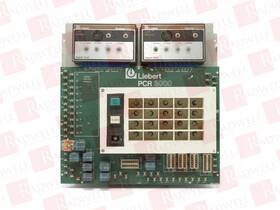
( Brand: Liebert ), ( Manufacturer Part Number: PCR3000 )
Review LIEBERT Emerson Used
The **Liebert PXR 3000 (formerly Emerson Network Power PXR 3000)** is a high-performance, scalable, and intelligent uninterruptible power system (UPS) designed to deliver robust protection, efficiency, and reliability for critical IT infrastructure in enterprise, data center, and mission-critical environments. Engineered with Emerson s advanced **Intelligent Power** technology, this modular UPS combines cutting-edge power conditioning, seamless scalability, and integrated smart management to ensure continuous operation even during grid disturbances, power surges, or extended outages. The PXR 3000 operates in **online double-conversion mode**, providing instantaneous protection by converting incoming AC power to DC, then back to clean, stable AC eliminating voltage fluctuations, harmonics, and transient spikes that could otherwise damage sensitive equipment. Its **modular architecture** allows for seamless expansion, enabling users to scale capacity incrementally from **300 kVA to 1.2 MVA** (in 300 kVA increments) without disrupting operations, making it an ideal solution for growing data centers or facilities requiring future-proofing.
At the heart of the PXR 3000 lies **Emerson s PowerLogic** platform, which integrates real-time monitoring, predictive analytics, and automated fault detection to enhance operational efficiency and reduce downtime. The system s **Intelligent Power Management (IPM)** software provides centralized oversight through a user-friendly interface, enabling administrators to remotely track power quality, load distribution, battery health, and environmental conditions. Advanced features like **automatic load shedding** and **battery equalization** ensure optimal performance while extending battery life, while **redundant components** such as dual power modules and bypass contacts guarantee high availability even in the event of a component failure. The UPS also supports **N 1 or N X redundancy**, allowing for graceful degradation under partial failure scenarios, which is critical for maintaining uptime in high-stakes environments like financial institutions, healthcare facilities, or cloud computing centers.
Beyond its technical prowess, the PXR 3000 is built with **sustainability and energy efficiency** in mind. Its **high-efficiency power conversion** (up to **96% efficiency in online mode**) minimizes energy waste, reducing operational costs and environmental impact. The system also incorporates **eco-friendly cooling technologies**, including **variable-speed fans and liquid cooling options**, to optimize thermal management without compromising performance. Additionally, the UPS complies with **global safety and environmental standards**, including **IEC 62040-3, UL 1778, and EN 62040**, ensuring compliance with regional regulations while maintaining peak reliability. Whether deployed in a **standalone configuration** or integrated into a larger **distributed power infrastructure**, the Liebert PXR 3000 stands as a testament to Emerson s commitment to delivering **smart, scalable, and resilient power protection** for the most demanding applications.
### **Pros and Cons of buying a Liebert PXR3000 (Emerson) UPS**
The **Liebert PXR3000** (part of Emerson s PXR series) is a high-end, online double-conversion UPS designed for critical data centers, enterprise networks, and mission-critical applications. Below is a detailed breakdown of its advantages and disadvantages.
---
### **Pros**
1. **High Reliability and Redundancy**
- Features **N 1 or 2N redundancy**, ensuring continuous power even if one or two power modules fail. This is ideal for environments where downtime is unacceptable.
- **Hot-swappable power modules** allow maintenance without interrupting operations.
2. **Online Double-Conversion Design**
- Provides **clean, stable power** by continuously converting AC to DC and back to AC, eliminating voltage spikes, sags, and noise. This is crucial for sensitive electronics like servers, networking equipment, and medical devices.
- Offers **infinite backup runtime** (limited only by battery capacity) in bypass mode, though runtime is typically shorter in normal operation.
3. **Advanced Battery Management**
- Supports **floating battery systems**, allowing for modular battery expansion without downtime.
- Includes **battery health monitoring** and predictive failure alerts to prevent unexpected outages.
- Compatible with **high-efficiency, long-life batteries** (e.g., lithium-ion or advanced lead-acid), reducing maintenance costs over time.
4. **Scalability and Flexibility**
- Can be **rack-mounted or floor-standing**, with options for **single-phase or three-phase** configurations (the PXR3000 is typically a three-phase model).
- Supports **parallel operation** with other PXR units for larger power requirements.
- Modular design allows for **future upgrades** in capacity and features.
5. **Network and Remote Management**
- Includes **SNMP, web interface, and API support** for centralized monitoring and control.
- **Remote diagnostics and alerts** via **Emerson s PowerLogic or third-party systems** (e.g., Nagios, PRTG).
- Supports **automatic failover and load balancing** in redundant setups.
6. **High Efficiency and Energy Savings**
- Operates at ** 94-96% efficiency** in normal mode, reducing energy costs compared to older UPS models.
- **EcoMode** feature optimizes power delivery to reduce heat and energy consumption when full load isn t required.
7. **Dedicated to Critical Loads**
- **Dedicated bypass** ensures that if the UPS fails, the load is automatically transferred to the bypass source (e.g., generator or utility) without interruption.
- **Isolation transformer** (in some configurations) protects against ground loops and electrical noise.
8. **Compliance and Certifications**
- Meets **IEC 62040-3, UL 1778, and other industry standards**, ensuring reliability in regulated environments (e.g., hospitals, data centers, financial institutions).
- **CE, FCC, and RoHS compliant**, making it suitable for global deployments.
9. **Low Maintenance Requirements**
- **Self-diagnostic tools** and **automatic shutdown procedures** reduce the risk of sudden failures.
- **Long warranty periods** (typically 3-5 years, extendable with service contracts).
10. **Future-Proofing**
- Supports **emerging technologies** like **AI-driven predictive maintenance** through Emerson s PowerLogic platform.
- Designed for **long-term use** with minimal obsolescence risk.
---
### **Cons**
1. **High Upfront Cost**
- One of the **most expensive UPS systems** on the market, with prices ranging from **$20,000 to $50,000 ** depending on configuration (capacity, redundancy, battery options).
- Additional costs for **installation, wiring, and professional setup** may apply.
2. **Complex Installation and Configuration**
- Requires **experienced electricians and UPS specialists** for proper setup, especially in **high-redundancy (2N) configurations**.
- **Wiring and grounding must be precise** to avoid issues like ground loops or voltage imbalances.
3. **Battery Replacement Costs**
- While batteries last **5-10 years**, replacement costs can be **significant** (especially for lithium-ion or advanced lead-acid batteries).
- **Floating battery systems** add to the initial expense but improve long-term reliability.
4. **Space and Weight Requirements**
- **Bulkier than smaller UPS units**, requiring dedicated space in data centers or server rooms.
- **Heavy weight** (typically **1,000 lbs for a 3000VA unit**) may necessitate reinforced flooring or mounting structures.
5. **Overkill for Small or Non-Critical Loads**
- If your application **does not require 24/7 uptime** (e.g., small offices, non-critical workstations), a **lower-cost UPS (e.g., CyberPower, APC, or smaller Emerson models)** may suffice.
- **Online double-conversion is unnecessary** for environments where **standby or line-interactive UPS** would work.
6. **Limited Runtime Without Battery Expansion**
- Standard runtime is **typically 5-15 minutes** (depending on load and battery capacity). For **longer outages**, additional batteries must be added, increasing cost.
- **Floating battery systems** help but require **dedicated space and investment**.
7. **Potential for Overkill in Redundancy**
- **N 1 redundancy** is excellent but **2N (full redundancy)** adds complexity and cost. If your environment **does not need 2N**, N 1 may be sufficient.
- **Parallel operation** for scaling adds another layer of management complexity.
8. **Dependency on Proper Maintenance**
- Like all high-end UPS systems, **regular maintenance is critical**. Skipping **battery tests, cooling checks, and firmware updates** can lead to failures.
- **Service contracts** (often **$1,000 $3,000/year**) are recommended to ensure reliability.
9. **Learning Curve for Users**
- The **web interface and management software** can be **overwhelming** for non-technical users.
- **Configuration mistakes** (e.g., incorrect load settings, bypass issues) can lead to **unexpected shutdowns**.
10. **Potential for Compatibility Issues**
- Some **legacy or non-standard equipment** may not work perfectly with the UPS, requiring **additional isolation or filtering**.
- **Generator compatibility** must be verified to ensure smooth transfer during outages.
---
### **Conclusion**
The **Liebert PXR3000 (Emerson)** is one of the **most robust, reliable, and feature-rich UPS systems** available, making it an **excellent choice for mission-critical environments** where **uptime is non-negotiable**. Its **online double-conversion, redundancy options, advanced battery management, and scalability** justify its high cost for **data centers, hospitals, financial institutions, and enterprise networks**.
However, it is **not suitable for every application**. If your needs are **less demanding** (e.g., small offices, non-critical workstations), a **lower-cost UPS** (such as an **APC Symmetra, CyberPower, or smaller Emerson model**) would be a **more cost-effective solution**. Additionally, the **complexity of installation, maintenance, and potential overkill for smaller setups** mean that this UPS is **best reserved for high-stakes environments**.
For **businesses that cannot afford downtime**, the **PXR3000 is a premium investment** that **minimizes risk, extends equipment lifespan, and ensures continuous operation**. For **budget-conscious or less critical applications**, alternatives exist that offer **better cost efficiency without sacrificing reliability**.
---
### **Final Recommendation**
**Buy the Liebert PXR3000 if:**You operate in a **data center, hospital, financial institution, or any environment where downtime is catastrophic**.
You require **24/7 uptime with redundancy (N 1 or 2N)**.
Your load is **highly sensitive to power quality** (servers, medical devices, networking equipment).
You can **justify the upfront cost** with long-term reliability and reduced risk of data loss or equipment damage.
You have **dedicated space, proper electrical infrastructure, and IT staff** to manage the system.
**Avoid the Liebert PXR3000 if:**Your budget is **limited**, and a **mid-range or entry-level UPS** (e.g., APC Back-UPS, CyberPower, or Emerson s smaller models) would suffice.
Your environment **does not require online double-conversion** (e.g., home office, small retail store).
You **lack the expertise** to install, configure, and maintain a high-end UPS system.
You **cannot afford the ongoing costs** of battery replacements and service contracts.
**Alternative Considerations:**- **For mid-range needs:** **Emerson PXR2000, APC Symmetra, or CyberPower CP15000PFCL** (offer similar features at a lower cost).
Details:
All products are guaranteed to be working but may show signs of use if purchasing a used product. Sells new and surplus product develops channels to purchase such. Call to use a shipping service other than the ones listed. Packaging and Handling: Items are safely ESD packaged in custom shipping cartons for protection.
Part Number PCR3000.
part #: pcr3000 prices
- $200.00-$375.00
specifications automationjack:
- brand: Liebert
- mpn: Pcr3000
payments automationjack:
- other
- wallet: Google-pay
- credit card: Diners-club
seller automationjack:
- # reviews: 2012 29
- rating: 99.6%
- city: 1 Millennium Dr, Willingboro, NJ 08046
returns automationjack:
- paid by: Buyer
- method: Money back
- time: 30 Days
- policy: Returns Accepted
offer automationjack:
- options: Ship-to-home
- started: April 26, 2026
- sold: 0
- quantity: 1
- availability: In Stock
general automationjack:
- Business Industrial > Industrial Automation Motion Controls > Other Automation Equipment
- condition: Used
shipping automationjack:
- type: Fixed
- class: Standard
- service: Standard
- transit: 28-34 Days
- cost: $12.90
Liebert PCR3000 Is Similar To:
- Liebert 02-796913-00 Emerson 0279691300 Used (68.4% similar) All products are guaranteed to be working but may show signs of use if purchasing a used product. Call to use a shipping service other than the ones listed. Sells new and surplus product develops channels to purchase such. Packaging and handling: items are safely eds packaged in custom shipping ...(October 28th, 2024)
- Liebert 02-806705-02 Emerson (65.5% similar) The product is an emerson Liebert 02-806705-02, which falls under the brand of. The specific features and functionalities of this product are not disclosed in the provided information. As an emerson Liebert product, it is designed to meet high standards of quality and reliability in providing ...(January 10th, 2025)
- Emerson Network Liebert S277y333r-04 Interceptor Series Surge Suppression S277y222r-05 7081002-05 (14.2% similar) Liebert interceptor series surge suppression S277Y222R-05 emerson 7081002-05...(February 25th, 2025)
- Liebert 02-790811-00 Emerson 0279081100 Used (68.4% similar) Packaging and handling: items are safely eds packaged in custom shipping cartons for protection. Call to use a shipping service other than the ones listed. Sells new and surplus product develops channels to purchase such. All products are guaranteed to be working but may show signs of use if ...(May 5th, 2025)
- Liebert C03a11 Homer Used (70.2% similar) Part number C03A11. Sells new and surplus product develops channels to purchase such. Call to use a shipping service other than the ones listed. All products are guaranteed to be working but may show signs of use if purchasing a used product. Packaging and handling: items are safely eds packaged in ...(August 22nd, 2025)
- Liebert 02-791946-01 Emerson 0279194601 Used (65.8% similar) The product is used surplus. All products are guaranteed to be working but may show signs of use. Call to use a shipping service other than the ones listed. Sells new and surplus product develops channels to purchase such. Packaging and handling: items are safely eds packaged in custom shipping ...(September 26th, 2025)
- Liebert 02-805964-10 Emerson 0280596410 Rev 4 Network Power Liebert As Is (43.4% similar) Emerson 02-805964-10 / rev 4 Liebert emerson network power, no possibility to test. Weill not be able to help you if don't let us know first. Pleasured before buying...(December 1st, 2025)
- Liebert Uhs221a2 Emerson Used (75.4% similar) Emerson UHS221A2 / used...(January 19th, 2026)
- Liebert 02-791950-00 Emerson 0279195000 Used (68.4% similar) Packaging and handling: items are safely eds packaged in custom shipping cartons for protection. All products are guaranteed to be working but may show signs of use. Call to use a shipping service other than the ones listed. The product is used surplus...(February 2nd, 2026)
- Liebert 02-790847-00 Emerson 0279084700 Used (68.4% similar) Call to use a shipping service other than the ones listed. Sells new and surplus product develops channels to purchase such. Packaging and handling: items are safely eds packaged in custom shipping cartons for protection. All products are guaranteed to be working but may show signs of use if ...(April 26th, 2026)