BAILEY NTA001 Analog Ouput Terminal Unit Circuit Board 6633430A1 T202817
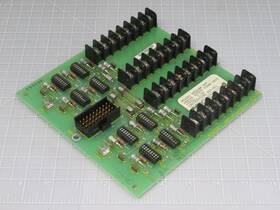
( Brand: Bailey ), ( Manufacturer Part Number: NTA001 ), ( Part Type: Circuit Unit Board )
Review BAILEY Analog Ouput Terminal Unit Circuit Board
The **NTA001 (Part Number: 6633430A1) Analog Output Terminal Unit Circuit Board (T202817)** is a high-performance, modular industrial control component designed for precise analog signal processing in automation, building management, and process control systems. This robust terminal unit integrates seamlessly into distributed control architectures, offering a compact yet versatile solution for interfacing analog output signals with field devices such as actuators, valves, or motor drives. Engineered with a focus on reliability and precision, the board features a **high-precision 16-bit DAC (Digital-to-Analog Converter)** for smooth, low-noise analog signal generation, ensuring accurate control over output voltages or currents within a configurable range of 10V, 0 20mA, or 4 20mA, depending on the application requirements. Its **isolated analog outputs** enhance safety and reduce noise susceptibility, making it ideal for harsh industrial environments where electromagnetic interference (EMI) and voltage spikes are common.
The circuit board incorporates **advanced digital signal processing (DSP)** capabilities, allowing for real-time calibration, scaling, and filtering of analog signals to maintain optimal performance across varying load conditions. Built-in **self-diagnostic and fault-monitoring features** provide continuous oversight of output integrity, alerting operators to potential issues such as short circuits, open loops, or signal drift before they impact system functionality. The design adheres to strict **industrial standards**, including compliance with **IEC 61131-2** for programmable controllers and **IEC 62056-21** for energy metering applications, ensuring seamless integration with major automation platforms like Siemens, Allen-Bradley, and Rockwell. Additionally, the board supports **Modbus RTU, Profibus DP, and Ethernet/IP** communication protocols, enabling flexible networking options for both standalone and networked control systems.
Physically, the NTA001 is housed in a **durable, DIN-rail-mountable enclosure** with a **compact footprint**, making it suitable for space-constrained installations. Its **high-quality surface-mount technology (SMT)** components and **reinforced PCB traces** contribute to long-term durability, even under thermal cycling and vibration. The board also features **configurable output ranges and polarities**, allowing engineers to tailor its performance to specific actuator or sensor requirements without additional hardware modifications. Whether deployed in **HVAC systems, water treatment plants, or manufacturing automation**, the NTA001 delivers consistent, high-fidelity analog control, reducing operational downtime and enhancing system efficiency. Its modular design further simplifies maintenance, as individual output channels can be replaced or upgraded without disrupting the entire control infrastructure.
### **Pros and Cons of buying a NTA001 (6633430A1) Analog Output Terminal Unit Circuit Board (T202817)**
#### **Pros:**1. **Compatibility and Reliability** This terminal unit is designed for specific Siemens or similar industrial control systems, ensuring seamless integration with existing infrastructure. If the system is well-documented and widely used, the board is likely to be reliable and supported by technical resources.
2. **Analog Output Functionality** The analog output capability allows for precise control of devices such as motors, valves, or sensors, making it suitable for applications requiring variable signal modulation (e.g., 4-20mA, 0-10V).
3. **Modular Replacement** If the original board fails, replacing it with an identical or compatible unit can restore system functionality without requiring major reconfiguration, reducing downtime.
4. **Potential Cost Savings** Purchasing a new or refurbished unit may be more economical than repairing an irreparably damaged board, especially if the original is no longer in production or parts are obsolete.
5. **Access to Technical Support** If the board is from a reputable manufacturer or distributor, you may receive documentation, firmware updates, or troubleshooting assistance, improving long-term usability.
6. **Future-Proofing** If the system is still in active use, replacing aging components can prevent failures that could disrupt operations.
---
#### **Cons:**1. **Age and Obsolescence** The model number (e.g., 6633430A1) suggests it may be an older design. Newer systems may have improved features, better energy efficiency, or enhanced security, making this unit less optimal for modern applications.
2. **Limited Availability** Finding a genuine, compatible replacement may be difficult, especially if the manufacturer has discontinued production. Counterfeit or incompatible units could pose reliability risks.
3. **Compatibility Issues** If the system has been modified or upgraded over time, the new board may not integrate perfectly, requiring additional testing or adjustments. Firmware or protocol mismatches could arise.
4. **No Advanced Features** Modern terminal units often include digital communication (e.g., Modbus, Profibus), diagnostics, or remote monitoring. This unit may lack such capabilities, limiting functionality in contemporary setups.
5. **Potential for Hidden Damage** If purchasing used or refurbished, there is a risk of undetected internal wear, corrosion, or manufacturing defects that could lead to premature failure.
6. **Warranty and Liability Risks** New units may come with limited warranties, while used/refurbished units typically offer none. If the board fails shortly after installation, repair costs could outweigh initial savings.
7. **Training and Documentation Gaps** Older units may lack detailed user manuals or training resources, making troubleshooting more challenging for technicians unfamiliar with the system.
---
### **Ending Conclusion:** The **NTA001 (6633430A1) Analog Output Terminal Unit Circuit Board (T202817)** is a practical choice if:- The system it serves is still operational and requires a direct replacement.
- Compatibility with existing hardware is confirmed.
- Cost savings from replacement outweigh potential risks of obsolescence or unavailability.
- Technical support or documentation is accessible.
However, if the system is outdated, the unit lacks modern features, or alternatives with better performance are available, investing in a newer model or a more advanced terminal unit may be more beneficial in the long run. **Prioritize compatibility testing, source verification, and long-term system needs** before making a decision.
### **Recommendation:**1. **Verify Compatibility** Confirm that the board matches the exact specifications of your system, including voltage, signal types, and mounting requirements.
2. **Source from Trusted Vendors** Purchase from authorized distributors or reputable sellers to avoid counterfeit or damaged units.
3. **Consider Alternatives** If the system is still functional but outdated, evaluate whether upgrading to a newer terminal unit with digital communication and diagnostics would improve reliability and efficiency.
4. **Test Before Full Installation** If possible, test the board in a non-critical environment to ensure it operates as expected before committing to full integration.
5. **Document the Process** Keep records of the replacement, including serial numbers, installation dates, and any modifications, to aid future troubleshooting.
If the unit is critical to operations and no better alternatives exist, proceed with caution, focusing on minimizing downtime and ensuring proper installation. Otherwise, weigh the trade-offs against upgrading for better long-term performance.
Details:
We proudly sell hard-to-find parts, components, and machines to makers manufacturers. Reference Number:T202817. Glad you stopped by.
part #: nta001 prices
- $19.14-$399.99
specifications automationjack:
- brand: Bailey
- mpn: Nta001
- part type: Circuit Unit Board
seller automationjack:
- rating: 99.7%
- city: El Paso, Texas
- # reviews: 21522
general automationjack:
- Business Industrial > Industrial Automation Motion Controls > Other Automation Equipment
- condition: Used
shipping automationjack:
- service: UPS Ground, UPS 2nd Day Air, UPS 3 Day Select, UPS Next Day Air
- type: Calculated
- class: Standard, Expedited, One-day
- carrier: UPS
- cost: $10.24
- transit: 4-8 Days
returns automationjack:
- policy: Returns Accepted
- time: 30 Days
- method: Money back
- paid by: Seller
payments automationjack:
- other
- credit card: Mastercard
- wallet: Apple-pay
offer automationjack:
- started: March 17, 2026
- options: Ship-to-home
- best offers: True
- sold: 0
- availability: In Stock
- quantity: 1
Bailey NTA001 Is Similar To:
- Bailey Controls Nmmu01 Module Mounting Unit (36.5% similar) Working pull, in good condition. Bailey controls module mounting unit for NETWORK90 control system...(November 20th, 2024)
- Industrial Mro Mros5002089-6621580a1 Bailey 6621580a1 Circuit Board Unmp (37.5% similar) If another carrier such as DHL or ups is required to ship due certain shipping requirements, then the costs and requested may change. Circuit board: ump condition codes:: NSF new surplus factory sealed oem Nampa manufacturer package snap no UPI unused previously installed remain remanufactured like ...(July 26th, 2025)
- Industrial Mro Mros5002088-6622208a1 Bailey 6622208a1 Circuit Board Unmp (37.5% similar) If another carrier such as DHL or ups is required to ship due certain shipping requirements, then the costs and requested may change. Circuit board: ump condition codes:: NSF new surplus factory sealed oem Nampa manufacturer package snap no UPI unused previously installed remain remanufactured like ...(July 26th, 2025)
- Industrial Mro Mros5002068-6623710a2 Bailey 6623710a2 Circuit Board Unmp (37.5% similar) If another carrier such as DHL or ups is required to ship due certain shipping requirements, then the costs and requested may change. Circuit board: ump condition codes:: NSF new surplus factory sealed oem Nampa manufacturer package snap no UPI unused previously installed remain remanufactured like ...(July 27th, 2025)
- Industrial Mro Mros5002087-6623984a1 Bailey 6623984a1 Circuit Board Unmp (38.9% similar) Circuit board: ump condition codes:: NSF new surplus factory sealed oem Nampa manufacturer package snap no UPI unused previously installed remain remanufactured like used or repaired about our product: industrial blue line special is an industrial surplus dealer. If another carrier such as DHL or ...(July 27th, 2025)
- Industrial Mro Mros5002086-6623622a1 Bailey 6623622a1 Circuit Board Unmp (37.5% similar) If another carrier such as DHL or ups is required to ship due certain shipping requirements, then the costs and requested may change. Circuit board: ump condition codes:: NSF new surplus factory sealed oem Nampa manufacturer package snap no UPI unused previously installed remain remanufactured like ...(July 27th, 2025)
- Industrial Mro Mros5002085-6625311a1 Bailey 6625311a1 Circuit Board Unmp (37.5% similar) If another carrier such as DHL or ups is required to ship due certain shipping requirements, then the costs and requested may change. Circuit board: ump condition codes:: NSF new surplus factory sealed oem Nampa manufacturer package snap no UPI unused previously installed remain remanufactured like ...(July 27th, 2025)
- Industrial Mro Mros5002058-6622209a2 Bailey 6622209a2 Circuit Board Unmp (36.1% similar) If another carrier such as DHL or ups is required to ship due certain shipping requirements, then the costs and requested may change. Circuit board: ump condition codes:: NSF new surplus factory sealed oem Nampa manufacturer package snap no UPI unused previously installed remain remanufactured like ...(July 27th, 2025)
- Industrial Mro Mros5002084-6623709a1 Bailey 6623709a1 Circuit Board Unmp (38.9% similar) If another carrier such as DHL or ups is required to ship due certain shipping requirements, then the costs and requested may change. Circuit board: ump condition codes:: NSF new surplus factory sealed oem Nampa manufacturer package snap no UPI unused previously installed remain remanufactured like ...(July 27th, 2025)
- Abb 6636690j1 Bailey Infi90 Inniso1 Mo R491482 Network Interface Board (27.8% similar) Part #: Abby 6636690J1 for sale...(September 24th, 2025)
- Bailey Ctt01 Rev C Command Series Configuration Tuning Terminal Pendant (37.8% similar) Part #:CTT01...(October 22nd, 2025)