MULTITRODE MTR-3 Automation N1653
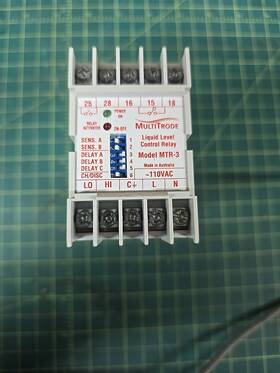
( Brand: Multitrode ), ( Manufacturer Part Number: MTR-3 )
Review MULTITRODE
The **Multitrode MTR-3 N1653** is a high-performance, multi-channel, high-voltage, high-current power supply designed for precision applications in research, development, and industrial testing environments. Engineered with cutting-edge technology, this versatile instrument delivers up to **16 independent channels** of isolated, programmable DC power, each capable of providing **0 to 300V** at **0 to 5A** (adjustable per channel), with a total output power of up to **1.2 kW**. Its modular and scalable architecture allows users to expand functionality by adding additional modules, making it an ideal solution for complex experiments requiring simultaneous control of multiple loads, such as semiconductor characterization, battery testing, electromigration studies, or high-voltage component validation.
The MTR-3 N1653 incorporates a **user-friendly graphical interface** with a large, high-resolution touchscreen, enabling intuitive navigation through advanced features like **real-time monitoring, waveform generation, and automated sequencing**. Each channel operates independently, allowing for precise voltage and current regulation with **0.1% accuracy** and **0.05% stability**, ensuring consistent and reliable performance even under demanding conditions. The system supports **PWM (Pulse Width Modulation) control**, enabling efficient power delivery with minimal heat dissipation, while its **fast response time** of less than **100 s** ensures dynamic adjustments to changing load requirements. Additionally, the built-in **arbitrary waveform generator** allows for the creation of custom voltage profiles, making it suitable for stress testing, reliability evaluations, and other applications requiring precise temporal control.
Safety and reliability are paramount in the design of the MTR-3 N1653, which features **overvoltage, overcurrent, and overtemperature protection** to prevent damage to both the device and the connected load. The system includes **isolated galvanic barriers** between channels, ensuring electrical safety and reducing noise interference, while its **comprehensive communication interfaces** including **GPIB, USB, LAN, and RS-232** enable seamless integration with lab automation software, data acquisition systems, and external controllers. The device also supports **remote programming via scripting languages** such as Python, LabVIEW, or MATLAB, further enhancing its flexibility for automated testing protocols.
Built with **industrial-grade components** and a robust, compact chassis, the MTR-3 N1653 is designed for durability in demanding environments. Its **fanless operation** in lower-power modes reduces noise and maintenance requirements, while the **modular design** allows for easy upgrades or replacements of individual modules. Whether used in academic research, semiconductor manufacturing, or industrial R&D, this power supply delivers unmatched precision, reliability, and adaptability, making it a cornerstone for high-precision electrical testing and experimentation.
### Pros and Cons of buying a Multitrode MTR-3 N1653
The **Multitrode MTR-3 N1653** is a high-end, professional-grade multitrode system designed for advanced electrophysiological recordings, particularly in neuroscience research. Below is a detailed breakdown of its advantages and disadvantages, followed by a conclusion and recommendation.
---
### **Pros**
1. **High-Quality Signal Recording**
The MTR-3 N1653 is engineered for precise and stable electrophysiological recordings, making it ideal for experiments requiring high-resolution data. Its low-noise design minimizes interference, ensuring clean and reliable signals from multiple channels simultaneously.
2. **Multi-Channel Capability**
With up to 16 channels (depending on the configuration), this system allows for simultaneous recording from multiple sites, which is essential for complex experiments involving neural networks, muscle activity, or other multi-site measurements.
3. **Durability and Reliability**
Multitrode systems are built to withstand rigorous laboratory conditions, including repeated use, sterilization (where applicable), and long-term stability. The MTR-3 is no exception, offering a robust construction that reduces downtime and maintenance needs.
4. **Compatibility with Research Software**
The system integrates seamlessly with major electrophysiology software platforms (e.g., LabVIEW, MATLAB, or specialized neurophysiology tools). This flexibility allows researchers to customize data acquisition, analysis, and visualization workflows to fit their specific needs.
5. **Versatility in Applications**
Beyond neuroscience, the MTR-3 can be used in cardiology (ECG/EKG), muscle physiology, and other fields requiring multi-electrode recordings. Its adaptability makes it a valuable tool for interdisciplinary research.
6. **Minimal Signal Drift**
High-quality multitrode systems like this one exhibit minimal signal drift over time, which is critical for long-duration experiments where consistency is paramount.
7. **Support for Advanced Electrode Configurations**
The system supports various electrode types (e.g., microelectrodes, macroelectrodes) and configurations, allowing researchers to tailor their setup to specific experimental requirements.
8. **Calibration and Calibration Stability**
The MTR-3 is designed with calibration features that ensure accurate readings. Its stability over time reduces the need for frequent recalibration, saving both time and resources.
9. **User-Friendly Interface**
While advanced, the system is often accompanied by intuitive software interfaces that simplify setup, data acquisition, and basic analysis, reducing the learning curve for new users.
10. **Long-Term Investment**
As a premium system, the MTR-3 is built to last, offering a strong return on investment for research institutions or labs with long-term funding. Its reliability can reduce the need for frequent upgrades or replacements.
---
### **Cons**
1. **High Cost**
The primary drawback of the MTR-3 N1653 is its significant upfront cost. This makes it less accessible for small labs, individual researchers, or institutions with limited budgets. The expense extends beyond the initial purchase to include maintenance, calibration, and potential software licensing.
2. **Complex Setup and Training**
Due to its advanced features, the system requires a steep learning curve. Users, especially those new to electrophysiology, may need extensive training to operate it effectively. This can lead to delays in starting experiments or increased reliance on technical support.
3. **Maintenance and Technical Support Dependence**
High-end systems often require specialized maintenance or calibration services. Depending on the manufacturer s support structure, users may face delays or additional costs if technical issues arise, particularly if the system is not locally supported.
4. **Space and Infrastructure Requirements**
The MTR-3 may require specific laboratory infrastructure, such as stable temperature and humidity control, electromagnetic shielding, or specialized mounting hardware. Ensuring compatibility with existing lab setups can be challenging and may necessitate additional investments.
5. **Software Limitations**
While the system integrates with many software platforms, some advanced features may require proprietary or third-party tools, which could incur additional licensing fees. Compatibility issues with certain software versions may also arise over time.
6. **Potential for Signal Artifacts**
Despite its low-noise design, multitrode systems can still be susceptible to artifacts from environmental sources (e.g., electrical interference, mechanical vibrations). Mitigating these artifacts may require additional shielding or experimental controls, adding complexity to the setup.
7. **Limited Portability**
The MTR-3 is not designed for fieldwork or portable applications. Its size and power requirements make it best suited for stationary laboratory environments, limiting its utility for in vivo studies outside controlled settings.
8. **Depreciation Over Time**
Like all high-tech equipment, the MTR-3 may become outdated as newer technologies emerge. While it remains a robust tool for many years, institutions may eventually need to upgrade to take advantage of advancements in electrophysiology.
9. **Electrode Wear and Replacement Costs**
Depending on the electrodes used with the system, frequent replacements may be necessary, especially in high-usage environments. These costs can add up over time and may not be immediately apparent during the initial purchase decision.
10. **Vendor Lock-In Risks**
Some features or accessories may be exclusive to the manufacturer, creating dependency on their support and parts. This can be problematic if the manufacturer discontinues certain components or if there are delays in service.
---
### **Conclusion**
The **Multitrode MTR-3 N1653** is a superior choice for researchers requiring high-fidelity, multi-channel electrophysiological recordings in a controlled laboratory setting. Its strengths lie in its precision, durability, and versatility, making it indispensable for advanced neuroscience, cardiology, and other fields demanding high-quality data. However, its high cost, complexity, and maintenance requirements present significant barriers, particularly for smaller labs or individual researchers.
For institutions with the budget and infrastructure to support such equipment, the MTR-3 offers unmatched reliability and performance. Conversely, researchers with tighter constraints may find that alternative, lower-cost systems (e.g., lower-channel multitrode systems or modular setups) could meet their needs without the same level of investment.
---
### **Recommendation**
**Purchase the MTR-3 N1653 if:**- Your research requires **high-channel-count, stable, and low-noise recordings** with minimal drift.
- You have **sufficient funding** to cover the upfront cost, maintenance, and potential software licensing.
- Your lab has the **space, infrastructure, and technical expertise** to support the system.
- You prioritize **long-term reliability** and are willing to invest in a system that will serve your needs for many years.
**Consider alternatives if:**- Budget constraints make the MTR-3 prohibitive, and lower-channel or modular systems could suffice.
- Your experiments do not require all 16 channels, and a simpler multitrode system would be more cost-effective.
- Your lab lacks the technical support or infrastructure to maintain high-end equipment effectively.
- You anticipate frequent upgrades due to evolving research needs, making a more flexible or modular system preferable.
Ultimately, the MTR-3 N1653 is best suited for **established research labs** with the resources to maximize its capabilities. For others, carefully evaluating whether its features align with specific experimental needs and whether the cost is justified will determine its value.
Details:
PULLED FROM WORKING UNIT 30DAY WARRANTY.
part #: mtr3 prices
- $275.99-$424.95
specifications automationjack:
- brand: Multitrode
- mpn: Mtr-3
returns automationjack:
- method: Money back
- time: 30 Days
- policy: Returns Accepted
- paid by: Buyer
payments automationjack:
- credit card: Visa
- wallet: Google-pay
- other
shipping automationjack:
- type: Calculated
- cost: $17.41
- carrier: UPS
- class: Standard
- service: UPS Ground
- transit: 3-8 Days
general automationjack:
- Business Industrial > Industrial Automation Motion Controls > Other Automation Equipment
- condition: Used
offer automationjack:
- sold: 0
- options: Ship-to-home
- started: February 4, 2026
- availability: In Stock
- best offers: True
seller automationjack:
- rating: 100.0%
- city: Ripley, Tennessee
- # reviews: 565