E-MU M1EM8810446000901N Pci Sound Card Midi Module 1212M EM8830 EM8840
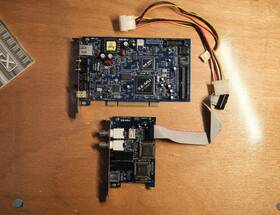
( Brand: E-mu ), ( Manufacturer Part Number: M1EM8810446000901N ), ( Part Type: Card Module ), ( Marke: Markenlos ), ( Country Of Origin: China )
Review E MU Pci Sound Card Em8810 Midi Daughter Module
The **E-mu E8810 PCI Sound Card** is a high-performance, professional-grade audio interface designed for musicians, producers, and sound engineers seeking uncompromising quality and versatility in their recording and production workflows. Built around the legendary **EM8810** core, this card delivers pristine analog-to-digital conversion with a **24-bit/96kHz** resolution, ensuring crystal-clear audio capture and playback with minimal noise and distortion. The **EM8830** DSP (Digital Signal Processor) module further enhances its capabilities by offloading complex processing tasks, allowing for real-time effects, mixing, and even virtual instrument playback without straining system resources. At its heart lies the **EM8840** module, a powerhouse for advanced MIDI sequencing, routing, and synthesis, making it an ideal choice for both traditional and modern production environments.
This sound card features a robust **PCI interface**, ensuring stable and reliable performance even under heavy workloads, while its **low-latency architecture** allows for seamless integration with digital audio workstations (DAWs) and live performance setups. With **multiple analog inputs and outputs**, including balanced XLR and TRS connections, the E8810 accommodates a wide range of microphones, instruments, and studio monitors, providing flexibility for both recording and playback scenarios. Its **MIDI I/O** capabilities extend its functionality, enabling seamless communication with synthesizers, drum machines, and other MIDI devices, making it a versatile tool for both analog and digital workflows.
Beyond its technical prowess, the E8810 is engineered with **E-mu s signature attention to detail**, offering features like **direct monitoring**, **headphone outputs**, and **high-quality preamps** that ensure professional-grade sound quality. Its **software compatibility** includes support for **E-mu s proprietary drivers** as well as industry-standard tools like **VST, AU, and ASIO**, ensuring smooth integration with virtually any DAW or audio software. Whether used in a home studio, project recording environment, or professional broadcast facility, the E8810 stands as a testament to E-mu s legacy of innovation, delivering a blend of analog warmth and digital precision that appeals to both purists and technophiles alike.
The **E-mu EMU1212M** (with the EM8810/EM8830/EM8840 modules) is a classic and highly regarded sound card and MIDI module, particularly for producers, musicians, and audio engineers who work with vintage or high-quality digital audio. Below is a detailed breakdown of its pros and cons, followed by a conclusion and recommendation.
---
### **Pros of the E-mu EMU1212M with EM88 Modules**
1. **Exceptional Audio Quality**
The EMU1212M is known for its pristine digital-to-analog conversion (DAC) and analog-to-digital conversion (ADC) performance. It uses high-quality components, including the **EM8810** (a 24-bit, 96kHz DAC/ADC module) and other modules like the **EM8830** (a 24-bit, 192kHz upgrade) and **EM8840** (a 24-bit, 192kHz module with improved filtering). These modules ensure low distortion, high dynamic range, and minimal noise, making it ideal for recording, mixing, and mastering.
2. **Vintage Sound and Warmth**
The EMU1212M is often praised for its "warm" and "analog-like" sound, even though it is a digital device. This is due to its careful design and the way it processes audio signals, which appeals to producers who prefer a slightly softer, less harsh digital sound compared to modern sound cards.
3. **Reliability and Durability**
E-mu products, especially older models like the EMU1212M, are built to last. Many users report that these devices continue to function flawlessly for decades with proper care. The PCI interface is also robust, though it does require a computer with a PCI slot (not PCIe).
4. **Compatibility with MIDI and Legacy Hardware**
The EMU1212M includes MIDI I/O, making it compatible with a wide range of MIDI devices, synthesizers, and legacy hardware. This is particularly useful for musicians who work with older gear or need to integrate MIDI controllers seamlessly.
5. **Software Support and Legacy Integration**
The EMU1212M works well with a variety of DAWs (Digital Audio Workstations) and audio software, including Pro Tools, Logic, Ableton, and older versions of software that rely on ASIO or WDM drivers. It also supports the **EMU Protection** system, which prevents unauthorized copying of software instruments (though this can be bypassed with third-party drivers).
6. **Low Latency and Stable Performance**
For its time, the EMU1212M offered surprisingly low latency, which was a significant advantage in professional audio workflows. Even today, it remains a stable choice for low-latency recording, especially when paired with modern computers and drivers.
7. **Resale Value and Collectibility**
Due to its reputation and scarcity (especially with the EM88 modules), the EMU1212M holds its value well in the used market. Some models, particularly those with the EM8830 or EM8840, can be quite valuable to collectors and professionals.
8. **Versatility for Recording and Mixing**
The EMU1212M is often used as a **preamp interface** for recording analog sources (microphones, instruments) due to its clean preamps and high-quality conversion. It can also serve as a **mastering interface** for its pristine sound.
9. **No Power Supply Issues**
Unlike some older sound cards that require external power, the EMU1212M draws power directly from the PCI slot, reducing potential compatibility issues with power-hungry devices.
10. **Community and Support**
The EMU1212M has a dedicated user base and community, with many resources available online for troubleshooting, driver updates, and workarounds. This makes it easier to keep the device running smoothly over time.
---
### **Cons of the E-mu EMU1212M with EM88 Modules**
1. **PCI Interface Limitations**
The EMU1212M uses a **PCI slot**, not PCIe. This means it will not work in modern computers that lack PCI slots (most newer motherboards only have PCIe). You would need an older computer or a PCI-to-PCIe adapter (though these can sometimes introduce compatibility issues).
2. **Driver Compatibility Issues**
While the EMU1212M works with many DAWs, some modern software may not officially support it, or may require third-party drivers (such as ASIO4ALL or custom EMU drivers). This can lead to occasional instability or limited features in newer applications.
3. **No USB or Modern Connectivity**
The EMU1212M lacks USB connectivity, which is standard in modern interfaces. This can be inconvenient if you need to connect to a laptop or a computer without a free PCI slot.
4. **Limited Input/Output Options**
The EMU1212M typically offers **two analog inputs (XLR/1/4") and two analog outputs**, which is sufficient for basic recording but may feel limiting compared to modern interfaces with multiple inputs, MIDI ports, and other features.
5. **No Built-in DSP or Effects**
Unlike some modern interfaces, the EMU1212M does not include built-in DSP or effects processing. All processing must be handled by your DAW or external hardware.
6. **Potential for Driver Crashes**
Older drivers can sometimes be unstable, leading to audio dropouts or crashes, especially in high-latency or resource-intensive setups. This is less of an issue with modern computers but can still be a concern.
7. **Physical Size and Bulk**
The EMU1212M is a larger device compared to modern USB interfaces, which can take up more space in a studio setup. This may not be an issue for desktop setups but could be a consideration for portable or minimalist setups.
8. **No Built-in Monitoring**
Some users report that the EMU1212M lacks direct monitoring controls, requiring manual routing in the DAW for headphone monitoring.
9. **Limited Overclocking or Upgrade Path**
Unlike some modern sound cards, the EMU1212M cannot be overclocked or upgraded significantly beyond its original specifications. The EM88 modules (e.g., EM8830, EM8840) are upgrades, but they are not as flexible as modern DAC/ADC modules.
10. **Learning Curve for Older Users**
Some users may find the setup process or driver management more complex than modern plug-and-play interfaces, especially if they are not familiar with older audio hardware.
---
### **Conclusion**
The **E-mu EMU1212M with EM88 modules** is a **high-quality, vintage sound card** that remains highly respected for its audio fidelity, reliability, and warm sound. It is an excellent choice for:
- **Professionals who prioritize pristine audio quality** (e.g., recording engineers, mastering engineers).
- **Musicians who work with legacy hardware** and need a stable MIDI/audio interface.
- **Enthusiasts who appreciate the "vintage" sound** of the EMU1212M.
- **Collectors or those who value durability and resale value**.
However, it is **not ideal** for:- **Modern setups without PCI slots** (unless you use a PCIe adapter, which may introduce issues).
- **Users who need USB connectivity, multiple inputs, or built-in effects**.
- **Those who prefer plug-and-play simplicity** over manual driver management.
If you are working in a **professional studio environment** and have a compatible computer, the EMU1212M is a **fantastic investment** that will serve you well for years. For **modern home studios or mobile setups**, a USB interface (e.g., Focusrite, Universal Audio, or Apogee) may be more practical.
---
### **Recommendation**
- **Buy the EMU1212M if:**- You have a computer with a PCI slot (or can use a PCIe adapter).
- You prioritize **audio quality, reliability, and vintage sound** over modern convenience.
- You work with **legacy MIDI hardware** or need a stable interface for recording.
- You are willing to invest in **driver management** and occasional troubleshooting.
- **Avoid the EMU1212M if:**- Your computer lacks a PCI slot, and you cannot find a reliable PCIe adapter.
- You need **multiple inputs, USB connectivity, or built-in effects**.
- You prefer **modern, plug-and-play interfaces** with better software support.
For most **modern users**, a **high-quality USB audio interface** (e.g., Universal Audio Apollo, Focusrite Scarlett, or Apogee Duet) would be a more practical choice. However, if you are a **purist, a collector, or a professional who values the EMU1212M s sound**, it remains one of the best-sounding sound cards ever made.
Details:
Swap in your actual condition notes. EM8830 MIDI Daughter Card with ribbon cable mounts to second slot bracket. Includes all three core components: EM8810 E-MU 1010 PCI Digital Sound Processor Card the main card. He took it out and checked no longer has the box.
It was stored in a plastic bag and has no rust damage. E-MU Systems 1212M PCI Digital Audio System Complete Bundle Includes: EM8810 Card EM8830 MIDI Daughter EM8840 Audio Dock Module. This is a complete E-MU 1212M digital audio system pulled from working machine. Driver discs, software see photos.
VERY slightly. I have NOT tested it since do not any PCs with PCI right now only Pci. I was helping my dad move and we found this. You can see some spots on the paint and left front bezel is slightly loose.
It was kept on the shelf and never used. He said he never actually installed it. Highly regarded for its clean analog output and low-latency MIDI performance.
part #: m1em8810446000901n prices
- $89.99-$339.99
specifications automationjack:
- brand: E-mu
- mpn: M1em8810446000901n
- part type: Card Module
- marke: Markenlos
- country of origin: China
general automationjack:
- Business Industrial > Industrial Automation Motion Controls > Other Automation Equipment
- condition: Used
offer automationjack:
- options: Ship-to-home
- availability: In Stock
- started: June 2, 2026
- quantity: 1
- sold: 0
- best offers: True
payments automationjack:
- credit card: Diners-club
- wallet: Google-pay
- other
shipping automationjack:
- transit: 3-7 Days
- carrier: USPS
- class: Standard
- cost: $0.00
- service: USPS Ground Advantage
- type: Calculated
returns automationjack:
- policy: No Returns
seller automationjack:
- rating: 100.0%
- city: Portland, Oregon
- # reviews: 613