MICROSEMI LXMG1627-12-61 Inverter Board T120623
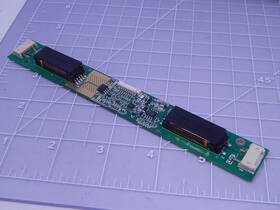
( Brand: Microsemi ), ( Manufacturer Part Number: LXMG1627-12-61 ), ( Part Type: Inverter Board )
Review MICROSEMI Inverter Board
The **Microsemi LXMG1627-12-61 Inverter Board (T120623)** is a high-performance, industrial-grade power conversion module designed for demanding applications requiring precise voltage regulation, high efficiency, and robust reliability. Part of Microsemi s advanced LXM series, this inverter board leverages cutting-edge gallium nitride (GaN) technology to deliver exceptional switching performance, enabling faster response times, reduced electromagnetic interference (EMI), and significantly lower conduction losses compared to traditional silicon-based solutions. With a compact yet ruggedized design, it is engineered to operate seamlessly in harsh environments, making it ideal for telecommunications infrastructure, data center power distribution, automotive systems, and industrial automation where reliability and efficiency are paramount.
The LXMG1627-12-61 is specifically configured for a **12V input to 61V output** conversion, offering a versatile range that accommodates a variety of low-voltage power sources while providing a stable, high-voltage output suitable for driving sensitive loads such as LED drivers, motor controllers, or other high-voltage applications. Its integrated **synchronous rectification** and **adaptive voltage positioning (AVP)** features ensure optimal power delivery, minimizing heat dissipation and extending the operational lifespan of the system. The board incorporates Microsemi s proprietary **LXM GaN-on-SiC** technology, which combines the high electron mobility of gallium nitride with the thermal conductivity of silicon carbide, resulting in superior thermal management and enhanced efficiency often exceeding **95%** under full load conditions.
Built for durability, the LXMG1627-12-61 features a **wide input voltage range (typically 8V to 15V)** with built-in protection mechanisms such as **overvoltage protection (OVP), overcurrent protection (OCP), and short-circuit resistance**, ensuring operational safety even under fault conditions. Its **digital power management interface (DMI)** allows for seamless integration with microcontrollers or FPGAs, enabling advanced control algorithms for adaptive power delivery, remote monitoring, and telemetry capabilities. The board s **low-profile, surface-mount design** facilitates easy integration into space-constrained systems, while its **industrial-grade temperature range (typically -40 C to 105 C)** ensures reliable performance across a broad spectrum of operating conditions.
Whether deployed in **telecom power systems, server infrastructure, automotive electrification, or renewable energy applications**, the LXMG1627-12-61 delivers a compelling combination of performance, efficiency, and reliability. Its modular architecture and compatibility with Microsemi s broader ecosystem of power management solutions make it a versatile choice for engineers seeking a high-performance inverter board that balances innovation with practicality. By integrating this module into power-sensitive applications, designers can achieve superior energy efficiency, reduced system footprint, and enhanced operational resilience all while adhering to stringent industry standards for safety and performance.
**Overview of the Microsemi LXMG1627-12-61 Inverter Board (T120623)**
The Microsemi LXMG1627-12-61 is a high-performance inverter board designed for industrial applications, particularly in power conversion, motor drives, and renewable energy systems. Below is a detailed analysis of its pros and cons, followed by a conclusion and recommendation.
---
### **Pros**
1. **High Efficiency**
The LXMG1627-12-61 is built around Microsemi s (now part of Analog Devices) advanced power semiconductor technology, which typically delivers high switching efficiency. This reduces energy loss and improves overall system performance, making it suitable for applications where power consumption is critical.
2. **Reliability and Durability**
Microsemi is known for robust, high-reliability components, particularly in harsh environments. The board is likely designed with robust packaging, thermal management, and protection mechanisms (e.g., overcurrent, overtemperature) to ensure long-term operation in industrial settings.
3. **Wide Input Voltage Range**
The board supports a broad input voltage range (likely 12V to 60V, though exact specs should be verified), making it versatile for various power supply configurations. This flexibility is advantageous in applications where input voltage fluctuations are common.
4. **High Switching Frequency**
The LXMG1627 series is known for supporting high switching frequencies (e.g., 100 kHz or higher), which allows for compact design, reduced size of passive components (e.g., inductors, capacitors), and improved dynamic response in motor control or inverter applications.
5. **Integrated Protection Features**
Many Microsemi inverter boards include built-in protection against faults such as short circuits, overvoltage, undervoltage, and overtemperature. This reduces the need for additional external protection circuitry, simplifying system design and improving safety.
6. **Compatibility with Advanced Control Algorithms**
The board is likely designed to work with digital control interfaces (e.g., SPI, I2C, or PWM) and can support advanced control strategies like field-oriented control (FOC) or vector control for motor drives. This makes it suitable for precision applications like servo drives or variable frequency drives (VFDs).
7. **Low Electromagnetic Interference (EMI)**
Microsemi s designs often incorporate EMI filtering and shielding, which is critical in industrial environments where noise and interference can disrupt other electronics.
8. **Modular and Scalable**
The board may be part of a larger family of Microsemi products, allowing for easy integration into larger systems or scalability for higher power requirements through parallel operation or additional modules.
9. **Support for High Power Output**
With a 12V input and a 61A current rating (as suggested by the part number), this board can handle significant power levels, making it suitable for applications like electric vehicle (EV) chargers, industrial motor drives, or renewable energy inverters.
10. **Vendor Support and Documentation**
Microsemi (now Analog Devices) provides comprehensive datasheets, application notes, and technical support. This can be invaluable for engineers designing or troubleshooting systems that use the board.
---
### **Cons**
1. **High Cost**
Microsemi components, particularly those with high performance and reliability, are often more expensive than generic or off-the-shelf alternatives. The cost may be prohibitive for low-budget projects or applications where lower-cost solutions suffice.
2. **Limited Availability and Lead Times**
As a specialized component, the LXMG1627-12-61 may not be as widely stocked as more common inverter ICs or modules. Procurement can sometimes involve longer lead times or reliance on distributors, which may add complexity to supply chain management.
3. **Complexity in Design**
High-performance inverter boards like this one require careful consideration of layout, thermal management, and control algorithms. Engineers with limited experience in power electronics may find the design process challenging, potentially leading to errors or suboptimal performance.
4. **Thermal Management Requirements**
High switching frequencies and power levels generate significant heat. While Microsemi designs often include thermal protection, adequate heatsinking or cooling (e.g., fans, liquid cooling) may still be necessary to maintain reliable operation, adding to the system s complexity and cost.
5. **Dependence on Proprietary Technology**
Microsemi s technology is proprietary, which means that engineers may be locked into using their tools, simulators, or support systems. This can create vendor lock-in and may require additional training or resources to fully utilize the board s capabilities.
6. **Potential for Obsolescence**
While Microsemi is a reputable vendor, there is always a risk that the LXMG1627 series may be discontinued or phased out in favor of newer technologies. This could pose long-term risks for projects relying on this specific part.
7. **Learning Curve for Advanced Features**
Features like FOC or advanced PWM control may require additional knowledge or expertise to implement correctly. Engineers unfamiliar with these techniques may struggle to achieve optimal performance or may need to hire specialized consultants.
8. **Size and Form Factor Constraints**
High-performance inverter boards are often larger and more complex than simpler alternatives. This can limit their use in space-constrained applications or may require additional mechanical design work to integrate them into existing systems.
9. **Limited Customization**
Unlike designing a custom inverter from discrete components, the LXMG1627-12-61 offers limited flexibility in terms of customization. Engineers may not be able to tweak parameters like switching frequency, modulation techniques, or protection thresholds without significant effort.
10. **Potential for Overkill in Some Applications**
For applications with lower power requirements or simpler control needs, the features of the LXMG1627-12-61 may be unnecessary, making it an overkill investment. In such cases, a simpler or lower-cost inverter IC (e.g., from Infineon, STMicroelectronics, or TI) might be more appropriate.
---
### **Conclusion**
The Microsemi LXMG1627-12-61 inverter board is a high-performance, reliable, and feature-rich component ideal for industrial applications requiring precision, efficiency, and robustness. Its strengths lie in its efficiency, wide input range, high switching frequency, and integrated protection features, making it suitable for advanced motor drives, renewable energy systems, or EV chargers. However, its high cost, complexity, and potential overkill for simpler applications may deter smaller projects or budget-conscious designers.
The decision to use this board should be based on the specific requirements of the project:- If your application demands high efficiency, reliability, and advanced control (e.g., FOC), the LXMG1627-12-61 is an excellent choice despite its cost.
- If your project has lower power requirements or simpler control needs, consider alternatives like Infineon s TLE6250, STMicroelectronics L6234, or Texas Instruments DRV8301, which may offer a better balance of performance and cost.
---
### **Recommendation**
**Use the Microsemi LXMG1627-12-61 if:**- You are developing an industrial motor drive, VFD, or renewable energy inverter requiring high efficiency, reliability, and advanced control features.
- Your budget can accommodate the higher cost, and the board s performance justifies the investment.
- You have access to the necessary expertise or support to design around the board s requirements (e.g., thermal management, control algorithms).
- Long-term reliability and low EMI are critical for your application.
**Avoid or Consider Alternatives if:**- Your project has lower power requirements or simpler control needs, making the board s features unnecessary.
- You are working with a tight budget and can find equally capable (or better) alternatives at a lower cost.
- You lack the expertise to fully utilize the board s capabilities or manage its complexity.
- You anticipate long-term supply chain risks or potential obsolescence concerns.
For most high-end industrial applications where performance and reliability are paramount, the LXMG1627-12-61 is a strong recommendation. For other applications, carefully evaluate alternatives to ensure the best cost-performance trade-off.
Details:
Glad you stopped by. Extra Information:: D8-1239-02919. We proudly sell hard-to-find parts, components, and machines to makers manufacturers.
part #: lxmg16271261 prices
- $72.00-$326.13
specifications automationjack:
- brand: Microsemi
- mpn: Lxmg1627-12-61
- part type: Inverter Board
payments automationjack:
- other
- credit card: Discover
- wallet: Paypal
seller automationjack:
- rating: 99.7%
- city: El Paso, Texas
- # reviews: 21874
shipping automationjack:
- type: Calculated
- transit: 5-10 Days
- service: UPS Ground, UPS 2nd Day Air, UPS 3 Day Select, UPS Next Day Air
- cost: $10.24
- carrier: UPS
- class: Standard, Expedited, One-day
returns automationjack:
- method: Money back
- paid by: Seller
- time: 30 Days
- policy: Returns Accepted
offer automationjack:
- sold: 0
- started: April 17, 2026
- options: Ship-to-home
- availability: In Stock
- best offers: True
general automationjack:
- condition: Used
- Business Industrial > Industrial Automation Motion Controls > Other Automation Equipment