TELEMECANIQUE LRD02 Schneider Electric
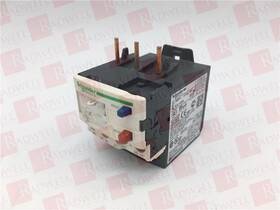
( Brand: Telemecanique ), ( Manufacturer Part Number: LRD02 )
Review TELEMECANIQUE Schneider Electric Used
The **Schneider Electric Telem canique LRD02** is a high-performance, modular **low-voltage motor control center (MCC)** designed to deliver reliable, efficient, and flexible electrical distribution for industrial, commercial, and infrastructure applications. Part of Schneider Electric s robust **Altivar** and **Premium** series, the LRD02 combines advanced engineering with modularity to provide a scalable solution for controlling and protecting electric motors in demanding environments. This compact yet powerful unit integrates **electromagnetic or electronic contactors**, **thermal overload relays**, **auxiliary relays**, and **emergency stop pushbuttons** into a single, space-efficient enclosure, making it ideal for applications requiring precise motor control, such as pumps, fans, conveyors, compressors, and HVAC systems.
The LRD02 is engineered with **Schneider Electric s Telem canique heritage**, ensuring a legacy of durability and innovation while incorporating modern features like **compact design**, **easy installation**, and **user-friendly operation**. Its modular construction allows for customization, enabling users to configure the unit with the exact number of motor starters, auxiliary relays, and control accessories needed for their specific application. The enclosure is constructed from high-quality, corrosion-resistant materials, offering protection against environmental factors such as dust, moisture, and mechanical impact, as defined by **IP20 or higher** standards, depending on the variant. This ensures long-term reliability in both indoor and outdoor settings, even in harsh industrial conditions.
At the heart of the LRD02 is its **electronic or electromagnetic contactor technology**, which provides efficient switching, reduced energy loss, and extended component lifespan. The integrated **thermal overload relays** offer precise protection against motor overheating, adjusting dynamically to load variations and preventing damage from sustained overloads or faults. For added safety and operational flexibility, the unit can be equipped with **emergency stop pushbuttons**, **auxiliary relays for signaling or sequencing**, and **remote control options**, all of which enhance automation and reduce manual intervention. The LRD02 also supports **Schneider Electric s EcoStruxure** platform, enabling seamless integration with advanced monitoring, control, and energy management systems for enhanced efficiency and predictive maintenance capabilities.
Installation and maintenance of the LRD02 are streamlined thanks to its **user-friendly design**, with clear labeling, easy-access terminals, and standardized mounting dimensions that align with industry norms. The unit s compact footprint optimizes space utilization in control panels, while its **modular expansion capability** allows for future upgrades without replacing the entire system. Whether deployed in a small machine application or as part of a larger motor control distribution system, the LRD02 delivers **superior performance, energy efficiency, and operational reliability**, reinforcing Schneider Electric s commitment to delivering smart, sustainable electrical solutions for modern industries.
**Pros and Cons of buying a Telemecanique LRD02 (Schneider Electric) Load Research Device**
### **Pros**
1. **Accurate Load Monitoring** The LRD02 provides precise real-time measurements of electrical loads, including voltage, current, power, energy, and power factor. This helps in identifying inefficiencies, overloaded circuits, or energy waste.
2. **Easy Installation and Use** Designed for simplicity, the device can be installed without complex wiring, often using standard clamp-on current sensors. Its intuitive display and user-friendly interface make it accessible for technicians and engineers.
3. **Remote Monitoring Capability** Many models support communication protocols like Modbus RTU or TCP/IP, allowing integration with SCADA systems, building management software, or cloud-based monitoring platforms. This enables centralized control and data logging.
4. **Energy Efficiency Analysis** Helps in identifying energy-saving opportunities by detecting harmonic distortions, reactive power issues, and inefficient equipment operation. This can lead to cost reductions in electricity bills.
5. **Compatibility with Schneider Electric Ecosystem** As part of Schneider Electric s product line, the LRD02 integrates seamlessly with other Schneider devices (e.g., circuit breakers, contactors, or energy management systems), enhancing overall system performance.
6. **Durability and Reliability** Built to industrial standards, the LRD02 is designed for harsh environments, offering protection against dust, moisture, and temperature variations, ensuring long-term operation.
7. **Cost-Effective for Medium-Sized Applications** While not as advanced as high-end power analyzers, the LRD02 offers a balanced combination of features and affordability, making it suitable for small to medium industrial or commercial setups.
8. **Diagnostic Features** Detects issues such as phase imbalances, voltage sags/swells, and transient events, which can prevent equipment damage and downtime.
9. **Portable and Field-Deployable** Some versions are compact and portable, allowing for on-site troubleshooting without permanent installation.
10. **Compliance and Reporting** Useful for audits and compliance with energy efficiency standards (e.g., ISO 50001) by providing detailed logs and reports.
---
### **Cons**
1. **Limited Advanced Features** Compared to high-end power analyzers (e.g., Fluke 435, Yokogawa WT3000), the LRD02 lacks deep harmonic analysis, waveform distortion measurements, or advanced predictive maintenance tools. It may not suffice for complex power quality studies.
2. **Single-Phase or Basic Three-Phase Support** Depending on the model, it may not handle very high power ranges or three-phase systems with extreme imbalances as effectively as specialized meters.
3. **Learning Curve for Advanced Functions** While user-friendly, mastering all features (e.g., Modbus configuration, remote logging) may require training, especially for non-technical users.
4. **Dependence on External Software** For full utilization (e.g., trend analysis, automation), third-party software or Schneider s proprietary tools may be needed, adding complexity.
5. **No Built-In Data Storage for Long-Term Logging** Some models require external storage or cloud integration to retain historical data, which may not be ideal for continuous monitoring without additional setup.
6. **Potential for Overload Sensitivity** In high-power applications, the device may struggle with very high currents or voltage spikes without proper calibration or additional sensors.
7. **Limited Customization** Unlike some enterprise-grade systems, the LRD02 offers fewer options for tailoring measurements to specific industrial processes or niche applications.
8. **Physical Size Constraints** Some versions may not fit in tight spaces or require additional mounting hardware, depending on the installation environment.
9. **Dependence on Schneider s Support** For warranty claims or technical issues, users must rely on Schneider Electric s support network, which may vary in responsiveness depending on location.
10. **Upfront Cost for Additional Accessories** While the base unit is reasonably priced, adding features like wireless communication, larger displays, or extended warranties can increase the total cost.
---
### **Conclusion**
The **Telemecanique LRD02 (Schneider Electric)** is a **practical and cost-effective tool** for basic to intermediate electrical load monitoring, energy analysis, and power quality diagnostics. It excels in **simplicity, accuracy for its class, and integration with Schneider s ecosystem**, making it ideal for small to medium industrial facilities, commercial buildings, or maintenance teams needing a reliable yet affordable solution.
However, it is **not a replacement for high-end power analyzers** in applications requiring **deep harmonic analysis, advanced predictive maintenance, or large-scale automation**. Users with **complex power systems, high-power demands, or specialized monitoring needs** may find it insufficient and should consider upgrading to more sophisticated devices.
For **most general-purpose load research, energy audits, or troubleshooting**, the LRD02 provides a **strong balance of functionality and ease of use**, justifying its purchase for those within Schneider Electric s product line.
---
### **Recommendation**
**Buy the LRD02 if:**- You need a **simple, accurate, and affordable** tool for load monitoring, energy efficiency checks, or basic power quality analysis.
- You are already using **Schneider Electric equipment** and want seamless integration.
- Your application involves **medium-sized electrical systems** (e.g., workshops, small factories, commercial buildings) where advanced features are unnecessary.
- You prioritize **ease of installation and use** over cutting-edge analytics.
**Avoid the LRD02 if:**- You require **deep harmonic analysis, waveform distortion measurements, or high-precision power quality studies**.
- Your system involves **extremely high power loads or three-phase imbalances** that exceed the device s capabilities.
- You need **long-term automated logging without external software** or **predictive maintenance features**.
- You are working in a **highly specialized industry** (e.g., data centers, renewable energy systems) where more advanced tools are standard.
**Alternative Considerations:**- For **basic load monitoring**, a **clamp meter (e.g., Fluke 377)** may suffice if budget is tight.
- For **advanced power quality analysis**, invest in a **Yokogawa WT3000 or Fluke 435**.
- For **enterprise-level energy management**, explore **Schneider s EcoStruxure or Siemens Sinamics** platforms.
In summary, the LRD02 is a **solid choice for its intended purpose**, but its limitations should be weighed against the specific demands of your application.
Details:
Part Number LRD02. Sells new and surplus product develops channels to purchase such. Call to use a shipping service other than the ones listed. Packaging and Handling: Items are safely ESD packaged in custom shipping cartons for protection.
SCHNEIDER ELECTRIC LRD02 / USED OVERLOAD RELAY, TESYS LRD SERIES, 0.16.0.25 AMP, 1 NO NC, CLASS 10A, IP20. All products are guaranteed to be working but may show signs of use if purchasing a used product.
part #: lrd02 prices
- $15.40-$39.99
specifications automationjack:
- brand: Telemecanique
- mpn: Lrd02
payments automationjack:
- other
- credit card: Mastercard
- wallet: Apple-pay
seller automationjack:
- city: 1 Millennium Dr, Willingboro, NJ 08046
- # reviews: 193372
- rating: 99.6%
returns automationjack:
- method: Money back
- time: 30 Days
- paid by: Buyer
- policy: Returns Accepted
general automationjack:
- Business Industrial > Industrial Automation Motion Controls > Other Automation Equipment
- condition: Used
offer automationjack:
- sold: 0
- quantity: 1
- availability: In Stock
- options: Ship-to-home
- started: March 7, 2026
shipping automationjack:
- class: Standard
- service: Standard
- type: Fixed
- cost: $12.90
- transit: 23-35 Days
Telemecanique LRD02 Is Similar To:
- Telemecanique Gv2-ae20 Schneider Electric Gv2ae20 Used Tested Cleaned (70.7% similar) Call to use a shipping service other than the ones listed. Schneider electric GV2-AE20 / GV2AE20 used tested cleaned discontinued by manufacturer, auxiliary contact, 2.5AMP, 24. Sells new and surplus product develops channels to purchase such. Packaging and handling: items are safely eds packaged in...(August 14th, 2024)
- Telemecanique Lc1-d3210-u5 Schneider Electric Lc1d3210u5 Used Tested Cleaned (69.9% similar) The product is used surplus. All products are guaranteed to be working but may show signs of use. Packaging and handling, items are safely eds packaged in custom shipping cartons for protection. Call to use a shipping service other than the ones listed. Sells new and surplus product develops ...(August 16th, 2024)
- Telemecanique Cad50bd Contactor Relay Used Free Shipping (52.4% similar) It was carefully removed from a working piece of equipment and is 100% functional. Cosmetically I would rate it a 9 out of 10. The shipping on this item reflects standard ground for the us. Greenback stock# G86677-8. I have a nice used Telemecanique CAD50BD contractor relay 10A - for sale...(September 4th, 2024)
- Telemecanique Lc1-d093-c-a65 Schneider Electric Lc1d093ca65 Used Tested Cleaned (68.3% similar) Good used condition F27...(September 19th, 2024)
- Telemecanique Atv31h055m2 Used Altivar 31 Inverter (42.1% similar) Many things can play a factor such allocation, weather and the items in order. Used excellent condition - item is used with no or very little signs of use wear. All aspects are in perfect condition. Used good condition - item is used with signs of use or wear, such as stains, scratches, chips or ...(September 21st, 2024)
- Schneider Electric Telemecanique Gk1-em Gk1em Fuse Holder Isolator 40-50 Amp 90v 8.5w (34.8% similar) Manufacturers warranty and support do not apply. GK1-EM GK1EM schneider Telemecanique fuse holder isolate - 40-50 amp, 90V, 8.5W: $70.00. Fuse holder isolate 40-50 90V 8.5W 50...(October 6th, 2024)
- Telemecanique Lrd3355 Schneider Electric Used (93.5% similar) Packaging and handling: items are safely eds packaged in custom shipping cartons for protection. All products are guaranteed to be working but may show signs of use. Call to use a shipping service other than the ones listed. Sells new and surplus product develops channels to purchase such...(October 15th, 2024)
- Telemecanique 03859820311a01 Schneider Electric Used (84.8% similar) Sells new and surplus product develops channels to purchase such. Call to use a shipping service other than the ones listed. Packaging and handling: items are safely eds packaged in custom shipping cartons for protection. All products are guaranteed to be working but may show signs of use if ...(October 17th, 2024)
- Telemecanique Lc1d09fe7 Schneider Electric Used (91.5% similar) Part number LC1D09FE7. All products are guaranteed to be working but may show signs of use. The product is used surplus. Call to use a shipping service other than the ones listed. Sells new and surplus product develops channels to purchase such. Packaging and handling: items are safely eds packaged ...(October 17th, 2024)
- Telemecanique Lc1d6511-lx1d6g6 Schneider Electric Lc1d6511lx1d6g6 Used (71.8% similar) All products are guaranteed to be working but may show signs of use if purchasing a used product. Call to use a shipping service other than the ones listed. Packaging and handling: items are safely eds packaged in custom shipping cartons for protection. Sells new and surplus product develops ...(October 19th, 2024)
- Telemecanique Lc1d11500g6 Schneider Electric Used (89.6% similar) Packaging and handling: items are safely eds packaged in custom shipping cartons for protection. All products are guaranteed to be working but may show signs of use. Part number LC1D11500G6. Call to use a shipping service other than the ones listed. Sells new and surplus product develops channels to...(October 19th, 2024)