TELEMECANIQUE LR2D1302 Schneider Electric
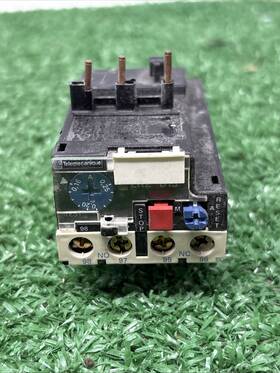
( Brand: Telemecanique ), ( Manufacturer Part Number: LR2D1302 )
Review TELEMECANIQUE Schneider Electric
The **Schneider Electric Telemecanique LR2D1302** is a high-performance, compact industrial motor starter designed to provide reliable and efficient control for three-phase alternating current (AC) motors in demanding automation and manufacturing environments. Part of Schneider Electric s renowned **Altivar** and **Premium** series, this motor starter combines advanced protection features, robust construction, and seamless integration with modern control systems to enhance operational efficiency and safety. Engineered with a **13-ampere (A) current rating**, the LR2D1302 is ideal for applications requiring precise motor control, such as conveyor systems, pumps, compressors, and small industrial machinery where consistent performance and quick response times are critical. Its **compact, DIN-rail mountable design** allows for easy installation in tight spaces, while its **modular architecture** enables flexible customization to meet specific application needs, whether through additional auxiliary contacts, integrated overload protection, or compatibility with Schneider s **EcoStruxure** platform for advanced monitoring and diagnostics.
At the heart of the LR2D1302 lies a **thermal overload relay** that continuously monitors motor current to prevent overheating, ensuring extended equipment lifespan and reducing downtime. The starter incorporates **electromagnetic or solid-state contactors**, depending on the configuration, delivering rapid and reliable switching with minimal arcing, which enhances durability and reduces maintenance requirements. For enhanced safety, it features **auxiliary contacts** (normally open and normally closed) that can be used for interlocking, signaling, or sequencing in complex control schemes. The LR2D1302 also supports **remote control** via auxiliary relays or programmable logic controllers (PLCs), making it a versatile solution for both standalone and integrated automation setups.
Schneider Electric s commitment to innovation is evident in the LR2D1302 s compatibility with **Modbus, Profibus, or Ethernet/IP** communication protocols, enabling seamless data exchange with supervisory systems, SCADA platforms, or IoT-enabled devices. This connectivity allows for real-time monitoring of motor health, energy consumption, and operational status, empowering predictive maintenance strategies and optimizing energy efficiency. The starter s **low power consumption** and **high efficiency** further contribute to cost savings by reducing energy waste while maintaining peak performance. Additionally, its **IP20 protection rating** ensures reliable operation in standard industrial environments, though it can be paired with appropriate enclosures for higher protection levels if needed.
Built to meet stringent international standards, including **IEC/EN 60947-4-1** for motor starters and **IEC/EN 60204-1** for machine safety, the LR2D1302 offers a robust solution for applications requiring compliance with global industrial regulations. Schneider Electric s reputation for quality and reliability is reinforced by the LR2D1302 s **long service life**, minimal wear-and-tear components, and easy accessibility for routine maintenance or replacements. Whether deployed in a small workshop, a mid-sized manufacturing facility, or as part of a larger automation system, this motor starter delivers a perfect balance of **performance, flexibility, and cost-effectiveness**, making it a trusted choice for engineers and technicians seeking a dependable control solution.
**Pros and Cons of buying a Telemecanique LR2D1302 (Schneider Electric) Safety Relay**
The **Telemecanique LR2D1302** is a modular safety relay designed for industrial applications, particularly in machine safety circuits. Below is a detailed analysis of its advantages and disadvantages.
---
### **Pros**
1. **High Reliability and Safety Compliance**
The LR2D1302 is certified to **EN ISO 13849-1 (Category 3, PL d)** and **IEC 62061**, ensuring it meets strict safety standards for industrial machinery. This reduces the risk of catastrophic failures in critical applications.
2. **Modular and Flexible Design**
It is part of Schneider Electric s **Modicon** and **Telemecanique** modular safety relay series, allowing easy integration into existing control systems. The LR2D1302 can be combined with other relays (e.g., LR2D1202, LR2D1402) to create complex safety logic without extensive rewiring.
3. **Compact and Space-Efficient**
The relay is designed for **17.5 mm rail mounting**, making it suitable for applications with limited space. This is particularly useful in automated production lines where compactness is essential.
4. **Wide Input and Output Options**
- **Inputs:** Supports **NO/NC contacts, inductive sensors, and safety-rated inputs** (e.g., 24V DC, 110V AC).
- **Outputs:** Provides **relay contacts (NO/NC) and transistor outputs**, allowing compatibility with various actuators and control systems.
- **Diagnostic LEDs:** Built-in status indicators help quickly identify faults or operational states.
5. **Self-Diagnostic and Fault Monitoring**
The relay includes **self-testing capabilities**, continuously monitoring its own integrity. If a fault is detected, it can trigger an alarm or lock out the system, preventing unsafe conditions.
6. **Compatibility with Schneider Ecosystem**
It integrates seamlessly with **Schneider s EcoStruxure, Modicon PLCs, and Altivar drives**, simplifying system design and maintenance. This reduces integration complexity and ensures long-term support.
7. **Long Lifespan and Durability**
Designed for **industrial environments**, the LR2D1302 is built to withstand **vibration, temperature fluctuations (-25 C to 70 C)**, and humidity, making it suitable for harsh factory conditions.
8. **Easy Wiring and Configuration**
- **Terminal block design** simplifies wiring with clear labeling.
- **Parameterization via software** (e.g., **Schneider s Safety Toolbox**) allows for easy configuration of safety functions without extensive manual adjustments.
9. **Cost-Effective for High-Safety Applications**
While not the cheapest safety relay on the market, its **certifications and reliability** often justify the cost in applications where compliance with safety standards is mandatory (e.g., robotics, press machines, conveyor systems).
10. **Backward and Forward Compatibility**
It is part of a well-established product line, meaning spare parts, documentation, and technical support are widely available. Newer models may offer additional features, but the LR2D1302 remains a stable choice.
---
### **Cons**
1. **Limited Advanced Safety Features**
Compared to newer **Schneider Electric safety relays (e.g., LR2D1600 series)**, the LR2D1302 lacks **advanced diagnostics, wireless communication (e.g., Modbus RTU, Ethernet/IP), or integrated HMI support**. This may require additional hardware for complex monitoring.
2. **Higher Initial Cost Than Basic Relays**
While justified by its safety certifications, the LR2D1302 is **more expensive than non-certified relays** (e.g., standard industrial relays). For low-risk applications, simpler solutions may suffice.
3. **Dependence on Schneider Ecosystem**
If your system relies heavily on **non-Schneider components**, integration may require additional adapters or custom logic, increasing complexity.
4. **Physical Size Constraints**
The **17.5 mm rail width** means it may not fit in systems designed for **35 mm or 70 mm rail-mounted devices**. This could require custom mounting solutions.
5. **Learning Curve for Configuration**
While user-friendly, **proper configuration of safety logic** (e.g., 2-out-of-3 voting, time delays) requires knowledge of **EN ISO 13849 standards**. Misconfiguration could lead to unsafe operation.
6. **Limited Output Current**
The relay s **output contacts are rated for 10A (AC/DC)**, which may be insufficient for high-power actuators. For such cases, an external relay or contactor may be needed.
7. **Aging Stock and Discontinuation Risk**
While still widely available, **older Schneider models sometimes face reduced support** compared to newer releases. Always verify **end-of-life (EOL) status** before long-term procurement.
8. **No Built-in Wireless or IoT Capabilities**
Unlike modern safety relays, the LR2D1302 **does not support wireless communication or cloud connectivity**. This limits its use in **smart factory or remote monitoring** applications.
9. **Sensitivity to Power Quality Issues**
Like most relays, it can be affected by **voltage spikes or poor power supply conditions**. A **surge protector or stabilized power supply** may be necessary in unstable environments.
10. **Documentation and Training Dependency**
Proper installation and troubleshooting **require access to Schneider s technical documentation** or training. Without this, diagnosing issues (e.g., contact wear, input failures) can be challenging.
---
### **Conclusion**
The **Telemecanique LR2D1302** is a **robust, certified safety relay** ideal for applications requiring **EN ISO 13849 compliance** in industrial machinery. Its **modularity, reliability, and integration with Schneider s ecosystem** make it a strong choice for **machine safety, robotics, and automated systems** where fail-safe operation is critical.
However, its **limited advanced features, higher cost, and dependency on Schneider s platform** may not make it the best fit for **simple, low-risk applications** or systems requiring **wireless communication or high-power outputs**. Additionally, **long-term availability** should be confirmed before purchasing in bulk.
For **new projects**, evaluating **newer Schneider safety relays (e.g., LR2D1600 series)** may offer better diagnostics and connectivity. For **existing systems already using LR2D relays**, the LR2D1302 remains a **proven, reliable solution**.
---
### **Recommendation**
**Buy the LR2D1302 if:**- You need a **certified safety relay** for **EN ISO 13849 or IEC 62061 compliance**.
- Your system is **already part of Schneider s ecosystem** (PLCs, drives, HMI).
- You require **modular, flexible safety logic** with **self-diagnostics**.
- The application involves **moderate power demands** ( 10A contacts).
**Avoid or Consider Alternatives if:**- You need **wireless communication, IoT integration, or advanced diagnostics** (consider **LR2D1600 or newer models**).
- The application is **low-risk** and does not require safety certifications (a standard relay may suffice).
- You anticipate **high-power outputs** (>10A) or **custom mounting constraints**.
- Long-term **spare parts availability** is a concern (check Schneider s support status).
**Final Verdict:**The LR2D1302 is a **solid, mid-range safety relay** that excels in **standard industrial safety applications**. While not the most advanced, its **reliability and certification** make it a **safe and practical choice** for many machine safety implementations. Always pair it with **proper training and documentation** to ensure correct installation and configuration.
Details:
The LR2D1302 relay is equipped with various features and specifications to ensure efficient precise automation in industrial settings, making it a valuable component for control systems. The product is a TELEMECANIQUE LR2D1302 relay, designed for industrial automation and motion control applications.
part #: lr2d1302 prices
- $29.00-$83.70
specifications automationjack:
- brand: Telemecanique
- mpn: Lr2d1302
shipping automationjack:
- class: Standard
- transit: 6-9 Days
- service: USPS Ground Advantage
- type: Calculated
- cost: $0.00
- carrier: USPS
offer automationjack:
- options: Ship-to-home
- quantity: 1
- availability: In Stock
- sold: 0
- best offers: True
- started: April 14, 2026
payments automationjack:
- wallet: Google-pay
- other
- credit card: Discover
general automationjack:
- condition: Used
- Business Industrial > Industrial Automation Motion Controls > Other Automation Equipment
seller automationjack:
- # reviews: 380
- rating: 98.3%
- city: Eaton, Indiana
returns automationjack:
- policy: No Returns
Telemecanique LR2D1302 Is Similar To:
- Telemecanique Gv2-ae20 Schneider Electric Gv2ae20 Used Tested Cleaned (64.9% similar) Call to use a shipping service other than the ones listed. Schneider electric GV2-AE20 / GV2AE20 used tested cleaned discontinued by manufacturer, auxiliary contact, 2.5AMP, 24. Sells new and surplus product develops channels to purchase such. Packaging and handling: items are safely eds packaged in...(August 14th, 2024)
- Telemecanique Lc1-d3210-u5 Schneider Electric Lc1d3210u5 Used Tested Cleaned (64.5% similar) The product is used surplus. All products are guaranteed to be working but may show signs of use. Packaging and handling, items are safely eds packaged in custom shipping cartons for protection. Call to use a shipping service other than the ones listed. Sells new and surplus product develops ...(August 16th, 2024)
- Telemecanique Lc1-d093-c-a65 Schneider Electric Lc1d093ca65 Used Tested Cleaned (61.3% similar) Good used condition F27...(September 19th, 2024)
- Schneider Electric Telemecanique Gk1-em Gk1em Fuse Holder Isolator 40-50 Amp 90v 8.5w (29.2% similar) Manufacturers warranty and support do not apply. GK1-EM GK1EM schneider Telemecanique fuse holder isolate - 40-50 amp, 90V, 8.5W: $70.00. Fuse holder isolate 40-50 90V 8.5W 50...(October 6th, 2024)
- Telemecanique Lrd3355 Schneider Electric Used (86.7% similar) Packaging and handling: items are safely eds packaged in custom shipping cartons for protection. All products are guaranteed to be working but may show signs of use. Call to use a shipping service other than the ones listed. Sells new and surplus product develops channels to purchase such...(October 15th, 2024)
- Telemecanique 03859820311a01 Schneider Electric Used (76.3% similar) Sells new and surplus product develops channels to purchase such. Call to use a shipping service other than the ones listed. Packaging and handling: items are safely eds packaged in custom shipping cartons for protection. All products are guaranteed to be working but may show signs of use if ...(October 17th, 2024)
- Telemecanique Lc1d09fe7 Schneider Electric Used (82.6% similar) Part number LC1D09FE7. All products are guaranteed to be working but may show signs of use. The product is used surplus. Call to use a shipping service other than the ones listed. Sells new and surplus product develops channels to purchase such. Packaging and handling: items are safely eds packaged ...(October 17th, 2024)
- Telemecanique Lc1d6511-lx1d6g6 Schneider Electric Lc1d6511lx1d6g6 Used (64.3% similar) All products are guaranteed to be working but may show signs of use if purchasing a used product. Call to use a shipping service other than the ones listed. Packaging and handling: items are safely eds packaged in custom shipping cartons for protection. Sells new and surplus product develops ...(October 19th, 2024)
- Telemecanique Lc1d11500g6 Schneider Electric Used (83% similar) Packaging and handling: items are safely eds packaged in custom shipping cartons for protection. All products are guaranteed to be working but may show signs of use. Part number LC1D11500G6. Call to use a shipping service other than the ones listed. Sells new and surplus product develops channels to...(October 19th, 2024)
- Telemecanique Zenl1111 Schneider Electric Used (79.1% similar) Call to use a shipping service other than the ones listed. The product is used surplus. All products are guaranteed to be working but may show signs of use. Packaging and handling: items are safely eds packaged in custom shipping cartons for protection. Sells new and surplus product develops ...(October 24th, 2024)
- Telemecanique Ca2-en122b5 Schneider Electric Ca2en122b5 Used (72.4% similar) Call to use a shipping service other than the ones listed. Sells new and surplus product develops channels to purchase such. All products are guaranteed to be working but may show signs of use if purchasing a used product. Packaging and handling: items are safely eds packaged in custom shipping ...(October 24th, 2024)