MTS LPSCSU0240 Lp Temposonics Magnetostrictive Ldt
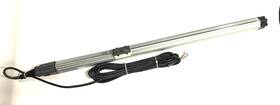
( Brand: Mts ), ( Manufacturer Part Number: LPSCSU0240 ), ( Model: LP LPSCSU0240 ), ( Modified Item: No )
Review MTS Lp Temposonics Magnetostrictive Ldt
The **MTS LPS-CSU0240 LP Temposonics Magnetostrictive Linear Displacement Transducer (LDT)** is a high-performance, non-contact, magnetostrictive sensing solution designed for precision motion control, dynamic positioning, and closed-loop feedback applications in industrial automation, robotics, and advanced manufacturing systems. Engineered by MTS Systems Corporation, a leader in test and measurement technology, this compact yet robust transducer leverages advanced magnetostrictive wave propagation technology to deliver exceptional accuracy, repeatability, and reliability across a wide range of operating conditions. The LPS-CSU0240 operates on the principle of magnetostriction, where a high-frequency pulse is sent through a guided wave tube, generating a traveling wave that interacts with a movable ferromagnetic target (such as a rod or shaft) to produce a precise displacement measurement. This contactless design eliminates wear and tear on moving components, reducing maintenance requirements and extending the lifespan of the system while ensuring consistent performance in harsh environments, including those exposed to dust, moisture, or temperature fluctuations.
With a **240 mm (9.45 inches) measurement range**, the LPS-CSU0240 is well-suited for applications requiring moderate to high stroke lengths, such as linear actuators, press systems, material handling equipment, and CNC machining centers. Its **high resolution of up to 1 m (0.0004 inches)** ensures fine positional control, making it ideal for applications demanding sub-micron precision, such as semiconductor manufacturing, medical device assembly, or aerospace component testing. The transducer s **CSU (Compact Sensor Unit)** housing integrates seamlessly with MTS s TempSonics signal conditioner, providing a compact, all-in-one solution that simplifies installation and reduces wiring complexity. The signal conditioner also offers **digital output options**, including analog (4-20 mA or 0-10 V) and digital (RS-485 or Profibus DP) interfaces, enabling seamless integration with PLCs, motion controllers, and data acquisition systems for real-time monitoring and feedback control.
One of the standout features of the LPS-CSU0240 is its **wide operating temperature range of -40 C to 85 C (-40 F to 185 F)**, making it versatile for applications in extreme environments, such as automotive test rigs, outdoor industrial machinery, or cryogenic systems. The transducer is also **IP67-rated**, ensuring protection against dust, dirt, and water ingress, which is critical for applications in dirty or wet environments like packaging machinery, food processing equipment, or underwater robotics. Additionally, the magnetostrictive sensing technology provides **excellent dynamic response**, with bandwidth capabilities up to **1 kHz**, allowing for accurate tracking of high-speed movements and vibrations. This makes the LPS-CSU0240 particularly well-suited for applications involving rapid acceleration, deceleration, or oscillatory motion, such as servo motor control, vibration testing, or dynamic load cell applications.
The LPS-CSU0240 is designed with **modular flexibility** in mind, offering multiple mounting options, including flange, threaded, or direct shaft attachment, to accommodate various system configurations. Its **low power consumption** and **long-term stability** further enhance its efficiency and reliability, reducing operational costs while maintaining high performance over extended periods. Whether used in research and development, quality assurance, or large-scale industrial automation, this transducer delivers a robust, high-precision solution that minimizes downtime and maximizes productivity. By combining cutting-edge magnetostrictive technology with MTS s reputation for durability and innovation, the LPS-CSU0240 stands as a versatile tool for engineers and technicians seeking uncompromising accuracy and dependability in their motion control applications.
**Pros and Cons of buying a MTS LPS-CSU0240 LP Temposonics Magnetostrictive LDT**
The **MTS LPS-CSU0240 LP Temposonics Magnetostrictive Linear Displacement Transducer (LDT)** is a high-precision, non-contact displacement sensor commonly used in industrial automation, robotics, and motion control applications. Below is a detailed analysis of its advantages and limitations.
---
### **Pros**
1. **High Precision and Accuracy**
The Temposonics magnetostrictive LDT is known for its exceptional resolution and accuracy, typically offering sub-micron precision. This makes it ideal for applications requiring fine positional control, such as CNC machines, semiconductor manufacturing, or precision assembly systems.
2. **Non-Contact Measurement**
Unlike mechanical sensors (e.g., potentiometers or linear variable differential transformers), this sensor does not require physical contact with the target, reducing wear and tear on both the sensor and the measured object. This also eliminates issues related to friction, stiction, or mechanical degradation over time.
3. **Wide Measurement Range**
The LPS-CSU0240 model provides a measurement range of **200 mm (20 cm)**, which is suitable for many industrial applications. The range can be extended or reduced depending on the specific model variant, offering flexibility for different use cases.
4. **High Reliability and Durability**
Magnetostrictive sensors are robust and resistant to environmental factors such as dust, moisture, and temperature variations (within specified limits). They have no moving parts that can fail due to mechanical stress, contributing to long-term reliability.
5. **Fast Response Time**
The sensor provides real-time displacement data with minimal latency, making it suitable for high-speed applications where quick feedback is critical (e.g., servo motor control, robotics, or dynamic positioning systems).
6. **Compatibility with MTS Systems**
As part of the MTS Temposonics family, this sensor integrates seamlessly with MTS control systems, including servo drives and motion controllers. This compatibility simplifies system integration and reduces the need for additional signal conditioning hardware.
7. **Low Maintenance Requirements**
Since the sensor operates without physical contact or wear-prone components, maintenance is minimal. There are no lubrication needs, and calibration may be required less frequently compared to mechanical sensors.
8. **Immunity to Electrical Noise**
Magnetostrictive sensors are less susceptible to electromagnetic interference (EMI) and electrical noise, which can be a problem in industrial environments with high-voltage equipment or strong magnetic fields.
9. **Versatile Mounting Options**
The sensor can be mounted in various orientations (e.g., vertical, horizontal, or at angles) and is compatible with different target rod materials (e.g., aluminum, steel, or non-magnetic materials with appropriate target rods).
10. **Digital Output Options**
Many Temposonics sensors support digital communication protocols (e.g., Profibus, DeviceNet, or Ethernet/IP), enabling easy integration into modern industrial networks and PLC-based control systems.
---
### **Cons**
1. **Higher Initial Cost**
Magnetostrictive LDTs are generally more expensive than alternative displacement sensors, such as potentiometers or linear encoders. The cost may be a barrier for small-scale or budget-conscious applications.
2. **Limited to Ferromagnetic Target Rods**
The sensor requires a ferromagnetic target rod (e.g., steel or aluminum with a ferromagnetic coating) to function. Non-ferromagnetic materials (e.g., plastic, copper, or certain alloys) cannot be measured directly, requiring additional adapters or target rods, which may add complexity and cost.
3. **Sensitivity to Magnetic Interference**
While magnetostrictive sensors are robust, they can be affected by strong external magnetic fields or nearby magnetic materials. Proper shielding or placement may be necessary in environments with significant magnetic interference.
4. **Target Rod Alignment Requirements**
The target rod must be aligned coaxially with the sensor for accurate measurements. Misalignment can lead to errors or reduced performance. This may require additional mechanical design considerations or adjustments during installation.
5. **Limited Dynamic Range for Very High Speeds**
While the sensor responds quickly, extremely high-speed applications (e.g., beyond 10 m/s) may require additional filtering or signal processing to avoid noise or overshoot in the measurement data.
6. **Calibration Needs**
Although the sensor is highly accurate, periodic calibration may be necessary to maintain performance, especially in harsh or changing environmental conditions. This adds to the overall maintenance burden.
7. **Size and Installation Constraints**
The sensor and its target rod occupy physical space, which may not be suitable for compact or space-constrained applications. The installation process may require additional structural support or mounting hardware.
8. **Vendor Lock-In with MTS Ecosystem**
While the sensor integrates well with MTS systems, compatibility with third-party controllers or non-MTS equipment may require additional interfaces or adapters, potentially increasing complexity or cost.
9. **Potential for Signal Degradation Over Time**
Although rare, prolonged exposure to extreme temperatures or mechanical stress could theoretically affect the sensor s performance. However, this is uncommon due to the sensor s robust design.
10. **Learning Curve for Setup and Configuration**
Configuring the sensor for optimal performance, especially in complex systems, may require technical expertise. Users unfamiliar with magnetostrictive sensors or MTS systems may need training or support to implement the sensor effectively.
---
### **Conclusion**
The **MTS LPS-CSU0240 LP Temposonics Magnetostrictive LDT** is a high-performance displacement sensor ideal for applications demanding precision, reliability, and non-contact measurement. Its strengths lie in its accuracy, durability, and compatibility with MTS control systems, making it well-suited for industrial automation, robotics, and motion control. However, its higher cost, dependency on ferromagnetic target rods, and specific installation requirements may pose challenges for some users.
For applications where **sub-micron precision, long-term reliability, and non-contact measurement** are critical such as in **CNC machining, semiconductor manufacturing, or high-precision robotics** this sensor is an excellent choice. Conversely, if **budget constraints, non-ferromagnetic targets, or simpler mechanical solutions** are priorities, alternative sensors (e.g., linear encoders or capacitive sensors) may be more appropriate.
---
### **Recommendation**
**Buy the MTS LPS-CSU0240 LP Temposonics LDT if:**- Your application requires **high-precision displacement measurement** (sub-micron accuracy).
- You are working within the **MTS ecosystem** (e.g., using MTS servo drives or controllers).
- Non-contact measurement and **low maintenance** are essential.
- The target object can accommodate a **ferromagnetic rod** or adapter.
- You can justify the **higher upfront cost** based on long-term reliability and performance benefits.
**Consider alternatives if:**- Your budget is limited, and lower-cost sensors (e.g., linear encoders or potentiometers) can meet your accuracy requirements.
- Your application involves **non-ferromagnetic materials** that cannot use the sensor directly.
- You require **extremely compact or flexible mounting solutions** that are not easily achievable with this sensor.
- You lack expertise in **configuring or integrating magnetostrictive sensors** into your system.
For most **high-end industrial or precision motion control applications**, the LPS-CSU0240 is a **strong recommendation** due to its unmatched accuracy and durability. However, a thorough evaluation of your specific requirements including cost, target material, and system integration is essential before making a final decision.
Details:
Magnetostrictive LDT. Condition: used, tape residue on unit, see pictures for more details.
part #: lpscsu0240 price
- $399.99
specifications automationjack:
- brand: Mts
- mpn: Lpscsu0240
- model: Lp Lpscsu0240
- modified item: No
seller automationjack:
- rating: 100.0%
- city: Denver, Colorado
- # reviews: 4578
shipping automationjack:
- carrier: UPS
- cost: $21.67
- service: UPS Ground, UPS 2nd Day Air, UPS Next Day Air
- class: Standard, Expedited, One-day
- type: Calculated
- transit: 2-4 Days
general automationjack:
- condition: Used
- Business Industrial > Industrial Automation Motion Controls > Other Automation Equipment
returns automationjack:
- time: 30 Days
- policy: Returns Accepted
- paid by: Buyer
- method: Money back
offer automationjack:
- started: April 14, 2026
- quantity: 1
- sold: 0
- options: Ship-to-home
- availability: In Stock
payments automationjack:
- other
- credit card: Diners-club
- wallet: Apple-pay
- cash
Mts LPSCSU0240 Is Similar To:
- Mts Temposonics Ehm1000md511c304241 Ehm1000md511c304242 Position Sensor Used (36.5% similar) With its specific model number and advanced technology, this position sensor is suitable for demanding industrial environments ensures precise control over motion in a wide range of applications. The Mts temposonics EHM1000MD511C304242 position sensor is a high-quality industrial automation product ...(April 29th, 2025)
- Mts Temposonics Rpn1000md601c206221 Linear Motion Sensor (39.6% similar) 1-NW4D-112690-ZJ-NP. Shipping services. Mts RPN1000MD601C206221 temposonics linear motion sensor...(February 25th, 2026)
- Mts Lhsr005u01501v0 L Temposonics Linear Position Sensor (60.4% similar) Temposonics linear position sensor. Condition: used...(April 14th, 2026)