SICK LMS511-22100 Lidar
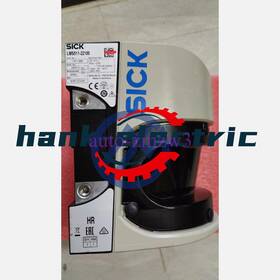
( Brand: Sick ), ( Manufacturer Part Number: LMS511-22100 )
Review SICK Used Lidar
The **SICK LMS511-22100** is a high-performance, industrial-grade LiDAR sensor designed for precision scanning and obstacle detection in demanding environments. Part of SICK s advanced LMS511 series, this compact yet robust device combines cutting-edge laser technology with sophisticated signal processing to deliver unparalleled accuracy and reliability. Operating at a wavelength of 905 nm, the LMS511-22100 emits a narrow, high-resolution laser beam that sweeps through a 270-degree field of view, capturing detailed distance measurements up to a maximum range of 100 meters. Its modular design allows for seamless integration into automation systems, making it ideal for applications in material handling, warehouse logistics, autonomous mobile robots, and industrial safety monitoring. The sensor features a high scanning frequency of up to 25 Hz, ensuring real-time data acquisition with minimal latency, while its IP67 rating guarantees protection against dust, water, and harsh environmental conditions. With a compact form factor measuring just 140 x 140 x 100 mm, the LMS511-22100 balances performance with ease of installation, making it suitable for both fixed and mobile platforms. Its advanced signal processing algorithms filter out noise and false readings, delivering clean, high-fidelity point cloud data that enhances decision-making in automated systems. Whether deployed in a high-speed production line, a dynamic warehouse environment, or an autonomous navigation system, the SICK LMS511-22100 sets a new standard for precision LiDAR sensing, offering engineers and operators the confidence to build smarter, safer, and more efficient industrial solutions.
### Pros and Cons of buying a SICK LMS511-22100 LiDAR
#### **Pros**
1. **High Precision and Accuracy** The LMS511-22100 is known for its excellent angular and distance resolution, making it ideal for applications requiring fine detail, such as autonomous navigation, robotics, and industrial automation. Its 0.1 angular resolution ensures reliable point cloud data.
2. **Wide Measurement Range** With a range of up to 120 meters, it is suitable for medium to large environments, including warehouses, outdoor navigation, and obstacle detection in autonomous systems.
3. **High Scanning Frequency** Operating at up to 25 Hz, it provides real-time data acquisition, which is crucial for dynamic environments where objects or obstacles may move quickly.
4. **Robust and Reliable Performance** Built with industrial-grade components, it is designed to operate in harsh conditions, including temperature variations, dust, and moisture (IP67 rating). This makes it durable for long-term use in outdoor or automated settings.
5. **Comprehensive Data Output** The device provides raw point cloud data, intensity values, and reflectivity measurements, which are useful for advanced applications like SLAM (Simultaneous Localization and Mapping) and 3D reconstruction.
6. **Compatibility with Common Platforms** It integrates well with ROS (Robot Operating System), MATLAB, and other industrial control systems, making it versatile for research and commercial applications.
7. **Good Community and Support** SICK is a well-established manufacturer with strong technical support, documentation, and a user community, which helps with troubleshooting and implementation.
8. **Modular and Upgradable** Some configurations allow for firmware updates, ensuring compatibility with evolving software and hardware standards.
---
#### **Cons**
1. **High Cost** The LMS511-22100 is a premium LiDAR unit, and its price can be prohibitive for small businesses, startups, or hobbyists. The cost may also include additional accessories like mounting hardware or power supplies.
2. **Complex Setup and Calibration** Unlike simpler LiDAR sensors, this unit requires careful installation, alignment, and calibration to ensure accurate performance. Users may need expertise in robotics or automation to set it up correctly.
3. **Power Consumption** It requires a stable power supply (typically 12V or 24V DC), which may add to the overall system complexity and cost if additional power management components are needed.
4. **Limited Range in Low-Light or Reflective Conditions** While it performs well in most environments, performance can degrade in low-light conditions or when scanning highly reflective or dark surfaces, potentially leading to missed detections.
5. **Size and Weight** The unit is larger and heavier than some consumer-grade LiDARs, which may limit its use in compact or portable applications. Mounting may require additional structural considerations.
6. **Software Dependency** Full utilization of its capabilities often requires specialized software (e.g., ROS packages, custom algorithms) for processing and interpreting the data, which may add a learning curve for new users.
7. **Potential Latency in Data Processing** While the scanning frequency is high, processing raw data in real-time can introduce latency, especially in complex systems where multiple sensors or algorithms are involved.
8. **Limited Availability of Cheaper Alternatives** For applications where high precision is not critical, there are more affordable LiDAR options (e.g., Velodyne, Ouster, or even ultrasonic sensors), which may be more cost-effective for budget-conscious projects.
---
### **Conclusion**
The SICK LMS511-22100 LiDAR is a high-performance sensor that excels in applications demanding precision, reliability, and real-time data acquisition. Its strengths lie in its industrial-grade build, wide measurement range, and compatibility with advanced robotic and automation systems. However, its high cost, complexity, and requirements for specialized setup and software may not make it suitable for all users, particularly those with limited budgets or experience in sensor integration.
For **professional, industrial, or research applications** where accuracy and durability are paramount (e.g., autonomous vehicles, warehouse automation, or robotics), the LMS511-22100 is an excellent choice despite its drawbacks. For **hobbyists, small businesses, or cost-sensitive projects**, exploring alternative LiDAR sensors or sensor fusion approaches may be more practical.
---
### **Recommendation**
- **Buy the SICK LMS511-22100 if:**- You are working on a project requiring high precision, such as autonomous navigation, industrial automation, or advanced robotics.
- Your budget allows for a premium sensor, and you prioritize reliability and long-term performance.
- You have access to or can invest in the necessary software (e.g., ROS, MATLAB) and technical expertise for setup and calibration.
- **Consider alternatives if:**- Your project has a tight budget, and you can compromise on some features (e.g., range or resolution) to use a more affordable LiDAR like the Velodyne VLP-16 or Ouster OS1-64.
- You are a beginner and may struggle with the complexity of setup and data processing; starting with a simpler sensor (e.g., RPLIDAR or Hokuyo) could be a better learning experience.
- Your application does not require the full range or precision of the LMS511-22100, and a lower-cost solution (e.g., ultrasonic sensors or structured light sensors) would suffice.
Ultimately, weigh your project s requirements against the sensor s capabilities and your available resources to make an informed decision.
Details:
Return Police: The product at fixed price, please pay as soon possible after the purchase. Shipping Detail. Serious buyers only, please.
You should receive the item within 2-4 weeks. Please leave a telephone number for on-time delivery. It will just take you 1 minute.
part #: lms51122100 prices
- $5594.58-$7769.00
specifications automationjack:
- brand: Sick
- mpn: Lms511-22100
returns automationjack:
- time: 14 Days
- paid by: Buyer
- policy: Returns Accepted
- method: Money back
general automationjack:
- condition: Used
- Business Industrial > Industrial Automation Motion Controls > Other Automation Equipment
payments automationjack:
- credit card: Mastercard
- wallet: Google-pay
- other
offer automationjack:
- sold: 0
- options: Ship-to-home
- best offers: True
- quantity: 4
- started: June 1, 2026
- availability: In Stock
shipping automationjack:
- transit: 3-7 Days
- class: Standard
- cost: $0.00
- service: Standard
- type: Fixed
seller automationjack:
- city: Canyon Country, California
- rating: 100.0%
- # reviews: 154
Sick LMS511-22100 Is Similar To:
- Sick Sks36-hva0-k02 Sks36hva0k02 Used Tested Cleaned (41.5% similar) Packaging and handling, items are safely eds packaged in custom shipping cartons for protection. All products are guaranteed to be working but may show signs of use. Call to use a shipping service other than the ones listed. Sells new and surplus product develops channels to purchase such...(February 1st, 2024)
- Sick Dgs20-1f400500 Dgs201f400500 Used Tested Cleaned (43.4% similar) Packaging and handling, items are safely eds packaged in custom shipping cartons for protection. Call to use a shipping service other than the ones listed. Sells new and surplus product develops channels to purchase such. All products are guaranteed to be working but may show signs of use...(February 3rd, 2024)
- Sick S30a-7111cp Used S3000 Safety Laser Scanner Profinet Io Advanced (33% similar) Item specifics: brand: Sick, mpn: S30A-7111CP, model : S30A-7111CP. Priority part. Used Sick S30A-7111CP S3000 safety laser scanner profaned Io advanced...(August 19th, 2024)
- Sick S30a-6011ca Brand Used S30a 6011ca Free Shipping By Dhl (34.1% similar) Operating various types of industrial products, mechanical modules...(August 21st, 2024)
- Sick Lms151-10100 1pc 1047607 Lidar Sensor 2 (57.5% similar) Condition: used, removed from working equipment. The photo are of the actual item...(August 22nd, 2024)
- Stegmann Ag-626-wdn Sick Ag626wdn Used (32.4% similar) Sells new and surplus product develops channels to purchase such. Call to use a shipping service other than the ones listed. Sick AG-626-WDN / AG626WDN used discontinued by manufacturer, rotary encoder, 8192X8192 ,10-32 CDC, with device net. All products are guaranteed to be working but may show ...(October 18th, 2024)
- Sick Vmd510-1021 Used Sensor Controller Unit Lnk 10base (43.4% similar) If it is not in the , and pictured, snot included offer. Condition: used: unit is used and in good working condition with minimal wear. The shipping price listed applies to the continental USA only lower 48. In most cases messages are answered within 24 hours. Used Sick VMD510-1021. Sensor ...(October 22nd, 2024)
- Sick S10b-9011da 1042267 2d Lidar Safety Laser Scanner (39% similar) All functions have been tested and are functional. Comes with an extra connection base as well. Lidar safety scanner from Sick. This device was used as a demo, but never implemented in factory environment...(October 27th, 2024)
- Stegmann Srm50hwa0k02 Sick Used (32.8% similar) Call to use a shipping service other than the ones listed. Packaging and handling: items are safely eds packaged in custom shipping cartons for protection. Part number SRM50HWA0K02. All products are guaranteed to be working but may show signs of use if purchasing a used product. Sells new and ...(November 3rd, 2024)
- Sick S30a-6011ea Used For Parts Safety Laser Scanner Without Ut System Plug (29.1% similar) Some cases have corrosion. State of units are unknown, use for repairs used parts Sick, S30A-6011EA, safety laser scanner w/out system plug. Units are not tested used for parts...(December 21st, 2024)
- Sick Ekm36-0kf0b0s01 1pcs Used Encoder (51.5% similar) Part #: Sick EKM36-0KF0B0S01 for sale...(January 13th, 2025)