FUSION UV SYSTEMS INC LHI10 Heraeus Light Hammer Irradiator
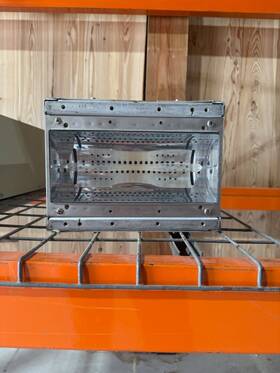
( Brand: Fusion Uv Systems Inc ), ( Manufacturer Part Number: LHI10 ), ( Type: Uv Light Hammer ), ( Unit Type: Unit )
Review FUSION UV SYSTEMS INC Heraeus Light Hammer Irradiator
The **Heraeus Light Hammer Irradiator (LHI10)** is a cutting-edge, high-performance ultraviolet (UV) fusion system designed to revolutionize the precision and efficiency of material bonding, surface treatment, and curing processes across industries ranging from medical device manufacturing to automotive and aerospace engineering. Engineered by Heraeus, a global leader in advanced materials and technologies, this compact yet powerful irradiator combines state-of-the-art UV-C and UV-A light technology with a proprietary "Light Hammer" mechanism to deliver unmatched control, consistency, and speed in curing and surface activation applications. The LHI10 features a modular, all-in-one design that integrates a high-intensity, mercury-free UV lamp array with a dynamic, programmable light distribution system, ensuring uniform irradiation across complex geometries while minimizing energy waste. Its advanced optical system, incorporating precision mirrors and diffusers, directs focused UV energy with exceptional accuracy, making it ideal for delicate substrates like plastics, composites, and sensitive medical-grade materials that require precise curing without thermal degradation. The system s intelligent control interface allows operators to customize parameters such as wavelength, intensity, and exposure time with sub-millisecond precision, accommodating everything from rapid adhesive bonding in high-volume production lines to specialized treatments like sterilization or surface modification for enhanced adhesion. Safety is a cornerstone of the LHI10 s design, with built-in UV shielding, interlock systems, and real-time monitoring to prevent operator exposure while maintaining compliance with industry standards. Its compact footprint and plug-and-play connectivity make it seamlessly integrable into existing production workflows, whether as a standalone unit or as part of an automated assembly line. Whether used for curing UV-sensitive inks and coatings, activating medical implants for biocompatibility, or enhancing the durability of composite materials in aerospace components, the Heraeus Light Hammer Irradiator (LHI10) sets a new benchmark for versatility, reliability, and performance in UV-driven manufacturing processes.
**Pros and Cons of buying a Fusion UV LHI10 (Heraeus Light Hammer Irradiator)**
### **Pros**
1. **High-Quality UV-C Irradiation** The LHI10 delivers consistent, high-intensity UV-C light (254 nm) for effective disinfection, sterilization, and surface treatment. Its powerful output ensures rapid and thorough processing, making it ideal for laboratories, medical facilities, and industrial applications.
2. **Versatile Applications** Beyond sterilization, the device can be used for:- **Surface decontamination** (e.g., lab equipment, medical instruments, packaging materials).
- **Cross-linking and curing** of polymers, adhesives, and coatings.
- **Water treatment and biofilm reduction** in controlled environments.
- **Research and development** in UV-based processes (e.g., material science, microbiology).
3. **Compact and Portable Design** The LHI10 is relatively compact for its power output, making it easier to integrate into existing workflows or transport between locations. Its modular setup allows for flexible positioning of the UV lamp relative to the target area.
4. **Precision and Control** The system includes adjustable parameters such as exposure time, distance, and intensity, allowing users to optimize results for specific applications. Some models may also feature automated control interfaces for repeatable processes.
5. **Durability and Reliability** Heraeus is a well-established manufacturer with a reputation for high-quality industrial equipment. The LHI10 is built to withstand frequent use, with robust components that minimize downtime for maintenance.
6. **Energy Efficiency** UV-C lamps are generally more energy-efficient than traditional sterilization methods (e.g., autoclaves or chemical disinfectants), reducing operational costs over time.
7. **Compliance with Standards** The device is likely designed to meet or exceed industry standards for UV sterilization (e.g., ISO, FDA, or ASTM guidelines), which is crucial for applications in healthcare, food safety, or regulated industries.
8. **Low Operating Costs** While the initial investment is significant, the cost of UV lamp replacements and electricity consumption is relatively low compared to other sterilization methods. The lifespan of the UV lamp can also be extended with proper maintenance.
9. **Reduction in Chemical Use** UV-C sterilization eliminates the need for harsh chemicals (e.g., bleach, ethanol, or hydrogen peroxide), which can be beneficial for environmental sustainability and reducing chemical exposure risks.
10. **Scalability** For larger operations, Heraeus offers other models in the Light Hammer series (e.g., LHI20, LHI30) that can be scaled up as demand grows, ensuring long-term flexibility.
---
### **Cons**
1. **High Initial Cost** The LHI10 is an expensive piece of equipment, with prices typically ranging from **$20,000 to $50,000 **, depending on configuration and additional accessories. This makes it a significant investment, particularly for small businesses or startups.
2. **Limited Penetration Depth** UV-C light has limited effectiveness in penetrating opaque materials or deep into porous surfaces (e.g., fabrics, thick plastics, or biological tissues). For such cases, alternative methods (e.g., steam sterilization or chemical disinfection) may still be required.
3. **Safety Concerns** UV-C radiation is hazardous to human skin and eyes, requiring proper protective gear (e.g., goggles, gloves, and lab coats) and strict operational protocols. Improper handling can lead to burns or long-term eye damage.
4. **Maintenance Requirements** The UV lamp must be replaced periodically (typically every **1,000 2,000 hours**), which adds to ongoing costs. Additionally, the quartz sleeve (which houses the lamp) may require cleaning or replacement over time to maintain optimal performance.
5. **Surface Material Limitations** Some materials (e.g., certain plastics, rubber, or sensitive electronics) may degrade or become damaged when exposed to prolonged UV-C irradiation. Testing is necessary to ensure compatibility.
6. **Environmental Factors** Dust, moisture, or contaminants on surfaces can absorb or scatter UV light, reducing efficacy. Regular cleaning and maintenance of the treatment area are essential for consistent results.
7. **Learning Curve** Proper use of the LHI10 requires training to optimize parameters (e.g., exposure time, distance, and intensity) for different applications. Inefficient settings can lead to wasted energy or inadequate sterilization.
8. **Space Requirements** While compact, the device still requires dedicated space for safe operation, especially if used in high-throughput environments. Proper ventilation may also be needed to disperse ozone (a byproduct of UV-C irradiation).
9. **Regulatory and Documentation Challenges** Depending on the application (e.g., medical or food processing), additional documentation (e.g., validation studies, logbooks) may be required to comply with regulations. This can add administrative overhead.
10. **Alternative Methods May Be Needed** In some cases, UV-C sterilization may not be sufficient alone. Combining it with other methods (e.g., heat, steam, or chemical treatments) might be necessary for comprehensive disinfection.
---
### **Conclusion**
The **Fusion UV LHI10 (Heraeus Light Hammer Irradiator)** is a powerful, high-performance UV-C sterilization and treatment system with broad applications in research, healthcare, industrial processing, and beyond. Its strengths lie in its **precision, efficiency, and versatility**, making it a valuable asset for organizations that require reliable UV-based solutions. However, the **high upfront cost, safety risks, and maintenance demands** necessitate careful consideration before purchase.
This device is particularly well-suited for:- **Laboratories** needing sterile surfaces for microbiological work.
- **Medical facilities** looking to reduce reliance on chemical disinfectants.
- **Industrial manufacturers** requiring UV curing or surface treatment.
- **Research institutions** exploring UV-based processes in materials science or biology.
For smaller operations or those with limited budgets, exploring **lower-cost alternatives** (e.g., handheld UV-C sterilizers or smaller lab units) may be more practical. Additionally, users should conduct **pilot tests** to ensure the LHI10 meets their specific needs before committing to a full purchase.
---
### **Recommendation**
**Buy the LHI10 if:**- You have a **clear, high-demand application** (e.g., large-scale sterilization, industrial curing, or research requiring consistent UV exposure).
- Your budget can accommodate the **initial investment and ongoing maintenance costs**.
- You have **proper safety protocols** in place to handle UV-C radiation.
- You require **high-intensity, repeatable results** that justify the equipment s capabilities.
**Avoid or consider alternatives if:**- Your application is **small-scale or intermittent**, making the cost prohibitive.
- You lack **dedicated space or training** for safe and effective operation.
- Alternative sterilization methods (e.g., autoclaves, chemical disinfection) are **more cost-effective or practical** for your needs.
- You are unsure whether UV-C will be **sufficient for your specific materials or contaminants**.
**Final Verdict:** The LHI10 is a **premium choice** for serious users who prioritize performance, reliability, and versatility in UV-based processes. For most businesses, a **detailed cost-benefit analysis** including long-term savings from reduced chemical use and improved efficiency will determine whether it is the right investment. If budget is a constraint, exploring **used or refurbished models** or smaller Heraeus units (e.g., LHI5) may offer a more accessible entry point.
Details:
Serial numbers will vary by unit. Item has been tested and works as it should. LIGHTHAMMER 10.
part #: lhi10 price
- $2000.00
specifications automationjack:
- brand: Fusion Uv Systems Inc
- mpn: Lhi10
- type: Uv Light Hammer
- unit type: Unit
offer automationjack:
- started: April 23, 2026
- best offers: True
- availability: In Stock
- sold: 0
- quantity: 2
- options: Ship-to-home
general automationjack:
- Business Industrial > Industrial Automation Motion Controls > Other Automation Equipment
- condition: Used
returns automationjack:
- policy: Returns Accepted
- time: 30 Days
- paid by: Buyer
- method: Money back
seller automationjack:
- rating: 100.0%
- city: Oneonta, New York
- # reviews: 54
shipping automationjack:
- service: UPS Ground Saver
- carrier: UPS
- type: Calculated
- class: Economy
- transit: 5-12 Days
- cost: $47.78
payments automationjack:
- credit card: Visa
- other
- wallet: Apple-pay
Fusion Uv Systems Inc LHI10 Is Similar To:
- Fusion Uv Systems Lc6b Set Lc-6b Conveyor Vps-3b Variable Power Supply I6b Irradiator (51.4% similar) Signs of wear Include marks, scratches, scuffs, stains, etc. Fusion Uv Systems set LC-6B conveyor VPS-3B variable power supply I6B irradiator: for sale is used lot. GSR veers 1675 gs 9.8 1675 LC-6B conveyor. Included in the lot are following: LC-6B conveyor, VPS-3B variable power supple, I6B ...(June 25th, 2025)
- Fusion Uv I300m 10192 I311mp Ultraviolet Light System Irradiator 126c111pr4 Si (52.2% similar) Message if any question...(September 18th, 2025)
- Fusion Uv Systems F300s 10686 I311mp-d Ultraviolet Light System Irradiator (64.7% similar) Country of manufacture: n/a. Will there be a dock or forklift. height : 12 in. After the return period has ended, you can no longer product. Your phone number and business name. Local pick-up, prefer to pick it up yourself. Brand: Fusion Uv Systems. Size: length : 12 in. Next day second air ...(October 14th, 2025)