MITSUBISHI FX3G-24M Programmable Controller Guarentee FX-4LC
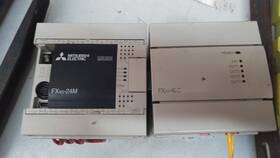
( Brand: Mitsubishi ), ( Manufacturer Part Number: FX3G-24M ), ( Part Type: Controller ), ( Country Of Origin: Japan )
Review MITSUBISHI Programmable Controller Guarentee
The **Mitsubishi Electric FX3G-24M** and **FX-4LC** programmable logic controllers (PLCs) represent a robust and versatile solution for industrial automation, engineered to deliver high performance, reliability, and flexibility for a wide range of applications. The **FX3G-24M** is a compact, 24-input/24-output modular PLC designed for small to medium-sized control systems, offering seamless integration with Mitsubishi s extensive range of sensors, actuators, and human-machine interface (HMI) devices. Its **24 digital inputs** and **24 digital outputs**, along with support for analog I/O expansion modules, provide ample scalability for basic to moderately complex automation tasks, such as conveyor systems, packaging machinery, or simple process controls. The **FX-4LC**, a more advanced variant, builds upon this foundation with enhanced processing power, improved memory capacity, and additional communication protocols, making it ideal for applications requiring real-time data acquisition, motion control, or integration with higher-level supervisory systems like SCADA or ERP platforms.
Both controllers operate on Mitsubishi s **FX Series programming environment**, which includes the intuitive **GX Developer** software, enabling users to create, debug, and monitor ladder logic (LD), structured text (ST), function block diagrams (FBD), and other programming languages with ease. The **FX3G-24M** features a **24K-step program memory** and a **128-step data memory**, sufficient for most basic automation tasks, while the **FX-4LC** boasts a **64K-step program memory** and **256-step data memory**, along with optional **128K-step extension modules**, allowing for more complex control logic, advanced calculations, and larger data handling requirements. Both models support **Mitsubishi s proprietary FX communication protocols**, including **FX-Net**, **CC-Link**, and **Ethernet/IP**, ensuring seamless interoperability with other Mitsubishi devices, such as **FX series PLCs, Q series PLCs, and industrial robots**, as well as third-party equipment through compatible gateways.
A standout feature of these PLCs is their **high-speed processing capabilities**, with the **FX-4LC** offering **16 high-speed counters** (configurable up to 1 MHz) and **16 high-speed pulse outputs**, making it particularly suited for applications requiring precise timing, such as CNC machine control, servo motor synchronization, or high-speed packaging. Additionally, both controllers incorporate **built-in diagnostics and error reporting**, providing real-time feedback on system status, input/output faults, and communication issues, which minimizes downtime and simplifies troubleshooting. The **FX3G-24M** and **FX-4LC** also support **remote I/O expansion**, allowing users to extend their control system s reach without compromising performance, while their **compact and ruggedized design** ensures durability in harsh industrial environments, with protection ratings up to **IP65** for the base units and **IP20** for expansion modules.
Backed by Mitsubishi s **global warranty and technical support**, these PLCs come with a **standard 12-month limited warranty** (extendable in some regions) that covers defects in materials and workmanship, ensuring peace of mind for industrial operators. The **FX Series** is renowned for its **cost-effectiveness, ease of use, and compatibility with legacy systems**, making it a preferred choice for businesses transitioning from older PLC technologies or those seeking a balance between affordability and advanced functionality. Whether deployed in a small manufacturing facility, a research laboratory, or an automated warehouse, the **FX3G-24M** and **FX-4LC** deliver a dependable, scalable, and future-proof solution for modern automation challenges. With Mitsubishi s reputation for innovation and reliability, these controllers continue to set a benchmark for industrial control systems, offering a blend of simplicity, power, and adaptability that meets the demands of today s dynamic manufacturing landscape.
### **Pros and Cons of Buying a Mitsubishi FX3G-24M and FX-4LC Programmable Controller**
#### **Mitsubishi FX3G-24M (FX Series PLC)**
The **FX3G-24M** is a mid-range programmable logic controller (PLC) from Mitsubishi Electric, widely used in industrial automation. Below are its key advantages and disadvantages:
**Pros:**1. **Reliability and Proven Performance** The FX series has a long history of stable operation in industrial environments, making it a trusted choice for many manufacturers.
2. **Cost-Effective for Small to Medium Applications** Compared to higher-end PLCs (such as Q series or Siemens S7), the FX3G-24M offers a balance between affordability and functionality, making it suitable for basic automation tasks.
3. **Extensive I/O Options** Supports a wide range of analog and digital I/O modules, allowing flexibility in system expansion.
4. **Compatibility with Mitsubishi s Ecosystem** Works seamlessly with other Mitsubishi devices (e.g., HMI panels, servos, and drives) and software like **GX Developer** for programming.
5. **Good for Teaching and Learning** Often used in educational settings due to its simplicity and availability of training resources.
6. **Local Availability and Support** Widely distributed, meaning easier access to spare parts, manuals, and technical support in many regions.
7. **Basic but Functional Programming** Uses ladder logic (relay logic), which is intuitive for engineers familiar with electrical control systems.
**Cons:**1. **Limited Advanced Features** Lacks some high-end functionalities found in newer or competing PLCs (e.g., advanced motion control, built-in communication protocols like Profinet, or high-speed counter modules).
2. **Outdated Technology Compared to Modern PLCs** While still functional, it does not support the latest industrial communication standards (e.g., Ethernet/IP, Modbus TCP with full compliance) as robustly as newer models.
3. **Slower Processing Speed** Not ideal for high-speed or complex control applications that require real-time performance.
4. **No Built-in Web Server or Cloud Connectivity** Unlike some modern PLCs, it does not natively support remote monitoring or cloud-based diagnostics.
5. **Deprecated Software Support** Mitsubishi may phase out updates for older models, potentially limiting long-term software compatibility.
6. **Physical Size and Space Constraints** The unit itself is larger than some compact PLCs, which may be a limitation in space-restricted applications.
---
#### **Mitsubishi FX-4LC (FX Series PLC)**
The **FX-4LC** is an older model in Mitsubishi s FX series, predating the FX3G line. It shares many similarities with the FX3G but has some key differences in performance and features.
**Pros:**1. **Very Affordable (Used Market)** Often found at low prices in the used market, making it a budget-friendly option for basic automation.
2. **Simple and Reliable for Basic Tasks** Suitable for simple control applications where cost is a priority over advanced features.
3. **Easy to Program** Uses ladder logic, which is straightforward for engineers with a background in electrical controls.
4. **Small Footprint** The FX-4LC is more compact than the FX3G, which may be advantageous in space-constrained environments.
5. **Good for Legacy Systems** If the application requires compatibility with older Mitsubishi hardware or software, the FX-4LC may be a viable choice.
**Cons:**1. **Extremely Outdated** The FX-4LC is several generations older than the FX3G, meaning it lacks modern features, faster processing, and better communication options.
2. **Limited I/O Expansion** Fewer module options compared to the FX3G, restricting flexibility in system design.
3. **No Ethernet or Modern Communication** Relies on older communication protocols (e.g., RS-232, RS-422), which are less efficient and secure than Ethernet-based standards.
4. **Harder to Find Spare Parts** Due to its age, finding replacement units or specific modules may be challenging compared to newer models.
5. **No Long-Term Software Support** Mitsubishi has likely discontinued updates, meaning potential compatibility issues with newer versions of programming software.
6. **Slower Response Times** Not suitable for applications requiring high-speed control or real-time performance.
---
### **Comparison Summary**
Feature FX3G-24M FX-4LC
------------------------ ----------------------------------- ----------------------------------
**Price (New/Used)** Moderate (used units available) Very low (mostly used)
**Performance** Better than FX-4LC, suitable for medium tasks Very basic, limited to simple controls
**Communication** Supports RS-232, RS-422, Ethernet (limited) RS-232/RS-422 only
**I/O Flexibility** Wider module selection More limited
**Future-Proofing** Better than FX-4LC but still outdated Poor; may require replacement soon
**Best For** Small to medium automation projects Budget-friendly, legacy systems
---
### **Conclusion and Recommendation**
#### **When to Choose the Mitsubishi FX3G-24M:**- **For new or moderately complex automation projects** where cost is a concern but reliability and basic functionality are required.
- **If compatibility with other Mitsubishi devices** (e.g., HMIs, drives) is necessary.
- **For applications that do not demand high-speed or advanced features** (e.g., simple machine control, conveyor systems, basic process automation).
- **When training or educational purposes** are involved, as the FX series is widely documented and taught.
#### **When to Avoid the FX3G-24M:**- **For high-speed or real-time control applications** (consider a Q series or Siemens S7 instead).
- **If Ethernet-based communication (e.g., Profinet, Modbus TCP) is critical** the FX3G has limited support.
- **For long-term future-proofing** if the system may need upgrades in 5 10 years, a newer PLC with better communication and software support is advisable.
#### **When to Choose the Mitsubishi FX-4LC:**- **Only if absolutely necessary for a legacy system** where no other options exist.
- **For extremely budget-conscious projects** where the application is simple and the PLC will not be in use for long.
- **As a temporary or backup solution** while transitioning to a newer PLC.
#### **When to Avoid the FX-4LC:**- **For any new project** its age and lack of modern features make it unsuitable for modern industrial demands.
- **If reliability or long-term support is a concern** the risk of obsolescence is high.
- **For applications requiring any form of advanced communication or automation** (e.g., SCADA integration, cloud monitoring).
---
### **Final Recommendation:** **Do not purchase the FX-4LC for any new project.** It is outdated, lacks modern features, and will likely become obsolete soon. Instead, consider:1. **Mitsubishi FX3G-24M** If the budget allows and the application is simple to medium-complexity, it is a reasonable choice for basic automation. However, be aware of its limitations in communication and speed.
2. **Mitsubishi Q Series (e.g., Q03UDE)** If budget permits, a Q series PLC offers better performance, modern communication, and long-term support. While more expensive upfront, it is more future-proof.
3. **Competing PLCs (e.g., Siemens S7-1200, Allen-Bradley Micro800, Omron CP1E)** These alternatives often provide better value in terms of features, communication, and software support for similar price points.
**If you must use a Mitsubishi FX series:**- **Opt for the FX3G-24M** over the FX-4LC, but be prepared to accept its limitations.
- **Check for used or refurbished Q series PLCs** if the budget allows these will serve you better in the long run.
**For most new applications, investing in a slightly more modern PLC (even if used) will save time, reduce maintenance issues, and ensure compatibility with future upgrades.** The FX-4LC is only recommended in rare cases where no other option exists.
Details:
Comes with our 30-Day Money-back GUARANTEE.
part #: fx3g24m prices
- $100.00-$149.99
specifications automationjack:
- brand: Mitsubishi
- mpn: Fx3g-24m
- part type: Controller
- country of origin: Japan
general automationjack:
- Business Industrial > Industrial Automation Motion Controls > Other Automation Equipment
- condition: Used
shipping automationjack:
- transit: 4-9 Days
- type: Calculated
- carrier: FedEx
- cost: $21.93
- service: FedEx Ground / FedEx Home Delivery
- class: Standard
payments automationjack:
- wallet: Paypal
- credit card: Visa
- cash
- other
seller automationjack:
- rating: 100.0%
- city: Carterville, Illinois
- # reviews: 3441
offer automationjack:
- quantity: 1
- options: Ship-to-home
- started: June 8, 2026
- sold: 0
- availability: In Stock
returns automationjack:
- time: 30 Days
- policy: Returns Accepted
- paid by: Buyer
- method: Money back
Mitsubishi FX3G-24M Is Similar To:
- Mitsubishi Hf204s-d48 Electric Servo Motor Hg204s-d48 With Encoder 30-day Warranty (37.8% similar) This product is a great investment for any company looking top-quality industrial automation products. This motor is in excellent condition and absolutely nothing wrong with it. Made in japan, this servo motor is highly reliable and durable, ensuring long-lasting performance. With its high precision...(November 12th, 2023)
- Mitsubishi A68r10 New Programmable Logic Controller Plc Unit Module (60.6% similar) New Mitsubishi A68R10 programmable logic controller plc unit module...(December 6th, 2023)
- Mitsubishi Fx2n-128mr-001 Programmable Controller 85-264vac 50 60hz 100va (59.4% similar) May be missing screws/lugs.pd D87 BB268BITEM is sold as is where. Select surplus: : Mitsubishi FX2N-128MR-001 programmable controller 85-264VAC 50/60HZ 100VAUSED good condition see photos missing plastic cover. May be faded. May have shelf ware. May have markings/scratches...(November 21st, 2024)
- Mitsubishi Fx2n-16mt Programmable Controller 5-30vdc 25w 50 60hz Used (61.2% similar) Is Mitsubishi FX2N-16MT not the part you are wanting. For example, programmable logic controllers plc's, distributed control systems DC's's, human machine interface him's, variable speed drives BSD's, power supplies, pressure transmitters and everything in between.: condition: used item - all used ...(November 28th, 2024)
- Mitsubishi Electric Aa150xj01 Ncmk-m1x05a25018c1 5p21042 Lcd Panel With Pcb Invert (35.4% similar) Mitsubishi electric AA150XJ01 NCMK-M1X05A25018C1 5P21042 LCD panel w/ PCB inverter T85298 warranty information: this is a used item, in good condition and includes 30 day warranty...(December 4th, 2024)
- Mitsubishi Fx2n-64mt-ess Ul Programmable Controller Read (73.2% similar) So, selling for parts only not working. Unable to test further. Unit powers on top green light illuminates, bottom flashes red. Mitsubishi FX2N-64MT-ESS / ul programmable controller read, comes as shown in the photos...(December 5th, 2024)
- Mitsubishi R32tb-15 Programmable Robot Teach Pendant With 50ft Cord (54.5% similar) Local pick-up and inspection available. Free shipping. Mitsubishi R32TB-15 programmable robot teach pendant w/ 50' cord in good working and cosmetic condition...(December 16th, 2024)
- Mitsubishi Jy331a08801e F2-40 M4hb Programmable Controller Relay Card T160859 (60.6% similar) Mitsubishi JY331A08801E F2-40 M4HB programmable controller relay card T160859 warranty information: this is a used item, in good condition and includes 30 day warranty...(January 17th, 2025)
- Mitsubishi Fr-e720-0.2k Electric Inverter With Warranty Free Shipping (38% similar) Free shipping in the continental us. Mitsubishi electric inverter FR-E720-0.2K used in good working condition. Working pull from fully functional machine. 60 day warranty included...(January 26th, 2025)
- Mitsubishi Srd-n4 Contactor With Un-ax4 4009pt175 (38.3% similar) Part #: Mitsubishi SRD-N4 for sale...(May 19th, 2025)
- Mitsubishi Bn330b170 Ab12c-2024 F32974 2 B Ks-yz407a Cnc Controller Board (49.3% similar) Lock upstairs closet too shelf right room lock 152. Mitsubishi AB12C-2024, F32974 2 b, KS-YZ407A CBC controller board BN330B170...(July 10th, 2025)