SICK FX3-M0C100000 Flexisoft
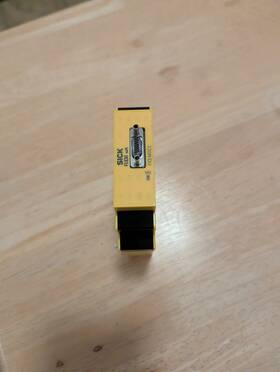
( Brand: Sick ), ( Manufacturer Part Number: FX3-M0C100000 )
Review SICK Flexisoft Fx3-m0c1
The **Sick FX3-M0C100000 FlexiSoft FX3-M0C1** is a cutting-edge, high-performance laser scanner designed for advanced industrial safety and security applications, particularly within automated material handling systems, warehouse logistics, and high-speed production environments. This compact yet robust device integrates seamlessly into modern automation workflows, offering unparalleled precision, reliability, and flexibility for detecting and measuring objects in real-time. Built on Sick s renowned FlexiSoft technology, the FX3-M0C1 combines a 2D laser scanner with a high-resolution, 1000-point measurement profile, delivering a scanning range of up to 100 meters, making it ideal for large-scale facilities where accuracy and distance are critical. Its modular design allows for easy integration into existing control systems via standard interfaces such as PROFINET, EtherNet/IP, or Modbus TCP, ensuring compatibility with a wide range of PLCs and industrial automation platforms. The FX3-M0C1 excels in dynamic environments by providing fast update rates of up to 50 Hz, enabling it to track moving objects with exceptional clarity while minimizing false detections. Its advanced signal processing algorithms further enhance performance by filtering out noise and irrelevant data, ensuring only relevant measurements are passed to the control system. The scanner s robust housing is engineered to withstand harsh industrial conditions, with an IP67 rating for protection against dust, water, and contaminants, while its wide operating temperature range of -20 C to 60 C ensures consistent operation in diverse climates. Whether deployed for collision avoidance, object detection, or precise positioning in automated guided vehicle (AGV) systems, the FX3-M0C1 delivers a balance of performance, durability, and adaptability that sets it apart as a cornerstone of modern smart manufacturing and logistics solutions.
The **Sick FX3-M0C100000 Flexisoft FX3-M0C100000** is a high-end, modular, and programmable industrial controller designed for advanced automation applications. Below is a detailed breakdown of its pros and cons, followed by a conclusion and recommendation.
---
### **Pros**
1. **Modular and Scalable Design**
The FX3 series is part of Sick s modular automation platform, allowing users to expand functionality by adding additional modules (e.g., I/O, communication, or safety modules) as needs evolve. This flexibility reduces the need for complete system replacements when requirements change.
2. **High Performance and Speed**
The FX3-M0C100000 is based on a high-performance CPU with fast processing capabilities, making it suitable for complex control tasks, real-time applications, and high-speed data processing. It supports up to 100,000 I/O points in a single system, which is ideal for large-scale automation setups.
3. **Advanced Communication Protocols**
The controller supports a wide range of communication protocols, including:- **PROFINET** (for industrial Ethernet)
- **Ethernet/IP** (for Allen-Bradley compatibility)
- **Modbus TCP**
- **SERCOS III** (for high-speed motion control)
- **CANopen**
This versatility ensures seamless integration with other devices and systems in diverse industrial environments.
4. **Flexisoft Programming Environment**
The **Flexisoft** programming environment is a robust, IEC 61131-3 compliant tool that supports multiple programming languages (Ladder Logic, Structured Text, Function Block Diagram, etc.). It also includes advanced features like:
- **Motion control** (for precise positioning tasks)
- **Safety functions** (integrated safety logic)
- **Diagnostics and logging** (for troubleshooting and maintenance)
The software is user-friendly and includes simulation tools for testing logic before deployment.
5. **Safety Integration**
The FX3 series supports **SIL 3/PL e** safety levels, making it suitable for applications requiring high safety standards (e.g., machine safety, personnel protection). Safety functions can be programmed directly within Flexisoft, reducing the need for additional safety controllers.
6. **Deterministic Performance**
The FX3 series is designed for deterministic control, ensuring predictable and consistent performance in real-time applications. This is critical for applications like robotics, CNC machines, or any process requiring precise timing.
7. **Support for Cloud and IoT**
Sick offers integration with cloud platforms and IoT solutions, allowing for remote monitoring, predictive maintenance, and data analytics. This can improve operational efficiency and reduce downtime.
8. **Long-Term Availability and Support**
Sick is a well-established company with a strong reputation in industrial automation. The FX3 series is part of their long-term product line, which suggests continued support, firmware updates, and availability of spare parts.
9. **Compatibility with Sick s Sensor Suite**
The FX3 can seamlessly integrate with Sick s wide range of sensors (e.g., laser scanners, vision systems, proximity sensors), enabling advanced applications like automated guided vehicles (AGVs), pick-and-place systems, or quality inspection.
10. **Reduced Wiring Complexity**
The modular design minimizes the need for extensive wiring, as many functions (e.g., communication, safety) can be handled through software or additional modules, reducing installation time and potential errors.
---
### **Cons**
1. **High Initial Cost**
The FX3-M0C100000 is a premium product, and the upfront cost can be significantly higher than entry-level or mid-range controllers (e.g., Allen-Bradley CompactLogix, Siemens S7-1200). This may be a barrier for small businesses or startups with limited budgets.
2. **Complexity for Beginners**
The advanced features of the FX3, such as Flexisoft programming, safety functions, and multi-protocol communication, can be overwhelming for users with limited automation experience. Training may be required, adding to the overall cost and time investment.
3. **Learning Curve for Flexisoft**
While Flexisoft is powerful, it may not be as intuitive as some other PLC programming environments (e.g., Codesys or even basic ladder logic in simpler PLCs). Users familiar with other platforms (e.g., Siemens TIA Portal, Rockwell Studio 5000) may need time to adapt.
4. **Dependency on Sick s Ecosystem**
The FX3 s strengths lie in its integration with Sick s sensors and software tools. If a user s system primarily relies on non-Sick components (e.g., motors from another manufacturer, legacy HMI systems), additional gateways or adapters may be needed, increasing complexity.
5. **Limited Physical I/O on Base Unit**
The base unit (FX3-M0C100000) itself has limited built-in I/O (e.g., digital I/O, analog inputs/outputs). To achieve a large number of I/O points, users must invest in additional modules, which can increase both cost and system complexity.
6. **Firmware and Software Updates**
While Sick provides updates, some users may experience occasional bugs or compatibility issues with new firmware versions. Testing updates in a non-production environment is advisable to avoid disruptions.
7. **Competition from Other Vendors**
Alternatives like **Allen-Bradley ControlLogix**, **Siemens S7-1500**, or **Beckhoff TwinCAT** offer similar capabilities and may be more cost-effective or better suited for specific applications. The choice often depends on existing infrastructure and vendor lock-in preferences.
8. **Maintenance and Support Costs**
While Sick offers robust support, third-party maintenance or troubleshooting may incur additional costs, especially for specialized applications. Users should factor in long-term support expenses.
9. **Physical Size and Installation Space**
The modular design of the FX3 requires more installation space compared to compact PLCs. This may not be ideal for applications with limited cabinet space or where space efficiency is critical.
10. **Potential Overkill for Simple Applications**
For basic automation tasks (e.g., simple motor control, discrete I/O applications), the FX3 s advanced features may be unnecessary, making it a more expensive solution than simpler PLCs would be.
---
### **Conclusion**
The **Sick FX3-M0C100000 Flexisoft** is an excellent choice for **large-scale, complex automation projects** that require high performance, modularity, safety integration, and advanced communication capabilities. Its strengths lie in its scalability, deterministic control, and seamless integration with Sick s sensor suite, making it ideal for industries like:
- **Robotics and automated guided vehicles (AGVs)**
- **High-speed motion control (e.g., CNC machines, packaging systems)**
- **Safety-critical applications (e.g., machine safeguarding, personnel protection)**
- **Industrial IoT and cloud-connected automation**
However, the **high cost, complexity, and learning curve** make it less suitable for **small-scale or budget-constrained projects** or applications where simpler PLCs would suffice. Users should carefully evaluate their requirements and budget before investing in this system.
---
### **Recommendation**
**Buy the Sick FX3-M0C100000 if:**- You are working on a **large, complex automation project** that requires high I/O density, multi-protocol communication, and safety integration.
- Your system heavily relies on **Sick sensors or requires deterministic control** (e.g., robotics, high-speed motion).
- You have the **budget and technical expertise** to fully utilize its advanced features.
- Long-term scalability and integration with cloud/IoT solutions are priorities.
**Consider alternatives (e.g., Allen-Bradley ControlLogix, Siemens S7-1500, or Beckhoff TwinCAT) if:**- Your project is **smaller in scale** or requires simpler control logic.
- You are working within a **tight budget** and need a more cost-effective solution.
- Your system primarily uses **non-Sick components**, and you prefer a more open or widely supported platform.
- You lack the **technical resources** to manage the complexity of Flexisoft programming.
Ultimately, the FX3-M0C100000 is a **powerful but specialized tool** best suited for advanced automation needs. For most other applications, a more affordable or simpler PLC may be a more practical choice.
Details:
Problems / Issues.
part #: fx3m0c100000 price
- $99.00
specifications automationjack:
- brand: Sick
- mpn: Fx3-m0c100000
shipping automationjack:
- class: Standard
- cost: $9.14
- carrier: USPS, UPS, FedEx
- service: USPS Ground Advantage, UPS Ground, FedEx Ground / FedEx Home Delivery
- type: Calculated
- transit: 4-10 Days
offer automationjack:
- best offers: True
- started: May 17, 2026
- sold: 0
- availability: In Stock
- quantity: 1
- options: Ship-to-home
payments automationjack:
- wallet: Google-pay
- credit card: Visa
- other
general automationjack:
- Business Industrial > Industrial Automation Motion Controls > Other Automation Equipment
- condition: Used
returns automationjack:
- time: 30 Days
- policy: Returns Accepted
- method: Money back
- paid by: Buyer
seller automationjack:
- # reviews: 15
- rating: 100.0%
- city: Redwood City, California