WOER Automation E203950-CABLE-SENSOR
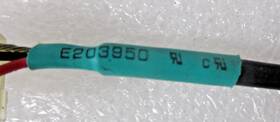
( Brand: Woer ), ( Manufacturer Part Number: E203950 )
Review WOER
The **Woer E203950** is a high-performance, precision-engineered cable sensor designed to elevate the functionality and reliability of your industrial or automotive applications. This robust device integrates seamlessly into systems requiring real-time monitoring of cable tension, strain, or load, making it an indispensable component for automated machinery, robotic arms, or tension control systems. Built with a durable, corrosion-resistant construction, the E203950 ensures long-term durability even in harsh environments, where exposure to moisture, dust, or temperature fluctuations could compromise less resilient sensors. Its compact yet sturdy design allows for easy installation in tight spaces, whether in manufacturing plants, automotive assembly lines, or precision engineering setups.
At the heart of the E203950 lies advanced sensor technology, featuring a high-precision strain gauge or load cell (depending on the specific variant) that delivers accurate and consistent readings with minimal drift over time. The sensor operates on a wide voltage range, typically between 5V to 24V DC, ensuring compatibility with most industrial control systems and microcontrollers. Its analog output signal, often in the form of a 4-20mA current loop or a voltage signal (e.g., 0-5V or 0-10V), provides a clear and scalable interface for integration with PLCs, data loggers, or custom control algorithms. This flexibility allows engineers to fine-tune tension or load parameters with precision, optimizing performance in applications such as cable reeling systems, conveyor belts, or tensioners in textile or packaging machinery.
One of the standout features of the Woer E203950 is its adaptability to various cable types, from steel cables and synthetic fibers to high-strength ropes, making it versatile for a broad range of industries. The sensor s robust mounting options including threaded holes, flanges, or quick-release mechanisms ensure secure and repeatable installation, reducing the risk of misalignment or signal interference. Additionally, the E203950 is engineered to minimize hysteresis and nonlinearity, ensuring that measurements remain reliable even under dynamic or fluctuating loads. For enhanced safety and diagnostics, many variants include built-in overload protection and self-diagnostic capabilities, alerting operators to potential issues before they escalate into system failures.
Whether deployed in a high-speed production line or a critical robotic application, the Woer E203950 delivers unmatched precision and reliability, serving as a cornerstone for systems where cable management and load monitoring are critical. Its combination of durability, accuracy, and ease of integration makes it a preferred choice for engineers and technicians seeking a dependable solution to complex tension control challenges. With minimal maintenance requirements and a long operational lifespan, this sensor not only enhances productivity but also reduces downtime, making it a cost-effective investment for any demanding application.
### **Pros and Cons of buying a WOER E203950 (OBD2 Scanner with Cable & Sensor)**
#### **Pros**
1. **Compatibility with Multiple Vehicle Systems** The WOER E203950 supports OBD-II, ABS, SRS, and some airbag systems, making it useful for diagnostics beyond just engine trouble codes. This broadens its utility for mechanics and DIYers working on various vehicle systems.
2. **Real-Time Data Monitoring** The device provides live data streaming for parameters like engine RPM, vehicle speed, fuel trim, and oxygen sensor readings. This helps in diagnosing performance issues, fuel efficiency problems, or sensor malfunctions in real time.
3. **User-Friendly Interface** The scanner features a clear LCD display with intuitive navigation, making it accessible for both beginners and experienced users. The menu-driven system simplifies code reading and data interpretation.
4. **Portable and Compact Design** The handheld scanner is lightweight and easy to carry, allowing for on-the-go diagnostics without requiring a computer or additional tools. Its compact size makes it ideal for garages, roadside repairs, or mobile mechanics.
5. **Affordable Price Point** Compared to professional-grade diagnostic tools (e.g., Launch X431 or Autel MaxiCOM), the WOER E203950 offers a cost-effective solution for basic to intermediate diagnostics. It s a budget-friendly alternative for hobbyists or small shops.
6. **Battery-Powered Operation** The inclusion of a rechargeable battery (or optional cable connection) ensures flexibility, as users can operate the scanner without being tethered to a vehicle s power source or a computer.
7. **Supports Multiple Languages** The interface is available in several languages, catering to a global user base. This is particularly useful for mechanics or owners in regions where English is not the primary language.
8. **Compatibility with Aftermarket Parts** The scanner can help verify the functionality of aftermarket sensors, injectors, or ECU modules by cross-referencing real-time data with manufacturer specifications.
9. **No Subscription or Software Costs** Unlike some digital scanners that require paid updates or software licenses, the WOER E203950 operates independently, reducing long-term expenses.
10. **Educational Value** For those new to automotive diagnostics, the scanner provides hands-on experience in interpreting error codes, live data, and system checks, which can be valuable for learning.
---
#### **Cons**
1. **Limited Advanced Features** The WOER E203950 lacks advanced functionalities found in higher-end scanners, such as:- **Bi-directional control** (sending commands to modules, e.g., resetting ECU adaption values).
- **Full system programming** (e.g., ECU reprogramming or module updates).
- **Advanced graphing or logging tools** for in-depth performance analysis.
- **Wireless connectivity** (some newer models offer Bluetooth/Wi-Fi for smartphone integration).
2. **Basic ABS/SRS Functionality** While it reads codes for ABS and SRS systems, its capabilities for these systems are limited compared to specialized tools. For complex airbag or braking system issues, a dedicated scanner may be needed.
3. **Dependence on OBD-II Port** The scanner relies on the vehicle s OBD-II port, which may not be present on older vehicles (pre-1996) or some non-passenger vehicles (e.g., heavy-duty trucks, motorcycles). The included cable/sensor may not cover all non-OBD-II systems effectively.
4. **Potential for Outdated Firmware** As automotive technology evolves, some newer vehicle models (especially those with advanced ECUs or CAN bus systems) may not be fully supported by older firmware. Users may need to manually update the software, which can be cumbersome.
5. **No Smartphone Integration** Unlike modern scanners that sync with apps for expanded features (e.g., cloud diagnostics, remote monitoring), the WOER E203950 operates independently. This limits its utility for users who prefer digital tracking or cloud-based solutions.
6. **Durability Concerns** While generally sturdy, the handheld design may be less rugged than industrial-grade diagnostic tools. Frequent drops or exposure to moisture could potentially damage the internal components.
7. **Learning Curve for Advanced Users** While beginner-friendly, interpreting live data or diagnosing complex issues (e.g., intermittent faults) may require additional knowledge beyond basic code reading. Some users may find the lack of detailed guides limiting.
8. **Limited Warranty or Customer Support** The warranty terms (if any) and customer service quality can vary by region. Some users report delays in resolving hardware issues or receiving replacements under warranty.
9. **No Built-in Printer or Export Options** Unlike some professional scanners, the WOER E203950 does not include a printer or easy export options for saving diagnostic reports. Users must manually note down codes or data.
10. **Compatibility Gaps with Some Brands** While it supports most OBD-II vehicles, there may be rare cases where it fails to communicate with certain Asian or luxury brand vehicles (e.g., some BMW, Mercedes, or Toyota models with proprietary protocols).
---
### **Conclusion**
The **WOER E203950** is a **versatile, budget-friendly diagnostic tool** ideal for:- **DIY mechanics** looking to troubleshoot basic engine, ABS, or SRS issues.
- **Small workshops** needing a cost-effective scanner for routine diagnostics.
- **Beginners** who want to learn automotive diagnostics without investing in expensive equipment.
- **Roadside repairs** where portability and simplicity are priorities.
However, it is **not suitable** for:- **Advanced ECU programming** or bi-directional control.
- **Heavy-duty or commercial vehicle diagnostics** requiring specialized tools.
- **Users who rely on smartphone integration or cloud-based diagnostics**.
- **Complex airbag or braking system repairs** that demand deeper ABS/SRS analysis.
For **casual users or those on a tight budget**, the WOER E203950 provides **excellent value** and fills a niche for basic to intermediate diagnostics. For **professionals or enthusiasts needing advanced features**, investing in a higher-tier scanner (e.g., Autel MaxiCOM, Launch X431) may be justified.
---
### **Recommendation**
**Buy the WOER E203950 if:**- You need a **simple, affordable scanner** for OBD-II, ABS, and SRS diagnostics.
- You prioritize **portability and ease of use** over advanced features.
- You re a **beginner or hobbyist** looking to learn diagnostics without high costs.
- Your vehicle fleet consists **mostly of post-2000 passenger cars** with standard OBD-II protocols.
**Avoid the WOER E203950 if:**- You require **ECU programming, bi-directional control, or wireless diagnostics**.
- You work on **luxury brands, heavy-duty trucks, or vehicles with proprietary systems**.
- You need **detailed performance graphs, logging, or cloud-based reporting**.
- You re willing to spend slightly more for a **more robust, future-proof scanner** with better support.
**Alternative Considerations:**- For **intermediate users**, the **Autel MaxiCOM MK808** or **Launch X431 Pro** offers more features at a modestly higher price.
- For **basic OBD-II only**, a **cheaper ELM327 Bluetooth adapter** paired with a free app (e.g., Torque, OBD Fusion) may suffice if you prefer smartphone integration.
- For **ABS/SRS specialists**, a **dedicated tool like the Bosch KTS 590** provides deeper analysis but at a premium cost.
Ultimately, the WOER E203950 is a **solid choice for its intended purpose**, but its limitations should align with your diagnostic needs.
Details:
With a focus on precision and reliability, this product could be an essential component in ensuring efficient accurate operations within manufacturing or production environments. The E203950 Cable-Sensor is a product from Woer, specifically the Woer RSFR-H model. This cable-sensor is likely designed for use in industrial automation and motion control systems, catering to the needs of businesses various settings.
part #: e203950 prices
- $15.00-$100.00
specifications automationjack:
- brand: Woer
- mpn: E203950
payments automationjack:
- credit card: Mastercard
- wallet: Google-pay
- other
shipping automationjack:
- carrier: USPS, UPS, FedEx
- cost: $5.62
- class: Standard
- service: USPS Ground Advantage, UPS Ground, FedEx Ground / FedEx Home Delivery
- type: Calculated
- transit: 5-10 Days
returns automationjack:
- policy: Returns Accepted
- method: Money back
- paid by: Buyer
- time: 30 Days
general automationjack:
- Business Industrial > Industrial Automation Motion Controls > Other Automation Equipment
- condition: Used
offer automationjack:
- options: Ship-to-home
- quantity: 2
- availability: In Stock
- started: March 18, 2026
- sold: 0
- best offers: True
seller automationjack:
- # reviews: 3548
- rating: 99.6%
- city: Umatilla, Florida