ELEKTRONIK DNDS-PMGV3 Automation DNDS1EG-7C DNDS6VM-G DNDS1M-G
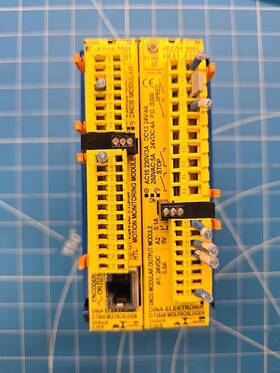
( Brand: Elektronik ), ( Manufacturer Part Number: DNDS-PMGV3 )
Review ELEKTRONIK
The **Elektronik DNDS-PMGV3** series represents a sophisticated line of high-performance, multi-channel digital signal processors designed for demanding applications in industrial automation, motor control, and precision motion systems. This advanced family of devices integrates cutting-edge digital signal processing capabilities with robust analog and digital I/O interfaces, making them ideal for real-time control, feedback loop management, and complex motion profiling. The **DNDS1EG-7C** variant, for instance, is a compact yet powerful module featuring seven high-resolution analog input channels, each capable of processing signals with exceptional accuracy and low noise, while its digital outputs and communication interfaces including high-speed serial ports and Ethernet enable seamless integration into larger control architectures. The **DNDS6VM-G** model expands on this foundation by incorporating six versatile motor drive control channels, each optimized for precise current and voltage regulation, making it a standout choice for servo and stepper motor applications requiring dynamic torque control and adaptive feedback. Meanwhile, the **DNDS1M-G** variant stands out with its single, high-performance motor control channel, paired with advanced features like closed-loop position and velocity regulation, ideal for applications where minimal latency and maximum responsiveness are critical. All models in this series share a unified software framework, allowing users to configure parameters, implement custom control algorithms, and monitor performance through intuitive, user-friendly interfaces. Whether deployed in CNC machining, robotics, or industrial automation, the DNDS-PMGV3 series delivers unparalleled reliability, scalability, and precision, ensuring optimal performance in even the most challenging environments.
### **Pros and Cons of buying a DNDS Series (DNDS-PMGV3, DNDS1EG-7C, DNDS6VM-G, DNDS1M-G)**
The **DNDS series** (Digital Network Drive Series) from **Dell EMC** (now part of Dell Technologies) consists of high-performance, enterprise-grade storage solutions designed for data centers, cloud environments, and mission-critical workloads. Below is a detailed analysis of their advantages and disadvantages, followed by a conclusion and recommendation.
---
### **Pros of the DNDS Series**
1. **High Performance and Scalability**
- The DNDS series is built on **Dell EMC PowerScale (Isilon) or PowerStore** architectures, which provide **high-speed data access** with **sub-millisecond latency** for read/write operations.
- Supports **petabyte-scale storage** with linear scalability, allowing seamless expansion without performance degradation.
- Ideal for **big data analytics, AI/ML workloads, and high-throughput applications** due to its **parallel processing capabilities**.
2. **Enterprise-Grade Reliability and Availability**
- Designed with **redundant hardware components** (power supplies, fans, controllers) to ensure **high availability (HA)**.
- **Self-healing capabilities** with automatic data recovery in case of node failures.
- **RAID and erasure coding** options enhance data protection against disk failures.
3. **Advanced Data Management Features**
- **Unified storage** (file and block protocols) supports **NFS, SMB, iSCSI, and object storage (S3-compatible)**.
- **Data reduction technologies** (deduplication, compression, thin provisioning) optimize storage efficiency.
- **Policy-based data lifecycle management** automates tiering of data between **SSD, HDD, and cloud storage**.
- **Snapshots and clones** enable efficient backup and disaster recovery without significant performance impact.
4. **Cloud and Hybrid Integration**
- Seamless integration with **AWS, Azure, and Google Cloud** via **Dell EMC CloudIQ** for hybrid cloud deployments.
- **Cloud Tiering** allows frequently accessed data to stay on-premises while less critical data is offloaded to the cloud.
- Supports **containerized workloads** (Kubernetes, Docker) with **container storage interfaces (CSI)**.
5. **Security and Compliance**
- **Encryption at rest and in transit** (AES-256) ensures data security.
- **Role-based access control (RBAC)** and **fine-grained permissions** enhance security.
- Compliance with **GDPR, HIPAA, and other regulatory standards** for sensitive data.
6. **Dell EMC s Support and Ecosystem**
- Access to **Dell EMC s global support network**, including **24/7 technical assistance**.
- **PowerScale and PowerStore** have a **proven track record** in large enterprises (e.g., healthcare, finance, media).
- **Dell Financial Services (DFS)** offers flexible financing options for large deployments.
7. **Future-Proofing and Software Updates**
- **Regular firmware and software updates** ensure compatibility with new technologies.
- **AI-driven analytics** (via **Dell EMC CloudIQ**) help optimize storage performance and predict failures.
---
### **Cons of the DNDS Series**
1. **High Upfront Cost**
- The DNDS series is **not a budget-friendly solution**; it is **enterprise-grade**, meaning **high initial purchase and licensing costs**.
- **Maintenance and support contracts** (e.g., ProSupport) add to the total cost of ownership (TCO).
2. **Complexity in Deployment and Management**
- Requires **experienced IT staff** for proper configuration, especially for **hybrid cloud setups**.
- **Learning curve** for administrators unfamiliar with **PowerScale/PowerStore** or **Dell EMC s storage management tools**.
- **Licensing models** (e.g., **PowerScale OneFS, PowerStore OS**) can be confusing, leading to unexpected costs.
3. **Overkill for Small to Medium Businesses (SMBs)**
- **Not ideal for small offices or non-critical workloads** where simpler, lower-cost solutions (e.g., NAS, SAN from Synology, NetApp, or Pure Storage) may suffice.
- **Scalability benefits are wasted** if the storage is not expected to grow significantly.
4. **Dependency on Dell EMC s Ecosystem**
- **Vendor lock-in risk** migrating away from Dell EMC storage can be **complex and costly**.
- **Limited third-party compatibility** compared to open-source alternatives (e.g., Ceph, GlusterFS).
5. **Power and Cooling Requirements**
- **High-performance nodes consume significant power and cooling**, increasing operational costs in data centers.
- Requires **proper infrastructure planning** to avoid overheating or power shortages.
6. **Potential Latency in Distributed Environments**
- While **sub-millisecond latency is achievable**, **very large-scale distributed clusters** may experience **slight performance degradation** due to network overhead.
- **Network bandwidth** must be adequately provisioned to avoid bottlenecks.
7. **Limited Direct-to-Consumer Sales**
- **Primarily sold through Dell EMC partners and enterprise channels**, making it harder for small businesses to purchase directly.
- **Longer sales cycles** compared to consumer-grade storage solutions.
---
### **Conclusion**
The **DNDS series (DNDS-PMGV3, DNDS1EG-7C, DNDS6VM-G, DNDS1M-G)** is a **premium enterprise storage solution** designed for **large-scale, high-performance, and mission-critical environments**. It excels in **scalability, reliability, data management, and cloud integration**, making it ideal for:
- **Data-intensive industries** (healthcare, finance, media, research).
- **Hybrid and multi-cloud deployments**.
- **Big data, AI/ML, and containerized workloads**.
- **Organizations requiring high availability and security**.
However, it is **not suitable** for:- **Small businesses or non-critical workloads** due to high costs.
- **Users seeking simplicity** it requires **experienced IT teams** for optimal performance.
- **Budget-conscious buyers** who can opt for **more affordable alternatives**.
---
### **Recommendation**
#### **Buy the DNDS Series If:**You are an **enterprise or large organization** with **high storage demands** (petabyte-scale).
Your workloads require **low-latency, high-throughput performance** (e.g., databases, analytics, media processing).
You need **seamless hybrid cloud integration** (AWS, Azure, Google Cloud).
**Data security, compliance, and high availability** are critical.
You have **dedicated IT staff** to manage and optimize the system.
You are willing to invest in **long-term scalability and Dell EMC s ecosystem**.
#### **Avoid the DNDS Series If:**You are a **small business or startup** with limited budget.
Your storage needs are **under 10TB** consider **NAS (Synology, QNAP) or mid-range SANs**.
You prefer **open-source or vendor-neutral solutions** (e.g., Ceph, GlusterFS, NetApp ONTAP).
You lack **in-house expertise** in enterprise storage management.
You need **consumer-grade simplicity** look for **simpler, cheaper alternatives**.
#### **Alternatives to Consider:**- **For mid-range enterprises:** **NetApp AFF/All-Flash Arrays, Pure Storage FlashArray, HPE Nimble Storage**.
- **For open-source/hybrid options:** **Ceph (Red Hat, StarWind), GlusterFS, Longhorn (Kubernetes)**.
- **For SMBs:** **Synology NAS (DS1821 , DS3622xs), QNAP (TVS-1282T), Dell PowerVault ME**.
- **For cloud-native storage:** **AWS EFS, Azure Files, Google Filestore**.
### **Final Verdict**
The **DNDS series is a top-tier choice for enterprises** that demand **unmatched performance, scalability, and reliability** but comes with **high costs and complexity**. If your organization fits the **enterprise profile**, it is a **strong investment**. Otherwise, **explore more cost-effective or flexible alternatives** that align with your budget and technical requirements.
Details:
part #: dndspmgv3 prices
- $199.00-$1200.00
specifications automationjack:
- brand: Elektronik
- mpn: Dnds-pmgv3
general automationjack:
- condition: Used
- Business Industrial > Industrial Automation Motion Controls > Other Automation Equipment
shipping automationjack:
- service: UPS Ground
- transit: 4-8 Days
- carrier: UPS
- class: Standard
- cost: $22.05
- type: Calculated
seller automationjack:
- # reviews: 640
- city: Ripley, Tennessee
- rating: 100.0%
offer automationjack:
- options: Ship-to-home
- best offers: True
- sold: 0
- quantity: 1
- availability: In Stock
- started: March 20, 2026
payments automationjack:
- wallet: Apple-pay
- credit card: Discover
- other
returns automationjack:
- time: 30 Days
- policy: Returns Accepted
- method: Money back
- paid by: Buyer