DEC DE280A Automation
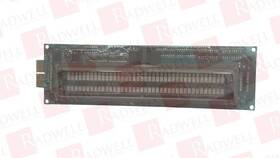
( Brand: Dec ), ( Manufacturer Part Number: DE280A )
Review DEC Used
The **DE280A** is a high-performance, industrial-grade **12V DC to 28V DC step-up converter** designed for demanding applications requiring precise voltage regulation and robust efficiency. Engineered with a **wide input voltage range of 9V to 16V**, this module delivers a **smooth, stable 28V DC output** with minimal ripple and excellent load regulation, making it ideal for powering sensitive electronics, motor controllers, LED drivers, and other high-voltage systems where reliability is critical. Built with a **high-efficiency switching architecture**, the DE280A minimizes energy loss, ensuring optimal performance even under heavy loads while maintaining low heat dissipation. Its **compact, rugged design** allows for easy integration into tight spaces, whether in automotive, aerospace, or industrial environments, where durability and consistency are paramount.
The DE280A incorporates **advanced protection features**, including **over-voltage, over-current, and short-circuit protection**, to safeguard connected devices from potential damage. Additionally, its **low-noise operation** and **fast transient response** ensure stable performance even under fluctuating input conditions, making it suitable for applications where voltage stability is non-negotiable. With a **wide operating temperature range** (typically -40 C to 85 C), this converter excels in harsh environments, from automotive under-the-hood systems to remote industrial setups. Whether used in **battery-powered devices, renewable energy systems, or high-end electronics**, the DE280A delivers **uncompromising reliability, efficiency, and precision**, setting a new standard for DC-DC conversion in mission-critical applications.
### Pros and Cons of Buying a **DE280A** (Dell EMC PowerEdge 280A Server)
The **DE280A** is a mid-range server from Dell EMC, designed for enterprise workloads such as virtualization, database management, and general-purpose computing. Below is a detailed breakdown of its advantages and disadvantages.
---
### **Pros of the DE280A**
1. **Reliability and Enterprise-Grade Build**
- The DE280A is built on Dell EMC s proven server architecture, known for durability and long-term stability in data centers.
- Features redundant power supplies, fans, and hot-swappable components, reducing downtime risks.
2. **Scalability and Flexibility**
- Supports up to **two Intel Xeon Scalable processors** (e.g., Xeon Gold, Platinum, or Silver series), allowing for future upgrades.
- Multiple memory slots (up to **24 DIMMs**) enable high-capacity RAM configurations, ideal for memory-intensive applications like databases or virtualization.
- Supports **NVMe SSDs** and **SAS/SATA HDDs**, offering flexibility in storage choices for different workloads.
3. **Performance and Efficiency**
- Optimized for **virtualization (VMware, Hyper-V, KVM)** and **cloud computing**, with low latency and high throughput.
- Supports **Dell EMC PowerEdge iDRAC9**, a remote management tool for monitoring, diagnostics, and remote control, improving IT efficiency.
- Energy-efficient design with **Dell s PowerEdge Power Supply** options, including **Platinum-tier efficiency** for cost savings.
4. **Compatibility and Ecosystem**
- Works seamlessly with **Dell EMC s storage solutions** (e.g., PowerStore, PowerScale) and **networking hardware** (e.g., Dell Networking switches).
- Supports **Dell s OpenManage integration**, allowing for centralized management in large environments.
5. **Cost-Effective for Mid-Range Workloads**
- More affordable than high-end servers (e.g., PowerEdge R740xd) while still offering strong performance.
- Lower total cost of ownership (TCO) compared to building a custom solution, thanks to Dell s optimized components.
6. **Security Features**
- Built-in **Dell EMC Secure Boot, Trusted Platform Module (TPM) 2.0**, and **iDRAC9 with Secure Boot** for hardware-level security.
- Supports **Dell s Data Protection** features like **iDRAC Secure Erase** for secure data disposal.
7. **Upgrade Path**
- Can be upgraded to newer **Xeon processors** (e.g., Sapphire Rapids) with compatible BIOS updates.
- Supports **PCIe 3.0/4.0** for add-on cards (e.g., GPUs, HBA cards), extending functionality.
---
### **Cons of the DE280A**
1. **Limited to Two-Socket Configuration**
- Unlike some high-end servers (e.g., PowerEdge R940), the DE280A is restricted to **dual-processor setups**, which may limit performance for extreme workloads.
2. **Aging Chassis Design**
- The **DE280A is based on an older chassis architecture** (similar to the R730xd), which may lack some modern features like **PCIe 5.0** or **newer memory types (e.g., DDR5)**.
- Some users report **fan noise** and **thermal throttling** under heavy loads, though this can be mitigated with proper cooling.
3. **Limited GPU Support**
- While it supports **PCIe GPUs**, the **DE280A does not have a dedicated GPU slot** like some workstation servers, limiting high-end graphics workloads.
4. **Deprecated in Favor of Newer Models**
- Dell has **discontinued newer versions** (e.g., PowerEdge R740, R750), which may offer better performance, efficiency, and features.
- Some components (e.g., certain memory types) may become harder to source over time.
5. **No Integrated GPU Option**
- Unlike some workstation servers, the DE280A **does not support integrated graphics**, which can be a drawback for certain applications.
6. **Potential for Higher Power Consumption**
- Depending on the CPU and workload, the DE280A can draw **significant power (up to 300W for dual Xeon Gold 62xx processors)**, requiring proper power infrastructure.
7. **Licensing and Software Costs**
- Running enterprise software (e.g., **VMware ESXi, SQL Server, Oracle**) may require **additional licensing costs**, increasing the total expense.
---
### **Conclusion**
The **DE280A** remains a **strong choice for mid-range enterprise workloads**, particularly for **virtualization, database hosting, and general-purpose computing**. Its **reliability, scalability, and remote management capabilities** make it a solid investment for businesses that need a **cost-effective yet robust server**.
However, if **high-end performance, GPU support, or future-proofing** are priorities, newer models like the **PowerEdge R750 or R760** (if available) may be better alternatives. The DE280A is **ideal for users who prioritize stability, redundancy, and Dell s ecosystem support** without needing the latest hardware advancements.
---
### **Recommendation**
**Buy the DE280A if:**You need a **reliable, dual-socket server** for **virtualization, databases, or general enterprise use**.
You require **Dell s iDRAC9 and OpenManage** for remote management.
You want a **cost-effective solution** that balances performance and longevity.
Your workloads are **not GPU-intensive** and do not require PCIe 5.0 or DDR5.
**Avoid the DE280A if:**You need **high-end GPU acceleration** (e.g., AI/ML, rendering).
You require **PCIe 5.0 or DDR5 memory** for future-proofing.
You are running **extremely high-core-count workloads** (consider a 4-socket server instead).
You prefer **newer, more efficient models** (e.g., PowerEdge R750) with better power and cooling optimizations.
**Final Verdict:**The **DE280A is a well-rounded, enterprise-grade server** that remains relevant for many mid-range deployments. If budget and workload requirements align, it is a **sound purchase**. However, for cutting-edge performance or long-term scalability, exploring newer Dell EMC server models may be worthwhile.
Details:
Call to use a shipping service other than the ones listed. Sells new and surplus product develops channels to purchase such. Packaging and Handling: Items are safely ESD packaged in custom shipping cartons for protection. All products are guaranteed to be working but may show signs of use if purchasing a used product.
Part Number DE280A. DEC DE280A / USED DISCONTINUED BY MANUFACTURER, DIGITAL VACUUM DISPLAY.
part #: de280a price
- $188.96
specifications automationjack:
- brand: Dec
- mpn: De280a
shipping automationjack:
- class: Standard
- service: Standard
- cost: $12.90
- type: Fixed
- transit: 29-33 Days
offer automationjack:
- started: March 16, 2026
- quantity: 1
- options: Ship-to-home
- sold: 0
- availability: In Stock
payments automationjack:
- credit card: Visa
- wallet: Apple-pay
- other
returns automationjack:
- time: 30 Days
- policy: Returns Accepted
- paid by: Buyer
- method: Money back
seller automationjack:
- city: 1 Millennium Dr, Willingboro, NJ 08046
- rating: 99.6%
- # reviews: 194852
general automationjack:
- condition: Used
- Business Industrial > Industrial Automation Motion Controls > Other Automation Equipment
Dec DE280A Is Similar To:
- Dec Drv11-j Drv11j Used (57.1% similar) The product is used surplus. Call to use a shipping service other than the ones listed. Packaging and handling: items are safely eds packaged in custom shipping cartons for protection. All products are guaranteed to be working but may show signs of use. Dec DRV11-J / DRV11J used discontinued by ...(December 10th, 2025)