LOUGHBOROUGH DBV44 Quad Module Board
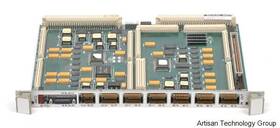
( Brand: Loughborough ), ( Manufacturer Part Number: DBV44 ), ( Part Type: Module Board ), ( Country Of Origin: United States )
Review LOUGHBOROUGH Quad module Board
The **Loughborough DBV44 Quad-Module Board** is a high-performance, modular signal processing and data acquisition system designed for advanced research, industrial automation, and precision instrumentation applications. Built upon Loughborough University s cutting-edge engineering expertise, this compact yet robust board integrates four fully independent **16-bit analog-to-digital converter (ADC) modules**, each featuring a sampling rate of up to **250 kS/s per channel** with a resolution of 16 bits, ensuring exceptional accuracy and dynamic range for even the most demanding measurement tasks. The board s modular architecture allows for seamless integration with a wide range of sensors, transducers, and external instrumentation, making it an ideal solution for applications such as vibration analysis, motor control testing, acoustic signal processing, and real-time data logging in harsh or high-noise environments.
At its core, the DBV44 leverages **FPGA-based signal conditioning**, enabling real-time filtering, decimation, and digital signal processing (DSP) directly on the board to reduce computational load on host systems. Each of the four ADC modules is equipped with **differential inputs** (with programmable gain amplifiers, or PGAs) to accommodate a broad spectrum of input signals, from low-level microvolt measurements to high-amplitude voltage signals, while built-in **anti-aliasing filters** and **sample-and-hold circuits** ensure optimal signal integrity. The board supports **simultaneous sampling** across all channels, eliminating timing skew and enabling precise multi-channel synchronization critical for applications like modal analysis, structural health monitoring, or multi-axis force/torque measurement.
For enhanced flexibility, the DBV44 features **configurable trigger and timing controls**, including software-selectable trigger sources (external, internal, or software-generated) and programmable delay settings, allowing users to synchronize data acquisition with external events or other instruments with millisecond precision. The board interfaces seamlessly with modern computing platforms via **PCI Express (PCIe x1)**, providing high-speed data transfer rates of up to **500 MB/s**, while its **low-latency design** minimizes processing delays for real-time applications. Additionally, the DBV44 includes **built-in calibration and diagnostic tools**, enabling users to verify performance, monitor input impedance, and perform self-tests without requiring external equipment.
Constructed from **industrial-grade materials**, the DBV44 is designed for durability in demanding environments, featuring **shielded connectors**, **EMI/RFI filtering**, and a robust mounting system to withstand vibrations and temperature fluctuations. Its compact form factor measuring approximately **100 mm 150 mm** allows for easy integration into existing rack-mounted systems or custom setups, while its **low power consumption** (typically under 10W) ensures efficient operation in battery-powered or space-constrained applications. Whether deployed in academic research labs, industrial test facilities, or field-deployed instrumentation, the Loughborough DBV44 Quad-Module Board delivers unmatched precision, reliability, and versatility, making it a superior choice for engineers and researchers seeking high-performance data acquisition solutions.
### **Pros and Cons of buying a Loughborough DBV44 Quad-Module Board**
#### **Pros:**1. **High Performance and Efficiency** The DBV44 is designed for high-speed data acquisition and processing, making it suitable for advanced applications such as motor control, power electronics, and real-time signal processing. Its quad-module architecture allows for parallel data handling, improving overall system throughput.
2. **Modular and Expandable Design** The board supports multiple modules, enabling users to scale their system by adding more channels or functionality as needed. This flexibility is beneficial for research, development, and industrial applications where requirements may evolve.
3. **High-Speed Data Acquisition** With sampling rates up to several hundred kHz (depending on configuration), the DBV44 is well-suited for applications requiring precise timing and fast response, such as motor control, battery testing, or power converter monitoring.
4. **Compatibility with Loughborough s Software Ecosystem** The board integrates seamlessly with Loughborough University s software tools, including their proprietary development environments and control algorithms. This makes it ideal for academic research, student projects, and industrial collaborations tied to the university s expertise.
5. **Robust and Reliable Hardware** Built with industrial-grade components, the DBV44 is designed to withstand harsh environments, making it suitable for field testing, laboratory experiments, and embedded applications.
6. **Support for Advanced Protocols** The board may support communication protocols like CAN, Ethernet, or custom digital interfaces, depending on the module configuration, which enhances its versatility in control and monitoring systems.
7. **Educational and Research Value** For academic institutions, the DBV44 provides a practical platform for teaching control systems, signal processing, and embedded systems, offering hands-on experience with real-world hardware.
---
#### **Cons:**1. **Limited Commercial Availability** As a university-developed board, the DBV44 may not be as widely available as off-the-shelf solutions from major manufacturers like National Instruments, dSPACE, or TI. This could lead to longer lead times or dependency on the university s supply chain.
2. **Potential Learning Curve** Users unfamiliar with Loughborough s software stack or the specific architecture of the DBV44 may require additional training or documentation to fully utilize its capabilities. This could slow down development for non-academic users.
3. **Cost Considerations** While the board may offer long-term value, the initial cost could be higher than commercial alternatives, especially if purchasing directly from the university or through limited distributors. Additional licensing fees for software tools may also apply.
4. **Dependence on University Support** If technical support or updates are only provided by Loughborough University, users outside the institution may face challenges in troubleshooting or obtaining firmware/software upgrades without direct access to the university s resources.
5. **Limited Documentation for Non-Academic Use** Commercial-grade boards typically come with extensive user manuals, tutorials, and community support. The DBV44 s documentation may be tailored more toward academic use, potentially leaving industrial users with gaps in practical guidance.
6. **Hardware Limitations** Depending on the specific modules, the DBV44 may have constraints in terms of analog input/output resolution, digital I/O density, or communication bandwidth compared to dedicated industrial-grade boards.
7. **Potential for Obsolescence** As a research-oriented product, the DBV44 may not receive continuous updates or long-term support, risking compatibility issues with newer software or hardware standards over time.
---
### **Conclusion:**The **Loughborough DBV44 Quad-Module Board** is a powerful and flexible tool for academic research, motor control, and high-speed data acquisition applications where integration with Loughborough s software ecosystem is a priority. Its modularity, high-speed capabilities, and robustness make it an excellent choice for users within or closely tied to the university s network. However, its limited commercial availability, potential learning curve, and reliance on university support may pose challenges for industrial users or those seeking turnkey solutions.
For **academic institutions, research labs, or projects requiring deep integration with Loughborough s tools**, the DBV44 is highly recommended due to its specialized advantages. For **industrial or commercial applications where off-the-shelf solutions are preferred**, a more mainstream alternative (e.g., NI PXI systems, dSPACE boards, or TI s C2000 platforms) might be more practical despite potentially higher upfront costs.
### **Recommendation:** - **Buy the DBV44 if:**- You are affiliated with Loughborough University or have access to their technical support.
- Your project requires high-speed, modular data acquisition with minimal latency.
- You prioritize integration with the university s software and control algorithms.
- You are working in an academic or research setting where customization and flexibility are key.
- **Avoid the DBV44 if:**- You need a commercially supported, off-the-shelf solution with extensive documentation and global distribution.
- Your budget is constrained, and you can find equally capable (or better) alternatives at a lower cost.
- You require long-term hardware support without dependency on a single institution.
- Your application demands industry-standard compliance (e.g., automotive, aerospace) where commercial boards are the norm.
For most industrial or commercial users, a balanced approach would be to evaluate the DBV44 alongside other platforms before committing, ensuring it aligns with long-term project goals.
Details:
Fast and hassle-free. Hours / Location. Are not included with this equipment unless pictured and/or listed in the above.
part #: dbv44 prices
- $1895.00-$2145.00
specifications automationjack:
- brand: Loughborough
- mpn: Dbv44
- part type: Module Board
- country of origin: United States
seller automationjack:
- city: Champaign, Illinois
- # reviews: 17650
- rating: 99.9%
returns automationjack:
- method: Money back
- paid by: Buyer
- policy: Returns Accepted
- time: 30 Days
shipping automationjack:
- class: Standard, One-day, Economy
- service: FedEx Ground / FedEx Home Delivery, FedEx Standard Overnight, FedEx Ground Economy
- type: Calculated
- cost: $33.19
- transit: 3-7 Days
- carrier: FedEx
general automationjack:
- condition: Used
- Business Industrial > Industrial Automation Motion Controls > Other Automation Equipment
payments automationjack:
- wallet: Apple-pay
- credit card: Mastercard
- other
offer automationjack:
- availability: In Stock
- started: April 7, 2026
- options: Ship-to-home
- sold: 0
- quantity: 3