ACTIVE D02601000 Edwards Pirani Vacuum Gauge APG100-XM
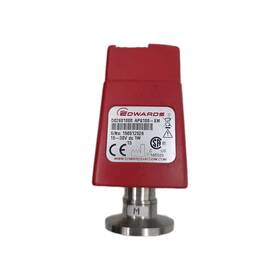
( Brand: Active ), ( Manufacturer Part Number: D02601000 ), ( Part Type: Vacuum Gauge )
Review ACTIVE Edwards Pirani Vacuum Gauge
The **Edwards APG100-XM Pirani Vacuum Gauge (Model D02601000)** is a high-performance, digital vacuum measurement instrument designed for precision applications in research, manufacturing, and industrial environments where accurate pressure monitoring is critical. Part of Edwards trusted APG series, this gauge combines advanced Pirani sensor technology with a robust, user-friendly interface to deliver reliable readings across a broad pressure range, from rough vacuum to high vacuum conditions. The APG100-XM features a compact yet durable design, making it ideal for integration into vacuum systems where space efficiency and reliability are paramount. Its digital display provides real-time pressure readings with high resolution, ensuring operators can quickly assess system performance without the need for manual adjustments or calibration. The gauge operates on the principle of thermal conductivity, where a heated filament s cooling rate varies with gas density, allowing for precise pressure measurement in non-reactive atmospheres such as nitrogen, argon, or other common process gases. With an operating range spanning from **10 -3 mbar (0.75 Torr) to 1000 mbar (750 Torr)**, the APG100-XM excels in applications like thin-film deposition, semiconductor processing, leak detection, and vacuum drying, where consistency and accuracy are non-negotiable. Its **XM (Extended Measurement) variant** enhances functionality by offering expanded pressure range capabilities and improved stability, reducing drift over time and ensuring long-term dependability in demanding environments. The gauge s robust construction, featuring a corrosion-resistant housing and sealed electronics, protects against contamination and environmental factors, while its modular design allows for easy installation and maintenance. Whether used in a controlled laboratory setting or a high-throughput production line, the Edwards APG100-XM delivers unmatched precision, making it an indispensable tool for engineers and technicians who demand the highest standards in vacuum technology.
### **Pros and Cons of buying a Edwards APG100-XM Piran Vacuum Gauge (D02601000)**
#### **Pros**
1. **High Accuracy and Reliability** The Piran gauge is known for its precise measurement of low-pressure gases, particularly in the range of 10 -3 to 10 -1 mbar. This makes it ideal for applications requiring consistent vacuum control, such as thin-film deposition, semiconductor manufacturing, and research environments.
2. **Wide Pressure Range** The APG100-XM covers a broad range of pressures, allowing it to be used in both roughing and high-vacuum applications without requiring multiple gauges.
3. **Durability and Long Lifespan** Edwards is a well-established manufacturer in vacuum technology, and their gauges are built to withstand prolonged use in demanding industrial and laboratory settings.
4. **Compatibility with Edwards Systems** If you already have other Edwards vacuum components (e.g., pumps, controllers), this gauge integrates seamlessly, reducing compatibility issues and simplifying system maintenance.
5. **Digital Display and Connectivity** The APG100-XM features a clear digital readout, making it easier to monitor vacuum levels in real time. Some models also support digital communication interfaces (e.g., RS-232, MODBUS), allowing for automation and data logging.
6. **Low Maintenance Requirements** Unlike some other gauge types (e.g., ionization gauges), Piran gauges have fewer moving parts and do not require frequent recalibration, reducing downtime.
7. **Cost-Effective for Specific Applications** While not the cheapest gauge on the market, its reliability and accuracy make it a cost-effective choice for applications where thermal conductivity measurement is preferred over other methods (e.g., in environments with reactive gases where ionization gauges may degrade).
---
#### **Cons**
1. **Limited Pressure Range for Ultra-High Vacuum (UHV)** The Piran gauge is not suitable for ultra-high vacuum applications (below 10 -5 mbar). For such environments, ionization gauges (e.g., Bayard-Alpert or Penning gauges) are typically required.
2. **Sensitivity to Gas Composition** Piran gauges measure thermal conductivity, which can vary with gas type. This means readings may be less accurate in mixed-gas environments or when dealing with gases like helium or hydrogen, which have significantly different thermal conductivities compared to air.
3. **Temperature Dependence** The gauge s performance can be affected by temperature fluctuations, requiring stable operating conditions for consistent readings.
4. **Potential for Filament Wear** Like other thermal conductivity gauges, the APG100-XM uses a heated filament that may degrade over time, necessitating eventual replacement (though this is less frequent than in ionization gauges).
5. **Higher Initial Cost Compared to Basic Gauges** While not excessively expensive, it is more costly than simple mechanical or capacitance manometers, which may suffice for roughing applications.
6. **Limited Longevity in Corrosive Environments** If exposed to aggressive chemicals or reactive gases, the gauge s internal components may degrade faster, reducing its lifespan.
7. **Requires Proper Installation and Calibration** Improper installation (e.g., incorrect mounting or improper venting) can lead to inaccurate readings or damage. Calibration may be needed periodically to maintain accuracy.
---
### **Conclusion**
The **Edwards APG100-XM Piran Vacuum Gauge (D02601000)** is a robust, accurate, and reliable choice for applications requiring precise low-to-medium vacuum measurement, particularly in environments where thermal conductivity is the primary measurement principle. It excels in industries like semiconductor manufacturing, thin-film deposition, and research laboratories where consistency and durability are critical.
However, it is not ideal for ultra-high vacuum applications or environments with highly reactive or variable gas compositions. Its performance depends on stable operating conditions, and users must account for potential filament wear and the need for periodic calibration.
### **Recommendation**
**Buy the Edwards APG100-XM if:**- You need a reliable, mid-range vacuum gauge for pressures between **10 -3 and 10 -1 mbar**.
- Your application involves **thermal conductivity-based measurements** (e.g., monitoring deposition processes, leak detection in moderate vacuum systems).
- You already use **Edwards vacuum components**, ensuring seamless integration.
- You operate in a **controlled environment** where temperature and gas composition are stable.
**Avoid or consider alternatives if:**- You require **ultra-high vacuum (UHV) measurements** (below 10 -5 mbar), in which case an **ionization gauge** (e.g., Edwards IGU series) would be more appropriate.
- Your system involves **highly reactive gases** (e.g., fluorine, chlorine) that may damage the gauge over time.
- You need a **lower-cost solution** for roughing applications, in which case a **mechanical or capacitance manometer** may suffice.
- You frequently work with **mixed gases** where thermal conductivity variations could affect accuracy.
**Final Verdict:** For most **low-to-medium vacuum applications** where accuracy and durability are priorities, the **APG100-XM is a strong, well-supported choice**. However, carefully assess your specific requirements before purchasing to ensure it aligns with your system s needs.
Details:
Edwards Apg100-xm Active Pirani Vacuum Gauge D02601000.
part #: d02601000 prices
- $399.00-$450.00
specifications automationjack:
- brand: Active
- mpn: D02601000
- part type: Vacuum Gauge
payments automationjack:
- other
- wallet: Paypal
- credit card: Discover
general automationjack:
- condition: Used
- Business Industrial > Industrial Automation Motion Controls > Other Automation Equipment
offer automationjack:
- sold: 0
- options: Ship-to-home
- started: June 9, 2026
- quantity: 1
- availability: In Stock
returns automationjack:
- policy: No Returns
seller automationjack:
- rating: 99.2%
- city: Puyallup, Washington
- # reviews: 2385
shipping automationjack:
- type: Calculated
- transit: 3-7 Days
- carrier: USPS
- service: USPS Ground Advantage
- class: Standard
- cost: $11.35