PEP CP690-33 Pmc Carrier Board
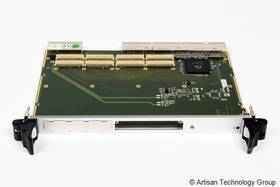
( Brand: Pep ), ( Manufacturer Part Number: CP690-33 ), ( Part Type: Board ), ( Country Of Origin: United States )
Review PEP Active Pmc Carrier Board
The **PEP CP690-33 PMC Carrier Board** is a high-performance, modular expansion solution designed to integrate seamlessly with PEP s advanced carrier-grade chassis systems, offering unparalleled flexibility and scalability for telecom, data center, and enterprise networking applications. Built to meet the rigorous demands of modern infrastructure, this carrier board supports a wide range of PMC (PMC/PMC and XMC) modules, enabling users to deploy cutting-edge processing, storage, and I/O capabilities in compact, high-density form factors. The CP690-33 leverages a robust, backplane-connected architecture that ensures low-latency data transfer and high reliability, making it ideal for applications requiring real-time processing, such as 5G baseband units, AI/ML acceleration, FPGA-based signal processing, or high-speed packet forwarding. Its modular design allows for easy upgrades and replacements, reducing downtime and operational complexity while future-proofing deployments against evolving technological requirements.
At its core, the CP690-33 is engineered for carrier-grade resilience, featuring comprehensive thermal management, redundant power inputs, and advanced error detection and correction mechanisms to ensure continuous operation even under extreme environmental conditions. The board supports a variety of high-speed interfaces, including PCIe Gen 3/4/5, 10G/25G/40G Ethernet, and high-bandwidth serial links, enabling seamless integration with both legacy and next-generation systems. Its compact yet dense form factor maximizes space efficiency in data centers and telecom racks, allowing operators to consolidate multiple functions into a single chassis while maintaining optimal performance. Whether deployed in a carrier-class switch, a high-performance computing cluster, or a specialized test and measurement system, the CP690-33 delivers the scalability, flexibility, and reliability required to handle the most demanding workloads.
For engineers and system architects, the CP690-33 offers a versatile platform that bridges the gap between hardware and software, enabling the deployment of customizable, high-performance solutions without the need for extensive rework or custom fabrication. Its compatibility with a broad ecosystem of PMC/PMC and XMC modules ensures broad interoperability, allowing users to mix and match components from leading vendors to tailor their systems to specific performance, power, and cost requirements. Additionally, the board s adherence to industry standards such as those set by the PCI Industrial Computer Manufacturers Group (PICMG) ensures long-term compatibility and support, reducing the risk of obsolescence. With its combination of modularity, high performance, and carrier-grade reliability, the PEP CP690-33 PMC Carrier Board stands as a cornerstone for next-generation networking and computing infrastructure, empowering organizations to build adaptable, high-efficiency systems capable of meeting the challenges of tomorrow s digital landscape.
### **Pros and Cons of buying a PEP CP690-33 PMC Carrier Board**
#### **Pros**
1. **Compatibility with High-Performance Systems**
The CP690-33 is designed for use in high-end PMC (PCI Mezzanine Card) carrier systems, making it suitable for applications requiring robust data processing, such as industrial automation, military/aerospace, or high-speed networking. It integrates seamlessly with existing PMC-based platforms, ensuring backward and forward compatibility with compatible PMC modules.
2. **High-Speed Data Transfer Capabilities**
The board supports high-speed data throughput, often leveraging PCIe (Peripheral Component Interconnect Express) or other high-speed interfaces, depending on the system configuration. This makes it ideal for applications requiring real-time data acquisition, signal processing, or high-bandwidth communication.
3. **Modular and Scalable Design**
As a carrier board, the CP690-33 allows for modular expansion by accommodating various PMC modules. This scalability enables users to upgrade or replace specific components without overhauling the entire system, reducing long-term maintenance costs.
4. **Rugged and Reliable Construction**
Many PMC carrier boards, including the CP690-33, are built to withstand harsh environments. Features such as conduction cooling, EMI shielding, and robust mechanical design enhance reliability in industrial or military settings where stability is critical.
5. **Support for Advanced Protocols and Interfaces**
Depending on the system, the CP690-33 may support advanced protocols like Ethernet, Serial, or specialized interfaces (e.g., LVDS, GPMC). This flexibility allows for integration with a wide range of sensors, actuators, or communication devices.
6. **Backward and Forward Compatibility**
The PMC standard itself is well-established, ensuring that the CP690-33 will work with a broad range of PMC modules from different manufacturers. This reduces vendor lock-in and provides flexibility in sourcing components.
7. **Professional and Industrial-Grade Support**
PMC-based systems are often supported by professional vendors who provide technical documentation, firmware updates, and troubleshooting assistance. This can be invaluable for complex or mission-critical applications.
---
#### **Cons**
1. **High Initial Cost**
PMC carrier boards like the CP690-33 are typically more expensive than standard PCI or PCIe cards due to their specialized design, rugged construction, and support for high-performance applications. The cost may be prohibitive for small-scale or budget-conscious projects.
2. **Complexity in Integration**
While modularity is an advantage, integrating a PMC carrier board into a system can be more complex than using standard PCIe cards. It requires careful planning for power distribution, cooling, and mechanical mounting, which may necessitate additional engineering resources.
3. **Limited Availability of Modules**
Not all PMC modules are readily available, and some may be proprietary or discontinued. Users may face challenges in sourcing specific modules, especially for niche applications, which could lead to delays or compatibility issues.
4. **Power Consumption and Heat Management**
High-performance PMC systems can consume significant power and generate heat. The CP690-33 may require additional cooling solutions (e.g., conduction cooling or fans), which adds to the system s complexity and cost.
5. **Learning Curve for Developers**
Developing software or firmware for PMC-based systems can be more challenging than for standard PCIe cards due to the need to understand PMC-specific protocols, memory-mapped I/O, and real-time operating systems (RTOS) if applicable. This may require additional training or expertise.
6. **Size and Form Factor Constraints**
PMC carrier boards are typically larger and more bulky than standard PCIe cards, which may limit their use in space-constrained applications. This could be a drawback for embedded or compact systems where size is a critical factor.
7. **Potential for Obsolescence**
While the PMC standard is stable, individual carrier boards or modules may become obsolete over time as manufacturers phase out older products. This could lead to difficulties in maintaining or upgrading legacy systems.
---
### **Conclusion**
The **PEP CP690-33 PMC Carrier Board** is a powerful and versatile solution for applications requiring high-performance, modular, and rugged data processing. Its strengths lie in its compatibility with a wide range of PMC modules, high-speed data transfer capabilities, and reliability in demanding environments. However, its high cost, complexity of integration, and potential challenges in sourcing modules or managing power/cooling may make it less suitable for small-scale or cost-sensitive projects.
### **Recommendation**
- **Buy the CP690-33 if:**- You are working on a **mission-critical, high-performance, or industrial application** where reliability and modularity are paramount.
- Your system already uses a **PMC-based architecture**, and you need to expand or upgrade it.
- You require **high-speed data acquisition, real-time processing, or support for specialized protocols**.
- You have the **budget and technical resources** to handle integration challenges, power management, and potential module sourcing issues.
- **Avoid the CP690-33 if:**- Your project is **budget-constrained** or requires a simpler, lower-cost solution (e.g., standard PCIe cards).
- You lack the **expertise or time** to integrate a complex modular system.
- Your application does not require **high-speed or ruggedized performance**, and standard interfaces (e.g., USB, Ethernet) would suffice.
- You anticipate **long-term maintenance challenges** due to potential module obsolescence or limited vendor support.
For most **high-end industrial, aerospace, or military applications**, the CP690-33 is a justified investment. However, for general-purpose computing or cost-sensitive projects, alternative solutions may be more practical. Always evaluate your specific requirements and consult with the manufacturer or system integrator to ensure the board aligns with your needs.
Details:
PCI Bus Speed: 33 MHz. Fast and hassle-free. Are not included with this equipment unless pictured and/or listed in the above.
part #: cp69033 price
- $995.00
specifications automationjack:
- brand: Pep
- mpn: Cp690-33
- part type: Board
- country of origin: United States
returns automationjack:
- time: 30 Days
- method: Money back
- paid by: Buyer
- policy: Returns Accepted
general automationjack:
- condition: Used
- Business Industrial > Industrial Automation Motion Controls > Other Automation Equipment
shipping automationjack:
- transit: 4-7 Days
- service: FedEx Ground / FedEx Home Delivery, FedEx Standard Overnight, FedEx Ground Economy
- type: Calculated
- class: Standard, One-day, Economy
- carrier: FedEx
- cost: $33.19
seller automationjack:
- city: Champaign, Illinois
- rating: 99.9%
- # reviews: 17781
payments automationjack:
- wallet: Apple-pay
- credit card: Diners-club
- other
offer automationjack:
- quantity: 2
- options: Ship-to-home
- availability: In Stock
- started: May 1, 2026
- sold: 0