IFM BI4-M12-AP6X-H1141 Sensor IGC205
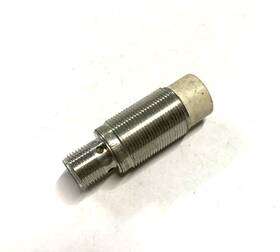
( Brand: Ifm ), ( Manufacturer Part Number: BI4-M12-AP6X-H1141 ), ( Model: BI4-M12-AP6X-H1141 4607000 ), ( Part Type: Sensor ), ( Country Of Origin: United States )
Review IFM Sensor
The **ifm Bi4-M12-AP6X-H1141 IG-C205** is a high-performance, industrial-grade **2D laser scanner** designed for precision detection and measurement in demanding automation and robotics applications. Part of ifm s advanced **Bi4 series**, this compact yet robust sensor combines cutting-edge **time-of-flight (ToF) laser technology** with a **12 mm M12 connector interface**, making it ideal for integration into tight spaces while delivering exceptional reliability in harsh environments. The **AP6X variant** features a **6 mm aperture**, optimizing its optical performance for applications requiring high resolution and accuracy, such as palletizing, bin picking, or quality inspection in manufacturing lines. With a **1141 mm detection range**, this sensor excels at capturing detailed 2D profiles of objects, surfaces, and edges with sub-millimeter precision, ensuring seamless interaction with robotic arms, conveyor systems, or automated sorting mechanisms. Its **IG-C205 interface module** supports **Profinet, EtherCAT, and IO-Link**, enabling seamless communication with modern PLCs, SCADA systems, and industrial networks, while the **IP67-rated housing** guarantees protection against dust, water, and contaminants, making it suitable for cleanroom environments or outdoor industrial settings. The sensor s **high-speed data acquisition** and **low-latency response** further enhance its suitability for dynamic applications, where real-time object detection and positioning are critical. Whether deployed in **warehouse automation, automotive assembly, or food processing**, the **Bi4-M12-AP6X-H1141** delivers a perfect blend of **compact design, industrial durability, and high-resolution imaging**, making it a versatile solution for next-generation smart manufacturing.
The **IFM BI4-M12-AP6X-H1141-IGC205** is a high-performance inductive proximity sensor designed for industrial applications, particularly in harsh environments. Below is a detailed analysis of its pros and cons, followed by a conclusion and recommendation.
---
### **Pros**
1. **High Reliability and Durability**
The sensor is built with robust materials and is rated for industrial use, including exposure to dust, moisture, and temperature variations. Its **IP67** rating ensures protection against water and dust ingress, making it suitable for outdoor or unprotected indoor environments.
2. **Wide Detection Range and Sensitivity**
The **AP6X** series offers a **60 mm** detection range, which is suitable for detecting small or medium-sized metal objects. The adjustable sensitivity allows for fine-tuning based on application requirements, reducing false triggers.
3. **Compact and Versatile Mounting Options**
The **M12** threaded connection is standard in industrial automation, offering secure and repeatable mounting. The sensor can be installed in various orientations (e.g., flush, protruding, or angled), providing flexibility in system integration.
4. **High Operating Temperature Range**
With a temperature range of **-25 C to 85 C**, the sensor can operate reliably in extreme environments, such as near machinery, in cold storage, or in tropical climates.
5. **Fast Response Time**
Inductive sensors like this one typically have response times in the **sub-millisecond range**, making them ideal for high-speed applications where quick detection is critical.
6. **Low Power Consumption**
The sensor operates on standard **24V DC**, consuming minimal power, which is beneficial for energy-efficient control systems.
7. **Long Lifespan and Low Maintenance**
As a solid-state sensor, it has no moving parts, reducing wear and tear. This contributes to a longer operational lifespan with minimal maintenance requirements.
8. **Compatibility with Industrial Communication Protocols**
The **IGC205** variant supports **IO-Link**, a smart communication protocol that enables advanced diagnostics, parameterization, and monitoring. This enhances predictive maintenance and system integration capabilities.
9. **Resistance to Interference**
Inductive sensors are generally immune to environmental interference (e.g., light, dust, or moisture), making them reliable in dirty or corrosive environments.
10. **Easy Installation and Calibration**
The sensor is straightforward to install and calibrate, with clear labeling and adjustable sensitivity settings. The M12 connector ensures a secure and repeatable connection.
---
### **Cons**
1. **Limited Detection of Non-Metal Objects**
Inductive sensors only detect **ferromagnetic materials** (e.g., iron, steel, nickel). Non-metallic or non-ferrous objects (e.g., aluminum, plastic, wood) will not be detected, which may limit its applicability in certain applications.
2. **Sensitivity to Material Properties**
The sensor s performance can vary based on the **thickness, hardness, and surface condition** of the target material. For example, thin or coated metals may not trigger detection reliably.
3. **Potential for False Triggers**
While adjustable sensitivity helps, improper tuning or the presence of stray metal particles (e.g., in pneumatic systems) can lead to false activations.
4. **Cost**
The sensor is priced higher than basic inductive sensors due to its **IO-Link capability, robust build, and extended temperature range**. For simple applications, a less expensive model may suffice.
5. **Limited Output Options**
The sensor typically provides a **PNP or NPN output**, which may not be compatible with all control systems without additional components (e.g., relays or signal conditioners).
6. **Physical Size Constraints**
While compact, the sensor s size may not be suitable for applications with **extremely tight spaces** or where multiple sensors need to be clustered closely.
7. **Dependence on Proper Grounding**
Like all inductive sensors, performance can degrade if the target or sensor mounting surface is not properly grounded, leading to inconsistent detection.
8. **IO-Link Learning Curve**
While IO-Link offers advanced features, it requires familiarity with the protocol for full utilization. Smaller operations or those without technical expertise may find it less intuitive to configure.
---
### **Conclusion**
The **IFM BI4-M12-AP6X-H1141-IGC205** is an excellent choice for industrial applications requiring **reliable, high-performance metal detection in harsh environments**. Its **durability, wide detection range, IO-Link support, and compact design** make it well-suited for automation, material handling, and process control systems where precision and longevity are critical.
However, its **limited detection to ferromagnetic materials, higher cost, and specific mounting requirements** may not make it ideal for every application. If the target material is non-metallic or the environment is less demanding, a simpler or less expensive sensor might be more appropriate.
---
### **Recommendation**
**Buy this sensor if:**- You need **reliable metal detection in a harsh or outdoor environment** (e.g., manufacturing, packaging, or automotive assembly lines).
- **IO-Link integration** is required for advanced diagnostics, remote parameterization, or predictive maintenance.
- Your application involves **high-speed or critical detection** where false triggers must be minimized.
- You require **long-term reliability** with minimal maintenance.
**Consider alternatives if:**- Your target material is **non-ferrous or non-metallic** (e.g., aluminum, plastic), in which case a **capacitive, photoelectric, or ultrasonic sensor** may be more suitable.
- Your budget is **limited**, and a basic inductive sensor (without IO-Link) will suffice.
- The application involves **extremely tight installation spaces**, where a smaller sensor might be necessary.
- You lack expertise in **IO-Link configuration**, and simpler sensors would be easier to implement.
For most **industrial metal detection applications with demanding environmental conditions**, this sensor is a **strong and justified purchase**. Ensure compatibility with your specific materials and system requirements before finalizing the decision.
Details:
Condition: used.
part #: bi4m12ap6xh1141 prices
- $89.44-$112.14
specifications automationjack:
- brand: Ifm
- mpn: Bi4-m12-ap6x-h1141
- model: Bi4-m12-ap6x-h1141 4607000
- part type: Sensor
- country of origin: United States
payments automationjack:
- credit card: Diners-club
- other
- wallet: Apple-pay
seller automationjack:
- # reviews: 4490
- city: Arvada, Colorado
- rating: 100.0%
general automationjack:
- Business Industrial > Industrial Automation Motion Controls > Other Automation Equipment
- condition: Used
returns automationjack:
- time: 30 Days
- method: Money back
- policy: Returns Accepted
- paid by: Buyer
shipping automationjack:
- service: UPS Ground, UPS 2nd Day Air, UPS Next Day Air
- type: Calculated
- class: Standard, Expedited, One-day
- transit: 2-4 Days
- carrier: UPS
- cost: $17.56
offer automationjack:
- options: Ship-to-home
- started: February 23, 2026
- sold: 0
- availability: In Stock
- quantity: 1
Ifm BI4-M12-AP6X-H1141 Is Similar To:
- Ifm Pn2224 Pressure Sensor With Display Used (32.5% similar) Ifm PN2224 pressure sensor with display used used:: this sale is for a used without box. Please e-mail photographs that show the damage to both item and packing materials or illustrates part number other significantly different features than what we advertised...(November 29th, 2023)
- Ifm Lk1023 Level Sensor 200 Mm s 18-30v Dc Alt Id Lk0472b-b-00kqp us 266622 (23.2% similar) Ifm LK1023,LEVEL sensor, 200MM /S,18-30V dc,alt id: LK0472B-B-00KQP/US. Manufacturer part number: LK1023. Alt id: LK0472B-B-00KQPKG/US...(August 5th, 2024)
- Efector Ifm 021179285933 O6t-fpkg as 4p-o6t309 Photoelectric Sensor (31.1% similar) Manufacturers warranty and support do not apply.: O6TFPKGAS4PO6T309. Photoelectric sensor. 100-500MM setting range. M8 connector. Adjustable 5-500MM range. Diffuse reflection sensor...(August 14th, 2024)
- Ifm Efector 02d220 Machine Vision Sensor Object Recognition Camera 02dirpkg k (24.8% similar) Used item F70...(August 15th, 2024)
- Ifm K2022-aboa sl ls Inductive Sensor 22mm 20-250vac 45-65hz Ip67 236288 (31.2% similar) Ifm K2022-ABOA/SL/LS. Ifm K2022-ABOA/SL/LS, inductive sensor, 22MM, 20-250VAC, 45-65HZ, IP67. Manufacturer part number: K2022-ABOA/SL/LS...(August 18th, 2024)
- Ifm Mk5301 C-slot Cylinder Sensor Mkc3028-bpkg g 0.3 as 300499 (26.3% similar) Operating voltage : 10. Switching frequency: 10000 Hz. Manufacturer part number: MK5301...(September 6th, 2024)
- Ifm Oid200 Oid250 Photoelectric Distance Sensor (35.3% similar) This photoelectric distance sensor from Ifm is a reliable and high-quality automation equipment. Its precise measurements and reliable functioning make it a valuable addition to any industrial setup. Get your hands on this efficient piece of automation equipment today. Used but in great working ...(September 7th, 2024)
- Ifm Pn4227 Pressure Sensor With Display 121403a Nice Condition (28.6% similar) Part #: Ifm PN4227 for sale...(October 30th, 2024)
- Efector Ifm Mk5159 Mkt3000-bpkg 0.3 asr Mkt3000bpkg03asr Cylinder Sensor (22.2% similar) Magnetic sensitivity 2 mt. Manufacturers warranty and support do not apply. Cylinder sensor with arm cell. 0.3 m pour-cable. M8 connector. 25 x 5/6 .5MM. Switching frequency...(February 23rd, 2025)
- Ifm 06h303 New O6h303 For Sensor (35.3% similar) Shipped with USPS ground advantage. Condition is used. New O6H303 06H303 for Ifm sensor...(March 9th, 2025)
- Ifm Pb4313 Pressure Sensor With Led Display Pb-040psbu76-hfbow ls v 292001 (24.8% similar) Pressure sensor w/ led bar display. Manufacturer part number: PB4313. Measuring range. Process connection: treadled - 7/16 20 inf / internal thread...(April 14th, 2025)