FANUC A20B-2103-023 Robot Motor Control Amplifier A20B-2101-023 A16B-3200-061 A06B-6107-H002
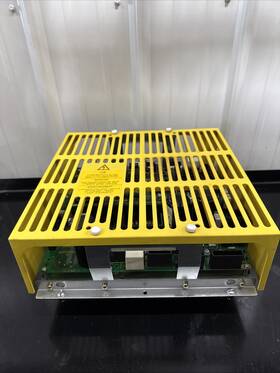
( Brand: Fanuc ), ( Manufacturer Part Number: A20B-2103-023 ), ( Non-domestic Product: Yes ), ( Bundle Listing: No ), ( Applicable Regions: Japan ), ( California Prop 65 Warning: Warning ), ( Type: Motor Control ), ( Unit Type: Unit )
Review FANUC Robot Motor Control Amplifier
The **FANUC A20B-2103-023**, **A20B-2101-023**, **A16B-3200-061**, and **A06B-6107-H002** components are critical elements within FANUC s advanced robotic servo system architecture, designed to deliver precision, reliability, and high-performance motion control for industrial automation applications. These parts serve as the backbone of FANUC s servo motor drive technology, ensuring seamless integration between the robot s mechanical joints and its control system to achieve smooth, accurate, and repeatable movements. The **A20B-2103-023** and **A20B-2101-023** are specialized **servo motor control amplifiers**, tailored for high-torque, high-speed applications in FANUC s A-series robots, such as the **M-20iA/20iA** models. These amplifiers are engineered to regulate the power supply to the servo motors with exceptional efficiency, employing advanced digital signal processing (DSP) and pulse-width modulation (PWM) techniques to minimize energy loss while maximizing torque output. Their robust design supports high-frequency response, enabling rapid acceleration and deceleration essential for applications like pick-and-place operations, welding, or assembly tasks where precision timing is paramount. The **A20B-2103-023** variant, in particular, is optimized for applications requiring higher continuous power output compared to the **A20B-2101-023**, making it suitable for heavier-duty robotic arms or configurations demanding sustained high-performance cycles.
The **A16B-3200-061** is a **high-performance servo motor**, specifically designed for FANUC s **A16iB** robot series, which excels in compact yet powerful applications such as articulated robots or SCARA configurations. This motor integrates FANUC s proprietary **high-efficiency permanent magnet synchronous motor (PMSM) technology**, delivering superior torque density and minimal heat generation, even under prolonged operation. Its sealed construction ensures protection against dust, moisture, and contaminants, making it ideal for harsh industrial environments such as automotive manufacturing, electronics assembly, or material handling. The motor s compact form factor allows for greater flexibility in robot arm design, enabling manufacturers to optimize workspace utilization without compromising performance. The **A16B-3200-061** is paired with FANUC s servo amplifiers to form a cohesive system that achieves sub-millimeter positioning accuracy, making it indispensable for tasks requiring fine motor control, such as screw driving, spot welding, or intricate part handling.
Complementing these components is the **A06B-6107-H002**, a **servo motor encoder**, which plays a pivotal role in closed-loop control by providing real-time feedback on the motor s rotational position, speed, and direction. This encoder is a high-resolution **absolute encoder** with a robust mechanical design, ensuring durability and resistance to shock, vibration, and temperature fluctuations critical factors in the demanding environments of industrial automation. The **A06B-6107-H002** utilizes FANUC s advanced **multi-turn absolute encoding technology**, eliminating the need for homing routines and enabling immediate, accurate positioning upon power-up. This feature significantly reduces downtime and enhances system reliability, particularly in applications where rapid cycle times are essential. The encoder s seamless integration with FANUC s servo amplifiers and motors ensures synchronized operation, allowing the robotic system to execute complex trajectories with minimal overshoot or error accumulation. Together, these components whether in the form of high-efficiency amplifiers, precision motors, or high-accuracy encoders represent the pinnacle of FANUC s servo technology, delivering unmatched performance, longevity, and adaptability for modern manufacturing and automation challenges. Their compatibility with FANUC s comprehensive robot control systems, such as the **R-30iB** or **R-30iA**, further solidifies their role as indispensable assets in achieving next-generation industrial automation.
### **Analysis of Fanuc Robot Motor Control Amplifiers (A20B-2103-023, A20B-2101-023, A16B-3200-061, A06B-6107-H002)**
Fanuc motor control amplifiers (MCAs) are critical components for robotic systems, ensuring precise motion control, power regulation, and system reliability. Below is a detailed breakdown of the pros and cons of purchasing these specific units, followed by a conclusion and recommendation.
---
### **Pros of Purchasing These Fanuc Motor Control Amplifiers**
1. **Compatibility and Reliability**
- These amplifiers are designed specifically for **Fanuc industrial robots**, ensuring seamless integration with existing robotic arms and control systems.
- Fanuc is a globally trusted brand with decades of experience in robotics, meaning these components are well-tested and optimized for industrial applications.
- The **A20B series** (A20B-2103-023, A20B-2101-023) is commonly used in **large industrial robots** (e.g., M-20iA, M-710ic), while the **A16B-3200-061** and **A06B-6107-H002** serve smaller or specialized applications, ensuring broad applicability.
- These units are **backward and forward compatible** with newer Fanuc controllers, reducing the risk of obsolescence.
2. **High Performance and Precision**
- Fanuc MCAs use **advanced servo control technology**, providing **smooth, high-speed motion** with minimal vibration and error.
- The **A20B series** supports **high torque and power output**, making it suitable for heavy-duty applications such as welding, material handling, and assembly.
- The **A06B-6107-H002** (a servo amplifier for small motors) ensures **fine control** for delicate tasks like pick-and-place or precision machining.
- These amplifiers feature **regenerative braking**, improving energy efficiency by recapturing kinetic energy during deceleration.
3. **Durability and Longevity**
- Built with **industrial-grade components**, these amplifiers are designed for **24/7 operation** in harsh environments (dust, temperature fluctuations, electrical noise).
- Fanuc s **redundant design** in some models minimizes single-point failures, increasing system uptime.
- Many of these units have **lifespans of 10 years** with proper maintenance, making them a cost-effective long-term investment.
4. **Technical Support and Availability of Parts**
- Fanuc has a **global support network**, including authorized distributors, service centers, and technical documentation.
- **Spare parts and replacements** are widely available, reducing downtime in case of failure.
- The **A-series amplifiers** are part of Fanuc s **legacy but still-supported** product line, meaning you can access firmware updates, diagnostics, and troubleshooting guides.
5. **Cost-Effectiveness in the Long Run**
- While **new OEM amplifiers** from Fanuc can be expensive, purchasing **used or refurbished units** (from reputable sources) can offer **significant cost savings** (often **30-70% cheaper** than new).
- The **reliability and performance** of Fanuc components often justify the investment, especially in **high-volume production environments**.
- **Energy efficiency** from regenerative braking and optimized power delivery can **reduce operational costs** over time.
6. **Ease of Integration and Programming**
- These amplifiers work seamlessly with **Fanuc CNC controllers (e.g., 0i, 16i, 18i, 31i)** and **robot controllers (e.g., R-30iB, R-2000iB)**.
- **Fanuc s Robotware software** allows for **easy programming, tuning, and diagnostics**, reducing setup time.
- **Plug-and-play compatibility** with most Fanuc robotic arms minimizes integration challenges.
7. **Resale and Trade-In Value**
- Fanuc equipment retains **good resale value**, especially for **well-maintained used units**.
- If upgrading to a newer system, these amplifiers can often be **repurposed or sold back**, offsetting costs.
---
### **Cons of Purchasing These Fanuc Motor Control Amplifiers**
1. **High Upfront Cost (New Units)**
- **New OEM amplifiers** from Fanuc are **expensive**, with prices ranging from **$5,000 to $20,000 ** depending on the model.
- The **A20B series** (for large robots) is particularly costly due to its high power and torque capabilities.
- This can be a **barrier for small businesses or startups** with limited budgets.
2. **Depreciation Over Time**
- While Fanuc equipment is durable, **newer models with advanced features (e.g., AI integration, IoT connectivity)** may become available, leading to **perceived obsolescence**.
- Some industries (e.g., automotive, aerospace) may require **upgraded compliance standards**, necessitating future replacements.
3. **Complexity in Troubleshooting**
- Fanuc s **proprietary systems** require **specialized knowledge** for diagnostics and repairs.
- **Non-Fanuc technicians** may struggle with **error codes, firmware updates, or hardware adjustments**, increasing maintenance costs.
- **Service contracts** from Fanuc or authorized dealers can be **costly** but are often necessary for optimal performance.
4. **Potential for Counterfeit or Poor-Quality Used Units**
- The **second-hand market** for Fanuc amplifiers is **flooded with counterfeit or refurbished units of questionable quality**.
- **Risk of purchasing non-functional or damaged units** if buying from untrusted sellers.
- **No warranty or return policy** on many used units, leading to financial risk if the amplifier fails shortly after purchase.
5. **Limited Customization**
- Fanuc amplifiers are **optimized for their specific robot models** and may **lack flexibility** for non-standard applications.
- **Third-party modifications** (e.g., changing power ratings, adding extra features) are **not officially supported** and can void warranties.
- **No open-source or third-party firmware support**, limiting integration with non-Fanuc systems.
6. **Power and Space Requirements**
- These amplifiers **require dedicated power supplies** and **proper cooling**, which may not be available in all industrial setups.
- **Large amplifiers (e.g., A20B series)** occupy **significant space**, requiring careful placement in the control cabinet.
- **High inrush currents** during startup can affect **facility power grids**, necessitating proper electrical planning.
7. **Dependence on Fanuc Ecosystem**
- If a facility **mixes Fanuc and non-Fanuc equipment**, **interoperability issues** may arise, especially in **hybrid automation setups**.
- **Lack of universal compatibility** with other brands (e.g., ABB, KUKA, Yaskawa) can complicate **system expansions or replacements**.
8. **Environmental and Regulatory Considerations**
- Some older models (e.g., **A06B-6107-H002**) may **not comply with latest energy efficiency standards**, leading to **higher operational costs**.
- **Disposal of old amplifiers** may require **special handling** due to **electronic waste regulations**, adding logistical challenges.
---
### **Conclusion**
Purchasing **Fanuc motor control amplifiers (A20B-2103-023, A20B-2101-023, A16B-3200-061, A06B-6107-H002)** offers **superior reliability, precision, and compatibility** for industrial robotic applications. Their **long lifespan, energy efficiency, and seamless integration** with Fanuc systems make them a **strong choice for manufacturers** investing in **high-performance automation**.
However, the **high upfront cost (especially for new units), complexity in maintenance, and dependency on Fanuc s ecosystem** can be **significant drawbacks**, particularly for **small businesses or non-Fanuc environments**. Additionally, the **risk of counterfeit used units** and **limited customization** require **careful sourcing and planning**.
For **large-scale industrial applications** where **reliability and compatibility** are paramount, these amplifiers are **highly recommended**. For **budget-conscious buyers**, **used/refurbished units from trusted suppliers** can offer **cost-effective performance**. Meanwhile, **facilities considering long-term flexibility** may weigh the **pros and cons of third-party alternatives** (e.g., Yaskawa, ABB) before committing.
---
### **Recommendation**
1. **For New Installations or Large-Scale Automation:**- **Purchase new OEM Fanuc amplifiers** if **budget allows**, as they ensure **maximum compatibility, warranty, and support**.
- **Invest in a service contract** to mitigate long-term maintenance risks.
2. **For Cost-Conscious Buyers (Used/Refurbished Units):**- **Buy from reputable suppliers** (e.g., **Fanuc-authorized dealers, industrial surplus markets, or certified refurbishers**).
Details:
Back side a little dirty Amplifier taken out of running robot.
part #: a20b2103023 price
- $500.00
specifications automationjack:
- brand: Fanuc
- mpn: A20b-2103-023
- non-domestic product: Yes
- bundle listing: No
- applicable regions: Japan
- california prop 65 warning: Warning
- type: Motor Control
- unit type: Unit
returns automationjack:
- policy: No Returns
offer automationjack:
- best offers: True
- quantity: 1
- started: February 28, 2026
- sold: 0
- options: Ship-to-home
- availability: In Stock
payments automationjack:
- wallet: Apple-pay
- credit card: Mastercard
- other
shipping automationjack:
- service: FedEx Ground Economy
- class: Economy
- carrier: FedEx
- cost: $23.72
- type: Calculated
- transit: 5-11 Days
seller automationjack:
- # reviews: 213
- city: Coldwater, Ohio
- rating: 100.0%
general automationjack:
- condition: Used
- Business Industrial > Industrial Automation Motion Controls > Other Automation Equipment
Fanuc A20B-2103-023 Is Similar To:
- Fanuc A06b-6290-h106 One Used Servo Amplifier (43.8% similar) Please leave a telephone number for on-time delivery. The product at fixed price, please pay as soon possible after the purchase. Return police: it will just take you 1 minute. Serious buyers only, please. Shipping detail. You should receive the item within 2-4 weeks...(August 14th, 2024)
- Fanuc A06b-1444-b103 1pc Servo Motor Used (33.1% similar) The product at fixed price, please pay as soon possible after the purchase. Shipping detail. It will just take you 1 minute. Serious buyers only, please. You should receive the item within 2-4 weeks. Return police: please leave a telephone number for on-time delivery...(August 15th, 2024)
- Fanuc A06b-0238-b101 1pc Servo Motor Used (43.6% similar) Return police: serious buyers only, please. You should receive the item within 2-4 weeks. Please leave a telephone number for on-time delivery. Shipping detail. The product at fixed price, please pay as soon possible after the purchase. It will just take you 1 minute...(August 15th, 2024)
- Fanuc A06b-0371-b575 1pc Servo Motor Used (34.6% similar) The product at fixed price, please pay as soon possible after the purchase. Shipping detail. You should receive the item within 2-4 weeks. Return police: please leave a telephone number for on-time delivery. It will just take you 1 minute. Serious buyers only, please...(August 15th, 2024)
- Fanuc A06b-0373-b077 One Used Servo Motor Tested Good (33.1% similar) Serious buyers only, please. It will just take you 1 minute. Return police: please leave a telephone number for on-time delivery. You should receive the item within 2-4 weeks. The product at fixed price, please pay as soon possible after the purchase. Shipping detail...(August 15th, 2024)
- Fanuc A06b-0031-b077 Used And Tested Servo Motor (31.4% similar) Part #: Fanuc A06B-0031-B077 for sale...(August 21st, 2024)
- Fanuc A06b-0235-b705 s037 Used Servo Motor (37.3% similar) Its brand, type, and model are all Fanuc A06B-0235-B705#S037, making it easy to find specify. This Fanuc servo motor is a reliable and efficient choice for industrial automation motion control applications...(August 24th, 2024)
- Ge Fanuc A61l-0001-0093 Series O-m Operator Control Hmi Screen With N860-3117-t010 (46% similar) Next day second air services are available. Condition: used. Items in lot: will there be a dock or forklift. Need it urgently. Size: length : 19 in. Your phone number and business name. Local pick-up, prefer to pick it up yourself. We choose the carrier. Consignee: height : 12 in. After the return...(September 4th, 2024)
- Fanuc A20b-2100-042 Rev 04d Control Board (45.1% similar) Fanuc A20B-2100-042 rev 04D control board...(October 10th, 2024)
- Fanuc empire Ee-0365-302-017 Rtu Robot Vision Cable To J1 P n (36.6% similar) Lot 4220, used - Fanuc rut robot vision cable to J1...(October 11th, 2024)
- Fanuc A06b-0227-b705 One Used Servo Motor Tested In Good Condition (34.2% similar) Return police: if you are satisfied with our service, please rate us. Shipping time. Buyer pays return shipping. It will just take you 1 minute. Please leave a telephone number for on-time delivery...(October 16th, 2024)