MULTIVAC 86.850.0400.30 Cpu Master Control Module
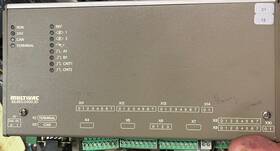
( Brand: Multivac ), ( Manufacturer Part Number: 86.850.0400.30 ), ( Model: MC96 86.850.0400.30 ), ( Part Type: Control Module ), ( Country/region Of Production: Germany )
Review MULTIVAC Mc Cpu Master Control Module
The **Multivac 86.850.0400.30 96 CPU Master Control Module** is a high-performance, industrial-grade programmable logic controller (PLC) designed to deliver robust automation and control solutions for demanding manufacturing, process control, and production environments. Engineered with a **96-bit processing architecture**, this advanced master control module ensures exceptional speed, precision, and reliability, making it an ideal choice for applications requiring seamless integration with complex control systems. Built on a solid foundation of **industrial-grade components**, the module is engineered to withstand harsh operational conditions, including extreme temperatures, high humidity, and electrical noise, ensuring long-term durability and minimal downtime. Its **high-density CPU design** allows for efficient handling of large-scale control tasks, including real-time data processing, motion control, and communication protocols such as **PROFIBUS DP, Ethernet/IP, and Modbus TCP**, facilitating seamless interoperability with a wide range of sensors, actuators, and higher-level supervisory systems.
The **86.850.0400.30** is equipped with a **modular architecture**, enabling users to expand its functionality through optional memory extensions, communication interfaces, and specialized input/output modules tailored to specific application needs. Its **deterministic control capabilities** ensure predictable performance, critical for applications in discrete manufacturing, packaging, material handling, and automated assembly lines where timing and synchronization are paramount. The module s **enhanced processing power** allows for the execution of complex algorithms, advanced motion control sequences, and sophisticated safety protocols, all while maintaining a compact and space-efficient footprint. Additionally, its **user-friendly programming environment**, compatible with industry-standard tools like **Multivac s proprietary software or third-party PLC development platforms**, simplifies configuration, debugging, and maintenance, reducing operational overhead and accelerating project deployment.
Safety and redundancy are key features of this master control module, as it supports **fail-safe operation, watchdog timers, and diagnostic monitoring**, ensuring system integrity even in the event of hardware or software anomalies. The module s **robust power management system** accommodates a wide input voltage range, providing flexibility in power supply configurations while maintaining stable operation under varying load conditions. Whether deployed in a **high-speed packaging line, a precision CNC machine tool, or a large-scale process control system**, the **Multivac 86.850.0400.30 96 CPU Master Control Module** delivers unparalleled performance, scalability, and reliability, empowering industries to achieve greater efficiency, productivity, and automation excellence. Its **future-proof design** and **extensive communication options** further ensure that it remains a versatile and adaptable solution for evolving industrial automation challenges.
### **Pros and Cons of buying a Multivac 86.850.0400.30 (96-CPU Master Control Module)**
#### **Pros:**1. **High Performance and Scalability** The 96-CPU architecture provides significant processing power, making it suitable for large-scale industrial automation, data processing, or complex control systems. This ensures faster response times and improved efficiency in high-demand applications.
2. **Compatibility with Multivac Systems** As a master control module designed for the Multivac platform, it integrates seamlessly with existing Multivac hardware and software, reducing the need for costly retrofitting or third-party adapters.
3. **Enhanced Reliability and Redundancy** The modular design allows for distributed processing, improving fault tolerance. If one CPU fails, others can continue operations, minimizing downtime in critical applications.
4. **Future-Proofing** The advanced architecture supports upgrades and expansions, allowing for additional CPU modules or software enhancements as operational needs evolve.
5. **Industrial-Grade Durability** Built for harsh environments, this module is likely designed to withstand temperature fluctuations, electrical noise, and mechanical stress, ensuring long-term operational stability.
6. **Advanced Control Capabilities** The high CPU count enables sophisticated control algorithms, real-time monitoring, and complex decision-making, which are beneficial for automation, robotics, or process control systems.
7. **Support for Multivac s Proprietary Features** Access to specialized functions such as distributed control, high-speed data acquisition, or integration with other Multivac peripherals may provide unique advantages over generic alternatives.
---
#### **Cons:**1. **High Cost** A 96-CPU master control module is likely a premium-priced component, making it financially prohibitive for small-scale or budget-conscious applications where fewer CPUs would suffice.
2. **Vendor Lock-In** Relying on Multivac s proprietary system may limit flexibility if future needs require switching to a more open or standardized platform (e.g., PLCs from Siemens, Allen-Bradley, or open-source solutions).
3. **Complexity in Setup and Maintenance** The advanced architecture may require specialized training for engineers to configure, troubleshoot, or upgrade the system, increasing operational overhead.
4. **Potential Overkill for Smaller Applications** If the application does not fully utilize 96 CPUs, the excess capacity may be wasted, leading to unnecessary expenses without proportional benefits.
5. **Dependency on Multivac Support** If Multivac s customer support or documentation is limited, resolving issues or finding replacements for obsolete parts could be challenging.
6. **Integration Challenges** While designed for Multivac systems, interfacing with non-Multivac devices or legacy systems may require additional gateways or converters, adding complexity.
7. **Power and Cooling Requirements** A high-CPU module may demand significant power and cooling, which could increase infrastructure costs (e.g., additional cooling systems, higher electrical load).
---
### **Conclusion:**The **Multivac 86.850.0400.30 (96-CPU Master Control Module)** is a powerful, high-performance solution ideal for **large-scale industrial automation, high-demand control systems, or applications requiring massive parallel processing**. Its strengths lie in **scalability, reliability, and deep integration with the Multivac ecosystem**, making it a strong choice for users already invested in the platform who need **maximum computational capacity**.
However, for **smaller projects, budget-sensitive applications, or environments where vendor lock-in is a concern**, the costs, complexity, and over-provisioning risks may outweigh the benefits. In such cases, alternatives like **modular PLCs, FPGAs, or cloud-based control systems** could offer a more balanced solution.
---
### **Recommendation:** - **Buy if:**- You are operating a **large-scale industrial automation system** that requires **high parallel processing power**.
- Your application **fully justifies the cost** of 96 CPUs (e.g., real-time data processing, distributed control, or high-speed decision-making).
- You are **already committed to the Multivac ecosystem** and need seamless integration.
- **Reliability and redundancy** are critical, and the module s fault-tolerant design aligns with your needs.
- **Avoid if:**- Your application **does not require 96 CPUs**, and a lower-cost alternative (e.g., a 16- or 32-CPU module) would suffice.
- You prioritize **vendor flexibility** and may need to switch platforms in the future.
- The **high upfront cost** cannot be justified by long-term savings or performance gains.
- Your team lacks **experience with Multivac systems**, making setup and maintenance difficult.
- **Alternative Considerations:**- If Multivac s ecosystem is restrictive, evaluate **open-standard PLCs (e.g., Siemens S7, Rockwell Studio 5000)** or **FPGA-based solutions** for greater flexibility.
- For cloud-integrated control, **edge computing devices** (e.g., NVIDIA Jetson, Raspberry Pi clusters) may offer cost-effective scalability.
- If power efficiency is a concern, assess whether a **lower-CPU variant** or **distributed control architecture** could meet requirements without excessive hardware.
Ultimately, this module is best suited for **high-end, performance-critical applications** where its advantages in speed, scalability, and reliability justify the investment. For most other use cases, a more tailored or cost-efficient solution may be preferable.
Details:
This module serves as the central control unit for Multivac MC96 system, ensuring efficient and reliable operation. Taken from a working machine The Multivac MC96 CPU Master Control Module 86.850.0400.30 is top-of-the-line automation equipment designed and manufactured in Germany by.
part #: 86850040030 prices
- $2450.00-$7034.43
specifications automationjack:
- brand: Multivac
- mpn: 86.850.0400.30
- model: Mc96 86.850.0400.30
- part type: Control Module
- country/region of production: Germany
shipping automationjack:
- type: Calculated
- class: Standard
- carrier: USPS
- transit: 5-12 Days
- cost: $16.15
- service: USPS Ground Advantage
payments automationjack:
- wallet: Google-pay
- other
- credit card: Discover
general automationjack:
- Business Industrial > Industrial Automation Motion Controls > Other Automation Equipment
- condition: Used
seller automationjack:
- city: Columbia, Missouri
- # reviews: 504
- rating: 100.0%
returns automationjack:
- paid by: Seller
- time: 30 Days
- method: Money back
- policy: Returns Accepted
offer automationjack:
- sold: 0
- options: Ship-to-home
- quantity: 1
- started: February 7, 2026
- availability: In Stock