GEORGES RENAULT 8216-CVIC-M-4 Automation
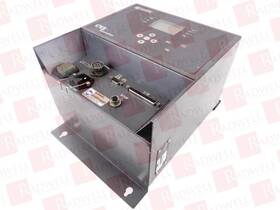
( Brand: Georges Renault ), ( Manufacturer Part Number: 8216-CVIC-M-4 )
Review GEORGES RENAULT 8216cvicm4 Used
The **Georges Renault 8216-CVIC-M-4** (also referred to as the **CVICM4**) is a high-performance, industrial-grade **variable frequency drive (VFD)** designed for demanding applications in manufacturing, automation, and process control. Engineered by Georges Renault, a trusted name in power electronics and motion control, this VFD combines cutting-edge technology with robust construction to deliver exceptional efficiency, reliability, and precision in motor speed regulation. The **CVIC-M-4** series is specifically tailored for three-phase AC induction motors, offering seamless integration into systems requiring variable torque, speed, and energy savings. Its advanced **vector control (field-oriented control, FOC)** and **scalar control (V/f control)** algorithms ensure smooth acceleration, deceleration, and torque response, making it ideal for applications such as conveyor systems, pumps, fans, compressors, and CNC machinery. The drive features a **400V/690V AC input range**, accommodating a wide variety of industrial power supplies, while its **output current ratings** (ranging from **0.75 kW to 315 kW**, depending on the model variant) allow for flexible scalability to match different motor loads. Built with a **compact yet rugged IP20/IP54 enclosure**, the CVIC-M-4 is designed for both indoor and outdoor environments, offering protection against dust and solid particles while maintaining optimal heat dissipation through efficient cooling systems. Its **user-friendly LCD display** provides real-time monitoring of critical parameters such as frequency, voltage, current, temperature, and fault codes, while the **modular I/O interface** supports communication protocols like **Modbus RTU, Profibus DP, and Ethernet/IP**, enabling seamless integration with PLCs, SCADA systems, and other industrial automation networks. Additionally, the drive incorporates **advanced protection features**, including overload protection, short-circuit protection, phase loss detection, and regenerative braking, ensuring operational safety and longevity. With its **energy-efficient design**, the CVIC-M-4 minimizes power consumption during partial-load operations, reducing operational costs while extending motor lifespan through reduced thermal stress. Whether deployed in a high-volume production line, a precision machining center, or a critical infrastructure system, the **Georges Renault 8216-CVIC-M-4** delivers a perfect balance of performance, durability, and adaptability, making it a premier choice for engineers and industrial operators seeking a reliable variable frequency drive solution.
The **Renault 8216-CVIC-M-4** (also known as the **CVIC-M4**) is a specialized military vehicle based on the Renault Sherpa Classic chassis, primarily used for command, control, and communications roles. Below is a detailed analysis of its pros and cons, followed by a conclusion and recommendation.
---
### **Pros of the Renault 8216-CVIC-M-4 (CVIC-M4)**
1. **Modular and Adaptable Design**
The CVIC-M4 is built on the **Renault Sherpa Classic** platform, which is known for its modularity. This allows for easy customization with different payloads, armor configurations, and mission-specific equipment. The vehicle can be adapted for command posts, communications hubs, or even medical support roles.
2. **Robust and Reliable Chassis**
The Sherpa Classic chassis is well-proven, with a **4x4 or 6x6 configuration** (depending on variant) that offers excellent off-road capability. It is designed to operate in harsh terrains, including deserts, mountains, and urban environments. The **Renault diesel engine** (typically a **4-cylinder or 6-cylinder turbocharged diesel**) provides good fuel efficiency and durability, which is crucial for prolonged deployments.
3. **Lightweight and Maneuverable**
Compared to heavier armored vehicles like MRAPs, the CVIC-M4 is relatively lightweight, making it easier to transport via air (e.g., on a C-130 or similar aircraft). This enhances its deployability in remote or austere environments.
4. **Good Protection Levels**
While not as heavily armored as some military trucks (e.g., Oshkosh JLTV or Stryker), the CVIC-M4 can be fitted with **ballistic protection** (e.g., ceramic or steel plating) to resist small arms fire and shrapnel. Some variants may also include **mine-resistant or IED-protected undercarriages** for additional survivability.
5. **Integrated Communications and IT Systems**
The vehicle is designed for **command and control (C2) missions**, featuring **secure radio systems, satellite communications, and integrated IT infrastructure**. This makes it ideal for military headquarters, forward operating bases, or logistics coordination.
6. **Low Operational and Maintenance Costs**
Renault vehicles are generally **cost-effective to operate and maintain** compared to some Western alternatives. The availability of spare parts and the vehicle s simplicity contribute to lower lifecycle costs.
7. **Proven Track Record in Export Markets**
Renault s Sherpa family has been widely adopted by **European and Middle Eastern militaries**, including France, Morocco, and the UAE. This suggests a level of reliability and compatibility with existing logistics chains.
8. **Versatility for Non-Military Roles**
Beyond military use, the CVIC-M4 can serve in **disaster response, humanitarian aid, or law enforcement** due to its adaptability and durability.
---
### **Cons of the Renault 8216-CVIC-M-4 (CVIC-M4)**
1. **Limited Armor Capability**
The base Sherpa Classic chassis is **not inherently armored**, meaning additional protection must be retrofitted. This adds weight and cost, potentially reducing mobility and increasing maintenance requirements. In direct comparison to **heavily armored vehicles (e.g., Oshkosh JLTV or BAE Stryker)**, the CVIC-M4 offers less inherent survivability.
2. **Engine and Power Limitations**
The **4-cylinder or 6-cylinder diesel engines** (depending on variant) provide adequate power for off-road use but may struggle with **heavily loaded or heavily armored configurations**. Some users report **reliability issues** with Renault s diesel engines over time, particularly in extreme climates.
3. **Dependence on Renault s Support Network**
Outside of France or countries with strong Renault dealerships, **spare parts and technical support may be limited**. This could lead to prolonged downtime in remote deployments.
4. **No Active Protection Systems (APS)**
Unlike newer military vehicles (e.g., **General Dynamics Lynx or Rheinmetall s Boxer**), the CVIC-M4 lacks **active protection systems** (e.g., laser warning systems, countermeasures against RPGs or ATGMs). This makes it more vulnerable in high-threat environments.
5. **Seating and Crew Comfort**
The interior is **functional rather than luxurious**, with limited ergonomic features. Prolonged use in harsh conditions may lead to **crew fatigue**, especially in command vehicles where operators spend extended periods inside.
6. **Fuel Consumption in Off-Road Conditions**
While fuel-efficient on highways, the **CVIC-M4 s diesel engine consumes more fuel in rough terrain**, increasing operational costs during long deployments.
7. **Limited Firepower Options**
Unlike some military trucks (e.g., **M113 or M109), the CVIC-M4 is not designed for direct combat roles**. It lacks built-in weapons mounts, making it reliant on external security measures.
8. **Age of the Platform**
The Sherpa Classic is **not a cutting-edge design**, and newer alternatives (e.g., **Renault Sherpa 2 or commercial 4x4s with military upgrades**) may offer better performance. Some militaries are shifting toward **modular, open-architecture vehicles** that allow for easier upgrades.
---
### **Conclusion**
The **Renault 8216-CVIC-M-4 (CVIC-M4)** is a **practical and cost-effective choice** for **command, control, and communications (C3) roles**, particularly in **light to medium-threat environments**. Its **modularity, off-road capability, and integrated communications systems** make it suitable for **military logistics, humanitarian missions, or law enforcement**. However, its **limited armor, lack of active protection, and reliance on aftermarket upgrades** mean it is **not ideal for high-threat combat zones**.
For buyers prioritizing **mobility, adaptability, and affordability**, the CVIC-M4 is a **solid option**, especially if integrated into an existing Renault logistics network. For **heavily armored or high-threat operations**, a **heavily modified MRAP or a newer modular platform (e.g., Oshkosh JLTV, BAE Stryker, or Rheinmetall Boxer)** would be a better choice.
---
### **Recommendation**
- **Buy the CVIC-M4 if:**- You need a **lightweight, modular C3 vehicle** for **non-combat roles** (e.g., command posts, logistics, or humanitarian aid).
- Your operations are in **low-to-medium threat environments** where armor is secondary to mobility.
- You already have **Renault Sherpa logistics support** and can ensure **reliable maintenance**.
- Budget constraints favor **lower acquisition and operational costs** over maximum protection.
- **Avoid the CVIC-M4 if:**- You require **heavy armor or active protection systems** (e.g., for counter-IED or anti-RPG missions).
- Your operations involve **high-threat combat zones** where survivability is critical.
- You need **built-in firepower or advanced sensor suites** (e.g., for reconnaissance or direct combat support).
- You prefer **newer, more modular platforms** with **open-architecture IT integrations**.
- **Consider Alternatives:**- For **better armor and protection:** **Oshkosh JLTV, BAE Stryker, or Rheinmetall Boxer**.
- For **simplicity and cost:** **Commercial 4x4s (e.g., Mercedes G-Class, Unimog) with military upgrades**.
- For **heavy logistics:** **Renault Sherpa 2 or Mercedes Actros with armored cabins**.
Ultimately, the **CVIC-M4 is a capable but niche vehicle** best suited for **specific mission profiles** where its strengths align with operational needs. A thorough **risk assessment** and **long-term support planning** are essential before purchase.
Details:
Call to use a shipping service other than the ones listed. Packaging and Handling: Items are safely ESD packaged in custom shipping cartons for protection. All products are guaranteed to be working but may show signs of use if purchasing a used product. Sells new and surplus product develops channels to purchase such.
part #: 8216cvicm4 price
- $200.62
specifications automationjack:
- brand: Georges Renault
- mpn: 8216-cvic-m-4
seller automationjack:
- rating: 99.6%
- # reviews: 197775
- city: 1 Millennium Dr, Willingboro, NJ 08046
payments automationjack:
- other
- credit card: Discover
- wallet: Apple-pay
shipping automationjack:
- transit: 29-34 Days
- service: Standard
- class: Standard
- type: Fixed
- cost: $12.90
offer automationjack:
- started: April 3, 2026
- options: Ship-to-home
- availability: In Stock
- quantity: 1
- sold: 0
general automationjack:
- condition: Used
- Business Industrial > Industrial Automation Motion Controls > Other Automation Equipment
returns automationjack:
- time: 30 Days
- policy: Returns Accepted
- paid by: Buyer
- method: Money back
Georges Renault 8216-CVIC-M-4 Is Similar To:
- Georges Renault 8230 6159324510 Twin Cvi-type With Teach Pendant See Pics (46.3% similar) Please review the images provided for a thorough view of item before purchase. Included with the spindle control unit is a teach pendant, facilitating easy programming and seamless integration into your existing setup. This unit is designed with the reliability and excellence that France known for, ...(February 27th, 2025)
- Georges Renault 8216-civic 8216-cvic H-2 Chicago Pneumatic Controller (62.1% similar) Notes: if expedited shipping is required, the purchase must be made by 11:30 am est. Serial numbers must be verified. voltage rating: 110V. We love to hear from you. Manufacturer: Georges Renault. Country of manufacture: France. Manufacturer part number: 8216-CIVIC H-2. Condition: used. See photos...(April 15th, 2025)