MICROCOM 800-259-00 Microcomm
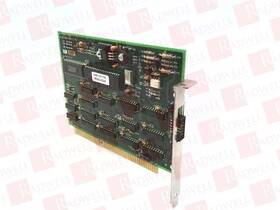
( Brand: Microcom ), ( Manufacturer Part Number: 800-259-00 )
Review MICROCOM Microcomm 80025900 Used
The **Microcom 800-259-00 (Microcom 80025900)** is a robust and versatile **industrial-grade wireless communication module** designed for demanding applications in automation, control systems, and remote monitoring. Part of Microcom s reliable line of **RF (radio frequency) transceivers**, this unit operates in the **2.4 GHz ISM band**, delivering high-speed, low-latency wireless connectivity ideal for industrial environments where reliability and interference resistance are critical. Built with a **compact, ruggedized enclosure**, the 800-259-00 is engineered to withstand harsh conditions, including temperature fluctuations, moisture, and mechanical stress, making it suitable for outdoor installations, factory floors, and other challenging operational settings.
This module supports **FSK (Frequency Shift Keying) and GFSK (Gaussian Frequency Shift Keying) modulation**, ensuring efficient data transmission with minimal interference, while its **adaptive frequency hopping spread spectrum (FHSS)** technology enhances signal stability in crowded RF environments. With a **maximum data rate of up to 250 kbps**, the 800-259-00 excels in applications requiring real-time communication, such as **remote telemetry, SCADA (Supervisory Control and Data Acquisition) systems, and wireless sensor networks**. Its **low-power operation** extends battery life in portable or battery-powered deployments, while its **built-in antenna diversity** improves signal reception in multipath environments, ensuring consistent performance even in dynamic or obstructed conditions.
The 800-259-00 is designed for seamless integration into existing industrial networks, offering **serial (RS-232/RS-485) and digital I/O interfaces** for easy connection to PLCs, gateways, or other control devices. Its **configurable parameters**, including transmission power, data rate, and frequency channels, allow for customization to meet specific application requirements. Additionally, the module supports **automatic retry mechanisms and error correction**, minimizing data loss in unreliable wireless conditions. Whether deployed in **smart metering, asset tracking, or wireless control systems**, the Microcom 800-259-00 provides a dependable, high-performance solution for industries where wireless connectivity must be both **efficient and resilient**.
For engineers and system integrators, the 800-259-00 stands out for its **proven reliability, ease of deployment, and compatibility with a wide range of industrial protocols**, making it a trusted choice for wireless communication needs in automation and monitoring applications. Its **long-term availability and backward compatibility** with legacy systems further solidify its position as a dependable component in modern industrial infrastructure.
### **Pros and Cons of buying a Microcom 800-259-00 (Microcom 80025900)**
#### **Overview**
The **Microcom 800-259-00** (also referred to as the **Microcom 80025900**) is a **modem** designed for **serial communication**, commonly used in industrial, medical, or legacy systems where RS-232/RS-485 connections are required. It supports **dial-up analog modems** and was popular in the late 1990s and early 2000s for remote data transmission.
---
### **Pros**
1. **Compatibility with Legacy Systems**
- Works with older **dial-up networks** (PSTN) and **serial devices** that require analog modems.
- Useful in environments where **ISDN, Ethernet, or modern cellular modems** are not feasible.
2. **Reliable for Remote Data Transfer**
- Can establish **voice-grade telephone connections** for remote monitoring, logging, or control.
- Suitable for **industrial automation, medical equipment, or SCADA systems** where stable serial communication is needed.
3. **Simple Installation & Configuration**
- Plug-and-play design with minimal setup requirements.
- Supports **AT commands** (common in older modems) for basic configuration via serial port.
4. **Cost-Effective for Niche Applications**
- Cheaper than modern **GSM/CDMA modems** or **Ethernet-based solutions** in specific use cases.
- May be more affordable than buying a new modem for a legacy system.
5. **Physical Durability**
- Built for **industrial or rugged environments**, often with metal enclosures and robust connectors.
6. **Backup Solution for Critical Systems**
- Can serve as a **redundant communication method** if primary networks fail.
- Useful in **off-grid or remote locations** where internet access is unreliable.
---
### **Cons**
1. **Obsolete Technology**
- **No longer supported** by major manufacturers; parts and firmware updates are unavailable.
- **Security risks** due to lack of modern encryption or vulnerability patches.
2. **Slow Data Transfer Rates**
- Typically supports **up to 56Kbps** (compared to modern **4G/LTE modems at 10Mbps **).
- Not suitable for **high-bandwidth applications** (e.g., video streaming, large file transfers).
3. **Dependence on Analog Phone Lines**
- Requires **working PSTN (Public Switched Telephone Network) infrastructure**, which is declining in many regions.
- **No support for VoIP, cellular, or broadband alternatives**.
4. **Limited Connectivity Options**
- Mostly **RS-232/RS-485 serial-only**; lacks **USB, Ethernet, or Wi-Fi** connectivity.
- May require additional adapters for modern computers.
5. **Maintenance & Troubleshooting Challenges**
- **No official support** from Microcom (now part of **Honeywell** or **Emerson**), making diagnostics difficult.
- **Hardware failures** (e.g., dial tone issues, port corruption) are harder to resolve without expertise.
6. **Compatibility Issues with Modern OS**
- **Windows 10/11** may not recognize the modem without **legacy drivers** or **virtual COM port emulators**.
- **Linux/macOS support** is limited; may require **third-party drivers** or **serial-to-USB adapters**.
7. **High Latency & Unreliable Connections**
- **Dial-up connections** suffer from **long call setup times** and **variable latency**.
- **No QoS (Quality of Service)** guarantees, making real-time applications problematic.
8. **Environmental & Regulatory Risks**
- **Lead content** (common in older electronics) may pose **recycling or disposal challenges**.
- **No compliance with modern standards** (e.g., FCC, CE, or RoHS updates).
---
### **Conclusion**
The **Microcom 800-259-00** is a **functional but outdated** solution best suited for **legacy systems** where no modern alternatives exist. It excels in **low-bandwidth, serial-based applications** in **industrial, medical, or remote monitoring** scenarios where **analog dial-up is still viable**. However, its **lack of modern support, slow speeds, and reliance on fading PSTN infrastructure** make it impractical for most contemporary use cases.
For **new projects**, alternatives like **GSM/CDMA modems, Ethernet-based IoT gateways, or cellular IoT modules** (e.g., **SIM7000, Quectel BG96**) are far superior in terms of **speed, reliability, and future-proofing**. If you **must** use this modem, ensure it is **integrated into a system with redundancy** and **backed up by alternative communication methods**.
---
### **Recommendation**
- **If maintaining a legacy system:**- Use the **Microcom 800-259-00** as a **temporary or backup solution** while planning a migration to a modern alternative.
- Keep **spare parts** and **documented configurations** for troubleshooting.
- Consider **emulating the modem** via software (e.g., **Hayes-compatible virtual modems**) if hardware replacement is not feasible.
- **For new deployments:**- **Replace with a modern cellular modem** (e.g., **4G/5G LTE**) for **higher speeds, better reliability, and global coverage**.
- If **serial communication is mandatory**, use a **USB-to-serial adapter** paired with a **cloud-based gateway** (e.g., **AWS IoT, Azure IoT**) for remote access.
- If **industrial automation** is the use case, evaluate **Ethernet/IP, Modbus TCP, or PROFINET** solutions for **higher performance**.
- **If cost is a concern but legacy support is needed:**- Explore **used/refurbished modems** from trusted vendors (e.g., **eBay, industrial surplus stores**) with **warranty options**.
- Check if **Honeywell/Emerson** offers **compatible replacements** under their product lines.
**Final Verdict:**The **Microcom 800-259-00 is a viable stopgap for legacy systems but should not be the primary choice for new implementations.** Investing in a **modern cellular or Ethernet-based solution** will provide **long-term reliability, security, and scalability**.
Details:
Packaging and Handling: Items are safely ESD packaged in custom shipping cartons for protection. Call to use a shipping service other than the ones listed. Sells new and surplus product develops channels to purchase such. All products are guaranteed to be working but may show signs of use if purchasing a used product.
part #: 80025900 price
- $74.36
specifications automationjack:
- brand: Microcom
- mpn: 800-259-00
general automationjack:
- Business Industrial > Industrial Automation Motion Controls > Other Automation Equipment
- condition: Used
returns automationjack:
- time: 30 Days
- method: Money back
- policy: Returns Accepted
- paid by: Buyer
payments automationjack:
- wallet: Paypal
- credit card: Discover
- other
seller automationjack:
- # reviews: 191365
- city: 1 Millennium Dr, Willingboro, NJ 08046
- rating: 99.5%
shipping automationjack:
- service: Standard
- transit: 22-34 Days
- type: Fixed
- class: Standard
- cost: $12.90
offer automationjack:
- sold: 0
- availability: In Stock
- quantity: 1
- started: February 22, 2026
- options: Ship-to-home