ALLEN BRADLEY 500-TOD930 Automation
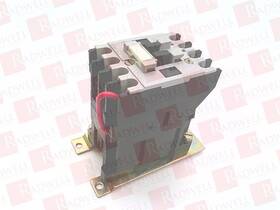
( Brand: Allen Bradley ), ( Manufacturer Part Number: 500-TOD930 )
Review ALLEN BRADLEY 500tod930 Used
The **Allen-Bradley 500-TOD930** is a high-performance, modular terminal output device designed for integration into Rockwell Automation s **ControlLogix** and **CompactLogix** programmable logic controller (PLC) systems. Part of the **500-series terminal block family**, this device serves as a critical interface for connecting discrete or analog output signals to external equipment, such as relays, solenoids, motors, or other control devices. Engineered with Rockwell s signature reliability and precision, the **500-TOD930** is built to withstand demanding industrial environments, offering robust protection against electrical noise, voltage spikes, and environmental contaminants.
Featuring a **930-point output capacity**, this terminal block provides a scalable solution for applications requiring a high density of discrete outputs, making it ideal for automation systems in manufacturing, process control, material handling, and industrial machinery. Each output channel is individually configurable, allowing for flexible wiring arrangements whether for normally open (NO) or normally closed (NC) contacts, resistive loads, or inductive loads such as relays and contactors. The device supports **24V DC or 120V AC** output voltages, accommodating a wide range of load requirements while maintaining compliance with **UL, CSA, and CE** safety standards. Its **screw-terminal connections** ensure secure and reliable electrical bonding, reducing the risk of loose connections or signal degradation over time.
The **500-TOD930** is designed with **modular flexibility**, allowing it to be easily integrated into larger control systems through the **Allen-Bradley 500-series backplane**, which supports daisy-chaining of multiple terminal blocks for expanded functionality. This backplane connection enables seamless communication with the PLC, where outputs can be programmed and monitored via **RSLogix 5000** or **Studio 5000** software, providing real-time control and diagnostics. The terminal block s **compact yet sturdy construction** with a **1/8 DIN rail mount** or panel-mount option optimizes space utilization in control panels while maintaining easy accessibility for maintenance and troubleshooting.
Built to endure harsh industrial conditions, the **500-TOD930** features an **IP65-rated enclosure**, protecting against dust, dirt, and water splashes, and operates reliably within a temperature range of **-20 C to 60 C**, ensuring consistent performance in extreme environments. Its **low power consumption** and **high switching capacity** (up to **10A per contact**) further enhance its efficiency and reliability, making it a dependable choice for applications demanding frequent or continuous operation. Whether deployed in a high-speed packaging line, a chemical processing plant, or an automated warehouse system, this terminal block delivers the durability, precision, and scalability required to meet the most rigorous industrial automation demands.
### **Pros and Cons of Buying an Allen-Bradley 500-TOD930 (500TOD933) Terminal**
The **Allen-Bradley 500-TOD930 (500TOD933)** is a terminal module used in PLC (Programmable Logic Controller) systems, specifically for the **Allen-Bradley 500 series**. Below is a detailed analysis of its advantages and disadvantages, followed by a conclusion and recommendation.
---
### **Pros**
1. **Compatibility with Legacy Systems**
- The 500 series PLCs were widely used in industrial automation from the 1980s to early 2000s. If your facility still relies on this system, this terminal is a direct replacement for maintaining existing operations without requiring a full system upgrade.
2. **Reliability and Proven Performance**
- Allen-Bradley (now part of Rockwell Automation) was a leader in industrial automation, and the 500 series was known for durability. The 500-TOD930 is designed to handle high-torque operations, making it suitable for applications like conveyor systems, machine tools, and other heavy-duty automation tasks.
3. **Easy Integration with Existing Hardware**
- Since it is part of the 500 series ecosystem, it can be easily integrated with other Allen-Bradley 500-series modules (e.g., power supplies, I/O modules, and PLC racks). This reduces the need for additional adapters or compatibility testing.
4. **Standardized Design**
- The module follows industry-standard form factors and wiring conventions, which simplifies troubleshooting and maintenance for technicians familiar with the 500 series.
5. **Cost-Effective for Maintenance**
- If your system is still operational but requires a replacement terminal, purchasing a new or refurbished 500-TOD930 can be cheaper than upgrading to a newer PLC platform (e.g., SLC 500, ControlLogix, or Micro800). This is particularly useful for older facilities where a full system overhaul is not feasible.
6. **Availability of Documentation and Support**
- Allen-Bradley (Rockwell Automation) provides extensive documentation, manuals, and technical support for the 500 series. While newer platforms may have more modern tools, the legacy support ensures that engineers can still access schematics, wiring diagrams, and troubleshooting guides.
7. **Backward Compatibility with Software**
- Programming languages like **Ladder Logic (LD)** and **Function Block Diagrams (FBD)** used in the 500 series are still supported in newer Rockwell software (e.g., **Studio 5000** with compatibility layers). This allows for continued use of existing programs with minimal adjustments.
8. **No Need for Additional Training**
- If your team is already trained on the 500 series, replacing a faulty terminal requires no additional certification or learning curve, reducing downtime and operational costs.
---
### **Cons**
1. **Obsolete Technology**
- The **Allen-Bradley 500 series** is **discontinued** and no longer supported by Rockwell Automation. This means:- No new firmware updates or security patches.
- Limited availability of spare parts over time.
- Potential compatibility issues with modern SCADA, HMI, or cloud-based systems.
2. **Higher Long-Term Maintenance Risks**
- As components age, finding replacements for the entire system (not just the terminal) becomes difficult. Other modules (e.g., power supplies, I/O cards) may also fail, leading to cascading failures and unplanned downtime.
3. **Limited Software and Tool Support**
- While Rockwell still supports the 500 series in some legacy environments, newer software tools (e.g., **FactoryTalk View**, **Studio 5000**) may not fully integrate with it. This can complicate modernizing control systems or integrating with IoT/Industry 4.0 platforms.
4. **Security Vulnerabilities**
- Older PLC systems lack modern cybersecurity features (e.g., encryption, firewall integration, or regular security audits). This increases the risk of cyberattacks, data breaches, or unauthorized access to industrial networks.
5. **Difficulty in Finding Skilled Technicians**
- As the 500 series declines in use, fewer engineers are trained on it. This can lead to:- Higher labor costs for specialized technicians.
- Slower troubleshooting and repairs.
- Increased reliance on external contractors, which can be expensive.
6. **Compatibility Issues with Modern Devices**
- Connecting the 500 series to modern devices (e.g., Ethernet/IP-enabled HMIs, wireless sensors, or cloud platforms) may require additional gateways or adapters, adding complexity and cost.
7. **Environmental and Compliance Risks**
- Older hardware may not meet current **EPA, OSHA, or IEC standards** for emissions, safety, or energy efficiency. This could lead to compliance issues or higher operational costs if retrofitting is required.
8. **Potential for Higher Energy Consumption**
- Legacy systems often lack energy-efficient designs compared to modern PLCs. If energy costs are a concern, maintaining a 500-series system may become less cost-effective over time.
---
### **Conclusion**
The **Allen-Bradley 500-TOD930 (500TOD933)** is a **practical short-term solution** for maintaining an existing 500-series PLC system, especially if:- Your facility has no immediate plans to upgrade.
- The system is still functional and cost-effective to maintain.
- You have in-house expertise to handle troubleshooting and repairs.
However, **long-term reliance on this terminal (and the entire 500 series) is risky** due to:- **Discontinued support** leading to parts shortages.
- **Security and compatibility gaps** with modern industrial networks.
- **Higher maintenance costs** as technicians with 500-series experience become scarce.
If your system is **critical to operations**, consider a **phased upgrade** to a newer Rockwell platform (e.g., **SLC 500, ControlLogix, or Micro800**) to ensure long-term reliability and scalability. Alternatively, if budget allows, a **full system replacement** may be the safest option to avoid future disruptions.
---
### **Recommendation**
1. **If the system is still operational and cost-effective to maintain:**- Proceed with purchasing the **500-TOD930** as a replacement terminal, but **document all components** and **monitor for signs of aging** (e.g., failing power supplies, I/O modules).
- **Stock up on spare parts** (e.g., additional terminals, power supplies) to minimize downtime.
- **Train backup technicians** on basic 500-series troubleshooting to reduce dependency on specialized experts.
2. **If the system is approaching end-of-life or experiencing frequent failures:**- **Evaluate an upgrade path** to a newer Rockwell PLC (e.g., **Micro800 for small systems** or **ControlLogix for larger, more complex applications**).
- **Assess ROI** calculate the cost of continued maintenance vs. the cost of upgrading. Often, a full or partial upgrade becomes more economical over 3 5 years.
- **Consult a Rockwell Automation partner** to help with migration planning, ensuring minimal disruption to operations.
3. **If budget is a constraint but long-term reliability is critical:** - Consider **hybrid solutions**, such as:- Keeping the 500-series PLC for legacy control but **adding a modern HMI or SCADA layer** for monitoring.
- Using **gateways** (e.g., **Allen-Bradley 1756-G110N**) to bridge the 500 series with Ethernet/IP networks.
- **Prioritize critical functions** if some parts of the system are non-critical, replace those first while keeping the 500 series for less time-sensitive operations.
Ultimately, while the **500-TOD930 is a viable stopgap**, the **best long-term strategy is gradual modernization** to avoid being locked into obsolete technology. If possible, begin planning an upgrade before the system becomes a bottleneck.
Details:
ALLEN BRADLEY 500-TOD930 / 500TOD930 USED CONTACTOR, TOP WIRED, OPEN TYPE, 110/120 VAC, 50/60 HZ, THREE POWER POLES AND ONE N.O. Auxiliary contact. Sells new and surplus product develops channels to purchase such. Call to use a shipping service other than the ones listed.
All products are guaranteed to be working but may show signs of use if purchasing a used product. Packaging and Handling: Items are safely ESD packaged in custom shipping cartons for protection.
part #: 500tod930 prices
- $29.96-$149.95
specifications automationjack:
- brand: Allen Bradley
- mpn: 500-tod930
returns automationjack:
- paid by: Buyer
- method: Money back
- policy: Returns Accepted
- time: 30 Days
seller automationjack:
- city: 1 Millennium Dr, Willingboro, NJ 08046
- rating: 99.6%
- # reviews: 193975
payments automationjack:
- credit card: Visa
- other
- wallet: Paypal
shipping automationjack:
- class: Standard
- type: Fixed
- transit: 29-34 Days
- service: Standard
- cost: $12.90
general automationjack:
- Business Industrial > Industrial Automation Motion Controls > Other Automation Equipment
- condition: Used
offer automationjack:
- availability: In Stock
- options: Ship-to-home
- quantity: 1
- started: March 10, 2026
- sold: 0
Allen Bradley 500-TOD930 Is Similar To:
- Allen Bradley 1489-m1c020 Ser.d 1 Pole 2a Circuit Braker (39.2% similar) New - old stock inventory as pictured not in original box item comes shown and only includes what is the photos, please look over carefully prior to purchase. Allen Bradley 1489-M1C020 sear.d 1 pole 2a circuit breaker. Some items may have slight cosmetic damage which is noted in the condition of ...(October 5th, 2023)
- Allen-bradley 2198-p070 Kinetix 5700 Dc Bus Fw14.001 2198p070 New (43.4% similar) Return police: it will just take you 1 minute. Please leave a telephone number for on-time delivery. 2198-P070 Allen Bradley kinetic 5700 dc bus FW14.001 2198P070 new dear customer, there is one things need to be noticed before placing an order...(October 8th, 2023)
- Allen-bradley Vpl-b0752f-pj12aa Allen-bradley Servo Motor For Parts Repair (32.8% similar) Please see pictures for more detail. It has not been tested. Sale includes: Allen-bradley VPL-B0752F-PJ12AA servo motor, for parts/ repair. Condition of internal components is unknown. Sorry, no other parts or accessories included. Functionality is unknown. Item has not been opened or disassembled. ...(November 10th, 2023)
- Allen-bradley 800f-x01l Contact Cartridge Bag Of 10 Sa (40% similar) They are new in the bag...(November 17th, 2023)
- Allen Bradley 800h-r3ha7 Selector Switch Station New (49.5% similar) It is carefully crafted with premium materials to withstand harsh conditions, ensuring that it will last for years come. The station is designed with a focus on functionality, making it easy to operate and providing you complete control over your equipment...(November 18th, 2023)
- Allen-bradley 2803-cm Series A Camera Mux Module (38.2% similar) Allen Bradley 2803-CM series a camera mix module condition - preowned, GC1-D-MBKY...(November 19th, 2023)
- Allen Bradley 100s-c30udj13bc Motor Controller Combination Rev-starte S 146393 (40% similar) Allen Bradley 100S-C30UDJ13BC motor controller combination rev-starter and base, 24 CDC. Manufacturer part number: 100S-C30UDJ13BC...(November 26th, 2023)
- Allen Bradley 800a-h2bw Ser B Maintained Selector Switch Nos Free Fast Ship (37.9% similar) Part #: Allen Bradley 800A-H2BW for sale...(December 20th, 2023)
- Guardmaster Ltd 440k-t11341 Allen Bradley 440kt11341 Series B Safety Interlock Switch (30.2% similar) Allen Bradley 440K-T11341, 440KT11341, series b, safety interlock switch lock: cabinet 2 top shelf 1210...(December 21st, 2023)
- Allen-bradley 2198-h20ck Dsl Converter Kit Sser B Fw 1.18 236757 (38.1% similar) MCSALE25X: : Allen Bradley 1756-IB16 sear a cat rev H01 f/w 3.2 dc input 16PT 24VDCUSED good condition may look different than photo have shelf ware BB61APD1 pd D78 item is sold as where...(January 3rd, 2024)
- Allen-bradley 4963-ds Surge Protector With Dry Contact Indication (35.8% similar) Allen Bradley 4963-DS surge protector with dry contact indication, 277 vac 60 Hz, 420 vac cove, in 20,000 a, CPR 1500 v, these are unused. Offer is for all they are dirty from sitting around, but they unused...(January 8th, 2024)