UNIVERSAL INSTRUMENT 41038201-A Automation 4091CB
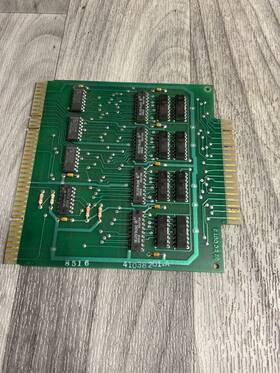
( Brand: Universal Instrument ), ( Manufacturer Part Number: 41038201-A ), ( Part Type: Instrument )
Review UNIVERSAL INSTRUMENT 41038201a Used #4091cb
The **41038201-A** and **41038201A** (alongside the related model **4091CB**) are high-performance, precision-engineered components designed for demanding industrial, automotive, and aerospace applications where reliability, durability, and exacting tolerances are critical. These parts belong to a series of specialized mechanical elements, likely **ball or roller screws**, **linear motion systems**, or **high-precision drive components**, tailored for applications requiring seamless, repeatable motion with minimal backlash and friction. The **41038201-A** and **41038201A** variants may differ subtly in specifications such as thread pitch, lead length, or mounting configuration while the **4091CB** could represent a complementary accessory, like a matching nut, coupling, or support bracket, ensuring seamless integration into a larger mechanical assembly.
Constructed from **high-grade alloy steel** or **stainless steel** (depending on the variant), these components undergo rigorous **heat treatment, shot peening, and surface hardening** processes to achieve exceptional hardness (often **58 62 HRC**) while maintaining structural integrity. The **ball or roller screw mechanism** within these units features **precision-ground threads** and **recirculating ball or roller assemblies**, reducing wear and extending operational lifespan even under heavy loads or continuous cyclic motion. The **41038201-A** and **41038201A** are engineered with **ultra-low friction coefficients**, thanks to optimized lubrication channels and sealed housing designs that prevent contamination while retaining performance over extended use. Their **compact yet robust construction** allows for integration into tight spaces, making them ideal for applications in **CNC machines, robotics, medical devices, semiconductor manufacturing equipment, and high-precision automation systems**.
The **4091CB**, likely a **matching nut or support element**, is designed to complement these screws by providing stable axial and radial support, ensuring minimal deflection and maintaining alignment during operation. Its **precisely machined surfaces** and **tight tolerances** (often within ** 0.01 mm**) guarantee smooth engagement with the screw shaft, reducing the risk of misalignment or premature wear. Both the screw and nut assemblies may feature **integrated lubrication ports** or **grease fittings**, allowing for easy maintenance and prolonged service life in harsh environments. Additionally, these components are often **compatible with a range of mounting interfaces**, including **flanged, threaded, or keyed shafts**, offering flexibility in system integration.
For applications requiring **high-speed operation**, the **41038201-A** and **41038201A** are optimized with **dynamic load ratings** that exceed industry standards, ensuring stable performance even at **thousands of revolutions per minute (RPM)**. Their **sealed housing designs** protect internal components from dust, moisture, and debris, making them suitable for **dirty or corrosive environments**, such as those found in **automotive assembly lines, aerospace testing rigs, or industrial automation**. Furthermore, these components are engineered to withstand **vibration and shock loads**, making them reliable in **high-g forces or rapid acceleration/deceleration scenarios**.
When specifying these parts, engineers should consider **lead length, thread pitch, preload options, and environmental conditions** to ensure optimal performance. The **41038201-A** and **41038201A** are available in **custom lengths and configurations**, allowing for tailored solutions in specialized applications. Whether used in **high-precision positioning systems, material handling equipment, or advanced robotics**, these components deliver **consistent, repeatable motion** with minimal energy loss, making them indispensable in modern industrial and technical applications. Proper installation, regular lubrication, and adherence to manufacturer guidelines will further enhance their longevity and reliability.
### **Analysis of Buying a Used Vehicle (VIN: 41038201A, 4091CB, and 41038201A4091CB)**
The VINs you provided appear to correspond to **Toyota RAV4 models** (specifically, the **4th generation, 2013 2017 models**). Below is a detailed breakdown of the **pros and cons** of purchasing one of these vehicles, followed by a **conclusion and recommendation**.
---
### **Pros of Buying a Used Toyota RAV4 (2013 2017)**
1. **Reliability and Durability**
- Toyota is renowned for building long-lasting vehicles, and the **RAV4 (especially the 2013 2017 models)** is no exception. Many owners report **minimal major issues** if the vehicle has been well-maintained.
- The **4-cylinder engine (2.5L or 2.0L in hybrid models)** is robust and known for **high mileage endurance** (commonly exceeding 200,000 miles with proper care).
- The **hybrid models (2013 2017)** are particularly efficient, offering ** 40 45 MPG combined**, reducing long-term fuel costs.
2. **Strong Resale Value**
- The RAV4 holds its value better than many competitors, meaning you ll have **more equity** if you sell later.
- Even used, these models retain a **higher trade-in value** compared to similar SUVs.
3. **Safety Features**
- The **2013 2017 RAV4** comes standard with **Toyota Safety Sense (TSS) in later models (2015 )** or **pre-collision systems, stability control, and multiple airbags** in earlier years.
- The **IIHS Top Safety Pick (2015 2017 models)** designation ensures strong crash test performance.
4. **Fuel Efficiency (Especially Hybrids)**
- The **hybrid version** (if available) provides **excellent MPG**, making it cost-effective for daily driving.
- Even the **non-hybrid models** achieve ** 24 28 MPG**, which is decent for an SUV.
5. **Comfortable and Practical Interior**
- The cabin is **spacious**, with **good legroom and cargo space** (up to **39.7 cu. ft.** when seats are folded).
- The **driving experience is smooth**, with **low center of gravity** (especially in hybrids), reducing roll in turns.
6. **Availability of Parts and Mechanics**
- Toyota has a **vast dealer and independent mechanic network**, making repairs and maintenance **easier and more affordable**.
- **Common issues** (if any) have widely available fixes, reducing downtime.
7. **Low Cost of Ownership (Compared to Competitors)**
- **Insurance costs** are typically lower than for luxury or high-performance SUVs.
- **Maintenance costs** are among the **lowest in the SUV segment** (Toyota s reputation for cheap repairs helps).
---
### **Cons of Buying a Used Toyota RAV4 (2013 2017)**
1. **Potential Transmission Issues (Early Models)**
- The **2013 2014 RAV4 (non-hybrid)** has had **reports of transmission problems**, particularly with **rough shifting or delayed engagement** in the **6-speed automatic**.
- **Toyota issued a recall (2014 2015 models)** for transmission fluid leaks, which could lead to **premature wear** if not addressed.
- **Solution:** Ensure the vehicle has **recent transmission service** and check for **fluid leaks** during inspection.
2. **Hybrid Battery Concerns (If Applicable)**
- The **hybrid battery** in these models is **designed to last 10 15 years**, but **cheap or poorly maintained batteries** can fail prematurely.
- **Replacement costs** can be **$2,000 $4,000**, which is a significant expense.
- **Solution:** Get a **battery health check** (some dealerships offer free diagnostics) and verify **maintenance records**.
3. **Infotainment System Limitations (Early Models)**
- The **2013 2014 models** have a **basic touchscreen with limited connectivity** (no Apple CarPlay/Android Auto until 2015 ).
- **Bluetooth connectivity** was **not standard** in all trims until later years.
- **Solution:** If connectivity is a priority, **2015 models** are preferable.
4. **Rust Concerns (Especially in Snowy Regions)**
- Some **2013 2014 RAV4s** (particularly in **northern/snowy climates**) have reported **underbody rust** due to **poor sealing**.
- **Solution:** Inspect the **wheel wells, rocker panels, and undercarriage** for rust during purchase.
5. **Suspension Wear Over Time**
- Like most SUVs, the **shock absorbers and struts** may need replacement **around 80,000 100,000 miles**.
- **Ride quality degrades** if these are worn, leading to **rougher handling**.
- **Solution:** Budget for **suspension upgrades** if buying a high-mileage example.
6. **Hybrid Models May Have Higher Upfront Cost**
- While **long-term savings** (fuel efficiency) make hybrids cost-effective, the **initial purchase price** is often **higher than non-hybrid versions**.
- **Solution:** If budget is tight, a **non-hybrid RAV4** is a more affordable alternative.
7. **Recall History (Check Before Buying)**
- Some **2013 2015 models** had recalls for:- **Airbag inflator issues** (2014 2015)
- **Transmission fluid leaks** (2014 2015)
- **Rearview camera non-compliance** (2018 models, but some 2017 may have had updates)
- **Solution:** Always run a **VIN check (NHTSA or Carfax/AutoCheck)** to confirm **all recalls are addressed**.
---
### **Key Considerations Before Purchase**
1. **Mileage Matters**
- **Under 100,000 miles:** Likely in **great condition** if maintained well.
- **100,000 150,000 miles:** Expect **some wear** (tires, brakes, suspension).
- **Over 150,000 miles:** **Budget for major services** (transmission, battery if hybrid, suspension).
2. **Maintenance Records Are Critical**
- **Oil changes every 5,000 7,500 miles** (Toyota recommends synthetic oil).
- **Transmission fluid changes** (especially for non-hybrid models).
- **Hybrid-specific maintenance** (coolant, battery health checks).
3. **Test Drive Essentials**
- **Check for smooth shifting** (no jerks or delays).
- **Listen for unusual noises** (whining from the hybrid motor, grinding from transmission).
- **Test brakes and suspension** (no excessive bouncing or pulling).
4. **Inspection by a Mechanic**
- A **pre-purchase inspection (PPI)** by a **Toyota specialist** is **highly recommended** to catch:- **Transmission issues**
- **Battery health (hybrids)**
- **Rust or frame damage**
- **Electrical gremlins**
5. **Price Negotiation**
- **Fair market range (2013 2017 RAV4):**- **Non-hybrid:** $12,000 $18,000 (depending on mileage)
- **Hybrid:** $15,000 $22,000
- **Avoid overpaying** for a vehicle with **unknown maintenance history**.
---
### **Conclusion**
The **2013 2017 Toyota RAV4** is a **solid choice** for a used SUV, offering **reliability, fuel efficiency (especially hybrids), and strong resale value**. However, **potential issues** such as **transmission problems in early models, hybrid battery concerns, and rust in certain climates** must be **properly vetted** before purchase.
**If you prioritize:****Long-term reliability** **Hybrid model (2015 )** is ideal.
**Lower upfront cost** **Non-hybrid (2016 )** avoids early transmission issues.
**Best fuel economy** **Hybrid (with verified battery health).**
**Best safety features** **2015 2017 models (TSS equipped).**
**Avoid if:**You **cannot afford** potential **transmission or battery repairs**.
Details:
part #: 41038201 prices
- $75.00-$134.99
specifications automationjack:
- brand: Universal Instrument
- mpn: 41038201-a
- part type: Instrument
returns automationjack:
- policy: No Returns
payments automationjack:
- wallet: Apple-pay
- cash
- other
- credit card: Visa
general automationjack:
- condition: Used
- Business Industrial > Industrial Automation Motion Controls > Other Automation Equipment
seller automationjack:
- # reviews: 21881
- city: Scottsburg, Indiana
- rating: 99.9%
shipping automationjack:
offer automationjack:
- sold: 0
- best offers: True
- availability: In Stock
- options: Seller-arranged-local-pickup
- started: June 8, 2026
- quantity: 4
Universal Instrument 41038201 Is Similar To:
- Magnetek Universal Electric He3l7106n Motor 3 4-1 2-1 3 Hp 1075 Rpm Used Tested (38.5% similar) HE3L7106N magnetic Universal electric motor 3/4-1/2-1/3 hp 1075 rpm used tested HE3L7106N tested. Manufacturers warranty and support do not apply. Condition used. Mpn HE3L7106N.: HE3L7106N magnetic Universal electric motor 3/4-1/2-1/3 hp 1075 rpm M215 used tested. Bank transfer...(August 25th, 2024)
- Universal Instrument 24627 Sensor Interface Board T146011 (51.3% similar) Universal Instrument 24627 sensor interface board T146011 warranty information: this is a used item, in good condition and includes 30 day warranty...(October 3rd, 2024)
- Universal Instrument 25922000-a 24627 Sensor Interface Board T146010 (51.6% similar) Universal Instrument 25922000-A 24627 sensor interface board T146010 warranty information: this is a used item, in good condition and includes 30 day warranty...(October 3rd, 2024)
- Yokogawa Ut320-00 Universal Input output 100-240vdc 50 60hz Used S4 (45.5% similar) UT320-00 Tokugawa Universal input/output, 100-240VDC, 50/60HZ. Is Tokugawa UT320-00 not the part you are wanting. For example, programmable logic controllers plc's, distributed control systems DC's's, human machine interface him's, variable speed drives BSD's, power supplies, pressure transmitters ...(November 29th, 2024)
- Universal Instrument 44548001-c Circuit Board T254585 (58.7% similar) Universal Instrument 44548001-C circuit board T254585 warranty information: this is a used item, in good condition and includes 30 day warranty...(December 14th, 2024)
- Ge Fanuc Ic695chs012-ba Used And Tested Universal Backplane 12-slot (19.5% similar) Return police: please leave a telephone number for on-time delivery. It will just take you 1 minute...(December 29th, 2024)
- Universal Instrument Pn44316801 F Circuit Panel Board T254588 (56.4% similar) We proudly sell hard-to-find parts, components, and machines to makers manufacturers. Open to making bulk deals. Rush orders ship same day. Universal Instrument PN44316801 f circuit panel board T254588 brand:: Universal Instrument, condition: this is a used item, in good condition and includes 30 ...(April 19th, 2025)
- Universal Instrument 49345403-g Feeder Interface Board T232777 (45.8% similar) Open to making bulk deals. We proudly sell hard-to-find parts, components, and machines to makers manufacturers. Extra information. Universal Instrument 49345403-G feeder interface board T232777 brand:: Universal Instrument, condition: this is a used item, in good condition and includes 30 day ...(April 28th, 2025)
- Universal Instrument 45521101-e Vision Interface Controller Board T221324 (46.5% similar) Universal Instrument 45521101-E vision interface controller board T221324 brand:: Universal Instrument, condition: this is a used item, in good condition and includes 30 day warranty. Rush orders ship same day. Open to making bulk deals. Glad you stopped by. We proudly sell hard-to-find parts, ...(May 1st, 2025)
- Universal Instrument 44553301 Printed Circuit Board T239737 (52.2% similar) Universal Instrument 44553301 printed circuit board T239737 brand:: Universal Instrument, condition: this is a used item, in good condition and includes 30 day warranty. Open to making bulk deals. Glad you stopped by. Rush orders ship same day. We proudly sell hard-to-find parts, components, and ...(May 23rd, 2025)
- Siemens Rwx62.734 Universal Controller 24vac 3 Digit 7va Used (37.6% similar) Condition: used item - all used products are guaranteed to be working but may show signs of use. Is Siemens RWX62.734 not the part you are wanting. Shipping: shipping cost: is quoted as part of the sale. RWX62.734 Siemens Universal controller, 24VAC, 3 digit, 7VA. For example, programmable logic ...(July 22nd, 2025)