PHOENIX CONTACT 2702758 Device Server 1E/1DB9
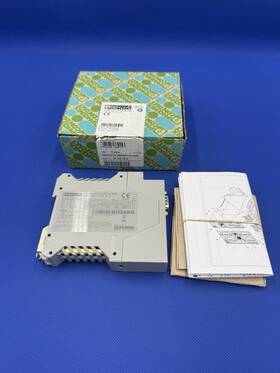
( Brand: Phoenix Contact ), ( Manufacturer Part Number: 2702758 ), ( Part Type: Device )
Review PHOENIX CONTACT Gw Device Server 1e/1db9
The **Phoenix Contact 2702758 GW Device Server 1E/1DB9** is a robust and versatile industrial communication gateway designed to seamlessly bridge the gap between legacy field devices and modern automation networks. Engineered for demanding environments, this device server combines high-performance data conversion with reliable connectivity, making it an ideal solution for integrating analog and digital signals into Ethernet-based systems. The unit features a single Ethernet port (10/100 Mbps) for straightforward integration into industrial networks, ensuring efficient data transmission while maintaining low latency. Its compact yet durable design, with an IP65-rated enclosure, allows for installation in harsh conditions, including dusty, wet, or temperature-fluctuating environments, where reliability is paramount.
At its core, the **2702758 GW Device Server** supports a wide range of communication protocols, including Modbus RTU, Modbus TCP, and PROFIBUS DP, enabling seamless interoperability with PLCs, SCADA systems, and other industrial controllers. The device is equipped with a single analog input (0 20 mA or 4 20 mA) and a single digital input (24 V DC), allowing it to monitor and process critical process variables such as temperature, pressure, or flow rates with precision. These inputs can be configured to trigger alarms, log data, or feed real-time information into higher-level systems, enhancing operational efficiency and decision-making.
One of the standout features of this device server is its flexibility in data handling. It supports both polling and event-driven communication, ensuring that critical data is captured and transmitted promptly, even in dynamic industrial settings. The unit also includes a built-in web server, enabling remote configuration, monitoring, and diagnostics via a standard web browser, which simplifies maintenance and troubleshooting. Additionally, its support for SNMP (Simple Network Management Protocol) allows for centralized network management, making it easier to monitor device health and performance across distributed systems.
The **2702758 GW Device Server** is particularly well-suited for applications in manufacturing, process control, building automation, and energy management, where reliable signal conversion and network integration are essential. Its plug-and-play functionality, combined with Phoenix Contact s reputation for quality and innovation, ensures a hassle-free deployment process. Whether used to modernize an existing infrastructure or as part of a new automation system, this device server delivers a dependable, scalable, and cost-effective solution for bridging the gap between field devices and digital networks.
The Phoenix Contact 2702758 GW Device Server (1E/1DB9) is a modular, industrial-grade gateway designed for connecting field devices to industrial networks or the cloud. Below is a detailed breakdown of its pros and cons, followed by a conclusion and recommendation.
---
### **Pros**
**1. Robust Industrial Design**
The device is built for harsh environments, featuring a wide operating temperature range (-40 C to 70 C), high resistance to vibration, shock, and electromagnetic interference (EMI/ESD). This makes it suitable for manufacturing plants, oil and gas, and other demanding industrial settings where reliability is critical.
**2. Modular and Scalable Architecture**
The GW Device Server supports multiple communication protocols (e.g., Modbus RTU/TCP, PROFIBUS DP, CANopen, Ethernet/IP) via its modular slots. This flexibility allows users to adapt to different field devices and network requirements without replacing the entire unit. The 1E/1DB9 model specifically includes one Ethernet port and one DB9 serial port (RS-232/422/485), which provides versatility for legacy and modern devices.
**3. High Performance and Low Latency**
The device is designed for real-time data acquisition and transmission, with minimal latency. It can handle high data throughput, making it suitable for applications requiring frequent or time-sensitive updates (e.g., SCADA systems, predictive maintenance).
**4. Security Features**
Phoenix Contact incorporates security measures such as authentication, encryption (e.g., TLS for Ethernet connections), and secure firmware updates. This is important for protecting industrial networks from cyber threats, especially in environments connected to the cloud or corporate networks.
**5. Cloud and IT Integration**
The GW Device Server supports integration with cloud platforms (e.g., AWS, Azure) and IT systems via standard protocols like OPC UA, MQTT, or REST APIs. This enables remote monitoring, analytics, and centralized control, which is valuable for digitalization initiatives.
**6. Easy Configuration and Management**
Phoenix Contact provides user-friendly configuration tools (e.g., Phoenix Contact s Device Server Manager software) for setting up protocols, parameters, and data mapping. The web-based interface simplifies remote management, reducing the need for on-site adjustments.
**7. Compliance and Certifications**
The device meets industry standards such as IEC 61131-2, IEC 62443 (for cybersecurity), and CE/FCC certifications. This ensures compatibility with global regulations and reduces integration risks in regulated industries.
**8. Long-Term Support and Updates**
Phoenix Contact is a well-established manufacturer with a strong reputation for product longevity. The device likely benefits from ongoing firmware updates, technical support, and compatibility with future protocols or standards.
**9. Local and Global Availability**
As a Phoenix Contact product, the device is widely available through authorized distributors and support networks worldwide, which can simplify procurement and maintenance.
**10. Cost-Effective for Complex Setups**
While the upfront cost may be higher than simpler gateways, its modularity and longevity can reduce long-term expenses by avoiding frequent replacements or additional hardware for protocol conversion.
---
### **Cons**
**1. High Initial Cost**
The GW Device Server is positioned as an enterprise-grade solution, and its price reflects this. For small-scale or budget-conscious deployments, the cost may be prohibitive compared to cheaper, less feature-rich alternatives (e.g., basic Modbus gateways or Raspberry Pi-based solutions).
**2. Complexity for Non-Expert Users**
The device s advanced features (e.g., multi-protocol support, cloud integration) require a certain level of technical expertise to configure and troubleshoot. Users without IT or industrial networking experience may find the setup or diagnostics challenging.
**3. Limited Physical Ports on the 1E/1DB9 Model**
The specific model (1E/1DB9) includes only one Ethernet port and one DB9 serial port. If your application requires additional ports (e.g., multiple serial connections or additional Ethernet), you may need to purchase additional modules or a different model (e.g., with more slots), increasing complexity and cost.
**4. Dependency on Phoenix Contact Ecosystem**
While Phoenix Contact s ecosystem is robust, users may become dependent on their proprietary tools or support. Switching to another vendor s gateway later could require reconfiguration or retraining, adding operational overhead.
**5. Firmware and Software Updates**
Regular firmware updates are essential for security and functionality, but they can occasionally introduce bugs or compatibility issues. Downtime for updates may be necessary, depending on the criticality of the application.
**6. Power Requirements**
The device requires a stable power supply (typically 24V DC). In environments with unreliable power, additional UPS or power conditioning may be needed, adding to the infrastructure cost.
**7. Learning Curve for Advanced Features**
Features like OPC UA publishing, MQTT brokers, or advanced security settings (e.g., role-based access control) may require training or documentation review. This can delay deployment or introduce errors if not properly understood.
**8. Limited Local Support in Some Regions**
While Phoenix Contact has a global presence, support quality and response times can vary by region. Users in less developed markets may face longer wait times for technical assistance.
**9. Potential Overkill for Simple Applications**
If your use case only requires basic protocol conversion (e.g., Modbus RTU to Modbus TCP) without cloud integration or advanced monitoring, a simpler, cheaper gateway might suffice. The GW Device Server s capabilities may not be fully utilized, leading to wasted investment.
**10. Vendor Lock-In Risks**
Phoenix Contact s proprietary configuration tools and protocols could create vendor lock-in. While this is mitigated by open standards like OPC UA, users should ensure compatibility with their long-term IT or OT strategies.
---
### **Conclusion**
The Phoenix Contact 2702758 GW Device Server (1E/1DB9) is a high-performance, modular gateway ideal for industrial environments requiring robust, secure, and scalable connectivity between field devices and IT/cloud systems. Its strengths lie in its reliability, security, flexibility, and long-term support, making it suitable for large-scale deployments, critical infrastructure, or applications demanding real-time data and integration.
However, its complexity, higher cost, and potential over-engineering for simpler applications may not justify the investment for smaller projects or non-technical users. The decision to purchase should be based on whether the device s advanced features align with your specific requirements, budget, and technical capabilities.
---
### **Recommendation**
**Buy the Phoenix Contact 2702758 GW Device Server if:**- You operate in an industrial environment with demanding conditions (e.g., manufacturing, oil and gas, energy).
- Your application requires multi-protocol support (e.g., combining Modbus, PROFIBUS, or CANopen with Ethernet/IP or cloud connectivity).
- Security, reliability, and long-term support are critical priorities.
- You plan to integrate with cloud platforms, SCADA systems, or IT networks for remote monitoring and analytics.
- Your budget can accommodate the upfront cost, and the device s features will be fully utilized.
**Consider alternatives if:**- Your project is small-scale or budget-constrained, and simpler gateways (e.g., basic Modbus gateways or Raspberry Pi-based solutions) would suffice.
- You lack in-house expertise to configure or maintain advanced industrial gateways.
- Your application only requires basic protocol conversion without cloud or advanced security features.
- You prefer open-source or non-proprietary solutions to avoid vendor lock-in.
**Additional Tips:**- Evaluate the total cost of ownership, including power supplies, mounting hardware, and potential additional modules.
- Request a demo or trial unit to test compatibility with your field devices and network infrastructure.
- Consult with Phoenix Contact s technical support or a certified integrator to ensure the device meets your exact requirements.
- If scalability is a concern, verify whether the device can accommodate future expansion (e.g., adding more modules or ports).
Details:
With its reliable brand reputation and specialized capabilities, this product is a valuable asset for those seeking high-quality automation solutions. The PHOENIX CONTACT 2702758 GW Device Server 1E/1DB9 is a specialized piece of automation equipment from the renowned brand, Phoenix Contact. This device server is designed specifically for industrial automation and motion control systems, perfect businesses industries looking to streamline their processes improve efficiency.
part #: 2702758 prices
- $153.23-$459.02
specifications automationjack:
- brand: Phoenix Contact
- mpn: 2702758
- part type: Device
general automationjack:
- condition: Used
- Business Industrial > Industrial Automation Motion Controls > Other Automation Equipment
payments automationjack:
- other
- wallet: Google-pay
- credit card: Diners-club
shipping automationjack:
- type: Calculated
- service: USPS Ground Advantage
- cost: $11.35
- transit: 5-11 Days
- carrier: USPS
- class: Standard
seller automationjack:
- rating: 100.0%
- city: San Tan Valley, Arizona
- # reviews: 743
returns automationjack:
- policy: No Returns
offer automationjack:
- quantity: 2
- availability: In Stock
- sold: 0
- options: Ship-to-home
- started: May 9, 2026
- best offers: True
Phoenix Contact 2702758 Is Similar To:
- Phoenix Contact 3005837 75pcs Nos Surplus (53.9% similar) This item is new old stock out of a surplus supply. Please feel free to ask question before purchase if you are unclear of a certain detail. Shows signs of storage wear. If you do not see it in the pictures then most likely doesn come with item. Please see pictures carefully for further visual ...(December 30th, 2023)
- Phoenix Contact 2864710 Mini Mcr-sl-ui-ui-sp Signal Conditioner (45% similar) Smoke free/pet free home...(January 12th, 2024)
- Phoenix Contact 2835493 Pair Of Pi-ex-me-2nam coc-24vdc Signal Isolator (42% similar) Only items included in pictures are the sale. Tested and working. This item was pulled from a working environment. Please look at all photos before purchasing...(February 4th, 2024)
- Phoenix Contact Ibs-rl-24-dio-8 8 8-lk-2mbd With Attached Part 2731128 148089 (36.5% similar) Phoenix Contact IBS-RL-24-DIO-8/8/8-LK-2MBD with attached part number 2731128 Phoenix digital i/o device 24VDC 3MA Haw/Fe 06/1.00. Alt id: 2731597. Manufacturer part number: IBS-RL-24-DIO-8/8/8-LK-2MBD...(May 13th, 2024)
- Phoenix Contact 2891002 Fl Switch Sfnb 8tx (53.3% similar) Model: fl switch snob 8TX. Compact design for space-saving installation verify mounting options if applicable. 8 x 10/100 bps Ethernet ports for connecting various devices. Type: used un managed Ethernet switch. Item specifics: brand: Phoenix Contact trusted brand for industrial automation and ...(August 2nd, 2024)
- Phoenix Contact 2864422 Mini Mcr-sl-rps-i-i Repeating Power Supply (43.9% similar) Smoke free/pet free home...(August 4th, 2024)
- Phoenix Contact 1517181 Sacb-8 16-l 5 0pur Sco Sacb816l50pursco Sensor (40.3% similar) Number of positions: shielding: no. Connection method: M12-SPEEDCON-SOCKET metal. Manufacturers warranty and support do not apply. Status display: yes. Master cable connection: fixed connection 180. Sensor/actuator box. Slot assignment: double. Number of slots: condition used...(August 7th, 2024)
- Phoenix Contact 2864147 Mini Mcr-ptb-sp Power Terminal Block (48.1% similar) Smoke free/pet free home...(August 10th, 2024)
- Phoenix Contact Vip-pa-flk50 4x14 10 0m s7 Vip Varioface Front Adapter 2322650 (38.1% similar) Phoenix Contact VIP-PA-FLK50/4X14/10,0M/S7 VIP variance front adapter 2322650. 2-H6L-87559-BL-EW. Shipping services...(August 17th, 2024)
- Phoenix Contact Quint-ps-3x400-500ac 24dc 40 2 (42.6% similar) Take care and god bless you yours. Here are 2 Phoenix Contact QUINT-PS-3X400-500AC/24DC/40RECENTLY in from a shut down factory...(August 18th, 2024)
- Phoenix Contact 2864383 Mini Mcr-sl-ui-ui Interface Module Signal Conditioner (41.6% similar) Phoenix Contact mini Cr-SL-ii-ii interface module signal conditioner 2864383, comes with what you see in the pictures. Condition: used. Model number: mini Cr-SL-ii-ii. Is used for electrical isolation, conversion, amplification and filtering of standard signals. The item may vary from picture as ...(August 21st, 2024)