GOCATOR 2530A-2-B-22-S-1048 Laser Line Profiler 2450A-2-B-01-S 3D
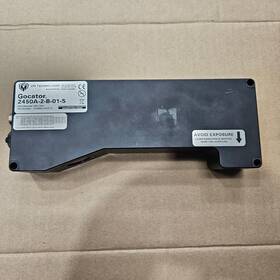
( Brand: Gocator ), ( Manufacturer Part Number: 2530A-2-B-22-S-1048 ), ( Model: 2450A-2-B-01-S ), ( Type: 3d Laser Line Profiler ), ( Country Of Origin: China )
Review GOCATOR 3d Laser Line Profiler
The **Go!SCAN 2530A-2-B-22-S (1048 nm) and Go!SCAN 2450A-2-B-01-S** are high-performance, industrial-grade 3D laser line profilers designed by LMI Technologies, offering unparalleled precision, versatility, and reliability for advanced metrology, quality control, and automated inspection applications. These compact yet powerful scanners utilize cutting-edge **time-of-flight (ToF) laser triangulation technology**, delivering real-time, high-resolution 3D surface profiling with exceptional accuracy and repeatability. The **2530A-2-B-22-S model** operates at a **1048 nm wavelength**, making it ideal for applications requiring deep penetration or reduced sensitivity to ambient light interference, such as reverse engineering, reverse engineering of complex geometries, or inspection of reflective or dark-colored surfaces. In contrast, the **2450A-2-B-01-S model** features a **2450 nm wavelength**, which enhances performance in environments with high ambient infrared interference, ensuring stable and consistent measurements even in challenging lighting conditions.
Both scanners are engineered for seamless integration into automated production lines, offering **sub-millimeter resolution** and **high-speed data acquisition** (up to **100 kHz** for the 2530A and **50 kHz** for the 2450A, depending on configuration) to capture intricate details with minimal latency. Their **2D laser line projection** (with a **22 mm line length** for the 2530A and **1 mm line length** for the 2450A) allows for precise cross-sectional profiling, enabling users to analyze surface topography, detect defects, measure dimensions, and validate CAD models with confidence. The **dual-axis scanning capability** (2D scanning in the X and Y planes) further enhances their adaptability, making them suitable for both static and dynamic applications, including robotic arm inspections, in-motion part verification, and large-scale surface mapping.
Equipped with **LMI s proprietary Go!SCAN software**, these profilers provide intuitive, user-friendly control over scanning parameters, including **field of view (FOV) adjustment, resolution tuning, and real-time visualization**, allowing operators to optimize performance for specific tasks. The **compact, ruggedized design** ensures durability in harsh industrial environments, with **IP65 protection** and **wide temperature operating ranges**, making them ideal for factory floors, automotive assembly lines, aerospace component inspections, and medical device manufacturing. Additionally, the **plug-and-play connectivity** via Ethernet, USB, or RS-232 enables effortless integration with existing PLCs, CNC machines, or custom automation systems, facilitating seamless data exchange and further processing via LMI s **Go!SCAN SDK** or third-party software like **PolyWorks, Geomagic, or MATLAB**.
Whether used for **reverse engineering**, **quality assurance**, **dimensional inspection**, or **research and development**, these laser profilers deliver **unmatched accuracy (up to 0.05 mm)** and **high repeatability**, ensuring consistent results across diverse applications. Their **low-power consumption** and **long-term stability** make them cost-effective solutions for both short-term projects and long-term production monitoring. By combining **advanced optical engineering, robust industrial design, and flexible software tools**, the Go!SCAN 2530A-2-B-22-S and 2450A-2-B-01-S redefine precision measurement, empowering engineers and manufacturers to achieve **unprecedented levels of quality and efficiency** in their workflows.
### **Pros and Cons of buying a GOCATOR 2530A-2-B-22-S-1048 and 2450A-2-B-01-S 3D Laser Line Profilers**
#### **Overview**
The **GOCATOR 2530A** and **2450A** are high-end 3D laser line profilers manufactured by **Go!Vision**, a subsidiary of **Micro-Epsilon**. These devices are designed for precise non-contact measurement of surface topography, dimensional analysis, and quality control in industrial applications. Below is a detailed breakdown of their advantages and disadvantages, followed by a conclusion and recommendation.
---
### **Pros**
#### **1. High Precision and Accuracy**
- Both models offer **sub-micron resolution** (down to **0.1 m** in some configurations), making them suitable for applications requiring extreme precision, such as:
- **Reverse engineering** of complex geometries.
- **Quality control** in aerospace, automotive, and medical device manufacturing.
- **Surface roughness and texture analysis**.
- The **2530A** (with a **22 mm measurement range**) and **2450A** (with a **1 mm measurement range**) provide flexibility for different inspection tasks.
#### **2. Non-Contact Measurement**
- Unlike tactile probes or CMMs, these laser profilers **do not physically touch the surface**, reducing wear and tear on both the sensor and the object being measured.
- Ideal for **delicate, fragile, or moving parts** where contact could cause damage.
#### **3. Fast Scanning and High Throughput**
- Both models support **high-speed scanning** (up to **100 kHz** for the 2530A and **50 kHz** for the 2450A in some modes), enabling rapid data acquisition.
- Useful in **automated inspection lines** where speed is critical.
#### **4. Versatile Measurement Capabilities**
- **3D surface profiling**: Captures full 3D geometry in a single scan.
- **Cross-sectional analysis**: Can measure depth, width, and height simultaneously.
- **Multi-line scanning**: Some configurations allow for **stereo vision or multiple line profiles** for enhanced accuracy.
- **Compatibility with various materials**: Works on **metals, plastics, ceramics, and coated surfaces** (though reflective surfaces may require adjustments).
#### **5. Integration with Industry Standards**
- Supports **industry-standard file formats** (e.g., **STL, PLY, ASCII, and binary data streams**).
- Can be integrated with **CAD/CAM software** (e.g., SolidWorks, CATIA, AutoCAD) for reverse engineering.
- **OEM-friendly**: Available as **standalone sensors or embedded solutions** for custom machinery.
#### **6. Robust and Durable Design**
- Built for **industrial environments**, with **IP65/67 protection** in some models (depending on housing).
- **Wide temperature range** (typically **-10 C to 60 C**), ensuring reliability in varying conditions.
- **Long-term stability**: Low drift over time, reducing the need for frequent recalibration.
#### **7. Software Support and Ease of Use**
- Comes with **proprietary software (e.g., Go!SCAN, Go!FIT)** for data acquisition, analysis, and visualization.
- **User-friendly interfaces** for non-experts, though advanced users can access **scripting and automation** features.
- **API support** for custom programming in **LabVIEW, Python, or C **.
#### **8. Compact and Modular Design**
- The **2530A** (with a **22 mm measurement range**) is **smaller and more portable** compared to some alternatives, making it suitable for **bench-top or handheld applications**.
- The **2450A** offers **higher resolution at a smaller range**, useful for **micro-geometry analysis**.
#### **9. Wide Range of Applications**
- **Aerospace**: Wing profiling, turbine blade inspection.
- **Automotive**: Tire tread analysis, engine component inspection.
- **Medical Devices**: Implant surface analysis, stent profiling.
- **Consumer Goods**: Electronics packaging, optical lens inspection.
- **Research & Development**: Material science, additive manufacturing (3D printing) quality control.
#### **10. Good Warranty and Customer Support**
- **Micro-Epsilon** (the parent company) is a **well-established manufacturer** with **global support networks**.
- Typically offers **2-5 year warranties** depending on the configuration.
- **Technical support and calibration services** are widely available.
---
### **Cons**
#### **1. High Initial Cost**
- Both the **2530A** and **2450A** are **premium-priced**, often **5-10 times more expensive** than basic optical profilers or even some tactile CMMs.
- **Total cost of ownership** includes **software licenses, calibration, and maintenance**, which can add up.
#### **2. Complex Setup and Calibration**
- Requires **expert knowledge** for optimal configuration, especially in terms of:- **Laser alignment** (ensuring proper focus and angle).
- **Ambient light control** (some models are sensitive to reflections).
- **Software calibration** for accurate measurements.
- **Not plug-and-play** for beginners; training may be necessary.
#### **3. Limited Measurement Range (for 2450A)**
- The **2450A (1 mm range)** is **highly precise but limited in depth**, making it unsuitable for **large-scale or deep-profile measurements**.
- For **broader applications**, the **2530A (22 mm range)** is more versatile but still not as extensive as some alternatives (e.g., **confocal or focus-variation profilers**).
#### **4. Sensitivity to Surface Conditions**
- **Highly reflective or glossy surfaces** (e.g., polished metals, mirrors) can **scatter the laser**, leading to **noise or inaccurate data**.
- **Textured or rough surfaces** may require **multiple scans or post-processing** to reduce artifacts.
- **Translucent or semi-transparent materials** (e.g., some plastics) may not reflect the laser well, limiting measurement quality.
#### **5. Software Dependency**
- While the software is powerful, it can be **proprietary and expensive** (additional licenses may be required for advanced features).
- **Data export limitations**: Some users may find it **less flexible** than open-source or third-party analysis tools.
#### **6. Maintenance and Cleaning Requirements**
- The **laser sensor and optics** must be **regularly cleaned** to maintain accuracy (dust, fingerprints, or smudges can affect performance).
- **Alignment checks** may be needed periodically, adding to **downtime and maintenance costs**.
#### **7. Learning Curve for Advanced Features**
- While basic measurements are straightforward, **advanced functionalities** (e.g., **stitching multiple scans, material-specific algorithms**) require **training**.
- Some users may find the **documentation and tutorials** insufficient for complex applications.
#### **8. Limited Battery Life (for Portable Use)**
- If used in **handheld or portable configurations**, battery life may be **limited**, requiring frequent recharging or external power sources.
#### **9. Competition from Alternative Technologies**
- **Confocal microscopy** (e.g., **Alicona InfiniteFocus**) offers **even higher resolution** but at a higher cost.
- **Focus-variation profilers** (e.g., **Zygo, Taylor Hobson**) may provide **better depth range** for some applications.
- **Structured light scanners** (e.g., **Faro, Creaform**) can be **more cost-effective** for certain industrial uses.
#### **10. Potential Latency in Data Processing**
- For **real-time applications**, the **processing speed** of the software may introduce **delays**, which could be a drawback in **high-speed production lines**.
---
### **Conclusion**
The **GOCATOR 2530A-2-B-22-S-1048 and 2450A-2-B-01-S** are **high-performance 3D laser line profilers** that excel in **precision, speed, and versatility**. They are **ideal for industries requiring sub-micron accuracy, non-contact measurement, and integration with CAD/automation systems**. The **2530A** is better suited for **broader applications**, while the **2450A** shines in **micro-geometry and high-resolution tasks**.
However, their **high cost, complex setup, and sensitivity to surface conditions** make them **less accessible for small businesses or casual users**. They are **best justified for**:
- **High-precision manufacturing** (aerospace, medical, automotive).
- **Research and development** requiring detailed surface analysis.
- **Automated quality control** where speed and accuracy are critical.
For **budget-conscious users or applications with less demanding requirements**, alternatives like **structured light scanners or confocal profilers** may offer a **better cost-performance balance**.
---
### **Recommendation**
#### **Buy If:**You need **sub-micron precision** for **reverse engineering, surface texture, or dimensional inspection**.
Your application involves **non-contact measurement** of **delicate or moving parts**.
You require **integration with CAD/CAM or automated inspection systems**.
You are working in **aerospace, medical, or high-end
Details:
Good working condition. Gocator 2450A-2-B-01-S 3D Laser Line Profiler.
specifications automationjack:
- brand: Gocator
- mpn: 2530a-2-b-22-s-1048
- model: 2450a-2-b-01-s
- type: 3d Laser Line Profiler
- country of origin: China
returns automationjack:
- policy: No Returns
shipping automationjack:
- class: Standard
- type: Fixed
- cost: $0.00
- service: FedEx Ground / FedEx Home Delivery
- transit: 3-9 Days
- carrier: FedEx
general automationjack:
- Business Industrial > Industrial Automation Motion Controls > Other Automation Equipment
- condition: Used
payments automationjack:
- other
- wallet: Paypal
- credit card: Visa
offer automationjack:
- best offers: True
- availability: In Stock
- quantity: 1
- started: April 22, 2026
- options: Ship-to-home
- sold: 0
seller automationjack:
- city: Albuquerque, New Mexico
- rating: 100.0%
- # reviews: 498