3COM 2239-XX Ethernet Transceiver Base Unit 802.3
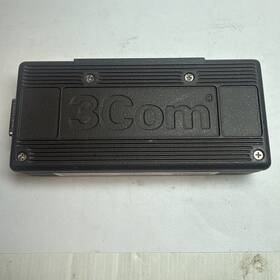
( Brand: 3com ), ( Manufacturer Part Number: 2239-XX ), ( Part Type: Transceiver Unit ), ( Unit Type: Unit )
Review 3COM 2239-x Ethernet Transceiver Base Unit
The **3Com 2239-xx Ethernet Transceiver Base Unit** is a robust and versatile modular component designed to enhance the flexibility and scalability of enterprise-grade networking infrastructure. Part of the 3Com s reliable line of networking solutions, this transceiver base unit serves as the foundational platform for a variety of high-performance Ethernet interfaces, enabling seamless integration with both copper and fiber-optic media. Built with enterprise-grade durability, the 2239-xx is engineered to deliver consistent performance in demanding environments, making it an ideal choice for data centers, corporate networks, and mission-critical applications where reliability and uptime are paramount.
This transceiver base unit is specifically designed to support **802.3 Ethernet standards**, ensuring compatibility with a wide range of networking protocols, including Fast Ethernet (10/100 Mbps) and Gigabit Ethernet (1000 Mbps) configurations, depending on the paired transceiver module. Its modular architecture allows network administrators to easily upgrade or replace transceivers as technology evolves, reducing downtime and future-proofing the network infrastructure. The unit s compact yet sturdy design ensures efficient space utilization in server racks, while its robust construction minimizes the risk of mechanical failure, even in high-density deployment scenarios.
One of the standout features of the 3Com 2239-xx is its compatibility with a broad spectrum of **SFP (Small Form-factor Pluggable) transceivers**, including both single-mode and multi-mode fiber optics, as well as copper-based solutions such as RJ-45 connectors. This flexibility allows network engineers to optimize connectivity based on distance requirements, bandwidth needs, and environmental conditions whether deploying short-reach copper connections for local area networks or long-haul fiber links for wide-area connectivity. The unit s standardized interface ensures seamless interoperability with other 3Com networking devices, including switches, routers, and hubs, fostering a cohesive and scalable network ecosystem.
Beyond its technical capabilities, the 3Com 2239-xx transceiver base unit is built with reliability in mind, featuring robust shielding and high-quality materials to protect against electromagnetic interference (EMI) and environmental stressors. Its low-power consumption design further enhances operational efficiency, reducing energy costs while maintaining peak performance. Additionally, the unit s compliance with industry standards, such as those set by the IEEE and TIA/EIA, ensures long-term viability and compatibility with emerging networking technologies. Whether deployed in a traditional office setting, a high-speed data center, or a remote branch office, the 3Com 2239-xx provides a dependable foundation for high-speed, high-reliability Ethernet connectivity.
The **3Com 2239-xx Ethernet Transceiver Base Unit** (part of the 3Com 2239 series) is an older networking device designed for use with fiber-optic or copper-based Ethernet connections, primarily supporting Fast Ethernet (10/100 Mbps) and Gigabit Ethernet (1000 Mbps) in some variants. Below is a detailed analysis of its pros and cons, followed by a conclusion and recommendation.
---
### **Pros of the 3Com 2239-xx Transceiver Base Unit**
1. **Compatibility with Legacy Systems**
The 3Com 2239 series was widely used in enterprise and campus networks during the late 1990s and early 2000s. Many older switches, hubs, and routers from 3Com (e.g., SuperStack 3, Fast Ethernet switches) require these transceivers for fiber or copper uplinks. If you have a legacy network that still relies on these devices, the 2239-xx is a direct replacement part.
2. **Standardized Fiber Connectivity**
The transceiver supports **ST, SC, or LC fiber connectors**, depending on the specific model (e.g., 2239-xx-SC for SC connectors). This makes it suitable for long-distance or high-bandwidth connections in environments where copper (Cat5e/Cat6) is insufficient or impractical.
3. **Reliability in Older Networks**
Since these transceivers were designed for enterprise use, they are generally robust and built to withstand consistent network traffic. If properly maintained, they can provide long-term stability in legacy setups.
4. **Cost-Effective Replacement**
For those maintaining older 3Com hardware, purchasing genuine or compatible transceivers is often cheaper than upgrading to modern SFP (Small Form-factor Pluggable) modules or replacing entire switches. Refurbished or third-party transceivers can be found at a fraction of the original cost.
5. **Backward Compatibility**
The 2239-xx series supports **10/100 Mbps Fast Ethernet** and, in some cases, **1000 Mbps Gigabit Ethernet** (depending on the variant). This flexibility allows it to work with both older and slightly newer equipment within the same ecosystem.
6. **Easy Installation**
The transceiver plugs directly into the switch or hub, requiring no additional configuration beyond ensuring proper fiber/copper connections. No firmware updates or complex setup is needed.
---
### **Cons of the 3Com 2239-xx Transceiver Base Unit**
1. **Obsolete Technology**
The 2239-xx series is **decades old**, predating modern standards like **SFP (Small Form-factor Pluggable), SFP , or QSFP**. Modern networks rely on these smaller, hot-swappable modules, which are more energy-efficient, faster, and easier to manage. Using legacy transceivers can limit future scalability.
2. **Limited Speed and Distance Capabilities**
- **Fast Ethernet (10/100 Mbps) variants** are severely underpowered compared to modern Gigabit or 10-Gigabit Ethernet.
- **Fiber distances** are typically limited to **2 km (multimode) or 10 km (single-mode)**, which may not meet the needs of modern enterprise or data center requirements.
- **Copper variants** (e.g., 100BaseTX) are limited to **100 meters**, the same as Cat5e, but lack the bandwidth for modern applications.
3. **Lack of Modern Features**
Unlike modern SFP modules, the 2239-xx does not support:- **DWDM (Dense Wavelength Division Multiplexing)** for high-density fiber networks.
- **Link aggregation (LACP)** for increased bandwidth.
- **Advanced monitoring (SFP-DDM for diagnostics)**.
- **Compatibility with newer switch platforms** (e.g., Cisco, Juniper, or modern 3Com/HP/Aruba switches).
4. **Hardware Compatibility Issues**
- Not all 3Com switches support the 2239-xx series. Some models may require **specific transceiver types** (e.g., 2239-xx-SC for SC connectors).
- Mixing **genuine vs. third-party transceivers** can sometimes cause compatibility problems, leading to connectivity issues.
- **Power requirements** may differ from modern switches, potentially requiring additional power supplies or adapters.
5. **Maintenance and Availability Challenges**
- **Spare parts are difficult to find** original 3Com transceivers are no longer manufactured, and third-party options may vary in quality.
- **No official support** from vendors; troubleshooting requires deep knowledge of legacy networking.
- **Physical wear and tear** over time may lead to failures, especially in fiber connections where dust or connector damage can occur.
6. **Security Risks**
Older networking hardware lacks modern security features such as:- **VLAN tagging** (though some 3Com switches support it, it was not a standard feature in all models).
- **Encryption for fiber links** (e.g., 802.1X or MACsec).
- **Firmware updates** to patch vulnerabilities.
7. **Energy Inefficiency**
Legacy transceivers consume more power than modern SFP modules, which can be a concern in large-scale deployments where energy costs are a factor.
---
### **Conclusion**
The **3Com 2239-xx Ethernet Transceiver Base Unit** remains a **practical solution for maintaining legacy 3Com networks** where upgrading is not feasible or cost-effective. It excels in **compatibility, reliability, and ease of use** for older systems but is **severely limited by outdated technology**. For modern networks, these transceivers are **not recommended** due to their inability to meet current speed, distance, and scalability requirements.
If you are **keeping a legacy 3Com network running**, the 2239-xx is a **viable stopgap**, especially if you can source genuine or high-quality third-party replacements. However, if you are **planning for future growth or migrating to newer hardware**, investing in **SFP/SFP modules** or upgrading to modern switches is the **only sustainable long-term solution**.
---
### **Recommendation**
1. **For Legacy Systems (Short-Term Use):**- **Use the 3Com 2239-xx** if you have no alternative and the network is stable.
- **Prioritize genuine or reputable third-party transceivers** to avoid compatibility issues.
- **Monitor for failures** and have spares on hand, as availability may decline over time.
2. **For Modern or Growing Networks:**- **Replace the 3Com 2239-xx with SFP/SFP modules** (e.g., Cisco, HP, or generic SFP transceivers) to support **Gigabit or 10-Gigabit Ethernet**.
- **Upgrade to a modern switch platform** (e.g., Cisco Catalyst, HP Aruba, or Juniper) that supports **hot-swappable SFP modules** and advanced features.
- **Consider fiber upgrades** (e.g., single-mode for longer distances, multimode for data centers) if your current setup is insufficient.
3. **If Keeping Legacy Hardware:**- **Document the network thoroughly** to ensure smooth operation.
- **Train staff on troubleshooting** since modern support resources are limited.
- **Plan for eventual migration** to avoid being locked into outdated technology.
**Final Verdict:**The **3Com 2239-xx is a niche solution for legacy networks** but is **not a future-proof choice**. For any new deployment or significant upgrade, **modern SFP-based solutions are the only practical recommendation**.
Details:
part #: 2239 prices
- $29.99-$196.87
specifications automationjack:
- brand: 3com
- mpn: 2239-xx
- part type: Transceiver Unit
- unit type: Unit
shipping automationjack:
- cost: $11.95
- transit: 5-12 Days
- class: Standard
- carrier: USPS
- type: Calculated
- service: USPS Ground Advantage
returns automationjack:
- policy: No Returns
seller automationjack:
- # reviews: 2299
- rating: 99.5%
- city: Danbury, Connecticut
general automationjack:
- Business Industrial > Industrial Automation Motion Controls > Other Automation Equipment
- condition: Used
payments automationjack:
- credit card: Discover
- other
- wallet: Apple-pay
offer automationjack:
- best offers: True
- availability: In Stock
- sold: 0
- options: Ship-to-home
- started: June 12, 2026
- quantity: 1
3com 2239 Is Similar To:
- 3com 3c905b-tx-nm Ethernet Pci Network Card 3c905btxnm (44% similar) Ideal for industrial automation and motion control systems, this network card ensures seamless communication data transfer a variety of applications. The 3COM ethernet pic network card 3C905B-TX-NM / 3C905BTXNM is a computer networking device that allows for easy connection to an network. With the ...(November 20th, 2025)
- 3com 3c905-tx 03-0104-005 Ethernet Netword Card (42% similar) Known issues / missing items. Item comes from a used environment and is untested. Item details. Shipping and handling. Calculated shipping with ups: standard shipping estimates are calculated using ups ground service to a commercial address. Item has some minor cosmetic wear and tear such as ...(May 28th, 2026)