SIEMENS 1LE10011BB622AA4 Automation
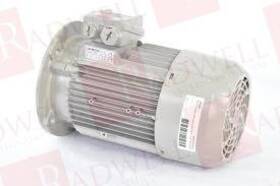
( Brand: Siemens ), ( Manufacturer Part Number: 1LE10011BB622AA4 )
Review SIEMENS Used
The **Siemens 1LE10011BB622AA4** is a high-performance, industrial-grade **SIMATIC ET 200SP** modular terminal designed for demanding automation applications within Siemens TIA Portal ecosystem. Part of the **ET 200SP** (Extended Technology 200 Series, Compact) family, this compact yet robust device integrates seamlessly into distributed I/O architectures, offering a versatile solution for machine and process automation in industries such as manufacturing, packaging, material handling, and energy management. Engineered with Siemens signature precision and reliability, the **1LE10011BB622AA4** combines a **12-slot backplane** with a **19-inch DIN rail mount** or **wall-mountable** enclosure, providing flexibility for installation in tight or space-constrained environments. Its **modular design** allows for easy expansion and configuration, accommodating a wide range of **digital, analog, and special-purpose input/output modules** (such as temperature sensors, proximity switches, or high-speed counters) to tailor the system to specific application requirements.
At its core, the **1LE10011BB622AA4** operates under the **PROFINET** communication protocol, enabling high-speed, deterministic data exchange with **SIMATIC S7-1200/1500 controllers**, **S7-400/1500**, or other industrial networks like **PROFIBUS DP** or **Ethernet/IP**, depending on the integrated modules. This seamless integration with Siemens automation software stack ensures real-time monitoring, diagnostics, and control, while the **TIA Portal** interface simplifies programming, configuration, and troubleshooting through intuitive tools like **SIMATIC STEP 7** or **SIMATIC WinCC**. The device is built to withstand harsh industrial conditions, featuring **IP65-rated** protection against dust and water ingress, **operating temperature ranges** from **-25 C to 60 C**, and **wide voltage input compatibility** (typically **24V DC**), making it suitable for deployment in factories, plants, or outdoor environments where reliability is critical.
One of the standout features of the **1LE10011BB622AA4** is its **scalability and redundancy capabilities**. The system supports **hot-swappable modules**, allowing for maintenance or upgrades without disrupting ongoing operations, while its **redundant power supply options** enhance system uptime in critical applications. The **backplane architecture** ensures low-latency communication between modules, and the **integrated diagnostics** provide real-time feedback on module status, voltage levels, and communication errors, reducing downtime through proactive fault detection. Additionally, the **1LE10011BB622AA4** is compatible with **SIMATIC NET** for advanced network management, enabling centralized monitoring and configuration across multiple ET 200SP terminals in large-scale automation setups. Whether deployed as a standalone I/O station or as part of a larger distributed control system, this terminal delivers the **performance, flexibility, and durability** required to meet the evolving demands of modern industrial automation.
### **Pros and Cons of buying a Siemens 1LE10011BB622AA4 (Industrial Motor)**
The **Siemens 1LE10011BB622AA4** is a **1.1 kW (1.5 HP), 230V, 50 Hz, three-phase induction motor** commonly used in industrial applications such as pumps, compressors, fans, and conveyors. Below is a detailed analysis of its advantages and disadvantages.
---
### **Pros**
1. **Reliability and Durability**
- Siemens motors are known for their robust construction, high-quality materials, and long operational lifespan, often exceeding 20,000 hours under proper maintenance.
- The motor features a **totally enclosed fan-cooled (TEFC)** design, protecting internal components from dust, moisture, and contaminants, which is ideal for harsh industrial environments.
2. **Energy Efficiency**
- This motor falls under **IE2 efficiency class**, meaning it consumes less power compared to older, less efficient models, leading to cost savings on electricity.
- Siemens motors are designed with optimized windings and magnetic materials, reducing energy losses.
3. **Low Maintenance Requirements**
- The sealed design minimizes the need for frequent lubrication or cleaning, reducing downtime.
- Siemens provides **predictive maintenance tools** (via their **SIMATIC SINAMICS** or **SIMATIC Energy Analyzer**) to monitor motor health remotely, helping prevent unexpected failures.
4. **Compatibility with Siemens Drives**
- The motor is designed to work seamlessly with **Siemens frequency inverters (e.g., SINAMICS G120, G150)**, enabling variable speed control, soft starting, and energy savings in applications requiring adjustable speed.
- This compatibility reduces integration challenges in automation systems.
5. **Global Availability and Support**
- Siemens has a widespread distribution network, making spare parts and service readily available worldwide.
- The motor comes with **Siemens-certified documentation**, including wiring diagrams, installation guides, and technical specifications, ensuring ease of installation and troubleshooting.
6. **Noise and Vibration Control**
- Siemens motors are engineered to operate with **low noise and vibration levels**, contributing to smoother operation and reduced wear on connected machinery.
- The balanced rotor design helps maintain stable performance under load variations.
7. **Safety Features**
- The motor includes **thermal protection** (via built-in thermistors or external relays) to prevent overheating.
- The **IP44 protection rating** (depending on the exact variant) offers protection against splashing water and solid particles, making it suitable for moderately wet environments.
8. **Cost-Effective for Long-Term Use**
- While the initial purchase price may be higher than some generic motors, the **lower energy consumption, reduced maintenance, and longer lifespan** often result in **lower total cost of ownership (TCO)** over time.
- Siemens motors are built to **IE2 efficiency standards**, which are mandatory in many regions, avoiding compliance penalties.
9. **Customization Options**
- Siemens offers **various mounting configurations (foot-mounted, flange-mounted, etc.)** and **additional accessories** (e.g., encoders, brakes) to suit specific applications.
- The motor can be integrated into **Siemens automation ecosystems**, such as **TIA Portal**, for advanced control and monitoring.
10. **Environmental Considerations**
- The motor s efficiency reduces greenhouse gas emissions by lowering energy consumption.
- Siemens follows **environmental compliance standards**, and many of their motors are **RoHS and REACH compliant**, making them suitable for eco-conscious industries.
---
### **Cons**
1. **Higher Upfront Cost**
- Compared to **generic or non-branded motors**, Siemens motors have a **premium price**, which may be a barrier for budget-conscious buyers or small businesses.
- The cost can be justified by long-term savings, but initial capital expenditure is higher.
2. **Limited Availability of Spare Parts in Some Regions**
- While Siemens has a global presence, **spare parts availability may vary** in less developed markets or niche industries, potentially leading to longer lead times for replacements.
- Some older models may require **specialized distributors**, increasing procurement complexity.
3. **Complexity in Installation and Configuration**
- For non-experts, integrating the motor with **Siemens drives or PLCs** may require **additional training or technical support**, increasing setup time.
- Misconfiguration can lead to **reduced efficiency or motor damage**, so proper expertise is recommended.
4. **Potential Overkill for Low-Demand Applications**
- If the motor is used in a **light-duty or intermittent application**, its **high efficiency and robust design may not be fully utilized**, making a slightly less expensive motor sufficient.
- For example, a **small workshop or non-critical process** may not justify the premium cost.
5. **Dependence on Siemens Ecosystem**
- If a facility already uses **non-Siemens automation systems (e.g., Allen-Bradley, Schneider, ABB)**, integrating this motor may require **additional gateways or compatibility layers**, adding complexity.
- Some **third-party inverters or controllers** may not be fully optimized for Siemens motors, leading to suboptimal performance.
6. **Weight and Space Requirements**
- Siemens motors are **heavier and bulkier** than some competitors, which may pose challenges in **space-constrained environments** or when retrofitting older machinery.
- The **footprint and mounting requirements** must be carefully considered during installation.
7. **Potential for Overengineering**
- In applications where **lower horsepower or simpler motors** would suffice (e.g., small fans, non-critical conveyors), the **1.1 kW motor may be unnecessarily powerful**, leading to **inefficient operation and higher costs**.
- Buyers must ensure the motor s **nameplate rating matches the actual load requirements** to avoid wasted energy.
8. **Warranty and Service Dependence on Siemens**
- If the motor fails within the warranty period, **reliance on Siemens or authorized dealers** may result in **longer repair times** compared to generic motors with local service networks.
- Some regions may have **limited Siemens service centers**, delaying maintenance.
9. **Potential for Compatibility Issues with Older Systems**
- If the motor is being retrofitted into an **older electrical system**, **voltage fluctuations, harmonic distortions, or wiring mismatches** could affect performance.
- **Soft-start or VFD compatibility** must be verified to avoid **inrush current issues or motor damage**.
10. **Resale Value and Obsolescence Risk**
- Siemens motors, like all industrial equipment, **depreciate over time**, and their resale value may not recover the initial cost.
- Future **upgrades or replacements** may require **compatibility with newer Siemens models**, potentially leading to **upgrade costs**.
---
### **Conclusion**
The **Siemens 1LE10011BB622AA4** is a **high-quality, efficient, and reliable motor** that excels in **industrial applications requiring durability, energy savings, and seamless integration with Siemens automation systems**. Its **TEFC design, IE2 efficiency, and low maintenance needs** make it a **strong choice for critical processes** where uptime and efficiency are prioritized.
However, the **higher upfront cost, complexity in installation, and dependence on the Siemens ecosystem** may not be justified for **low-demand or non-critical applications**. Buyers should **carefully assess their specific requirements** such as load type, environmental conditions, and existing automation infrastructure to determine whether this motor is the **optimal choice**.
For **large-scale industrial facilities, pump systems, compressors, or applications requiring variable speed control**, the **Siemens 1LE10011BB622AA4 is highly recommended** due to its **long-term cost savings, reliability, and compatibility with advanced control systems**.
For **smaller operations, non-critical machinery, or budget-constrained environments**, a **generic IE2 or IE3 motor from a different brand** (e.g., ABB, WEG, or TECO) may offer a **more cost-effective solution** without sacrificing performance.
---
### **Final Recommendation**
**Buy the Siemens 1LE10011BB622AA4 if:**You operate in an **industrial environment with harsh conditions** (dust, moisture, temperature variations).
Your facility already uses **Siemens drives, PLCs, or automation systems**, ensuring seamless integration.
**Energy efficiency and long-term cost savings** are critical to your operations.
You require **low maintenance, high reliability, and predictive maintenance support**.
The motor s **1.1 kW rating perfectly matches your load requirements** (no overengineering).
**Consider an alternative if:**Your application is **low-demand or non-critical**, and a **lower-cost motor** would suffice.
You **do not use Siemens automation**, and compatibility with third-party systems is a concern.
**Budget constraints** make the premium price difficult to justify without long-term ROI analysis.
The motor s **size or weight** poses installation challenges in your facility.
**Best Practice Before Purchase:**- **Verify load requirements** (actual HP vs. motor rating) to avoid over/under-sizing.
- **Check compatibility** with your existing electrical system (voltage, phase, harmonic distortion).
- **Consult
Details:
Part Number 1LE10011BB622AA4. Sells new and surplus product develops channels to purchase such. Call to use a shipping service other than the ones listed. All products are guaranteed to be working but may show signs of use if purchasing a used product.
Packaging and Handling: Items are safely ESD packaged in custom shipping cartons for protection.
part #: 1le10011bb622aa4 prices
- $169.99-$200.00
specifications automationjack:
- brand: Siemens
- mpn: 1le10011bb622aa4
offer automationjack:
- options: Ship-to-home
- started: February 26, 2026
- quantity: 1
- availability: In Stock
- sold: 0
payments automationjack:
- wallet: Google-pay
- credit card: Visa
- other
seller automationjack:
- # reviews: 191990
- rating: 99.6%
- city: 1 Millennium Dr, Willingboro, NJ 08046
shipping automationjack:
- type: Fixed
- transit: 29-34 Days
- cost: $12.90
- class: Standard
- service: Standard
returns automationjack:
- policy: Returns Accepted
- time: 30 Days
- method: Money back
- paid by: Buyer
general automationjack:
- Business Industrial > Industrial Automation Motion Controls > Other Automation Equipment
- condition: Used
Siemens 1LE10011BB622AA4 Is Similar To:
- Siemens 3tf2010-0bb4 3tf20100bb4 Used Tested Cleaned (47.1% similar) Sells new and surplus product develops channels to purchase such. All products are guaranteed to be working but may show signs of use. Call to use a shipping service other than the ones listed. Packaging and handling, items are safely eds packaged in custom shipping cartons for protection...(January 26th, 2024)
- Furnas Electric Co Clm0d04120 Siemens Used (37.3% similar) Sells new and surplus product develops channels to purchase such. Packaging and handling, items are safely eds packaged in custom shipping cartons for protection...(January 28th, 2024)
- Furnas Electric Co 3tf3010-0ap0 Siemens 3tf30100ap0 Used Tested Cleaned (32.7% similar) Packaging and handling, items are safely eds packaged in custom shipping cartons for protection. Sells new and surplus product develops channels to purchase such. All products are guaranteed to be working but may show signs of use. Call to use a shipping service other than the ones listed...(February 6th, 2024)
- Siemens 6xv1830-1ch15 Used 60inches (42.4% similar) Used in working condition. With its 60 inches, it offers ample display space for your industrial automation needs. The brand Siemens is known for its quality and durability, making this model a great investment any industrial setting. Was used in a cabinet until taken out of service. This Siemens ...(May 5th, 2024)
- Furnas Electric Co 3rt2017-1af02 Siemens 3rt20171af02 Used Tested Cleaned (32.1% similar) All products are guaranteed to be working but may show signs of use. Call to use a shipping service other than the ones listed. Packaging and handling, items are safely eds packaged in custom shipping cartons for protection. The product is used surplus. Sells new and surplus product develops ...(August 1st, 2024)
- Furnas Electric Co 3tf3200-0a Siemens 3tf32000a Used Tested Cleaned (32% similar) Packaging and handling: items are safely eds packaged in custom shipping cartons for protection. Call to use a shipping service other than the ones listed. Sells new and surplus product develops channels to purchase such. All products are guaranteed to be working but may show signs of use...(August 2nd, 2024)
- Ite Siemens Sfh32 Used Tested Cleaned (45.7% similar) All products are guaranteed to be working but may show signs of use. Sells new and surplus product develops channels to purchase such. Call to use a shipping service other than the ones listed. Packaging and handling: items are safely eds packaged in custom shipping cartons for protection...(August 2nd, 2024)
- Siemens 42bf35ajbgn Used Tested Cleaned (44.4% similar) Siemens 42BF35AJBGN...(August 4th, 2024)
- Siemens 241-1ch31-0xb0 Used And Tested 6es7 Communication Module (31.6% similar) Product feature: Siemens 6ES7 241-1CH31-0XB0. Used tested Siemens 6ES7 241-1CH31-0XB0 communication module. Product specifications: brand name...(August 7th, 2024)
- Siemens 6sn2132-1cu11-1ba1 Used And Tested Programmable Positioning Motor (36.5% similar) Product specifications: brand name. Used tested. Programmable positioning motor...(August 7th, 2024)
- Furnas Electric Co 3rk1301-1eb00-0aa2 Siemens 3rk13011eb000aa2 Used Tested Cleaned (34.8% similar) All products are guaranteed to be working but may show signs of use. Sells new and surplus product develops channels to purchase such. Call to use a shipping service other than the ones listed. Packaging and handling, items are safely eds packaged in custom shipping cartons for protection. The ...(August 10th, 2024)