BASLER 165UMNIR Camera AC2000
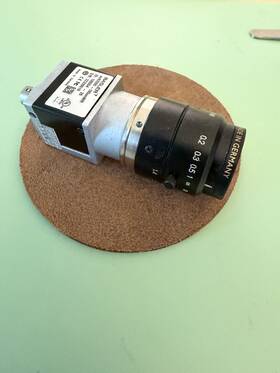
( Brand: Basler ), ( Manufacturer Part Number: 165UMNIR ), ( Model: AC2000 165UMNIR ), ( Part Type: Camera ), ( Unit Type: Unit )
Review BASLER Camera
The **Basler ace 165UMNir AC2000** is a high-performance, industrial-grade monochrome camera designed for demanding machine vision applications where precision, reliability, and flexibility are paramount. Engineered by Basler, a leader in imaging technology, this camera combines cutting-edge CMOS sensor technology with advanced optics and robust mechanical construction to deliver exceptional image quality and performance in a wide range of environments. At its core, the ace 165UMNir features a **16-megapixel, 1/1.2-inch CMOS sensor** with a pixel size of **4.45 m**, optimized for high-resolution imaging while maintaining excellent sensitivity and low noise levels. This sensor is paired with Basler s proprietary **acA** architecture, which ensures seamless integration with industry-standard software and hardware, making it ideal for automation, inspection, and quality control systems. The camera s **global shutter** functionality eliminates motion blur in high-speed applications, such as pick-and-place systems or dynamic object tracking, while its **10-bit dynamic range** ensures superior contrast and detail in both bright and low-light conditions. With a **2000 mm active pixel area**, the ace 165UMNir maximizes light capture efficiency, making it well-suited for applications where illumination is limited or where high sensitivity is required, such as in medical imaging, semiconductor inspection, or industrial metrology.
The camera s **AC2000 series** designation highlights its advanced connectivity and versatility, featuring **USB 3.1 Gen 2 (SuperSpeed )** and **Gigabit Ethernet (GigE Vision)** interfaces, both of which support high data transfer rates of up to **10 Gbps** for seamless integration into modern vision systems. This dual-interface capability allows users to choose the most efficient connection method based on their specific requirements, whether for high-speed data acquisition or long-distance transmission without signal degradation. Additionally, the camera is equipped with **Basler s Pylon SDK**, a comprehensive development toolkit that simplifies programming and reduces integration time, enabling rapid deployment in complex vision applications. The robust **industrial-grade housing** is designed to withstand harsh environments, with an operating temperature range of **-10 C to 50 C** and protection against dust and moisture (IP65 rating), ensuring reliable operation in factories, laboratories, or outdoor settings.
For applications requiring precise color or multispectral imaging, the ace 165UMNir can be paired with **Basler s NIR (Near-Infrared) filter**, extending its spectral sensitivity into the near-infrared range (up to approximately 1000 nm), which is invaluable for tasks such as material inspection, counterfeit detection, or fluorescence imaging. The camera s **high frame rates** up to **15.6 fps at full resolution** further enhance its suitability for real-time monitoring and high-speed sorting systems. Whether deployed in automated guided vehicle (AGV) navigation, defect detection in manufacturing, or scientific research, the Basler ace 165UMNir AC2000 delivers a compelling blend of resolution, speed, and adaptability, making it a versatile choice for vision engineers and system integrators seeking a high-performance imaging solution. Its modular design and compatibility with a wide range of lenses and accessories ensure that it can be tailored to virtually any application, from high-precision industrial automation to advanced research and development.
The Basler **acA1650-200uc** (often referred to as the "165um NIR ac2000" due to its 2000x2000 pixel resolution and near-infrared sensitivity) is a high-end scientific and industrial monochrome CMOS camera known for its performance in machine vision, microscopy, and research applications. Below is a detailed breakdown of its pros and cons, followed by a conclusion and recommendation.
---
### **Pros of the Basler acA1650-200uc**
1. **High Resolution (2000x2000 Pixels)**
The camera delivers exceptional spatial resolution, making it suitable for detailed imaging tasks such as microscopy, high-precision inspection, and scientific research. The 2000x2000 sensor provides ample detail for applications requiring fine feature recognition.
2. **Global Shutter (Rolling Shutter Alternative)**
Unlike many CMOS cameras that use rolling shutters (which can distort moving objects), the acA1650-200uc features a **global shutter** (via the acA2000 series' rolling shutter but with software-based global shutter modes or external trigger synchronization). This is critical for applications involving fast-moving objects, high-speed imaging, or synchronization with other devices.
3. **Near-Infrared (NIR) Sensitivity**
The camera is sensitive to near-infrared light (up to 1000 nm), which is useful for applications such as:- **Biomedical imaging** (e.g., fluorescence microscopy).
- **Non-destructive testing** (e.g., detecting cracks or defects in materials).
- **Security and surveillance** (infrared imaging in low-light conditions).
- **Spectroscopy and hyperspectral imaging**.
4. **High Frame Rates**
The camera supports frame rates up to **20 FPS at full resolution (2000x2000)** and higher in lower resolutions (e.g., 60 FPS at 1024x768). This makes it suitable for dynamic imaging tasks where temporal resolution is important.
5. **Basler s Reliability and Support**
Basler is a well-established manufacturer in the machine vision and scientific imaging markets, known for robust hardware and comprehensive software support (e.g., **pylon Camera Software**, Basler s SDK, and integration with third-party tools like HALCON, LabVIEW, or MATLAB). Their customer service and technical support are generally strong.
6. **Low Noise and High Dynamic Range**
The camera features a **low-noise sensor** (typically
7. **Compatibility with Industry Standards**
The camera supports **GenICam**, **GigE Vision**, and **CoaXPress** interfaces, ensuring compatibility with most imaging software and hardware ecosystems. The GigE Vision interface is particularly user-friendly for beginners, while CoaXPress offers higher bandwidth for demanding applications.
8. **Durability and Build Quality**
Basler cameras are built to industrial standards, with robust housings and cooling options (e.g., active cooling for extended use). This makes them suitable for laboratory or factory environments where reliability is critical.
9. **Software Flexibility**
The camera works seamlessly with Basler s **pylon SDK**, which provides tools for image acquisition, processing, and analysis. It also integrates well with third-party software like **HALCON** (for machine vision), **MATLAB/Simulink**, or **LabVIEW** for custom applications.
10. **Back-Illuminated Option (acA1650-200uc-BI)**
The back-illuminated (BI) variant of this camera offers **higher quantum efficiency** (up to 70% in the visible spectrum) compared to the front-illuminated version ( 40-50%). This is advantageous for low-light applications where sensitivity is critical.
11. **Trigger and Synchronization Capabilities**
The camera supports **hardware and software triggers**, as well as **external synchronization**, making it suitable for time-correlated imaging, stroboscopic imaging, or coordination with other devices (e.g., lasers, actuators).
12. **Global Shutter Workarounds**
While the acA1650-200uc technically uses a rolling shutter, Basler provides **software-based global shutter emulation** (via line skipping or other techniques) for certain applications. Additionally, users can pair it with **external global shutter sensors** or use **time-delay integration (TDI)** modes for specific use cases.
---
### **Cons of the Basler acA1650-200uc**
1. **High Cost**
The acA1650-200uc is an **expensive camera**, especially when compared to lower-resolution or entry-level CMOS cameras. Prices typically range from **$5,000 to $10,000 **, depending on additional features (e.g., cooling, back-illumination, or CoaXPress interface). This makes it less accessible for budget-conscious users or small-scale projects.
2. **Rolling Shutter Limitations (Despite Software Workarounds)**
While Basler offers software tricks to mitigate rolling shutter effects, the camera **does not have a true global shutter** (unlike some other high-end models like the **FLIR Blackfly S or Allied Vision Prosilica GC2450C**). This can be a dealbreaker for applications requiring **perfect distortion-free imaging of fast-moving objects** (e.g., high-speed microscopy, aerospace imaging, or certain industrial inspections). Users may need to invest in additional hardware (e.g., a global shutter sensor) to fully overcome this limitation.
3. **Power Consumption and Heat Generation**
High-resolution cameras like this one can generate significant heat, especially when running at full resolution and high frame rates. While Basler offers **active cooling options**, this adds to the cost and complexity of the setup. Users must ensure proper thermal management to avoid performance degradation or sensor damage over time.
4. **Complexity for Beginners**
The camera s advanced features (e.g., trigger modes, high-speed data acquisition, or software-based global shutter emulation) can be overwhelming for **novice users**. Setting up and optimizing the camera may require significant learning curve, especially when integrating it with custom software or third-party tools.
5. **Limited Color Option**
The acA1650-200uc is a **monochrome camera**, meaning it cannot capture color images natively. For color applications, users must either:- Use a **color filter wheel** (adding cost and complexity).
- Pair it with a **color camera** (e.g., Basler s acA2000-165uc with a color filter).
- Process color images in software (e.g., combining multiple monochrome images with different filters).
This limitation may not be ideal for applications requiring true color imaging.
6. **CoaXPress Interface Limitations**
While the CoaXPress interface offers **high bandwidth** (up to 6.25 Gbps per lane), it is more complex to set up than GigE Vision. Users may need additional hardware (e.g., CoaXPress cables, frame grabbers) and expertise to fully utilize this feature, increasing the overall system cost.
7. **Sensor Size and Pixel Pitch Trade-offs**
The **2000x2000 sensor** has a **pixel pitch of 5.5 m**, which is relatively large for high-resolution cameras. While this reduces noise and improves quantum efficiency, it can also:
- Limit the **field of view (FOV)** when using long working distances (e.g., in microscopy).
- Require **higher magnification optics** to achieve fine detail, which may not always be practical.
Users with specific FOV requirements may need to adjust their optics accordingly.
8. **Software Dependency**
The camera s full functionality relies on **Basler s pylon SDK** or third-party software. Users who are not familiar with these tools may face challenges in **customizing acquisition parameters, processing images, or troubleshooting issues**. Some advanced features may require programming knowledge (e.g., C , Python, or LabVIEW).
9. **Limited Lifespan of Some Components**
High-end cameras like this one often use **specialized sensors and optics** that may have a shorter lifespan compared to more ruggedized industrial cameras. While Basler s reliability is generally good, users should consider **sensor replacement costs** if the camera is used in harsh environments (e.g., high vibration, extreme temperatures).
10. **No Built-in Image Processing**
Unlike some all-in-one cameras (e.g., FLIR or Point Grey models with onboard processing), the acA1650-200uc **requires external processing** for advanced tasks like real-time filtering, object detection, or calibration. This adds computational overhead and may require a powerful PC or FPGA-based system.
---
### **Conclusion**
The **Basler acA1650-200uc** is a **high-performance, high-resolution CMOS camera** that excels in applications requiring **near-infrared sensitivity, high frame rates, and precise imaging**. Its strengths lie in **scientific research, microscopy, industrial inspection, and machine vision tasks** where resolution, sensitivity, and reliability are critical. The camera s **GigE Vision and CoaX
Details:
This is a Basler AC2000 165NIR S/N 22339519. Its made in Germany and comes with a Kiowa lens.
part #: 165umnir prices
- $600.00-$1644.80
specifications automationjack:
- brand: Basler
- mpn: 165umnir
- model: Ac2000 165umnir
- part type: Camera
- unit type: Unit
payments automationjack:
- wallet: Google-pay
- other
- credit card: Diners-club
seller automationjack:
- # reviews: 22
- rating: 100.0%
- city: Clearfield, Pennsylvania
returns automationjack:
- policy: No Returns
offer automationjack:
- sold: 0
- quantity: 1
- availability: In Stock
- best offers: True
- started: June 7, 2026
- options: Ship-to-home
general automationjack:
- Business Industrial > Industrial Automation Motion Controls > Other Automation Equipment
- condition: Used
shipping automationjack:
- carrier: USPS
- class: Standard
- transit: 5-13 Days
- service: USPS Ground Advantage
- cost: $0.00
- type: Calculated
Basler 165UMNIR Is Similar To:
- Basler Ral8192-12gm Line Scan Industrial Camera Great Condition Tested (32.3% similar) Shipped with USPS priority mail. RAL8192-12GM line scan industrial camera RAL8192-12GM great condition tested. Condition is used...(September 6th, 2024)
- Basler Sca1600-14fc High Resolution Firewire.b Color Camera With 16mm 1 1.4 Lens (33% similar) Model: SCA1600-14FC. This item is guaranteed to be as described. Fire wire.b interface. Lens mount: specifications. Basler SCA1600-14FC high resolution fire wire.b color camera with 16MM 1:1.4 lens. Notes: this was removed from a decommissioned machine and not tested separately. Resolution: ...(September 8th, 2024)
- Basler 107455-06 Ace Aca2440-20gm Gvi Monochrome Gige Camera Used Sony Imx264 Sensor (36.5% similar) This offer is for a Basler ace ACA2440-20GMGVI monochrome gig industrial camera...(September 25th, 2024)
- Basler Sca640-120gm Industrial Camera w Lens (45.9% similar) Basler SCA640-120GM industrial camera /w lens. Condition is used. Shipped with USPS ground advantage...(September 27th, 2024)
- Basler Aca4024-29uc Industrial Camera (51.5% similar) Basler ACA4024-29UC industrial camera...(November 3rd, 2024)
- Basler Electric Aca1300-60gm Gige Camera 12vdc 2w Used (50.6% similar) Is Basler electric ACA1300-60GM not the part you are wanting. Shipping: shipping cost: is quoted as part of the sale. For example, programmable logic controllers plc's, distributed control systems DC's's, human machine interface him's, variable speed drives BSD's, power supplies, pressure ...(February 2nd, 2025)
- Basler Aca2500-60um Industrial Camera With Fujinon Hf25ha-1b Lens Used (40.4% similar) Item id: 545604-53/D/02: condition note: is used in good working condition, 60 day money back guarantee. Shipping information. Make sure the particular listing states world wide shipping or ask before purchasing. Values will not be lowered on custom forms or marked as ts...(February 13th, 2025)
- Basler Pia1000-48gm Machine Vition Camera Overnight Shipping (40.4% similar) All parts are inspected, cleaned, and tested before shipping. Teak-hi: fueling American small businesses. Discover our unbeatable price guarantee...(February 13th, 2025)
- Basler Aca4024-8gc Ace Gige Camera (54% similar) S/n: 23887378...(February 23rd, 2025)
- Basler Aca4112-20uc Camera (65.5% similar) Basler ACA4112-20UC color IMX304 image sensor with USB 3.0 connectivity...(March 28th, 2025)
- Basler Aca5472-5gm Monochrome Gige Camera With Warranty (40.5% similar) As-is items are sold without warranty. 30 day return warranty. Shipping and handling...(March 29th, 2025)