ALLEN-BRADLEY 156-A30BA2 Contactor 25YR
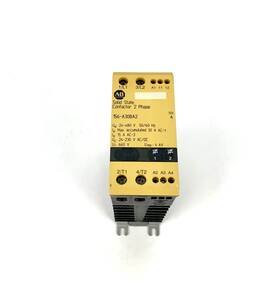
( Brand: Allen-bradley ), ( Manufacturer Part Number: 156-A30BA2 ), ( Type: Contactor ), ( Country Of Origin: Denmark )
Review ALLEN BRADLEY Contactor Us Seller
The **Allen-Bradley 156-A30BA2** is a robust, high-performance contactor designed for demanding industrial applications where reliability, longevity, and precise control are paramount. Part of the **156 Series**, this contactor is engineered to deliver exceptional performance over an extended operational lifespan, with a **25-year warranty** a testament to its durability and engineering excellence. Built with **Allen-Bradley s proprietary magnetic and mechanical components**, this contactor ensures smooth, consistent operation while minimizing wear and tear, even under harsh environmental conditions. The **30-ampere rating** makes it suitable for controlling motors, heaters, and other high-demand loads in manufacturing, processing, and automation systems, offering a balance between capacity and efficiency.
The **156-A30BA2** features a **compact yet sturdy design**, optimized for easy installation in control panels, enclosures, or direct-mount applications. Its **molded case construction** provides superior protection against dust, moisture, and mechanical stress, ensuring long-term reliability in challenging industrial settings. The contactor incorporates **silver-cadmium oxide contacts**, which are resistant to welding and arcing, reducing the risk of failure and extending maintenance intervals. Additionally, the **auxiliary contacts** (if included in the configuration) provide versatile signaling capabilities for monitoring and control logic, enhancing system flexibility.
One of the standout features of this contactor is its **low-energy coil design**, which minimizes power consumption while maintaining strong magnetic attraction, ensuring reliable latching and release even under voltage fluctuations. The **interchangeability with other 156 Series contactors** simplifies inventory management and reduces downtime during replacements or upgrades. Whether integrated into a **PLC-based system, motor starter circuit, or standalone control application**, the **156-A30BA2** delivers consistent performance with minimal maintenance, making it an ideal choice for industries prioritizing **cost-effectiveness, reliability, and long-term operational integrity**. Built to endure decades of use, this contactor exemplifies **Allen-Bradley s commitment to engineering precision and endurance** in industrial automation.
### **Pros and Cons of Buying a 25-Year-Old Allen-Bradley 156-A30BA2 Contactor**
#### **Pros:**1. **Proven Reliability** The Allen-Bradley 156 series is a well-established industrial component with a long track record of durability. If properly maintained, it may still function effectively despite its age.
2. **Compatibility** This model is widely used in industrial automation, making it easy to find replacement parts, documentation, and technical support from Allen-Bradley (now part of Rockwell Automation).
3. **Cost Savings** Purchasing a used or refurbished unit may be significantly cheaper than buying a new one, especially if the original manufacturer no longer supports it.
4. **Functional for Low-Demand Applications** If the contactor is used in a non-critical, low-cycle application (e.g., occasional switching, not frequent start-stop cycles), it may continue working without immediate failure.
5. **Ease of Replacement** Since the model is legacy, spare parts and wiring diagrams remain accessible, simplifying troubleshooting and maintenance.
---
#### **Cons:**1. **Wear and Tear** At 25 years, the mechanical and electrical components (contacts, coil, springs) may be degraded, increasing the risk of sudden failure, arcing, or welding.
2. **Obsolete Standards** Modern industrial standards emphasize higher efficiency, safety, and environmental compliance. Older contactors may lack features like built-in diagnostics, reduced arc flash protection, or compatibility with newer control systems.
3. **Limited Availability of New Parts** While some components may still be sourced, Allen-Bradley has phased out production of many legacy models, making long-term repairs difficult.
4. **Higher Maintenance Requirements** The unit may require more frequent inspections, contact cleaning, and lubrication to prevent failures, increasing operational downtime.
5. **Safety Risks** Older contactors may not meet current safety regulations (e.g., UL, NEC) for arc flash protection or insulation coordination, posing hazards to personnel.
6. **Energy Inefficiency** Modern contactors often incorporate energy-saving features (e.g., lower coil power consumption, faster response times) that older models lack.
7. **Integration Challenges** If the system is being upgraded to newer PLCs or HMI interfaces, compatibility issues may arise due to outdated communication protocols or signal levels.
8. **Warranty and Support Issues** Allen-Bradley no longer provides official warranties or technical support for discontinued models, leaving the user responsible for all repairs.
---
### **Ending Conclusion:**The decision to purchase a 25-year-old Allen-Bradley 156-A30BA2 contactor depends on the application s criticality, budget, and long-term reliability needs. If the contactor is in a **non-critical, low-cycle application** with **minimal risk of failure**, it may be a cost-effective short-term solution provided it is thoroughly inspected and maintained. However, for **high-reliability, safety-critical, or frequently cycled systems**, the risks of failure, safety violations, and maintenance burdens outweigh the benefits. Modern alternatives (e.g., newer Allen-Bradley models, Schneider Electric, or Siemens contactors) offer improved performance, safety, and support, making them a more prudent long-term investment.
---
### **Recommendation:**- **If the contactor is in a low-demand, non-critical role and testing confirms its functionality**, proceed with purchase **only if** you are prepared for:
- Regular preventive maintenance (contact cleaning, coil testing, thermal inspections).
- Immediate replacement parts inventory for critical failures.
- Accepting potential obsolescence risks.
- **For all other cases**, prioritize a **new or refurbished modern contactor** that meets current safety and efficiency standards. If budget is a constraint, consider:
- A **remanufactured** Allen-Bradley unit (if available through authorized providers).
- A **compatible alternative** from another manufacturer (e.g., Siemens, Schneider Electric) that offers similar specifications.
- A **gradual system upgrade** to replace the contactor as part of a larger automation modernization project.
Ultimately, the **cost of potential downtime, safety incidents, or repair difficulties** often far exceeds the initial savings of purchasing an aged component. Investing in a reliable, supported solution ensures long-term operational stability.
Details:
Allen Bradley 156-A30BA2 Solid State Contactor 2 Phase, Photos are of the actual item. Free Shipping in the Continental USA.
part #: 156a30ba2 prices
- $34.95-$49.95
specifications automationjack:
- brand: Allen-bradley
- mpn: 156-a30ba2
- type: Contactor
- country of origin: Denmark
seller automationjack:
- city: Austin, Texas
- rating: 100.0%
- # reviews: 535
payments automationjack:
- other
- wallet: Paypal
- credit card: Diners-club
shipping automationjack:
- carrier: USPS
- class: Standard
- cost: $0.00
- type: Calculated
- transit: 5-10 Days
- service: USPS Ground Advantage
offer automationjack:
- started: March 28, 2026
- sold: 0
- options: Ship-to-home
- availability: In Stock
- quantity: 10
general automationjack:
- Business Industrial > Industrial Automation Motion Controls > Other Automation Equipment
- condition: Used
returns automationjack:
- policy: Returns Accepted
- method: Money back
- time: 30 Days
- paid by: Buyer
Allen-bradley 156-A30BA2 Is Similar To:
- Allen Bradley 1489-m1c020 Ser.d 1 Pole 2a Circuit Braker (41.9% similar) New - old stock inventory as pictured not in original box item comes shown and only includes what is the photos, please look over carefully prior to purchase. Allen bradley 1489-M1C020 sear.d 1 pole 2a circuit breaker. Some items may have slight cosmetic damage which is noted in the condition of ...(October 5th, 2023)
- Allen-bradley 2198-p070 Kinetix 5700 Dc Bus Fw14.001 2198p070 New (42.1% similar) Return police: it will just take you 1 minute. Please leave a telephone number for on-time delivery. 2198-P070 allen bradley kinetic 5700 dc bus FW14.001 2198P070 new dear customer, there is one things need to be noticed before placing an order...(October 8th, 2023)
- Allen-bradley Vpl-b0752f-pj12aa Allen-bradley Servo Motor For Parts Repair (40.3% similar) Please see pictures for more detail. It has not been tested. Sale includes: Allen-bradley VPL-B0752F-PJ12AA servo motor, for parts/ repair. Condition of internal components is unknown. Sorry, no other parts or accessories included. Functionality is unknown. Item has not been opened or disassembled. ...(November 10th, 2023)
- Allen-bradley 800f-x01l Contact Cartridge Bag Of 10 Sa (54.4% similar) They are new in the bag...(November 17th, 2023)
- Allen Bradley 800h-r3ha7 Selector Switch Station New (45.5% similar) It is carefully crafted with premium materials to withstand harsh conditions, ensuring that it will last for years come. The station is designed with a focus on functionality, making it easy to operate and providing you complete control over your equipment...(November 18th, 2023)
- Allen-bradley 2803-cm Series A Camera Mux Module (43.3% similar) Allen bradley 2803-CM series a camera mix module condition - preowned, GC1-D-MBKY...(November 19th, 2023)
- Allen Bradley 100s-c30udj13bc Motor Controller Combination Rev-starte S 146393 (42.2% similar) Allen bradley 100S-C30UDJ13BC motor controller combination rev-starter and base, 24 CDC. Manufacturer part number: 100S-C30UDJ13BC...(November 26th, 2023)
- Allen Bradley 800a-h2bw Ser B Maintained Selector Switch Nos Free Fast Ship (45.2% similar) Part #: allen bradley 800A-H2BW for sale...(December 20th, 2023)
- Guardmaster Ltd 440k-t11341 Allen Bradley 440kt11341 Series B Safety Interlock Switch (28.4% similar) Allen bradley 440K-T11341, 440KT11341, series b, safety interlock switch lock: cabinet 2 top shelf 1210...(December 21st, 2023)
- Allen-bradley 2198-h20ck Dsl Converter Kit Sser B Fw 1.18 236757 (37.2% similar) MCSALE25X: : allen bradley 1756-IB16 sear a cat rev H01 f/w 3.2 dc input 16PT 24VDCUSED good condition may look different than photo have shelf ware BB61APD1 pd D78 item is sold as where...(January 3rd, 2024)
- Allen-bradley 4963-ds Surge Protector With Dry Contact Indication (43.9% similar) Allen bradley 4963-DS surge protector with dry contact indication, 277 vac 60 Hz, 420 vac cove, in 20,000 a, CPR 1500 v, these are unused. Offer is for all they are dirty from sitting around, but they unused...(January 8th, 2024)