IED 1522LR Logic Relay Module Logic/relay
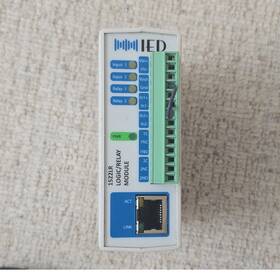
( Brand: Ied ), ( Manufacturer Part Number: 1522LR ), ( Type: Logic/relay Module )
Review IED Logic/relay Module Model
The **IED 1522LR Logic/Relay Module** is a high-performance, modular input/output device designed to enhance the functionality and reliability of industrial automation systems, particularly within substation and power distribution environments. Engineered for seamless integration into advanced protection and control schemes, this module serves as a versatile interface between digital logic signals and relay outputs, enabling precise control, monitoring, and coordination of critical infrastructure. Built with robust construction and industrial-grade components, the IED 1522LR excels in environments exposed to harsh conditions, including temperature fluctuations, electrical noise, and mechanical stress, ensuring consistent operation even under demanding operational scenarios. Its compact yet durable design allows for easy installation within standard IED enclosures or distributed control systems, making it an ideal solution for both new installations and retrofitting existing setups.
At its core, the IED 1522LR features a sophisticated array of **digital inputs and relay outputs**, configurable to meet a wide range of application requirements. The module supports high-speed, optically isolated logic inputs capable of interfacing with a variety of sensors, switches, or communication protocols, including binary signals, pulse counting, or time-stamped events. Each input channel is designed to withstand transient surges and electrical interference, ensuring data integrity even in noisy industrial settings. On the output side, the module provides **high-current relay contacts** with configurable wetting current and voltage ratings, allowing for direct control of relays, contactors, or other high-power devices in protection schemes, motor starters, or load management systems. The relays are engineered for extended mechanical life, with low contact resistance and minimal bounce time, ensuring reliable operation over thousands of switching cycles.
One of the standout features of the IED 1522LR is its **flexible communication interface**, which enables seamless integration with modern protection and control systems. The module supports industry-standard protocols such as **IEC 61850-7-4 (MMS)** and **DNP3**, facilitating real-time data exchange with supervisory control and data acquisition (SCADA) systems, intelligent electronic devices (IEDs), or human-machine interfaces (HMIs). This interoperability allows engineers to monitor logic states, relay statuses, and event logs remotely, enabling proactive maintenance and fault diagnosis. Additionally, the module s **configurable parameters** via a user-friendly interface whether through a built-in web server, serial communication, or integration with a host system allow for on-the-fly adjustments to input thresholds, relay timing, or event filtering, enhancing system adaptability without requiring physical reconfiguration.
Safety and reliability are paramount in industrial applications, and the IED 1522LR is designed with these priorities in mind. The module incorporates **optical isolation** between inputs and outputs to prevent ground loops and electrical interference, while its **fail-safe design** ensures predictable behavior in the event of power loss or hardware failure. For critical applications, the module supports **redundant power supply options**, including battery backup or dual-power inputs, to maintain operation during transient outages. Furthermore, the IED 1522LR adheres to stringent industry standards, including **IEC 61850-3** for substation equipment, **IEC 60255** for relay performance, and **IEC 61000-6-2** for electromagnetic compatibility, ensuring compliance with global regulatory requirements. Its **wide operating temperature range** typically from -40 C to 85 C further extends its applicability to extreme climates, whether in tropical, arctic, or high-altitude environments.
Beyond its technical specifications, the IED 1522LR is engineered for **ease of deployment and maintenance**. The module s **plug-and-play design** simplifies installation, with clear labeling, standardized connectors, and minimal wiring requirements. For troubleshooting, the module provides **detailed diagnostic logs**, including input status, relay operation history, and error codes, which can be accessed via the communication interface or a local display. Additionally, its **modular architecture** allows for easy expansion or replacement of components, reducing downtime and maintenance costs. Whether deployed in a substation automation system, a renewable energy microgrid, or an industrial control network, the IED 1522LR delivers a balance of performance, flexibility, and reliability, making it an indispensable component for modern electrical infrastructure.
The IED 1522LR Logic/Relay Module is a compact, programmable device designed for industrial automation, particularly for controlling relays, logic functions, and communication interfaces. Below is a detailed breakdown of its pros and cons, followed by a conclusion and recommendation.
---
### **Pros of the IED 1522LR**
1. **Compact and Modular Design**
The IED 1522LR is a small, DIN-rail-mountable module, making it ideal for space-constrained control panels. Its modular nature allows easy integration into larger systems without requiring significant rewiring.
2. **Programmable Logic Functions**
It supports programmable logic (e.g., AND, OR, NOT, timers, counters) via ladder logic or structured text, providing flexibility for custom control schemes. This reduces the need for external PLCs for simple logic tasks.
3. **Relay Outputs**
The module includes relay outputs (typically 2 or 4 contacts) with configurable contact ratings (e.g., 10A/250VAC or 2A/30VDC), suitable for controlling motors, solenoids, or other inductive loads. The relays are often opto-isolated, improving safety and noise immunity.
4. **Communication Interfaces**
It typically supports communication protocols like **Modbus RTU/TCP**, **PROFIBUS DP**, or **Ethernet/IP**, enabling integration with SCADA systems, HMIs, or other industrial devices. This facilitates remote monitoring and control.
5. **Low Power Consumption**
As a low-power device, it consumes minimal energy, reducing operational costs and heat generation in control cabinets.
6. **Easy Installation and Configuration**
The IED 1522LR is designed for quick installation with minimal wiring. Configuration is often done via software (e.g., provided by the manufacturer), with intuitive interfaces for ladder logic programming.
7. **Diagnostic Capabilities**
Many versions include built-in diagnostics (e.g., fault logging, status monitoring) that help troubleshoot issues without requiring external tools.
8. **Cost-Effective for Simple Applications**
For applications requiring only basic logic or relay control (e.g., pump start/stop, valve sequencing), the IED 1522LR can be more economical than a full-fledged PLC.
9. **Redundancy and Safety Features**
Some variants offer redundancy options (e.g., dual power supplies) or safety-rated outputs (e.g., SIL-rated relays) for critical applications, enhancing reliability.
10. **Compatibility with Industrial Environments**
It is typically designed to withstand harsh conditions (e.g., temperature ranges of -25 C to 75 C, high humidity, EMI/EMC resistance), making it suitable for factory floors or outdoor installations.
---
### **Cons of the IED 1522LR**
1. **Limited Processing Power**
Unlike a full PLC, the IED 1522LR has restricted processing capabilities. Complex control algorithms, high-speed data acquisition, or advanced motion control may require a more powerful device.
2. **Scalability Issues**
If the application grows to require more I/O points, additional modules or a larger PLC may be needed, potentially increasing system complexity and cost.
3. **Dependence on Manufacturer-Specific Software**
Configuration and programming often rely on proprietary software, which may require training or licensing. This can limit flexibility if the manufacturer discontinues support.
4. **No Built-In Analog Inputs/Outputs**
Most IED 1522LR modules lack analog I/O (e.g., 0-10V, 4-20mA), requiring external modules or converters for temperature, pressure, or flow control applications.
5. **Limited Expansion Options**
While modular, the IED 1522LR may not support the same range of expansion cards or third-party integrations as a PLC. This can restrict functionality in specialized applications.
6. **Potential Latency in Communication**
For high-speed communication protocols (e.g., Ethernet/IP with strict timing requirements), the IED 1522LR may introduce delays compared to dedicated industrial Ethernet devices.
7. **Firmware Dependence**
Updates or bugs in the firmware can sometimes require reconfiguration or even replacement of the module, leading to downtime.
8. **Not Suitable for High-Speed Control**
Applications requiring microsecond-level timing (e.g., servo control, high-frequency switching) are better served by dedicated motion controllers or PLCs with faster processors.
9. **Single-Vendor Lock-In**
Relying on a single vendor for hardware and software support can be risky if the company exits the market or changes pricing strategies.
10. **Learning Curve for Advanced Users**
While simple logic is straightforward, mastering advanced features (e.g., structured text, complex communication protocols) may require training, especially for users unfamiliar with industrial automation.
---
### **Conclusion**
The IED 1522LR Logic/Relay Module is a **versatile, cost-effective solution for applications requiring basic relay control, programmable logic, and communication interfaces**. It excels in scenarios where space, simplicity, and integration with existing systems are priorities, such as:
- Simple motor/pump control.
- Sequencing valves or actuators.
- Basic SCADA integration (e.g., Modbus to HMI).
- Retrofitting legacy systems with minimal changes.
However, it is **not ideal for complex control systems, high-speed processes, or applications requiring extensive analog I/O**. In such cases, a full PLC (e.g., Siemens S7, Allen-Bradley Micro800, or Schneider Quantum) or a dedicated motion controller would be more appropriate.
---
### **Recommendation**
**Buy the IED 1522LR if:**- Your application involves **simple relay logic, discrete I/O control, or basic sequencing** without complex math or analog signals.
- You need a **compact, easy-to-integrate solution** with communication support (e.g., Modbus, PROFIBUS).
- Cost and space constraints make a full PLC unnecessary.
- You are working with a **proven vendor** and have access to their support/software.
**Avoid the IED 1522LR if:**- You require **analog inputs/outputs, high-speed control, or advanced motion functions**.
- Your system demands **scalability** (e.g., hundreds of I/O points or modular expansion).
- The application involves **critical safety functions** (e.g., SIL 3 or high-integrity control), where a safety-rated PLC or functional safety module is needed.
- You anticipate **future growth** that would require a more powerful controller.
**Alternatives to Consider:**- For **simple relay control**: Use a **standalone relay controller** (e.g., Omron J3, Siemens LOGO!) if the IED 1522LR s communication features are unnecessary.
- For **analog discrete I/O**: Opt for a **low-end PLC** (e.g., Allen-Bradley Micro800, Siemens S7-1200).
- For **high-speed or complex logic**: Invest in a **mid-range PLC** (e.g., Siemens S7-1500, Rockwell ControlLogix).
Ultimately, the IED 1522LR is a **solid choice for its intended purpose**, but its limitations should align with your project s requirements. Always verify the specific model s datasheet for exact specifications (e.g., relay ratings, communication protocols) to ensure compatibility with your application.
Details:
The IED 1522LR Logic/Relay Module is a specialized control module designed for industrial automation and motion systems. Produced by the reputable brand IED, this module is a crucial component for ensuring efficient and accurate automation in various industrial settings. This specific model, with MPN 1522LR, is known for its reliable performance and precise control capabilities.
part #: 1522lr prices
- $49.99-$400.00
specifications automationjack:
- brand: Ied
- mpn: 1522lr
- type: Logic/relay Module
returns automationjack:
- policy: No Returns
shipping automationjack:
- cost: $9.69
- transit: 6-12 Days
- class: Standard
- type: Calculated
- service: USPS Ground Advantage
- carrier: USPS
offer automationjack:
- best offers: True
- started: May 9, 2026
- options: Ship-to-home
- availability: In Stock
- quantity: 1
- sold: 0
seller automationjack:
- city: Lake Mary, Florida
- # reviews: 137
- rating: 100.0%
general automationjack:
- Business Industrial > Industrial Automation Motion Controls > Other Automation Equipment
- condition: Used
payments automationjack:
- other
- credit card: Discover
- wallet: Apple-pay